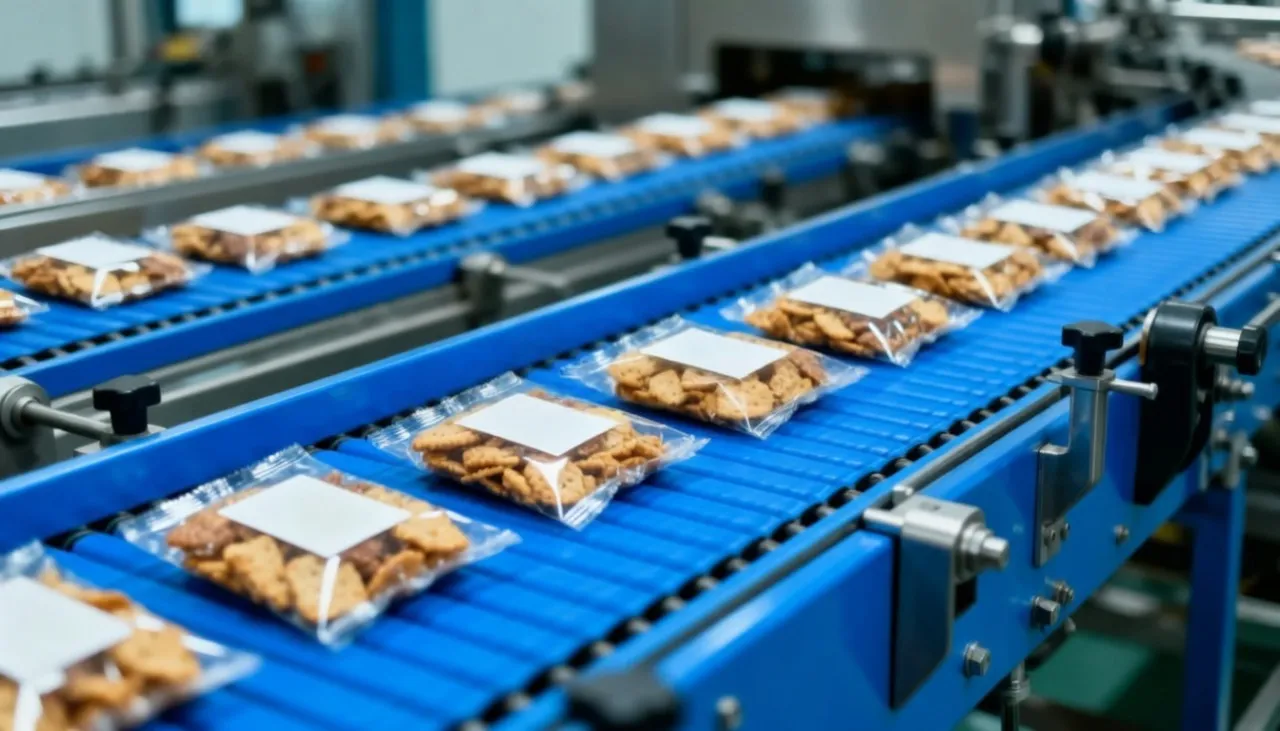
 Si recorres cualquier fábrica moderna de aperitivos en el Reino Unido —un productor de patatas fritas en las Midlands, una tostadora de café en Bristol, un fabricante de galletas en Yorkshire— oirás el pulso rítmico del aire comprimido que recorre cada etapa de la línea de producción. Este aire infla los envases flexibles, impulsa el producto a través de cintas transportadoras neumáticas, acciona las válvulas de llenado y crea la atmósfera modificada dentro de cada bolsa sellada que mantiene tus patatas fritas crujientes durante seis meses en el estante. Sin embargo, lo que a menudo no se ve es el riesgo invisible que se esconde dentro de ese aire comprimido: la contaminación por aceite.
Los compresores lubricados convencionales inyectan neblina de aceite en la cámara de compresión, e incluso con la filtración posterior, pueden sobrevivir aerosoles traza de tan solo 0,01 micras que ingresan al flujo del producto. Para aplicaciones de envasado de alimentos, en particular el envasado en atmósfera modificada (MAP), el lavado con nitrógeno de snacks, frutos secos y café, y el transporte neumático de confitería, galletas y snacks inflados, esta contaminación no es solo un problema de calidad. Es un incidente de seguridad alimentaria inminente que puede provocar la retirada del producto, anular la certificación BRC Global Standard y exponer a su empresa a graves responsabilidades regulatorias según la Ley de Seguridad Alimentaria de 1990 y las directrices de la FSA.
Esta guía analiza en detalle por qué un compresor de aire sin aceite no es una opción de mejora para las líneas de envasado de alimentos, sino un elemento básico para su funcionamiento. Abordamos la ciencia detrás del aire comprimido apto para uso alimentario, las aplicaciones específicas donde el riesgo de contaminación es mayor, cómo seleccionar la máquina adecuada para su volumen de producción y cómo las soluciones de compresores sin aceite de Ever Power ya están dando soporte a fabricantes de alimentos en Inglaterra, Escocia y Gales.
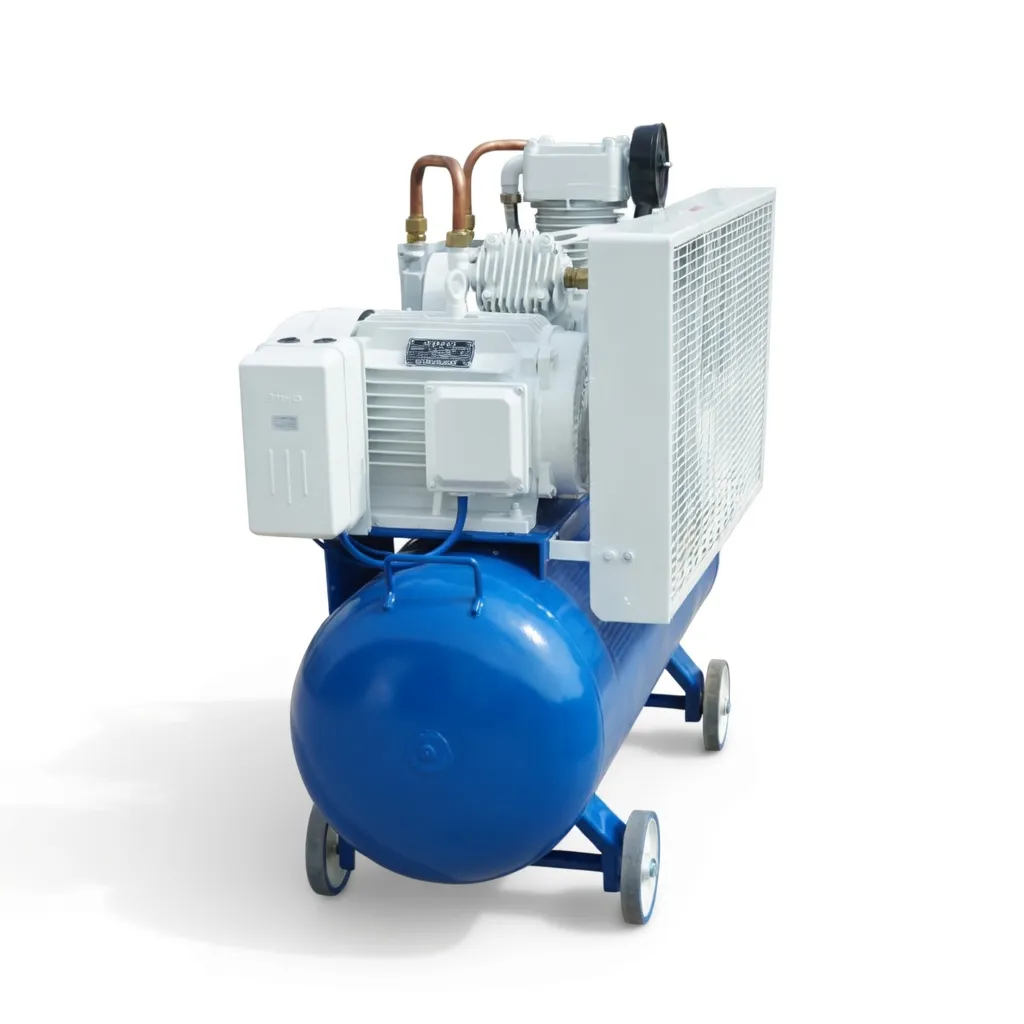
Compresor de aire Ever Power sin aceite — Serie de grado alimenticio
Diseñado para evitar la transferencia de aceite. Apto para entornos alimentarios. Listo para su instalación inmediata en su sistema de envasado en atmósfera modificada (MAP) o línea de transporte neumático.
🔹 Solicita un presupuesto gratuito: contacta con nuestros ingenieros.
Por qué los compresores convencionales representan un riesgo en el envasado de alimentos.
 Los compresores de tornillo rotativo lubricados estándar utilizan aceite para sellar las holguras del rotor, enfriar la etapa de compresión y reducir el desgaste. Este diseño funciona a la perfección en aplicaciones industriales —como el inflado de neumáticos, el prensado de paneles y el uso de herramientas neumáticas— donde la calidad del aire es fundamental para el rendimiento, no para la seguridad. En el momento en que ese mismo aire comprimido entra en un entorno de envasado de alimentos, el cálculo del riesgo cambia por completo.
Los aceites para compresores derivados del petróleo contienen hidrocarburos aromáticos, aditivos lubricantes y subproductos de oxidación. Al aerosolizarse en partículas submicrónicas, estos compuestos atraviesan directamente los filtros coalescentes estándar de 1 micrón y permanecen en suspensión en el aire del proceso. En una línea de envasado en atmósfera modificada (MAP), este aire contaminado se inyecta directamente en el espacio libre de la bolsa sellada, el mismo espacio donde el producto permanecerá durante toda su vida útil. El aceite se deposita en la superficie del producto, favorece el enranciamiento de los aperitivos ricos en lípidos, acelera la oxidación del café tostado y puede alterar el perfil sensorial de los dulces. En los peores casos, cuando se trata de hidrocarburos de aceite mineral (MOH), existe evidencia documentada de migración a la matriz alimentaria, una categoría de contaminación que los organismos reguladores de Europa y el Reino Unido tratan con creciente severidad.
Contaminación del producto
Los aerosoles de aceite con un tamaño inferior a 0,01 µm eluden los filtros estándar y entran en contacto directo con el producto dentro del envase sellado.
Riesgo de auditoría y certificación
Las auditorías BRC Global Standard, SQF y FSSC 22000 ahora exigen específicamente la verificación documentada de la ausencia de aceite en el aire.
Vida útil más corta
La contaminación por aceite en el gas del espacio de cabeza acelera la oxidación, reduciendo la vida útil entre 15 y 301 TP5T en productos ricos en lípidos.
Exposición a costos de retirada
En el Reino Unido, el coste medio de una retirada de alimentos del mercado asciende a entre 10.000 y 30.000 libras esterlinas o más en costes directos, antes de tener en cuenta los daños a la reputación y la exclusión de los establecimientos minoristas.
Comprender la norma ISO 8573-1: El estándar que debe cumplir su línea de producción.
La norma ISO 8573-1 clasifica la pureza del aire comprimido en nueve clases de calidad según tres categorías de contaminantes: partículas, agua y aceite. Para aplicaciones de envasado de alimentos, la clasificación del contenido de aceite es el criterio determinante. La clase 1 permite un contenido total máximo de aceite de 0,01 mg/m³. La clase 0 —el estándar de referencia absoluto para aplicaciones de contacto directo o casi directo con alimentos— no permite la presencia de aceite detectable y exige que el fabricante del equipo verifique y declare este nivel de rendimiento.
Cabe destacar que la clasificación ISO 8573-1 Clase 0 no se logra simplemente añadiendo más filtros después de una máquina lubricada. El verdadero rendimiento de Clase 0 requiere un diseño de compresión intrínsecamente libre de aceite, en el que ningún lubricante entra en la cámara de compresión. Por ello, la transición de la industria alimentaria a la tecnología de compresores libres de aceite es estructural, no meramente estética.
| Clase ISO 8573-1 | Aceite máximo (mg/m³) | Tamaño máximo de partícula | Punto de rocío a presión | ¿Apto para alimentos? |
|---|---|---|---|---|
| Clase 0 | No detectable | ≤ 0,1 µm | ≤ −70 °C | ✅ Contacto directo / Purga MAP |
| Clase 1 | ≤ 0,01 | ≤ 0,1 µm | ≤ −70 °C | ✅ Envases para alimentos / MAP |
| Clase 2 | ≤ 0,1 | ≤ 1 µm | ≤ −40 °C | ⚠️ Solo sin contacto |
| Clase 3+ | ≤ 1.0+ | > 1 µm | ≤ −20 °C | ❌ No permitido en zonas de alimentación |
Aplicaciones de los compresores sin aceite en las líneas de envasado de alimentos
La variedad de procesos en una planta de envasado de alimentos que dependen del aire comprimido es mayor de lo que la mayoría de los gerentes de operaciones perciben inicialmente. A continuación, se presentan los siete puntos de aplicación más críticos donde un compresor de aire sin aceite no solo es preferible, sino esencial para cualquier fabricante de alimentos del Reino Unido que opere bajo la certificación BRC AA/A o FSSC 22000.
Especificaciones técnicas: Serie de compresores Ever Power sin aceite aptos para uso alimentario
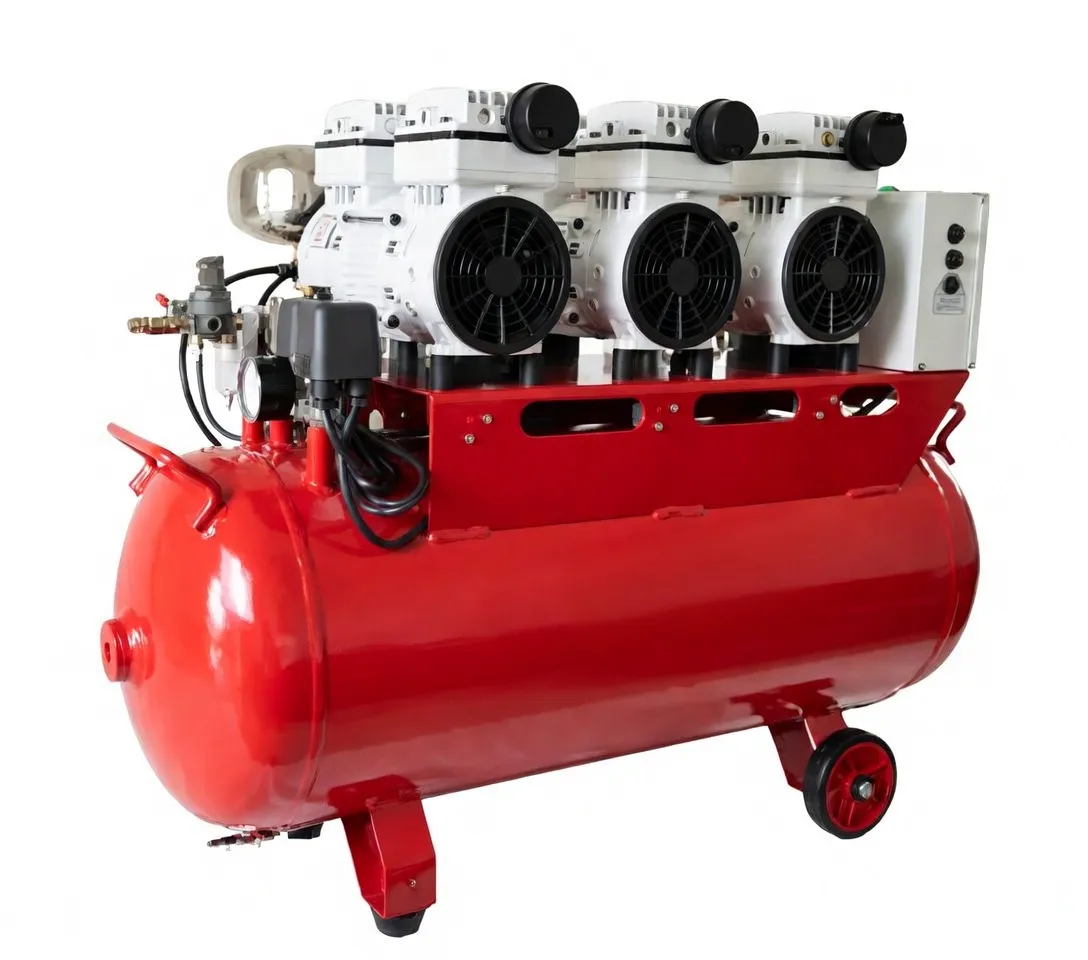
La gama de compresores sin aceite de grado alimenticio de Ever Power está diseñada para entornos de producción de servicio continuo. La etapa de compresión utiliza tecnología impregnada con PTFE o inyectada con agua para eliminar completamente el aceite de la cámara del rotor, mientras que el secador frigorífico integrado y los filtros de carbón activado garantizan que el aire de salida cumpla con los requisitos de la norma ISO 8573-1 Clase 0 en el punto de uso. A continuación se muestran los datos clave de rendimiento de la gama estándar:
| Modelo | Potencia (kW) | FAD (m³/min) | Presión (bar) | Ruido (dB(A)) | Clase de petróleo | Proceso de dar un título |
|---|---|---|---|---|---|---|
| EP-DE-7.5 | 7.5 | 0,8 – 1,1 | 7 / 8 / 10 | ≤ 62 | Clase 0 | ISO 8573-1 · CE · UKCA |
| EP-DE-15 | 15 | 1,8 – 2,4 | 7 / 8 / 10 | ≤ 65 | Clase 0 | ISO 8573-1 · CE · UKCA |
| EP-OF-22 | 22 | 2,8 – 3,6 | 7 / 8 / 10 / 13 | ≤ 67 | Clase 0 | ISO 8573-1 · CE · UKCA · FDA |
| EP-OF-37 | 37 | 4,5 – 6,0 | 7 / 8 / 10 / 13 | ≤ 69 | Clase 0 | ISO 8573-1 · CE · UKCA · FDA |
| EP-OF-55 | 55 | 7.0 – 9.2 | 7 / 8 / 10 / 13 | ≤ 71 | Clase 0 | ISO 8573-1 · CE · UKCA · FDA |
| EP-OF-75 | 75 | 9,5 – 12,5 | 7 / 8 / 10 / 13 | ≤ 73 | Clase 0 | ISO 8573-1 · CE · UKCA · FDA · Personalizado |
FAD = Suministro de aire libre a presión nominal. Todas las unidades están disponibles en trifásica de 400 V/50 Hz (estándar del Reino Unido). Se pueden solicitar configuraciones de voltaje personalizadas.
Seis ventajas operativas de cambiar a la compresión sin aceite.
Riesgo de contaminación cero
Al no haber aceite presente en la etapa de compresión, no existe ningún mecanismo por el cual el aceite pueda contaminar el flujo de aire comprimido. La vía de contaminación se elimina físicamente, no mediante filtración; un enfoque fundamentalmente diferente y más robusto para la seguridad alimentaria.
Documentación lista para la certificación
Cada compresor exento de aceite Ever Power se entrega con un paquete completo de documentación que incluye el certificado de verificación ISO 8573-1 Clase 0, la declaración de conformidad de UKCA, las fichas de datos de seguridad de los materiales de todas las piezas en contacto con el fluido y un informe de calidad del aire comprimido. Su auditor BRC o FSSC dispondrá de todo lo necesario.
Menor costo operativo total
La eliminación de los cambios de aceite, los separadores de aceite, los elementos filtrantes coalescentes y los costos de eliminación de condensado de aceite reduce significativamente el gasto anual en mantenimiento. Los estándares de la industria sugieren una reducción de entre 15 y 251 TP5T en el costo total de propiedad durante un período operativo de 10 años, en comparación con una máquina lubricada equivalente con filtración completa aguas abajo.
Sostenibilidad y alineación con los criterios ESG
La ausencia de aceite lubricante significa que no hay condensado aceitoso que requiera una eliminación especializada, ni residuos de filtros contaminados con aceite, ni riesgo de derrames de lubricante en el entorno de producción. Para los fabricantes de alimentos que informan sobre las emisiones de Alcance 3 o que trabajan para obtener la certificación ISO 14001, esto representa una mejora ambiental cuantificable y documentable.
Programa de mantenimiento simplificado
Las unidades de tornillo rotativo sin aceite requieren menos mantenimiento que las máquinas con inyección de aceite. Las revisiones del compresor son menos frecuentes y la ausencia de cartuchos separadores de aceite elimina una causa común de fallos. Para las fábricas de alimentos que operan en turnos de 16 o 24 horas, esto se traduce directamente en un mayor tiempo de actividad y menos paradas no planificadas durante los periodos de máxima producción.
Soporte para integración personalizada
El equipo de ingeniería de Ever Power ofrece asistencia integral para el diseño del sistema, incluyendo cálculos de caída de presión, esquemas de tuberías, dimensionamiento del receptor e integración del secador. Trabajamos directamente con su ingeniero de planta o fabricante de equipos originales (OEM) de embalaje para garantizar que el sistema de aire comprimido se ajuste con precisión a la demanda de su línea, sin sobredimensionarlo ni subdimensionarlo.
Éxito del cliente: Fabricante de snacks de Midlands elimina el riesgo de retirada del mercado.
Lo que dicen los fabricantes de alimentos del Reino Unido
“Tuvimos un incidente de contaminación que casi se produce con nuestra antigua máquina de inyección de aceite: un filtro se había reinstalado incorrectamente después de un mantenimiento. Desde que cambiamos al sistema sin aceite Ever Power, ese riesgo simplemente ha desaparecido. Nuestro gerente de control de calidad lo describió como la mejor decisión de infraestructura que hemos tomado en una década.”
David Whitmore
“El soporte técnico de Ever Power fue excelente: vinieron a nuestras instalaciones, revisaron nuestra red de tuberías existente y especificaron un sistema que se ajustaba a nuestra demanda máxima, en lugar de simplemente ofrecernos capacidad adicional que no necesitábamos. La documentación facilitó enormemente nuestra próxima auditoría de vigilancia FSSC 22000.”
Sarah Bancroft
Tostamos y envasamos café de especialidad en lotes muy pequeños, y la integridad del sabor de nuestro producto es fundamental. Saber que el aire comprimido que utilizamos en nuestra línea de envasado está certificado como libre de aceite nos da una gran confianza al hablar con nuestros compradores minoristas y mayoristas sobre nuestros controles de calidad. No se trata solo de una especificación técnica, sino de una ventaja comercial.
James Okonkwo
Nuestra capacidad de fabricación y soluciones de compresores a medida
Ever Power opera una planta de fabricación con certificación ISO 9001 y una línea de producción de compresores dedicada a la industria alimentaria y farmacéutica. Nuestra capacidad de ingeniería va mucho más allá de las unidades estándar de catálogo. Diseñamos y construimos regularmente soluciones de aire comprimido sin aceite a medida para fabricantes de alimentos del Reino Unido cuyos requisitos se salen de los parámetros estándar, incluyendo presiones personalizadas de hasta 16 bar, configuraciones de doble voltaje para instalaciones de exportación internacional, paquetes de tuberías de acero inoxidable para zonas de alta higiene, variantes con certificación ATEX para entornos con polvo de harina y azúcar, y paneles de sistema integrados que combinan el compresor, el secador frigorífico, el separador de aceite/agua, el filtro de carbón activado y el control PLC en una única carcasa preinstalada y precableada que solo requiere una conexión eléctrica y una única tubería de salida para su puesta en marcha.
Nuestro equipo de ventas técnicas en el Reino Unido colabora directamente con ingenieros de planta, gerentes de proyecto y equipos de compras para elaborar propuestas técnicas detalladas —que incluyen diagramas P&ID, evaluaciones de niveles de ruido, resúmenes de requisitos de servicios y cálculos indicativos de ROI— sin costo ni compromiso alguno. Entendemos que las decisiones sobre equipos de capital en el sector alimentario involucran a múltiples partes interesadas y procesos de aprobación extensos, y estamos preparados para brindar apoyo en cada etapa, desde la especificación inicial hasta la optimización posterior a la puesta en marcha.
¿Listo para especificar su sistema de aire comprimido apto para uso alimentario?
Nuestros ingenieros responden en un plazo de 24 horas. Cubrimos todas las regiones del Reino Unido, incluyendo Inglaterra, Escocia, Gales e Irlanda del Norte.
Preguntas frecuentes
© Ever Power · Compresores de aire sin aceite para envasado de alimentos · Reino Unido
Editado por gzl