
Industrial Air Systems · UK B2B Technical Guide
Air Compressors for Industrial Applications: Engineering Principles, Performance Data & UK Market Insights
A comprehensive technical reference for procurement engineers, plant managers, and manufacturing directors across the United Kingdom — covering selection criteria, performance parameters, application scenarios, and supplier evaluation for modern industrial air compressor systems.
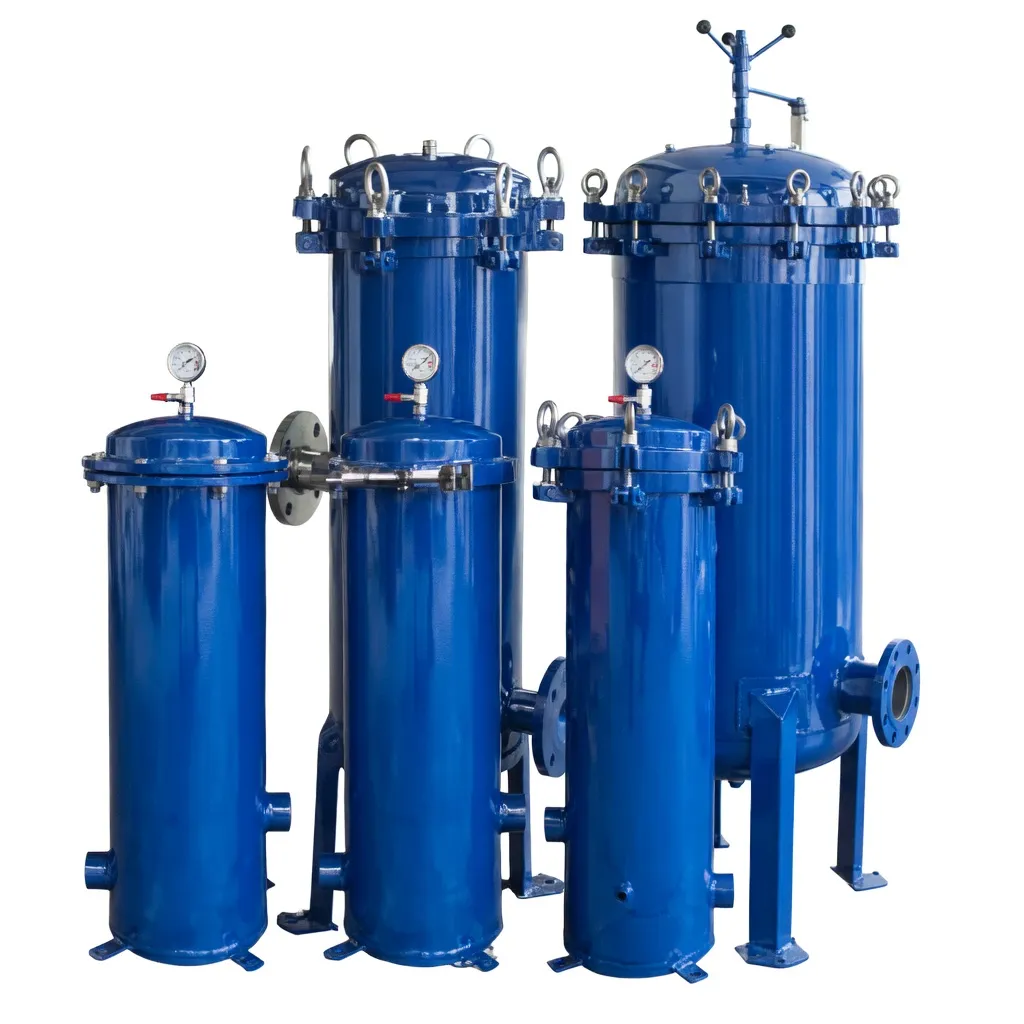 Across Birmingham’s fabrication shops, Sheffield’s steel processors, and Manchester’s advanced manufacturing parks, the industrial air compressor is the single most universally deployed piece of power infrastructure in heavy industry. Unlike electrical drives or hydraulic systems that are application-specific, compressed air carries energy in a flexible, storable, and instantly deployable form. It powers pneumatic actuators, drives cutting tools, supplies breathing air in controlled environments, feeds spray painting lines, and — critically — provides the clean, dry, high-pressure gas streams that modern laser cutting and plasma processing equipment demands. The spectrum of air compressor types available today reflects over a century of iterative engineering refinement, from early reciprocating piston designs used in Victorian-era ironworks to the sophisticated variable frequency drive (VFD) rotary screw units that dominate contemporary UK manufacturing facilities.
Come funzionano i compressori d'aria industriali: principi ingegneristici spiegati
Rotary Screw Principle
Two counter-rotating helical rotors — a male rotor with convex lobes and a female rotor with concave flutes — mesh together inside a precision-machined housing. Atmospheric air enters through the inlet valve, becomes trapped in the diminishing volume between rotor profiles, and is progressively compressed as the rotors turn. The compressed air exits through a discharge port sized to match the intended delivery pressure. Because compression is continuous rather than cyclical, rotary screw machines deliver pulsation-free airflow — a property that is highly valued in laser cutting applications where pressure stability directly affects cut quality and kerf consistency. Oil-injected variants use lubricating oil both to seal the rotor clearances and to absorb the heat of compression; the oil is subsequently separated and returned to the circuit through a multi-stage separator system.
Reciprocating Piston Principle
A crankshaft-driven piston moves within a cylinder, drawing in air during the downstroke as inlet valves open, then compressing it during the upstroke as both valves close. Single-stage designs compress air once to delivery pressure; two-stage designs intercool the air between compression stages, improving thermodynamic efficiency and enabling delivery pressures up to 15–20 bar. The inherent cyclical nature of piston compressors produces pressure pulsation in the discharge line, necessitating adequately sized receiver tanks as pulsation dampeners. Despite this limitation, reciprocating compressors remain favoured for intermittent-duty applications in workshops across Yorkshire and the West Midlands, where their simplicity of maintenance and lower capital cost are decisive advantages.
VFD-Controlled Screw Principle
Variable Frequency Drive (VFD) technology applies an inverter between the mains supply and the drive motor, continuously modulating motor speed — and therefore airflow output — in response to measured system pressure. A PID control loop samples discharge pressure many times per second, adjusting rotor speed to maintain the setpoint within ±0.1 bar. At part-load conditions that represent the majority of operating hours in most facilities, a VFD compressor draws dramatically less power than a fixed-speed unit cycling on and off against an inlet valve. The energy saving is proportional to the cube of speed reduction: halving rotor speed reduces power draw by approximately 87.5%. In environments with variable demand profiles — such as automotive assembly lines in Coventry or packaging plants in Wakefield — VFD compressors can reduce annual energy expenditure by 35–50% versus fixed-speed equivalents.
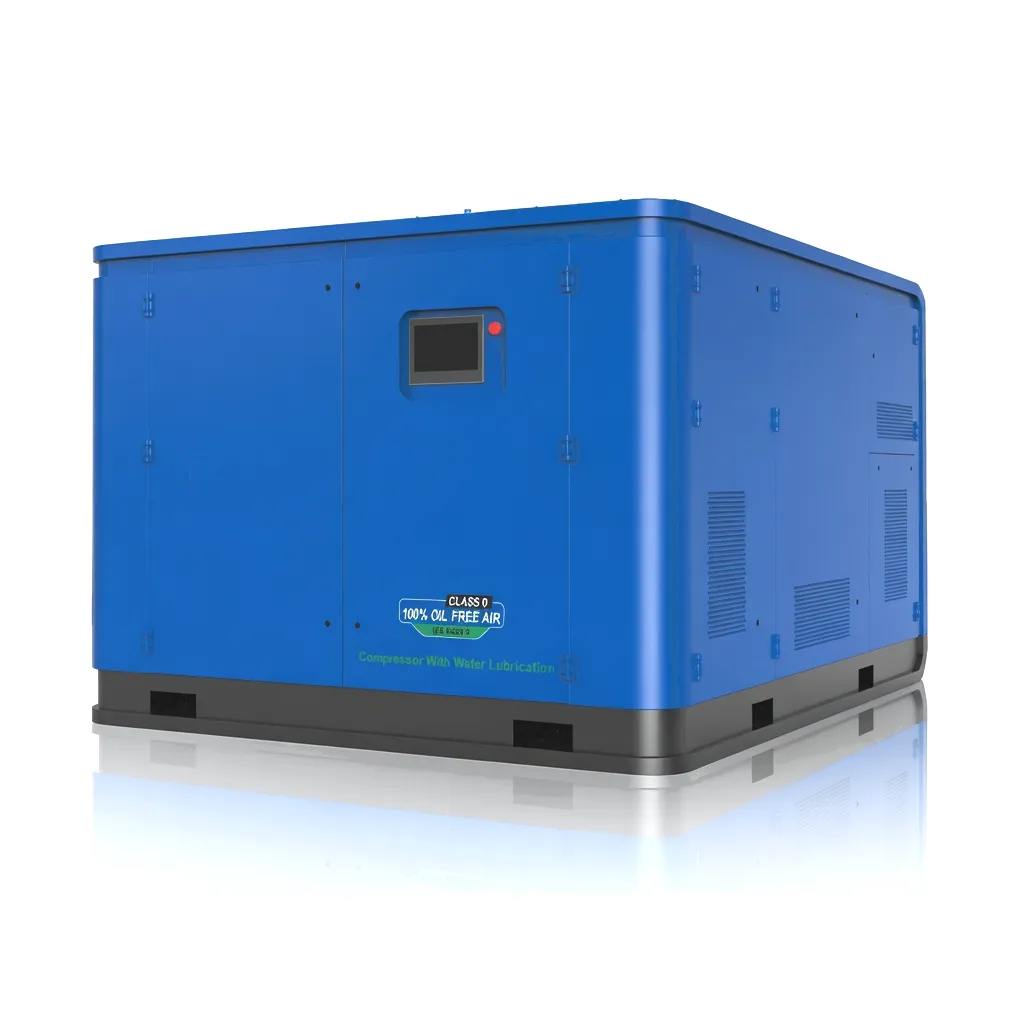 Material selection in air compressor engineering is not a secondary concern — it is a primary determinant of service life, reliability, air quality, and the total cost of ownership that procurement engineers must justify to financial directors. The rotor profiles in a rotary screw compressor are typically machined from alloyed cast iron or engineered steel, selected for their dimensional stability under thermal cycling and their resistance to scoring when the oil film momentarily breaks down. Rotors are ground to micron-level tolerances and then surface-treated — often with nitriding or physical vapour deposition (PVD) coatings — to achieve the hardness gradient that resists wear at the rotor tip contact band without introducing brittleness that would propagate fatigue cracks.
Core Technical Advantages of Modern VFD Rotary Screw Air Compressors
⚡
Efficienza energetica
VFD-equipped units achieve specific power consumption as low as 5.5 kW per m³/min at ISO 1217 conditions, versus 7.2–8.0 kW/m³/min for equivalent fixed-speed designs. Across a 6,000-hour annual operating cycle, this differential translates to tens of thousands of pounds in reduced electricity costs.
🔧
Stabilità della pressione
Closed-loop pressure control maintains network pressure within ±0.1 bar of setpoint under varying load conditions. This stability is essential for laser cutting nozzle assist gas circuits, pneumatic servo valves, and automated assembly tooling where pressure variation causes positional error.
🔇
Reduced Noise Levels
Modern sound-attenuated enclosures, combined with VFD speed reduction at part-load, deliver operating noise levels of 62–68 dBA at 1 metre. This supports compliance with the UK Control of Noise at Work Regulations 2005 without the need for additional compressor room acoustic treatment.
📊
Intervalli di servizio estesi
Bearing systems rated for 80,000-hour L10 life, combined with intelligent oil condition monitoring that samples viscosity, acidity, and contamination in real time, extend oil change intervals from the traditional 2,000 hours to 4,000–6,000 hours in controlled ambient conditions — directly reducing maintenance labour costs.
🌏
IE4/IE5 Motor Efficiency
Permanent magnet synchronous motors rated IE4 or IE5 to IEC 60034-30-1 standards eliminate rotor slip losses entirely, adding 2–4 percentage points of motor efficiency over IE3 induction motors and qualifying industrial purchasers for UK energy efficiency incentives and Carbon Trust financing schemes.
🛠
Intelligent Controller Integration
Integrated PLC-based controllers log operating hours, pressure events, temperature excursions, and power consumption. RS485 and Modbus/TCP interfaces enable integration with factory SCADA systems and cloud-based energy management platforms, meeting the connectivity requirements of Industry 4.0 deployments across the UK.
Product Technical & Performance Parameter Table
| Parametro | Compact Series (11–22 kW) | Standard Series (30–75 kW) | Heavy-Duty Series (90–160 kW) |
|---|---|---|---|
| Potenza del motore | 11 / 15 / 18.5 / 22 kW | 30 / 37 / 45 / 55 / 75 kW | 90 / 110 / 132 / 160 kW |
| Delivery Pressure Range | 7 – 13 bar | 7 – 13 bar | 7 – 13 bar (16 bar optional) |
| Consegna aerea gratuita (FAD) | 1.1 – 3.6 m³/min | 5.0 – 12.5 m³/min | 15.0 – 28.0 m³/min |
| Specific Power (ISO 1217) | 5.8 – 6.5 kW/(m³/min) | 5.5 – 6.2 kW/(m³/min) | 5.2 – 5.8 kW/(m³/min) |
| Discharge Air Temperature | Ambient + ≤8°C | Ambient + ≤8°C | Ambient + ≤8°C |
| Oil Carry-Over (ISO 8573-1) | < 3 mg/m³ (Class 3) | < 3 mg/m³ (Class 3) | < 1 mg/m³ (Class 2 opt.) |
| Noise Level @ 1m | 62 – 66 dBA | 65 – 70 dBA | 68 – 74 dBA |
| Materiale del rotore | Nitrided alloy steel | Nitrided alloy steel | Nitrided alloy steel + PVD coat |
| Materiale per alloggi | Grey cast iron / Aluminium alloy | Grey cast iron | Grey cast iron |
| Classe di efficienza del motore | IE3 / IE4 (PM option) | IE4 PM standard | IE4 / IE5 PM standard |
| VFD Speed Range | 25 – 60 Hz (adjustable) | 20 – 60 Hz | 18 – 60 Hz |
| Oil Change Interval | 4.000 ore | 4,000 – 6,000 h | 6,000 h |
| Certificazione | CE, UKCA, ISO 1217 | CE, UKCA, ISO 1217 | CE, UKCA, ISO 1217, PED 2014/68/EU |
Industrial Application Scenarios: Where Air Compressors Deliver Critical Performance
Application Scenario 1: Fibre Laser Cutting in Metal Fabrication (Birmingham, West Midlands)
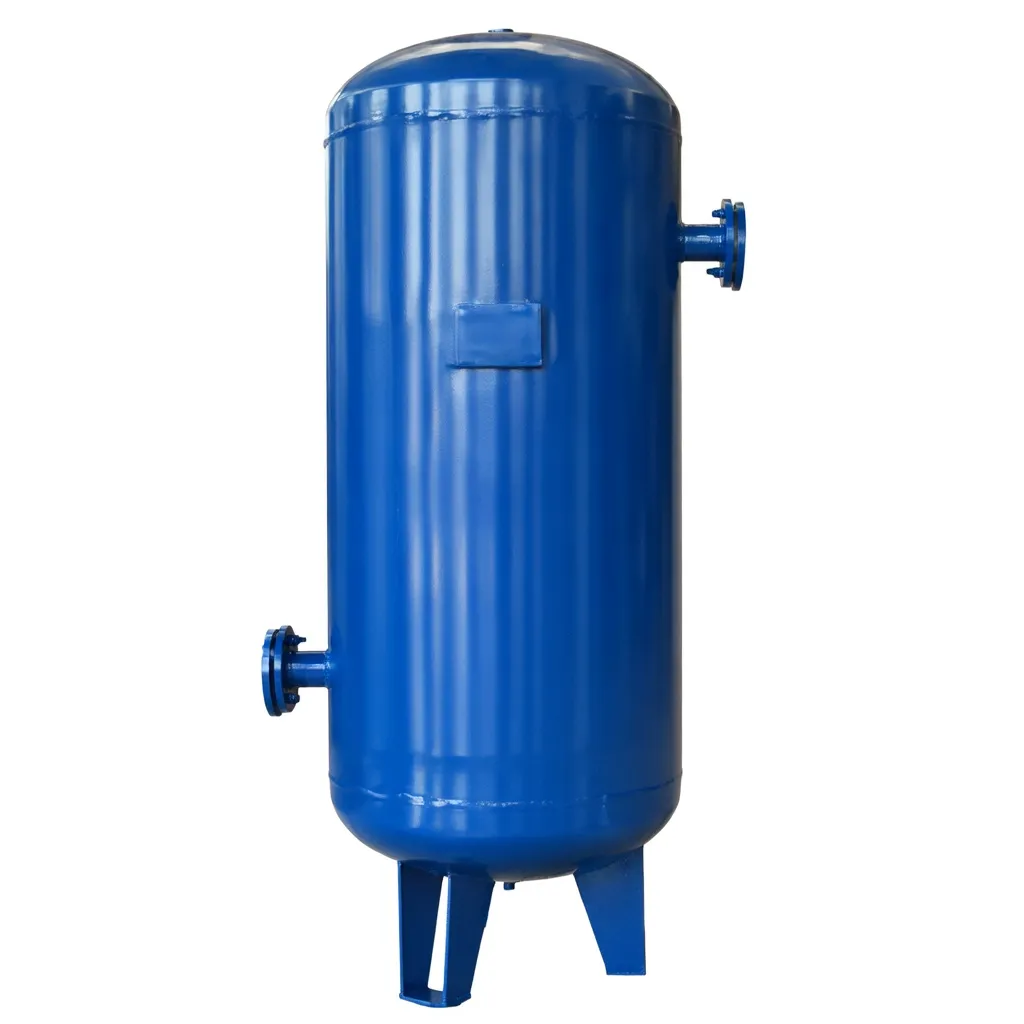 Birmingham’s metalworking sector, one of the densest concentrations of precision fabricators in Europe, represents the most technically demanding environment for industrial air compressors used as laser cutting assist gas. Fibre laser cutting of mild steel, stainless steel, and aluminium requires a continuous, oil-free, dry compressed air stream delivered at pressures between 6 and 16 bar depending on material thickness and cutting speed. Pressure instability at the nozzle — even transient fluctuations lasting milliseconds — causes oxidation striations on the cut face, increases dross adhesion, and widens the kerf beyond tolerance. A VFD screw compressor maintaining ±0.1 bar pressure control, paired with a two-stage desiccant dryer achieving a pressure dew point of -40°C and a coalescing filter rated to 0.01 µm, delivers the air quality grade that high-power (6 kW–20 kW) fibre laser systems require to operate at rated cutting throughput with repeatable edge quality.
Application Scenario 2: Automotive Assembly Line Pneumatic Tooling (Coventry & Sunderland)
Automotive assembly plants — including the major vehicle manufacturing facilities in Coventry and Sunderland — deploy hundreds of pneumatic impact wrenches, nut runners, and riveting tools simultaneously across assembly lines operating three shifts per day. The aggregate compressed air demand profile is characterised by high peak flow transients when multiple stations fire simultaneously, punctuated by relatively quiet intervals between assembly cycles. A compressed air system comprising multiple VFD rotary screw compressors managed by a central sequencer controller handles this profile optimally: the sequencer brings additional compressor capacity online during high-demand periods and ramps back individual units during quieter intervals, maintaining stable header pressure across the entire ring main. Air quality requirements at the point of use demand ISO 8573-1 Class 1.4.2 or better, achieved through inline coalescing filtration and refrigerant drying equipment positioned close to the main distribution header rather than at the compressor discharge, minimising recontamination from line corrosion.
Application Scenario 4: Steel Shot Blasting and Surface Preparation (Sheffield & Rotherham)
Sheffield’s steel processing heritage, now largely redirected toward high-value engineering components for aerospace, offshore, and nuclear power sectors, continues to rely heavily on compressed air for abrasive blasting, shot peening, and surface preparation processes that are prerequisites for protective coating adhesion. These applications demand high airflow at moderate pressure — typically 7–10 bar at flow rates exceeding 15 m³/min for large-format blast rooms — making heavy-duty rotary screw compressors the only viable power source. The abrasive particulate environment demands robust inlet filtration with self-cleaning pulse-jet filter elements to prevent accelerated rotor wear, and compressor installations in Sheffield and Rotherham facilities frequently employ remote inlet ducting to draw air from above the blast room roof, bypassing the localised particulate-laden zone at floor level.
Application Scenario 5: Food and Beverage Bottling and Packaging Lines (Leeds & Bristol)
Food and beverage manufacturers operate compressed air systems in two functionally distinct zones: non-contact air for driving pneumatic conveyors, sortation systems, and labelling machinery — where Class 1.4.2 to ISO 8573-1 is typically adequate — and direct product contact air for bottle blowing, pneumatic filling valves, and PET container forming, where Class 0 oil-free air is mandatory under both British Retail Consortium (BRC) and Food Safety System Certification (FSSC) 22000 frameworks. Leading facilities in Leeds’ growing food processing sector and Bristol’s established beverage manufacturing cluster have adopted heat-of-compression (HOC) desiccant dryers that use the waste heat from oil-free compressor discharge to regenerate desiccant beds without external heating energy — a configuration that achieves -70°C pressure dew points with zero additional energy input, substantially improving the site energy balance.
Customer Success Story: Sheffield Precision Engineering Group
Background & Challenge
A medium-sized precision engineering group based in Sheffield, supplying aerospace-grade titanium and Inconel components to prime contractors in the UK defence and civil aviation sectors, identified a critical bottleneck in their 5-axis CNC machining department. Three high-power fibre laser cutting cells — each drawing up to 18 bar assist gas pressure for titanium profiling — were experiencing unacceptable variation in cut edge quality, attributed by their process engineers to pressure transients in the compressed air main caused by an ageing reciprocating compressor installation that was nearing the end of its serviceable life. Reject rates on cut titanium blanks had reached 4.2% over a three-month assessment period, representing a substantial material and rework cost on a high-value alloy.
The group’s engineering director approached Ever Power with a requirement for a replacement compressed air plant capable of delivering stable 16-bar output across all three laser cells simultaneously, with peak combined demand of 7.2 m³/min, while conforming to their site’s available electrical supply capacity of 200 kVA and fitting within the existing compressor room footprint of 6m × 4m.
Ever Power Solution & Implementation
Ever Power’s application engineering team conducted a two-day on-site audit, deploying data-logging equipment on the existing compressed air distribution ring main to characterise actual demand profiles across all three production shifts. The audit revealed that true peak simultaneous demand was 6.8 m³/min — lower than the estimated figure — and that demand over 80% of operating hours fell between 3.0 and 4.5 m³/min. Based on this profile, Ever Power proposed a twin-compressor configuration: two 90 kW VFD rotary screw units with bespoke high-pressure stage specification for 16-bar delivery, managed by a shared sequencer controller and fitted into a compact side-by-side arrangement within the room footprint. The installation was completed over a planned shutdown weekend, with commissioning, pressure testing to PED requirements, and ISO 1217 performance verification achieved within the 60-hour outage window. Within four weeks of the new system going live, the Sheffield facility recorded a laser cut reject rate of 0.3% — a reduction of over 90% from the pre-installation baseline — and their process engineers confirmed consistent cut edge quality across all three material grades.
Recensioni dei clienti
★★★★★
“We’ve installed a lot of compressors over the years, but the pressure stability we get from these Ever Power VFD units is genuinely in a different league. Our titanium cut reject rate dropped from over 4% to below 0.5% within the first month. The custom 16-bar stage configuration was exactly what we needed — nobody else we approached was willing to engineer that.”
— Engineering Director, Precision Aerospace Components, Sheffield
★★★★★
“The audit data they provided before we committed to any capital spend was incredibly detailed — we could see our actual demand curve by hour of day and day of week. It gave our board the confidence to approve the investment. The commissioning team was professional throughout, hit every deadline, and the UKCA documentation was ready on handover day without us having to chase.”
— Plant Manager, Metal Fabrication Group, Birmingham
★★★★★
“We run a three-shift operation and downtime is simply not an option. Ever Power’s twin-unit setup with automatic switchover has given us absolute confidence — we’ve had zero unplanned production stoppages related to compressed air supply in eleven months since installation. The energy monitoring data from the controller has also helped us pass our ISO 50001 energy audit for the first time.”
— Operations Director, Advanced Manufacturing Facility, Coventry
Featured Ever Power Air Compressor Products
Ever Power’s current product range includes a selection of high-efficiency variable frequency screw air compressors engineered for demanding UK industrial environments. Two standout models are available for immediate enquiry:
Compressore d'aria a vite a frequenza variabile CM160PVF
The CM160PVF delivers 160 kW of connected power in a compact, acoustically optimised enclosure with an integrated IE4 permanent magnet motor and a full-range VFD that modulates output between 18 and 60 Hz. Designed for high-throughput laser cutting suites and multi-station welding environments, it achieves specific power of 5.2 kW/(m³/min) at 7 bar — among the lowest in its class — and incorporates an intelligent touchscreen controller with Modbus TCP connectivity for integration with factory energy management systems.
Compressore d'aria a vite con azionamento a velocità variabile
The Variable Speed Drive Screw Air Compressor series covers the 30–132 kW power range with a modular design philosophy that allows motor, airend, and controller to be independently specified to match exact site requirements. Pressure setpoints are selectable between 7 and 13 bar without hardware changes, and an optional high-pressure stage extension covers 16 bar delivery. This series has been adopted by sheet metal fabricators, food packaging lines, and automated warehousing facilities across the UK, valued for its consistent part-load efficiency and straightforward integration with existing compressed air distribution networks.
Frequently Asked Questions — Industrial Air Compressors UK
Ready to Specify Your Industrial Air Compressor System?
Ever Power’s engineering team is ready to assist UK-based procurement managers, plant engineers, and technical directors with specification, quotation, and technical guidance — at no obligation.
modifica a cura di gzl