Air Compressor Systems — UK Industrial Guide
Screw Air Compressors: Engineering Principles, Industrial Performance & UK Market Guide
A comprehensive technical reference for procurement engineers, plant managers, and operations directors across British manufacturing — from working principles to real-world applications.
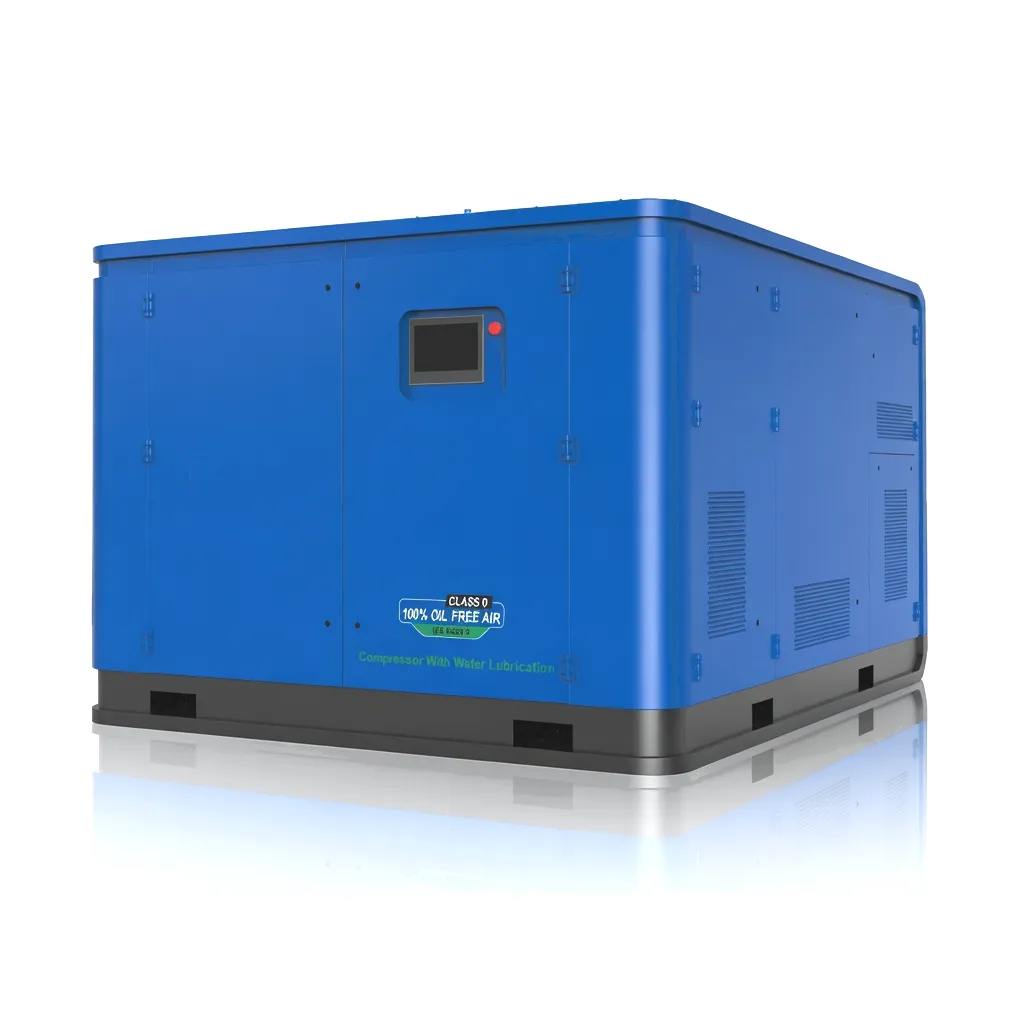 Compressed air is the fourth utility in British industry. Alongside electricity, gas, and water, a reliable screw air compressor underpins virtually every high-volume production environment — from automotive pressed-metal lines in Birmingham to pharmaceutical clean rooms in the North West. The global screw air compressor market continues to expand, driven by the push for energy efficiency, tighter environmental regulations, and the rapid uptake of laser-cutting technology across UK fabrication shops. Understanding what distinguishes a high-performance machine from a merely adequate one has become mission-critical for procurement teams that need to justify capital expenditure against long-run operating costs.
Modern oil-injected and oil-free screw compressors operate on principles refined over decades of mechanical engineering, yet the gap between manufacturer claims and real-world performance remains wide. This guide dissects the technology at a component level, provides verified performance data, maps the most relevant UK industrial applications, and benchmarks the customisation services offered by Ever Power — a manufacturer whose engineering depth sets a credible standard for the sector.
Whether you are specifying a replacement unit for an existing compressed-air network in Sheffield or designing a new multi-compressor manifold for a greenfield food-processing plant in Leeds, the data and analysis that follow will accelerate your decision-making and help you avoid the most common procurement mistakes.
How a Screw Air Compressor Works: Rotary Helical Technology Explained
At the mechanical core of every rotary screw air compressor sits a matched pair of intermeshing helical rotors — one male (with convex lobes) and one female (with concave flutes) — housed inside a precision-bored barrel. As the rotors turn, they progressively reduce the inter-rotor volume, mechanically compressing trapped air without the reciprocating pistons or valves that define older technologies. The result is a nearly continuous flow of compressed air rather than the pulsing output associated with reciprocating compressors, which means downstream equipment sees far less pressure variation and wear.
The compression cycle moves through three distinct phases. In the intake phase, atmospheric air is drawn through a multi-stage inlet filter into the suction port as the rotor lobes separate and the inter-lobe volume grows. During the compression phase, the lobes mesh progressively, reducing volume and raising pressure along the rotor length; in oil-injected variants, a precisely metered quantity of lubricant is injected at this stage to seal clearances, cool the air-oil mixture, and lubricate bearing surfaces without external lubrication circuits. Finally, in the discharge phase, the compressed air — still carrying oil aerosol in injected designs — is expelled through the discharge port and into the separator vessel where the vast majority of oil is recovered and recirculated.
Variable Frequency Drive (VFD) versions add an inverter-controlled motor that modulates rotor speed in real time, matching compressed-air output precisely to instantaneous demand. This feature is particularly valuable in UK manufacturing environments where shift patterns, seasonal load variations, and part-load operation are common. Energy savings of 20–40% versus fixed-speed alternatives are routinely documented in post-installation audits, and several UK energy-efficiency schemes provide capital allowances that reduce the effective purchase price when VFD compressors are installed.
Core Materials and Precision Manufacturing
⚙
Rotor Alloys
Male and female rotors are machined from high-grade alloy steel billet — typically a chromium-molybdenum steel (e.g. 42CrMo4) — and precision-ground to sub-micron surface tolerances. Some manufacturers use cast iron for cost reduction, but steel rotors maintain dimensional stability under thermal cycling and resist the micro-pitting that undermines long-term efficiency. Ever Power opts exclusively for forged steel rotors across its VFD range.
🔧
Airend Housing
The compressor airend body is typically gravity die-cast from EN-AC-46000 aluminium alloy for units up to 90 kW, balancing thermal conductivity with structural rigidity. Larger frames use grey cast iron (GG-25) for dimensional stability under elevated discharge pressures. Internal bores are finish-honed to IT5 tolerance class, ensuring the critical clearance between rotor tips and housing that governs volumetric efficiency.
📈
Bearings & Seals
Angular-contact ball bearings and cylindrical roller bearings handle the mixed radial-axial loads generated by helical rotor forces. Premium units specify bearings to ABEC-5 or ABEC-7 standards from qualified suppliers. Shaft seals are typically composite PTFE-lip designs or mechanical face seals in oil-free variants; both must perform reliably across the full operating temperature range (−10°C to 50°C ambient) common across British factory environments.
🏭
Oil-Separation Media
Multi-stage oil separation combines cyclonic momentum separation (primary stage) with borosilicate glass-fibre coalescing filters (secondary stage), delivering residual oil carryover below 3 mg/m³ — compliant with ISO 8573-1 Class 3 for oil aerosol. The separator vessel itself is pressure-tested to 1.5× maximum allowable working pressure (MAWP) and CE-marked to PED 2014/68/EU for UK and European distribution.
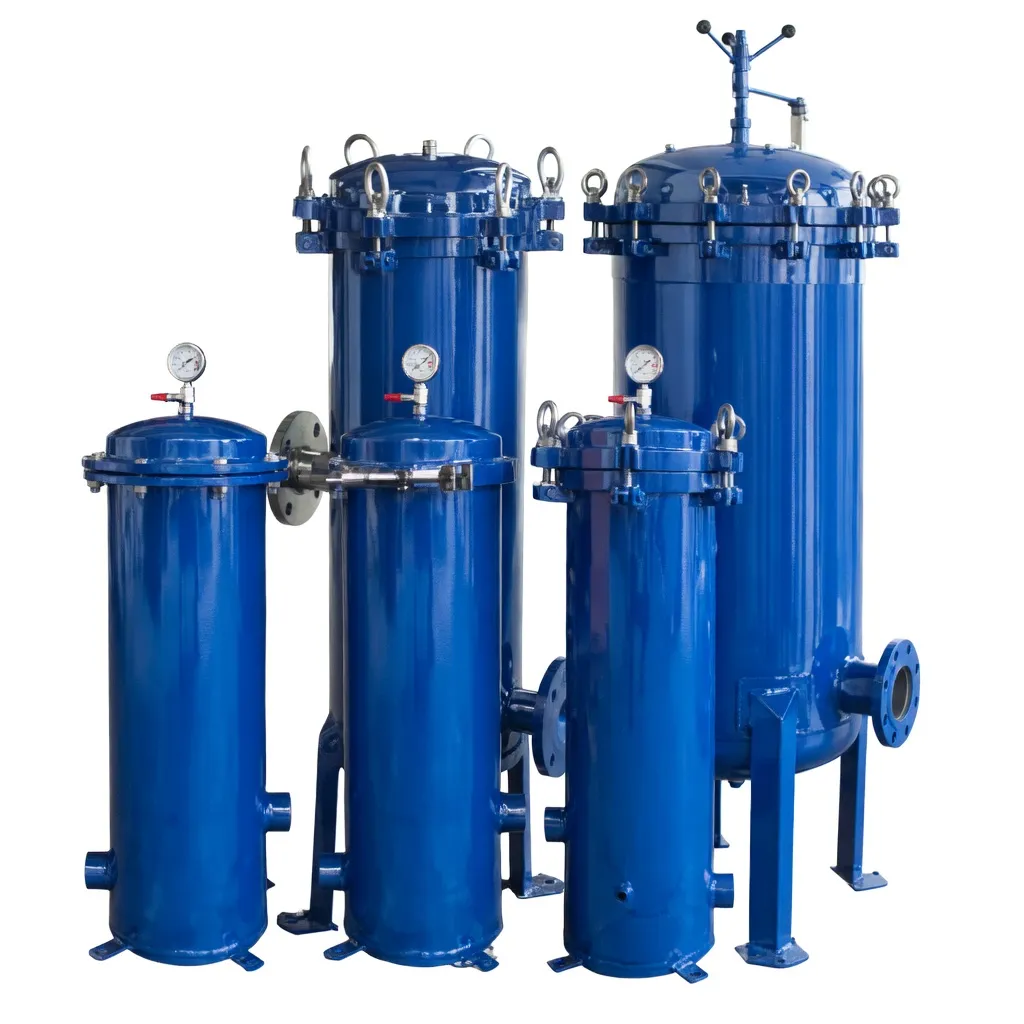
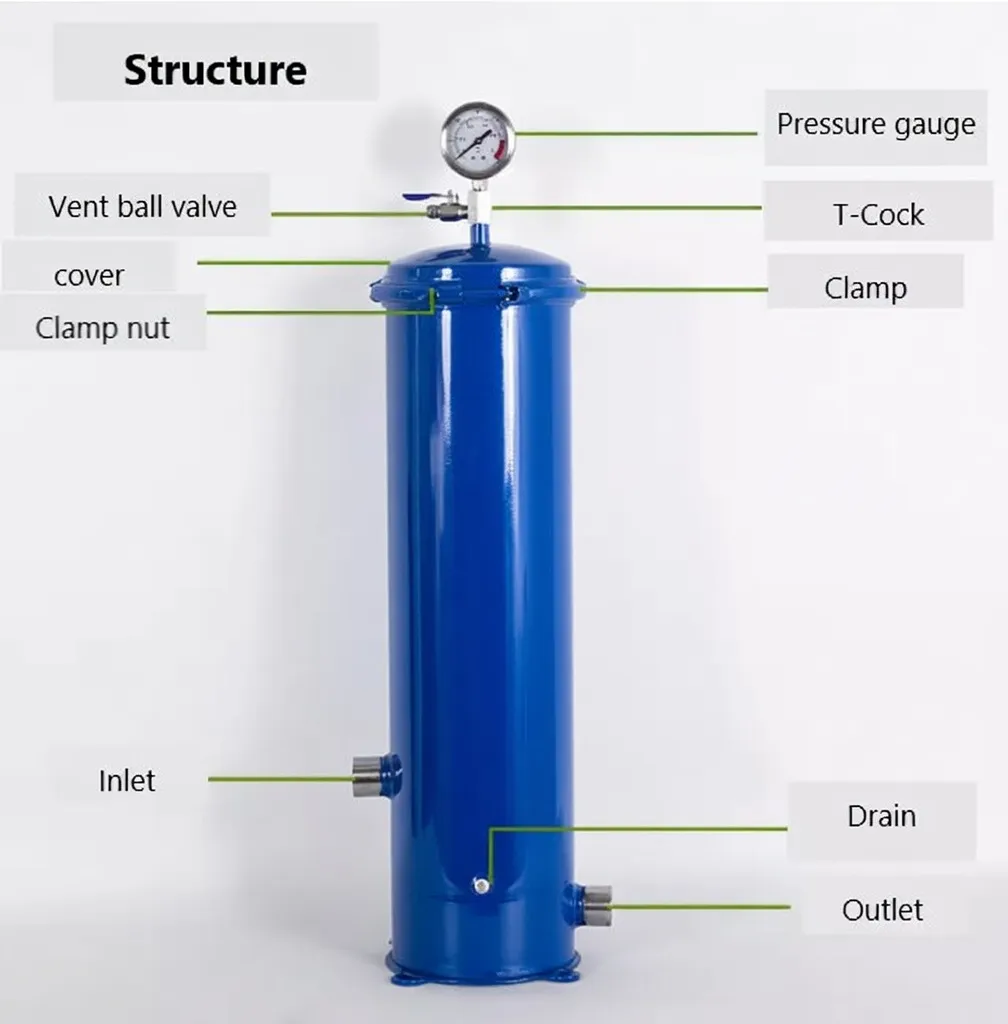
The downstream post-processing chain is as important as the airend itself. Stainless-steel precision filters rated to IP65 handle coarse particulate, water aerosols, and residual oil fractions in sequence, protecting downstream processes from contamination. In food-grade applications — a rapidly growing sector across Yorkshire and the Midlands — Class 0 oil-free output is mandated under BRC Global Standard for Food Safety, and the filter configuration must demonstrate compliance at every scheduled audit. Ever Power’s post-processing accessories are designed from the outset to integrate with its compressor airends, eliminating the pressure-drop penalties that arise when mixing components from separate supply chains.
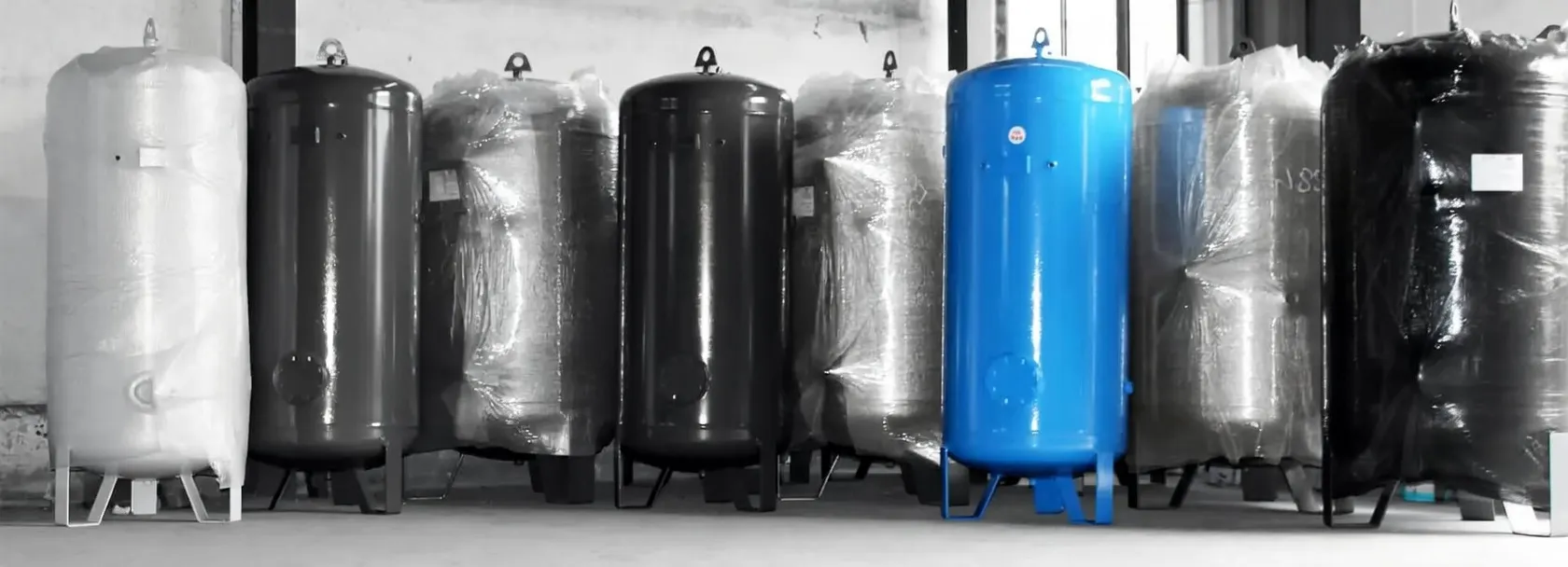
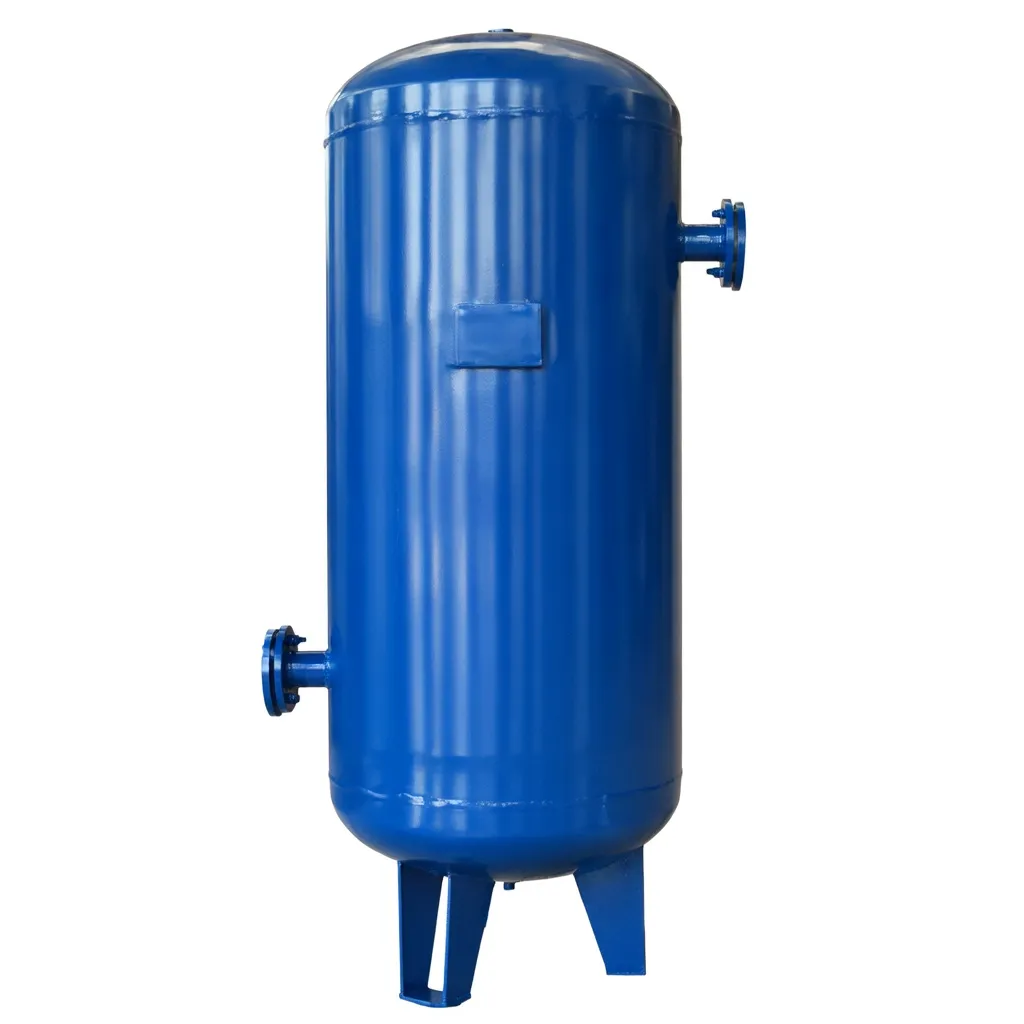
Gas storage vessels — the receiver tanks sitting downstream of the separator — are manufactured in 304-grade stainless steel for general industrial use and 316L for corrosive or food-grade environments. Wall thickness is calculated to ASME Section VIII or EN 13445, and every vessel leaves the factory with a hydrostatic pressure test certificate, material traceability documentation, and PED conformity declaration. UK buyers should confirm that their supplier’s documentation package is accepted by their insurer and meets the requirements of the Pressure Systems Safety Regulations 2000 (PSSR), which imposes a written scheme of examination on any stored-energy pressure system above defined thresholds.
Core Technical Advantages of Modern Screw Air Compressors
Several attributes separate screw technology from reciprocating and centrifugal alternatives, and the differences compound over the multi-decade service lives typical in UK heavy industry.
✓ Continuous Duty Rating
Screw compressors are rated for 100% continuous duty (24/7 operation), unlike reciprocating units limited to 60–70% duty cycles. This makes them ideal for three-shift manufacturing operations in Birmingham and Coventry automotive supply chains.
✓ Low Specific Energy Consumption
Best-in-class VFD screw compressors achieve specific energy consumption (SEC) values below 5.5 kWh per 100 m³ at 7 bar(g), meeting IE3 motor efficiency and the UK’s Climate Change Levy (CCL) requirements.
✓ Minimal Vibration and Noise
Balanced counter-rotating rotors generate vibration levels typically below 2.5 mm/s RMS, enabling floor-mounted installation without anti-vibration plinths in many cases. Sound power levels of 68–72 dB(A) are achievable, well within COSHH noise-at-work regulations for UK workplaces.
✓ Heat Recovery Potential
Up to 80% of input electrical energy can be recovered as useful heat from the oil cooler and aftercooler circuits, displacing gas or electric heating in factories across the North West and Scotland — a significant operating-cost lever as UK energy prices remain elevated.
✓ Extended Service Intervals
Modern synthetic compressor oils formulated to OEM specifications deliver 6,000–8,000-hour oil-change intervals and airend overhaul intervals exceeding 40,000 hours, dramatically reducing lifecycle maintenance costs versus reciprocating alternatives.
✓ Intelligent Controls
Integrated PLC controllers with touchscreen HMIs, Modbus RTU/TCP-IP connectivity, and remote SCADA integration are now standard on higher-specification machines, enabling condition-based monitoring and predictive maintenance strategies aligned with UK Industry 4.0 roadmaps.
Tuotteen tekniset ja suorituskykyparametrit
The table below summarises key performance indicators for a representative range of industrial screw air compressors suitable for UK manufacturing environments. All values are measured at 7 bar(g) discharge pressure, ISO 1217 Annex C conditions (20°C inlet, 1 bar absolute, 0% relative humidity).
| Parametri | 18 kW | 37 kW | 75 kW | 132 kW | 200 kW |
|---|
| Vapaa ilman toimitus (m³/min) | 2.4 | 5.2 | 11.0 | 20.5 | 32.0 |
| Suurin poistopaine (bar) | 13 | 13 | 13 | 13 | 10 |
| SEC (kWh/100 m³ @ 7 bar) | 6.1 | 5.8 | 5.5 | 5.2 | 5.0 |
| Moottorin hyötysuhdeluokka | IE3 | IE3 | IE3 | IE3 | IE4 |
| Melutaso dB(A) @ 1 m | 66 | 68 | 70 | 72 | 74 |
| Roottorin materiaali | 42CrMo4 Alloy Steel (forged, precision-ground) |
| Kotelon materiaali | EN-AC-46000 Aluminium | GG-25 Grey Cast Iron |
| Öljyn siirtyminen (mg/m³) | ≤ 3 (ISO 8573-1 luokka 3) |
| Airend Overhaul Interval (hrs) | 40,000+ |
| Ympäristön lämpötila-alue | −10°C to +50°C |
Teollisuuden sovellusskenaariot Ison-Britannian valmistusteollisuudessa
Screw air compressors are found across virtually every sector of British industry. What follows is an application-by-application breakdown covering the sectors where performance requirements, air-quality standards, and regulatory frameworks make machine selection genuinely consequential.
⚡ Laser Cutting & Sheet Metal Fabrication
CO₂ and fibre laser cutters depend on a continuous supply of clean, dry compressed air or nitrogen-boosted air at 10–16 bar to assist the cutting jet and protect the focusing lens. Contaminants above ISO 8573-1 Class 2 quality rapidly degrade lens coatings and increase cycle times on mild steel, stainless, and aluminium stock. Fabrication shops in Sheffield’s Advanced Manufacturing Park and across the West Midlands corridor typically run VFD screw compressors in the 37–75 kW range, often paired with a membrane dryer and activated-carbon filter to eliminate residual oil vapour from the cutting beam path.
🚗 Automotive Assembly & Body Pressing (Birmingham, Coventry)
Automotive OEMs and Tier-1 suppliers across the Birmingham and Coventry clusters demand multi-compressor manifold systems capable of sustaining ring-main pressures at 6.5–8 bar throughout three-shift continuous production. Pneumatic torque wrenches, plasma spraying booths, paint atomisation systems, and clamping fixtures all represent simultaneous loads. A master-slave configuration using a 132 kW base-load machine with a VFD trim compressor achieves the best specific energy performance across the typical load-demand curve for these facilities.
💊 Pharmaceutical & Life Sciences (North West England)
North West England hosts one of the highest concentrations of pharmaceutical manufacturing in Europe. EU GMP Annex 1 and the MHRA’s own guidance on compressed gases mandate ISO 8573-1 Class 1 air quality for direct product-contact applications such as tablet coating, blister sealing, and aseptic filling. Oil-free two-stage screw compressors with stainless-steel internals and validated certification packages are required. Redundancy architecture — typically N+1 or 2N — must be documented in the site’s Utilities Qualification protocol, and annual requalification tests must confirm output air quality against microbiological as well as particulate specifications.
🍔 Food, Beverage & Dairy Processing (Yorkshire)
Yorkshire’s food and drink sector — one of the UK’s strongest regional food economies — uses compressed air in conveying, packing, bottle-blowing, and clean-in-place (CIP) systems. BRC Global Standard and BRCGS require Class 0 oil-free air for any application where air contacts or could plausibly contact food. Waterless oil-free rotary screws fitted with hygienic downstream pipework in 316L stainless steel, EPDM seals, and self-draining condensate traps are specified as standard for greenfield dairy and ready-meal facilities across the Leeds-Bradford corridor.
💻 Electronics & PCB Manufacturing (Cambridge, Bristol)
Precision electronics assembly — SMD pick-and-place, wave soldering, and conformal-coating operations — requires ultra-dry, particle-free compressed air at modest flows but consistent pressure stability. Pressure ripple above ±0.1 bar disrupts dispensing valve repeatability and causes micro-component misplacement. Oil-free screw machines combined with desiccant dryers achieving −70°C pressure dewpoint are specified for Cambridge and Bristol technology-campus facilities, where vibration-sensitive metrology labs may also share the compressed-air ring main.
🧹 Air-Jet Weaving & Technical Textiles (Lancashire)
Lancashire’s surviving technical-textile sector uses air-jet weaving looms that consume large volumes of low-pressure air (1.5–3.5 bar) at very high flow rates. Weft yarn is propelled across the shed by precisely timed air pulses; inconsistent pressure causes yarn breaks and weave defects that require costly downtime. Multiple medium-capacity fixed-speed screw compressors feeding a large receiver buffer are preferred over single large machines, providing both redundancy and the buffer volume needed to absorb loom demand spikes without pressure sag.
Ever Power: Tarkkuusvalmistus ja räätälöity suunnittelu
Ever Power operates a 38,000 m² manufacturing campus equipped with 5-axis CNC machining centres, computer-controlled precision grinding, and in-house rotor-profiling software developed over two decades of airend design. Every rotor pair is balanced to G2.5 standard and undergoes a 4-hour run-in test at full load before airend assembly, generating a performance certificate traceable to ISO 1217 test conditions.
OEM & Private-Label Supply
Ever Power manufactures under OEM contract for distributors across the EU and UK, supplying branded airends, complete packaged compressors, and bespoke frame configurations. Lead times of 15–30 days apply to standard build-to-order specifications; prototype airends for novel rotor-profile research can be completed in 45 days including test data.
Pressure & Flow Customisation
Standard catalogue ranges cover 4–13 bar discharge pressure and 18–250 kW motor power. Custom rotor wrap angles and stage ratios extend the range to 16 bar single-stage or 40 bar two-stage for specialist applications including PET bottle preform blowing and high-pressure nitrogen generation for laser-assist systems.
UK Supply Chain & After-Sales
Ever Power maintains a UK-registered spare-parts inventory covering filters, oil separators, bearing kits, and controller assemblies for its full product range. CIF delivery to UK ports (Felixstowe, Southampton, or Liverpool) is standard, with DDP options available for buyers who require duty and VAT handling included in the landed-cost calculation. A network of authorised UK service agents supports planned maintenance contracts and emergency breakdown response within agreed SLA windows.
Laadun sertifiointi
All packaged units carry CE marking, UKCA marking (post-transition period compliance), ISO 9001:2015 quality management certification, and PED 2014/68/EU pressure vessel documentation. Test reports, material certificates (EN 10204 3.1), and weld inspection records ship with every unit as standard — a documentation standard that significantly accelerates UK customer insurance and HSE compliance reviews.
Customer Success Story: Sheffield Advanced Fabrication Ltd.
 Sheffield Advanced Fabrication Ltd. operates a 4,200 m² sheet-metal and structural-steel fabrication shop in the Don Valley, Sheffield — one of England’s most active remaining centres for precision metalworking. The company runs three 6 kW fibre laser cutters and two 4 kW CO₂ machines simultaneously across two shifts, plus eight pneumatic press-brake assist cylinders and a plasma profiling table. The existing compressed-air system — two ageing 55 kW fixed-speed reciprocating units installed in 2009 — was consuming 14.2% of the site’s total electrical energy budget while delivering inconsistent pressure to the laser-assist circuits, resulting in lens contamination and unplanned stoppages averaging 4.5 hours per week.
Following a compressed-air audit carried out by the company’s utilities manager in Q1, Sheffield Advanced Fabrication contacted Ever Power via their UK distributor in Leeds. The Ever Power technical team proposed a dual-machine solution: a 75 kW VFD screw air compressor as the primary production unit, paired with a 37 kW fixed-speed machine on standby-trim duty, feeding a 500-litre receiver through a dedicated dryer and three-stage filtration train. The downstream filter configuration achieved ISO 8573-1 Class 1:4:1 air quality — exceeding the lens-manufacturer’s published minimum specification.
Post-installation metering over a 90-day period showed a 34.6% reduction in compressed-air energy consumption relative to the 2023 baseline. Laser-circuit pressure stability improved to ±0.04 bar, unplanned stoppages attributed to air quality fell to zero, and the site’s engineering team documented payback of the capital investment within 2.7 years at prevailing UK industrial electricity tariffs. The installation also provided the data needed to demonstrate energy-efficiency improvements under the company’s ISO 50001 energy management certification renewal.
Mitä asiakkaamme sanovat
“The Ever Power 75 kW VFD unit transformed our laser-cutting department. Pressure at the lens-protection circuit has been rock-solid since commissioning. We calculated that the consistent air quality alone has extended our cutting head service intervals by an estimated 40%. The machine itself has been impressively quiet for its output — our operators no longer need hearing protection in that bay.”
Daniel Marsh, Operations Director — Sheffield Advanced Fabrication Ltd., Sheffield, South Yorkshire
“We specified the custom 13-bar airend for our nitrogen-assist application on 20 mm stainless. Ever Power’s engineering team turned around the application-specific performance curves within three working days, which was faster than any other supplier we approached. The unit has been running at rated output for 14 months without a single unplanned stop. Price was very competitive given the technical content.”
Rebecca Clarke, Plant Engineer — Precision Laser Components Ltd., Wolverhampton, West Midlands
“Switching to Ever Power’s oil-free screw platform was the right call for our BRC audit cycle. The documentation package they supplied — including the third-party ISO 8573 air quality test certificates — made the auditor’s review straightforward. The quote-to-delivery timeline was 22 days, which is remarkable for a custom-voltage unit. Ongoing support from the UK agent has been responsive and technically knowledgeable.”
Graham Holt, Technical Manager — Northern Foods Processing, Leeds, West Yorkshire
Esittelyssä Ever Power -ruuvikompressorituotteet
These two flagship models represent Ever Power’s most specified solutions for UK industrial buyers who prioritise energy efficiency, application flexibility, and long-term cost of ownership.
CM160PVF Muuttuvataajuusruuvikompressori
The CM160PVF is a 160 kW permanent-magnet variable-frequency drive screw air compressor delivering up to 28.5 m³/min at 7 bar. Its integrated PM motor eliminates the traditional motor-coupling interface, reducing drivetrain losses and enabling speed modulation down to 25 Hz for ultra-efficient part-load operation. The unit is UKCA marked, supplied with full PED documentation, and supported by Ever Power’s UK spare-parts network. It is particularly suited to large-volume fabrication shops, automotive paint lines, and central compressed-air plants in the 15,000–30,000 m³/shift consumption range.
Näytä tuotetiedot →
Muuttuvanopeuksinen ruuvikompressori
Ever Power’s Variable Speed Drive (VSD) Screw Air Compressor series spans 11–250 kW and is designed around a direct-drive configuration with Siemens or ABB inverter technology. Pressure setpoint can be dialled in from 4 to 13 bar(g), and the integrated controller stores 30 days of operational data for energy-performance reporting against BS EN ISO 50001 targets. The series has been widely adopted across UK defence-sector facilities and precision engineering subcontractors in the East Midlands, where verifiable energy data is required for public-sector contract compliance documentation.
Näytä tuotetiedot →
Usein kysytyt kysymykset
Real questions from UK plant engineers, procurement managers, and operations teams — answered clearly.
How much does a variable frequency drive screw air compressor cost to buy and operate in the UK, and what is a realistic payback period compared with a fixed-speed machine?
Purchase price for a VFD screw compressor in the 37–75 kW range typically runs 15–25% higher than an equivalent fixed-speed unit. However, at UK industrial electricity prices (approximately 20–28 pence per kWh for large consumers), the energy savings from VFD modulation — typically 20–35% at average system load factors — generate payback periods of 2–4 years. Plants running at load factors below 70% see the fastest returns. Government Enhanced Capital Allowances (ECA) for qualifying energy-efficient plant may further reduce the net capital outlay.
Which type of screw air compressor should I choose for a laser cutting operation in Sheffield, and what air quality class do laser manufacturers actually require?
For fibre laser cutting, an oil-injected screw compressor with a three-stage downstream filtration train (particulate filter, coalescing filter, activated-carbon adsorber) is the most cost-effective route to ISO 8573-1 Class 1:4:2 air quality. Oil-free machines are not necessary unless your process also includes food contact or pharmaceutical work from the same ring main. Lens manufacturers typically mandate oil aerosol content below 0.01 mg/m³ at the machine inlet, achievable with a properly maintained high-efficiency coalescing filter downstream of the oil-injected airend. Pressure requirement is normally 10–16 bar depending on assist-gas system design.
Where can I get a competitive quote from a reliable screw air compressor supplier who ships to Birmingham or the wider West Midlands region with fast lead times?
Ever Power supplies direct to UK buyers via its authorised UK distributor network, with stocked units available for ex-works delivery to Felixstowe or Southampton within 15–30 business days and DDP delivery to UK factory gates including customs clearance on request. For Birmingham and West Midlands customers, contact the Ever Power export team at
[email protected] with your required flow rate, pressure, duty cycle, and site voltage. Quotations are typically returned within one working day and include a full datasheet, energy-cost modelling spreadsheet, and CE documentation summary.
What are the UK legal and regulatory requirements under PSSR 2000 that apply when I install a new compressed air system in a manufacturing facility in England?
The Pressure Systems Safety Regulations 2000 (PSSR) require that any pressure system with stored energy above defined thresholds has a Written Scheme of Examination (WSE) prepared by a competent person (typically a chartered engineer or insurer-appointed surveyor) before it is commissioned. The system must be examined in accordance with the WSE and records kept for the working life of the plant. The compressor pressure vessel, receiver, and associated pipework all fall within scope. Most UK insurers and specialist compressed-air engineers offer WSE drafting as part of a commissioning package. UKCA marking on the vessel and pressure-relief valve is required for new equipment placed on the GB market after December 2024.
How do I calculate what size screw air compressor my factory in Leeds needs, and what flow and pressure should I specify when requesting a price from a supplier?
Sum the free air delivery (FAD) requirements of all simultaneously operating pneumatic equipment, add a 25–30% margin for leakage (UK average site leakage is 25–35% of total compressed-air output in older facilities), then add a further 10% growth allowance. For pressure, identify the highest-pressure demand device on your network, add losses across your dryer and filter train (typically 0.3–0.5 bar total), and add 0.5 bar to allow for pipe-friction losses. This gives your required compressor discharge pressure. Provide these figures — plus site voltage (typically 400V/3-phase/50 Hz in the UK), installation dimensions, and ambient temperature range — when requesting a quotation.
When is the right time to replace an ageing reciprocating air compressor in my factory with a modern screw machine, and how do I justify the business case to UK management?
Key triggers include: maintenance spend exceeding 15% of original machine cost per annum; unplanned downtime averaging more than 2 hours per week; specific energy consumption above 8 kWh/100 m³; or inability to maintain consistent pressure during peak demand. A simple business case compares the net present value (NPV) of continuing to maintain the old machine — including downtime cost and energy spend — against the NPV of replacing it with a modern VFD screw unit. At current UK electricity prices, the energy-cost delta alone typically delivers a compelling case within 3 years for machines over 22 kW, especially when heat recovery is costed into the analysis.
Who is responsible for arranging the statutory inspection of a compressed air receiver installed in a UK factory, and what documentation do I need to keep on site?
Under PSSR 2000, the duty falls on the “user” of the system — in practice, the occupier of the premises or the employer in control of the equipment. Inspections must be carried out by a “competent person,” typically a chartered engineer retained by the site’s insurer under an inspection contract. Records of every examination, including any defects found and remedial actions taken, must be retained for at least 2 years after the next examination. Typical inspection intervals are 26 months for receivers, though the WSE may specify shorter intervals based on duty severity or corrosion risk assessment.