
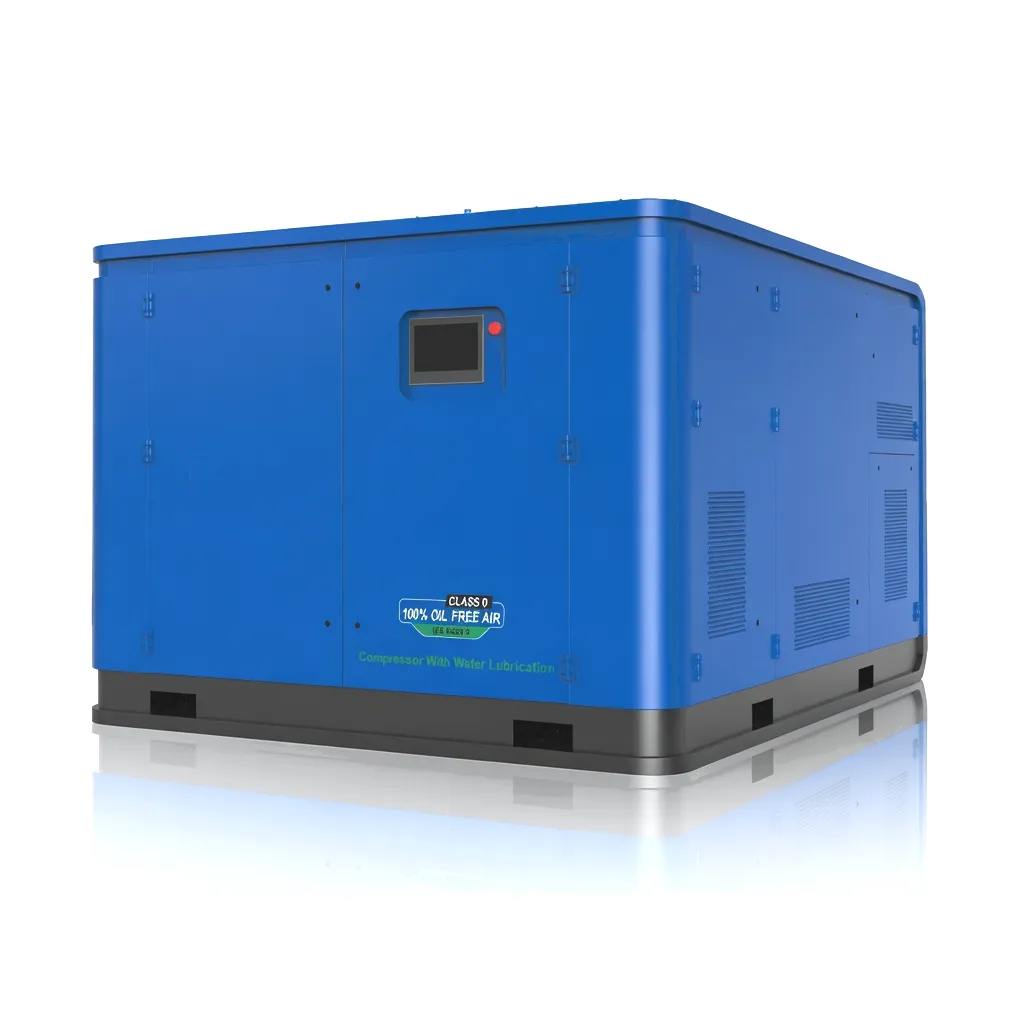
 Compressed air is often called the fourth utility in British manufacturing — right alongside electricity, gas, and water. Yet the engineering decisions behind an air compressor installation are far more complex than plugging in a machine and flipping a switch. Pressure ratings, flow volumes, duty cycles, moisture content, and downstream filtration must all align with the exact demands of the production process, whether that involves laser cutting sheet steel in a Wolverhampton fabrication unit or filling pharmaceutical-grade containers in a Leeds cleanroom.
The UK manufacturing sector operates under some of the tightest quality and environmental standards in the world. BS EN ISO 8573 governs compressed air purity, while the Energy Savings Opportunity Scheme (ESOS) puts pressure on facility managers to optimise every kilowatt consumed. In this environment, choosing an air compressor is not just a capital expenditure decision — it is a strategic choice that will affect energy bills, product quality, maintenance schedules, and regulatory compliance for the next fifteen to twenty years.
This technical guide draws on practical field knowledge from compressed air installations across the Midlands, Yorkshire, the North West, and Scotland. It examines the core working principles of modern screw and piston compressors, the materials science behind key components, real-world performance parameters, and the full spectrum of industrial applications where reliable compressed air supply is non-negotiable. Whether you are upgrading an ageing reciprocating unit or specifying a new variable-frequency drive system from scratch, the sections that follow provide the technical depth you need to make a confident, well-informed decision.
How Modern Industrial Air Compressors Actually Work
Working Principle & Thermodynamic Cycle
At its most fundamental level, an air compressor converts mechanical energy — usually from an electric motor — into potential energy stored as pressurised air. The physics that govern this process are well established, but the engineering implementation varies dramatically between compressor types, and that variation has profound implications for efficiency, maintenance cost, and suitability for different industrial environments. Understanding the underlying thermodynamic cycle allows plant engineers to match machine type to process requirement rather than simply purchasing on price.
Compressão de parafuso rotativo
Two counter-rotating helical rotors — one male, one female — mesh together inside a precision-machined housing. As the rotors turn, air is drawn into the inlet, trapped in the progressively narrowing space between the rotor lobes and the housing, and continuously compressed until it is discharged at the outlet port. Unlike piston compressors, this process is essentially continuous rather than pulsed, which produces far lower pressure fluctuations and allows direct coupling to downstream air-powered equipment without large receiver tanks. Modern oil-injected screw compressors achieve volumetric efficiencies exceeding 90% across a wide pressure range, and oil-free variants employing PTFE-coated or water-cooled rotors can meet the stringent purity requirements of food processing and pharmaceutical production in UK facilities.
Compressão de pistão alternativo
A crankshaft-driven piston moves back and forth inside a cylinder, drawing air in through an inlet valve on the downstroke and compressing it on the upstroke before the outlet valve opens and releases the compressed air into the receiver. Single-stage units compress air in one stroke to approximately 7–10 bar; two-stage units intercool the air between stages to improve thermodynamic efficiency and achieve pressures up to 30 bar or beyond. The reciprocating design excels in applications that require intermittent high-pressure bursts — such as tyre fitting bays, paint shops, and pneumatic rivet guns in aerospace fabrication — where the duty cycle is well below 100%. The robust simplicity of cast-iron cylinders and forged steel crankshafts means maintenance can often be performed in-house without specialist tooling.
Controle de inversor de frequência (VFD)
Whether the compression element is a screw or a scroll, fitting an inverter-controlled variable frequency drive to the drive motor transforms a fixed-speed machine into one that can modulate its output precisely to match real-time air demand. The motor speed — and thus the compressed air delivery rate — rises and falls continuously in response to system pressure feedback. This eliminates the energy wasted during unloaded running, which can represent 15–35% of total input power in a conventional load/unload controlled machine. In a UK factory running two or three shifts with variable production volumes, a VFD compressor with integrated heat recovery can reduce the compressed air station’s energy consumption by 30–50% compared with a fixed-speed equivalent — a compelling case under the UK government’s current industrial decarbonisation agenda.
The intercooling stage in two-stage machines — whether rotary or reciprocating — deserves particular attention. After the first stage of compression, air temperature may reach 150–200°C. Passing this hot air through a finned tube or plate-type intercooler reduces it to near-ambient temperature before the second stage compresses it further. This isothermal approach to compression reduces the specific power required per unit of compressed air output and extends the life of seals, lubricants, and downstream components. Plants in the colder regions of the UK — the Scottish Highlands, Northumberland, and parts of Cumbria — benefit from naturally lower ambient temperatures that improve both intercooler and aftercooler effectiveness year-round.
Core Materials & Metallurgy Behind High-Performance Compressor Components
Material Science · Component Engineering
The reliability of an air compressor over a twenty-year service life is determined as much by materials selection as by design geometry. Rotor profiles machined to tolerances of five micrometres or less will diverge and lose efficiency if the base material distorts under thermal cycling. Bearing housings that corrode in humid coastal environments like those around Bristol’s docks or the Humber estuary will fail prematurely. The material choices made at the design stage therefore cascade forward into every aspect of field performance.
Screw rotor pairs are almost universally manufactured from high-grade cast iron (GG25 or GG30) for the male rotor and either ductile iron or steel alloy for the female, though premium models intended for oil-free service use aluminium-bronze female rotors that reduce the risk of scoring should the minimum lubrication film momentarily break down. The rotor housing itself is typically gravity die-cast from EN-AC-46100 aluminium alloy, which offers an excellent combination of thermal conductivity, castability, and corrosion resistance. Aluminium’s thermal properties help dissipate compression heat and maintain tighter running clearances across the operating temperature range.
🔧 Valve Assemblies
Reed valves in reciprocating compressors are stamped from spring-tempered stainless steel strip (typically 1.4310 or 1.4301 grade), selected for fatigue resistance across millions of flex cycles. Valve seats are usually hardened tool steel or sintered carbide, lapped to a surface finish below 0.4 Ra to ensure leak-free seating.
🧰 Bearing Specification
Main drive bearings in industrial rotary screw units are typically taper roller or angular contact ball bearings manufactured to ISO P5 or P4 tolerance class. Bearing steels such as 100Cr6 (SAE 52100) deliver the combination of hardness, toughness, and oil-film compatibility needed for 40,000-hour bearing L10 life targets.
💧 Lubricants & Coolants
Synthetic polyalphaolefin (PAO) or ester-based compressor oils operate effectively from -40°C to +100°C, extending oil change intervals to 8,000 hours in premium machines. Thermal stability resists varnish and sludge formation that can block oil separator elements and cause overtemperature shutdowns in busy continuous-production environments.
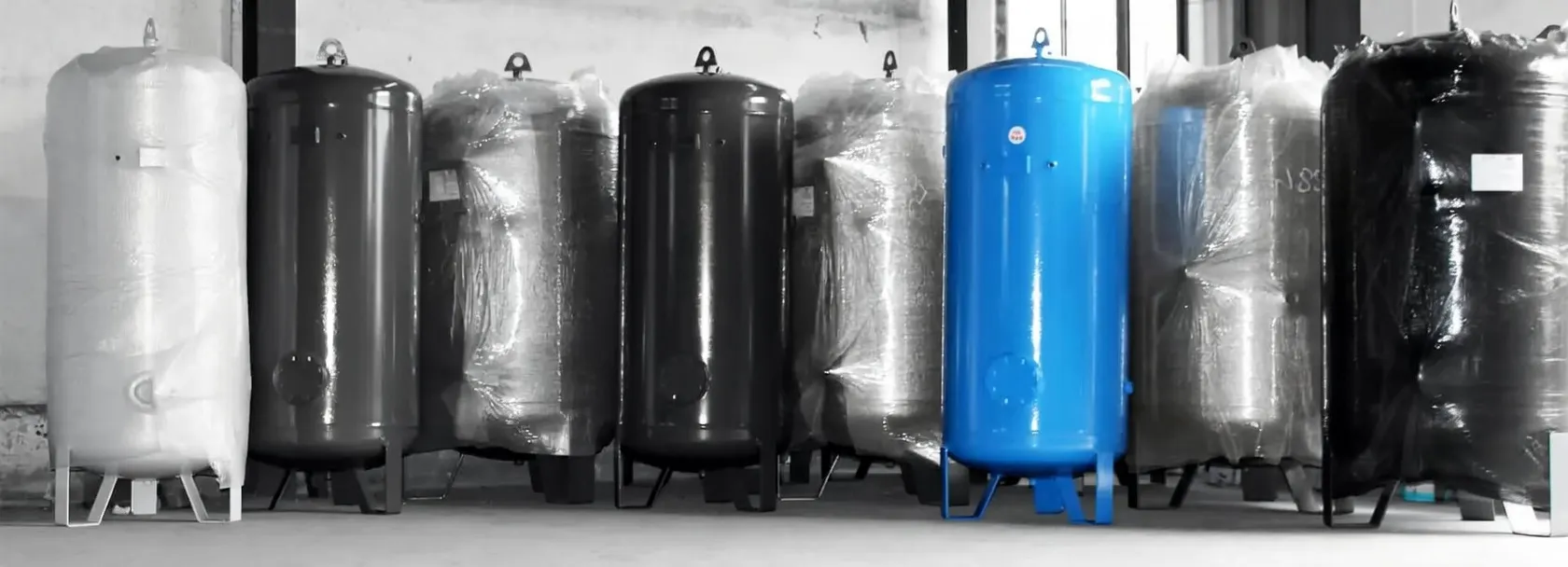
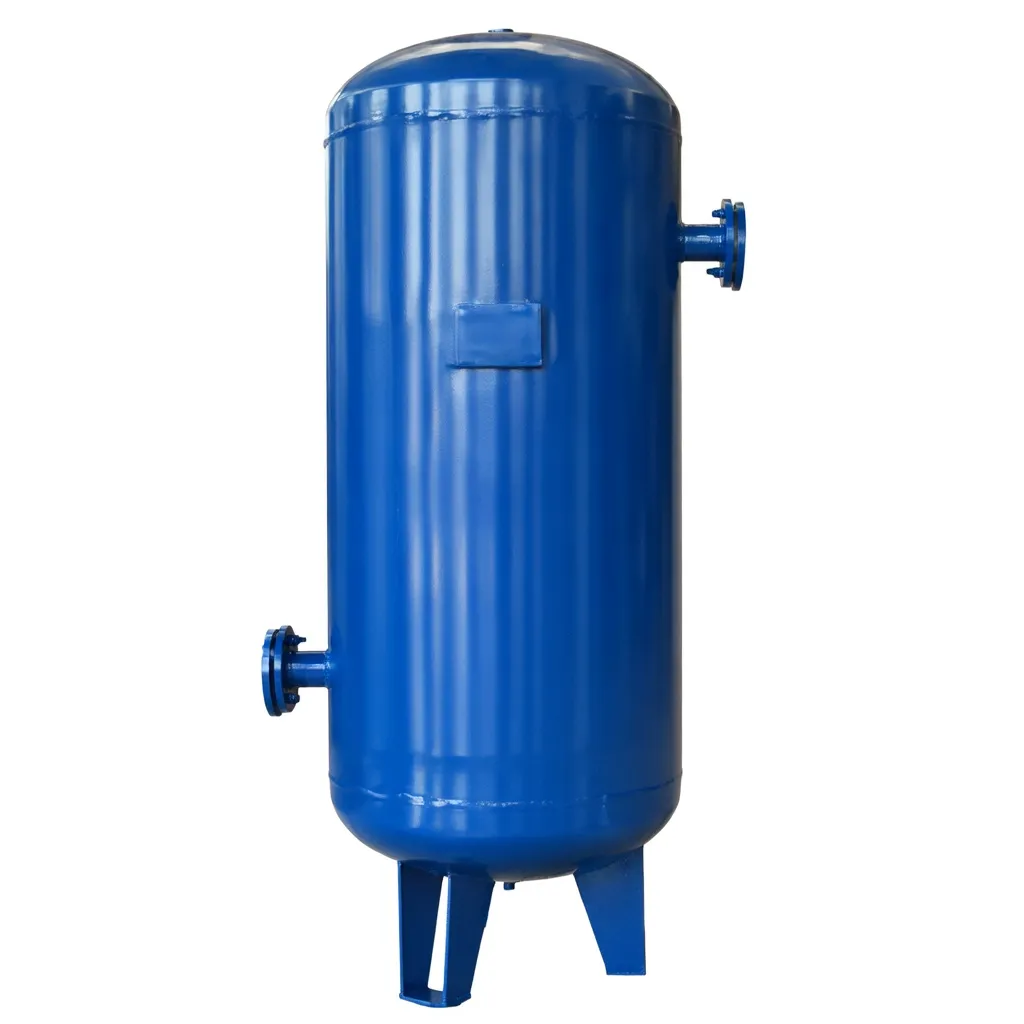
Pressure vessels and air receiver tanks fall under the UK’s Pressure Equipment (Safety) Regulations 2016 (PER 2016), which transposes the EU PED into domestic law post-Brexit with minor modifications. Receivers must be manufactured from P265GH or equivalent boiler plate steel, stress-relieved after welding, and subjected to hydraulic pressure testing at 1.5 times the design working pressure before being supplied with a Declaration of Conformity and UKCA marking. Stainless steel receivers (grade 316L) are increasingly specified in food, beverage, and pharmaceutical installations across the UK where regular internal cleaning with caustic or acidic agents is required. The material choice between carbon steel and stainless must account not only for initial cost — which can be two to three times higher for stainless — but also the whole-life cost of repainting, internal treatment, and the contamination risk associated with any surface corrosion.
Technical Performance Parameters: Industrial Air Compressor Reference Table
Specifications · Key Data · Selection Reference
| Parâmetro | Piston (Single-Stage) | Piston (Two-Stage) | Parafuso rotativo (velocidade fixa) | Parafuso rotativo (VFD) |
|---|---|---|---|---|
| Typical Pressure Range | 4 – 10 bar | 10 – 30 bar | 5 – 13 barras | 5 – 16 bar |
| Entrega Aérea Gratuita (FAD) | 0.05 – 1.5 m³/min | 0.1 – 2.5 m³/min | 0.4 – 30 m³/min | 0.4 – 30 m³/min |
| Potência específica (kW por m³/min) | 6,5 – 8,5 | 5.8 – 7.5 | 5.5 – 7.0 | 4,8 – 6,2 |
| Drive Motor Power Range | 0.75 – 15 kW | 4 – 37 kW | 5.5 – 250 kW | 7,5 – 355 kW |
| Ciclo de trabalho | 50 – 70% | 60 – 80% | 100% | 100% |
| Nível de ruído (dB(A) a 1 m) | 72 – 85 | 75 – 88 | 62 – 75 | 58 – 72 |
| Arraste de óleo (mg/m³) | 5 – 25 | 5 – 20 | 2 – 5 (with separator) | <0.01 (oil-free) |
| Intervalo típico de revisão | 2.000 – 4.000 h | 4.000 – 6.000 h | 8,000 – 12,000 h | 8.000 – 16.000 h |
| Compressed Air Purity Class (ISO 8573-1) | Class 4-5 | Class 3-4 | Class 1-2 (with filtration) | Class 0-1 (oil-free) |
| Rotor/Cylinder Material | Ferro fundido GG25 | Cast Iron / Steel | GG25 / EN-AC-46100 Al | Al-Bronze / Stainless |
Six Core Technical Advantages Driving Adoption in UK Industrial Plants
Product Advantages · Engineering Benefits
The case for investing in a high-specification industrial air compressor goes well beyond simply having compressed air available on demand. The engineering advantages embedded in a well-chosen system manifest in energy savings that appear on every monthly electricity invoice, quality improvements that reduce scrap rates in precision machining cells, and reliability figures that justify the upfront capital cost many times over across a typical asset life of fifteen to twenty years.
⚡ 1. Energy Efficiency via VFD
Variable frequency drive technology matches motor speed precisely to actual air demand, eliminating the 15–35% of input energy typically wasted during unloaded running in fixed-speed machines. Over a ten-year service life at average UK industrial electricity prices (currently around £0.22 per kWh for SMEs), a 75 kW VFD compressor can save upwards of £120,000 in energy costs compared with its fixed-speed equivalent — often exceeding the original purchase price several times over.
🌟 2. Integrated Heat Recovery
Approximately 94% of the electrical energy consumed by a screw compressor is converted to heat rather than compressed air. Modern heat recovery systems capture this from the cooling circuit and redirect it into space heating or process hot water, reducing boiler loads. In a typical Yorkshire textile mill or Midlands metalworking shop running a 55 kW compressor, recovered heat can contribute 40–60 kW of thermal energy continuously — cutting gas consumption and improving the facility’s overall carbon footprint in line with UK net zero commitments.
📈 3. Consistent Pressure Stability
Rotary screw designs deliver continuous, pulse-free compressed air that maintains system pressure within a narrow band (typically ±0.1 bar of setpoint). This stability is critical in CNC machining centres where pneumatic tool changers require repeatable actuation forces, and in laser cutting systems where assist gas pressure affects cut edge quality directly. Pressure fluctuations that would be inconsequential in a simple blowing application can cause positioning errors, valve malfunctions, or combustion instability in sensitive downstream equipment.
🔒 4. Low Noise & Vibration
Modern oil-injected screw compressors operate at 62–72 dB(A) — comparable to normal conversation — compared with 80–88 dB(A) for equivalent-capacity reciprocating units. This matters enormously under the UK Control of Noise at Work Regulations 2005, which require employers to take action at 80 dB(A) and place mandatory controls at 85 dB(A). A quieter compressor may allow installation in or near occupied work areas without the hearing protection zones, acoustic enclosures, or regular audiometric testing programmes that reciprocating alternatives would trigger.
🔧 5. Extended Maintenance Intervals
Premium synthetic lubricants and hardened rotor coatings extend oil change intervals to 6,000–8,000 hours and airend service intervals to 16,000–24,000 hours on top-tier models. In a plant operating two shifts per day — roughly 4,000 hours per year — this translates to an oil change every eighteen to twenty-four months rather than every six. The financial benefit is real: reduced consumable costs, fewer planned shutdown windows, and lower risk of contamination events during maintenance that could affect downstream processes.
📡 6. Intelligent Remote Monitoring
Industry 4.0-ready compressors integrate with plant SCADA systems via Modbus, Profibus, or OPC-UA protocols, streaming real-time data on pressure, temperature, oil condition, filter differential pressure, and specific power consumption. Predictive algorithms flag bearing wear, valve deterioration, or separator saturation weeks before a failure would occur. For multi-site UK manufacturers — a common structure among the country’s mid-tier engineering groups — centralised remote monitoring allows one engineer to manage compressed air quality across a dozen sites from a single dashboard.
Cenários de aplicação industrial em diversos setores da indústria manufatureira do Reino Unido
Application Scenarios · Sector-Specific Requirements
✂ Laser Cutting & Sheet Metal Fabrication
Fibre laser cutting machines require a continuous, ultra-dry supply of assist gas — typically nitrogen or clean compressed air — delivered at pressures ranging from 6 to 20 bar depending on material thickness and cut quality targets. The compressed air supply must meet ISO 8573-1 Class 1 for moisture (dewpoint <-40°C) and Class 1 for oil (below 0.01 mg/m³) to prevent contamination of the cut edge and lens damage. Fabrication shops across Birmingham’s Jewellery Quarter and Sheffield’s Advanced Manufacturing Park increasingly use oil-free screw compressors paired with high-pressure boosters specifically to serve laser cutting cells, eliminating the cylinder hire costs and safety risks associated with bottled nitrogen.
🚘 Automotive Tier-One Component Manufacturing
The automotive supply chain clustered around the West Midlands and Sunderland’s Nissan plant demands compressed air for pneumatic assembly tools, robotic spray painting, brake system testing, and air-purge cleaning of precision components before assembly. Typical plant air systems operate at 6.3–7 bar with total site demand ranging from 50 to 500 m³/min. Variable frequency drive compressors are favoured because automotive production volumes fluctuate significantly across model changeovers and production ramp-up periods, and the ability to throttle air delivery precisely prevents costly pressure drops that would disrupt torque-controlled tightening tools on the assembly line.
💊 Processamento de Alimentos e Bebidas
UK food manufacturers operating under BRC Global Standard or SALSA accreditation must use compressed air that meets ISO 8573-1 Class 0 or Class 1 for any air that contacts food, packaging surfaces, or processing equipment interiors. This rules out oil-lubricated compressors without extensive downstream filtration and water separation. Oil-free screw compressors, backed by HACCP-compliant compressed air quality monitoring systems, are the standard specification in canning lines in Lincolnshire, ready-meal production facilities in Northamptonshire, and beverage bottling plants across the South East. Stainless steel pipework and zero-loss condensate drains complete the hygienic system design.
🏥 Pharmaceutical & Life Sciences Manufacturing
Pharmaceutical manufacturing facilities — numerous in Cheshire, Hertfordshire, and around Cambridge’s biotech cluster — require the highest purity compressed air in any industrial sector. EU GMP Annex 15 and MHRA guidelines mandate validated compressed air systems with documented pressure dewpoints typically below -40°C, particle counts meeting ISO 8573-1 Class 1, and hydrocarbon content below 0.01 mg/m³. Oil-free compressors with upstream HEPA-filtered intakes, stainless steel downstream pipework, and validated monitoring points at each point-of-use represent the standard architecture, with full IQ/OQ/PQ qualification documentation provided to support regulatory inspections.
🔧 General Engineering & CNC Machining
Precision engineering subcontractors — the backbone of UK advanced manufacturing concentrated in the East Midlands and West Yorkshire — use compressed air across almost every machine on the shop floor. CNC machining centre spindle purge (to prevent swarf entry during tool changes), pneumatic vices and clamps, part blow-off stations, and coordinate measuring machine (CMM) air bearings all demand stable, filtered air at 5–8 bar. A single 37 kW variable-speed compressor can typically serve a shop floor of twelve to twenty CNC machines while matching air delivery to actual spindle utilisation — avoiding the overcapacity that plagues facilities that over-specified fixed-speed plant years ago.
🏗 Construction & Civil Engineering Sites
Portable diesel and electric air compressors are the workhorses of UK construction sites, powering pneumatic breakers, jackhammers, and concrete vibrators on projects from HS2 tunnelling operations in the Chilterns to the continuing regeneration developments in Manchester’s Northern Quarter. The challenging requirement here is reliability under harsh environmental conditions — dust ingestion, temperature extremes, and frequent relocation — which calls for a heavily filtered intake, a robust steel frame, and a compressor element tolerant of inclination during transport. Towable diesel compressors from 50 to 750 cfm capacity handle the broad range of site requirements, with Stage V emission-compliant engines increasingly mandated by local authority planning conditions in urban areas.
Ever Power: Custom Engineering, Precision Manufacturing & UK Supply Chain Capability
Factory Strength · Customisation · Supply Assurance
Ever Power has spent more than two decades building a manufacturing infrastructure specifically designed to serve demanding industrial markets where standard catalogue products are simply not enough. The company’s production facility spans over 40,000 square metres of climate-controlled manufacturing floor space, housing a full suite of precision machining centres, surface treatment lines, pressure testing bays, and quality control laboratories that collectively support the design and production of engineered-to-order compressed air equipment for clients across Europe, North America, and Asia-Pacific.
What genuinely differentiates Ever Power from the majority of compressed air equipment suppliers is the depth and breadth of its customisation capabilities. The engineering team can modify rotor profiles, pressure ratings, drive arrangements, cooling circuit configurations, control system architectures, and materials specifications to match the precise requirements of a given installation — not simply select from a product matrix of standard options. For UK clients, this has translated into solutions as varied as explosion-proof compressors certified to ATEX zone 2 for chemical plant applications in Teesside, ultra-low-noise configurations for compressor rooms adjacent to open-plan offices in Cambridge tech parks, and skid-mounted multi-compressor packages with shared controller logic for data centre cooling backup in the South East.
The supply chain guarantee that Ever Power provides to British industrial buyers goes beyond lead time commitments. A dedicated stock-holding programme keeps critical consumable parts — oil separator elements, inlet filter cartridges, air/oil cooler cores, and belt sets — in UK-based distribution hubs to support same-day or next-day despatch for emergency breakdowns. Technical documentation packages include CE/UKCA declarations, full material traceability records, pressure vessel inspection certificates, and IOM manuals in English, satisfying the documentary requirements of UK insurance underwriters and Authorised Inspector regimes without the weeks-long delay that some Asian suppliers impose.
✅ Ever Power Capability Summary
✓
Bespoke rotor machining to 3 µm tolerance on 5-axis CNC centres
✓
ATEX directive compliance for hazardous area compressor packages
✓
Full IQ/OQ/PQ validation support for pharmaceutical installations
✓
UK-stocked spare parts with 24-hour emergency despatch guarantee
✓
OEM integration packages for machine builders and system integrators
✓
ISO 9001:2015 quality management with full material traceability records
✓
UKCA-marked pressure vessels with Authorised Inspector certification
Talk to an Ever Power Engineer
Tell us your flow rate, operating pressure, purity class, and site conditions — and we will configure a system that meets your exact requirements with full UK compliance documentation.
Customer Success Story: Sheffield Precision Fabrications Ltd.
South Yorkshire · Steel Fabrication & Laser Cutting
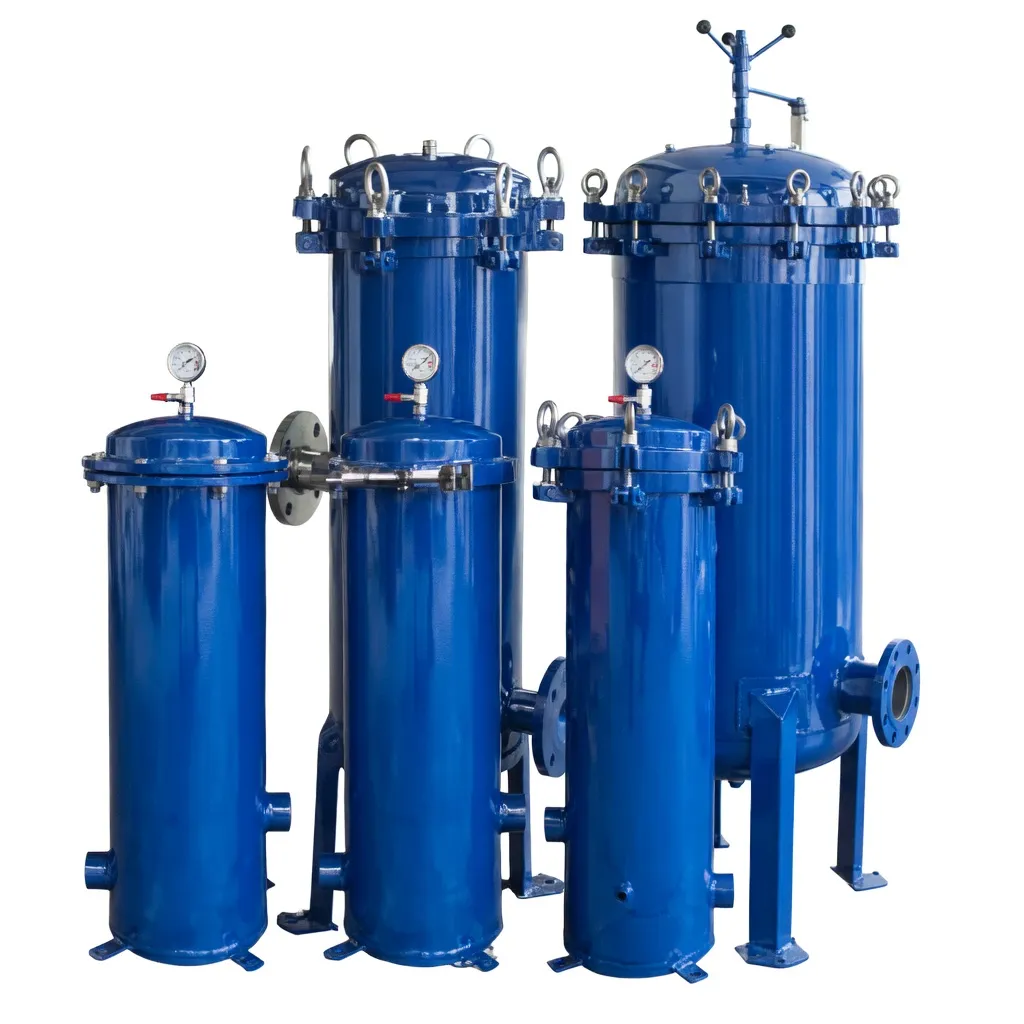 Sheffield Precision Fabrications Ltd — a sixty-person sub-contract sheet metal shop operating from a 7,000 m² facility on the outskirts of Sheffield — had grown steadily over the previous decade by investing in high-power fibre laser cutting machines. By 2023, the site ran four laser cutting cells operating three shifts per day, five days per week, along with sixteen CNC press brakes, six robotic welding cells, and an inline shot-blast and powder coating line. The compressed air system serving all of this had evolved piecemeal from an original installation of three reciprocating compressors purchased in the 1990s, supplemented by various screw units added over the years without a coherent system design.
The problems were multiple and interconnected. Pressure at the laser cells was consistently 0.8–1.2 bar below the minimum required for high-pressure nitrogen-assist cutting on 10 mm stainless steel, forcing operators to run oxygen assist instead — significantly increasing edge oxidation and downstream grinding time. Oil carryover from the oldest reciprocating unit was reaching the laser lens protection window, causing premature contamination events that required lens replacement at around £800 per lens and approximately four hours of cell downtime each time. The quarterly electricity bill for the compressor room alone exceeded £14,000, even though actual air demand analysis — conducted as part of a feasibility study commissioned from an independent compressed air audit firm — showed that peak demand was only 62% of installed compressor capacity, and overnight demand dropped to just 18%.
Ever Power’s engineering team conducted a two-week site survey with data logging across all shift patterns and proposed a solution centred on two 75 kW variable frequency drive oil-free screw compressors configured in a master-slave arrangement, complemented by a refrigerant dryer with a validated -40°C dewpoint, a three-stage stainless steel coalescing filtration bank, and a 3,000-litre UKCA-marked receiver. Custom-engineered acoustic enclosures reduced noise output to 64 dB(A) to satisfy the company’s new workplace noise risk assessment. The project was completed over a single planned shutdown weekend, with full IOM documentation, a compressed air quality test certificate to ISO 8573-1 Class 1:1:1, and a one-year free service package included.
Within three months of commissioning, Sheffield Precision Fabrications had eliminated all lens contamination events, reduced laser cell nitrogen cylinder consumption by 34% by switching to high-pressure clean air assist on most materials, and recorded an 8% throughput improvement in the laser cutting department due to consistent pressure delivery. The quarterly electricity bill for the compressor room dropped from £14,000 to £8,200 — a saving of £23,200 per year from energy alone — giving a calculated simple payback of just under four years on the capital investment, with an anticipated twenty-year asset life.
O que os clientes do Reino Unido dizem sobre a Ever Power
“The VFD unit Ever Power supplied has transformed our energy consumption figures. We were sceptical that a non-European brand could deliver the build quality and documentation standard we needed for our ISO 9001 audit — but the traceability pack and UKCA certification were absolutely spot on. The pressure stability on our laser cells is genuinely better than anything we had before.”
— James R., Operations Director, Sheffield Precision Fabrications Ltd., South Yorkshire
“We needed a customised oil-free system with an ATEX package for our solvent coating line in Birmingham. Ever Power came back within forty-eight hours with a technically detailed proposal that showed they genuinely understood our hazardous area requirements — not just a price on a data sheet. Commissioning was straightforward and the ongoing remote monitoring has already flagged one bearing issue before it became a breakdown.”
— Sarah M., Facilities & Engineering Manager, West Midlands Coatings Group, Birmingham
“The spare parts availability was a major concern when we first considered Ever Power — we’ve been burned by Chinese suppliers before when critical parts took eight weeks to arrive. The UK distribution arrangement means we had a replacement separator element on site within six hours of placing the call on a Thursday afternoon. That kind of service changes the whole risk calculation when you’re running a three-shift food production environment.”
— David K., Plant Manager, North Yorkshire Food Producers Ltd., Harrogate
Produtos em destaque da Ever Power: Compressores de ar
Variable Speed · High Efficiency · UK-Compliant
Compressor de ar de parafuso de frequência variável CM160PVF
The CM160PVF represents a top-tier solution for facilities with fluctuating air demand. Featuring a permanent magnet synchronous motor and a high-efficiency screw airend, this unit delivers a Free Air Delivery range of 16.8–28.0 m³/min at working pressures from 6 to 13 bar, with a measured specific power as low as 5.3 kW per m³/min at full load. The integrated intelligent controller continuously matches motor speed to system pressure, with response times under 200 milliseconds. IP55-rated motor protection and a corrosion-resistant aftercooler make it well-suited to UK manufacturing environments where ambient humidity and temperature vary significantly between summer and winter production periods.
Compressor de ar de parafuso com acionamento de velocidade variável
Engineered for maximum flexibility, this variable speed drive screw air compressor series covers the 7.5 to 160 kW power range and is available in oil-injected or oil-free configurations to match the purity requirements of any application from general workshop use to Class 0 pharmaceutical production. The integrated IE4 premium efficiency motor reduces motor losses by up to 30% compared with standard IE2 equivalents, while the adaptive control algorithm learns demand patterns over the first two weeks of operation and pre-adjusts speed modulation curves to minimise transient overshoots. Skid-mounted packages with integrated dryer and filtration are available for UK clients requiring a single point of connection on site.
Frequently Asked Questions: Industrial Air Compressors for UK Manufacturing
Voice-Search Friendly · Technical & Commercial
Pronto para especificar seu sistema de ar comprimido?
Talk to Ever Power’s UK Engineering Team Today
From a single workshop compressor to a complete multi-site compressed air infrastructure — Ever Power delivers the technical depth and documentation quality that UK industry demands.
editado por gzl