Industrial Gas Compressor Series · UK Supplier
Industrial Gas Compressor: Coke Oven, Coal Seam & Specialty Gas Solutions
From coke oven gas recovery to coal seam extraction and precision analytical systems, our industrial gas compressor portfolio delivers reliable, high-capacity compression for the most demanding process environments. Whether you operate a metallurgical plant, chemical facility, or energy recovery site, these machines are engineered to perform where ordinary compressors fail.
Capacity: 2–500 Nm³/min | Pressure: 0.1–32.00 MPa | Power: 5.5–10,000 kW | Types: M, D, P, L, Z
What Makes an Industrial Gas Compressor Different?
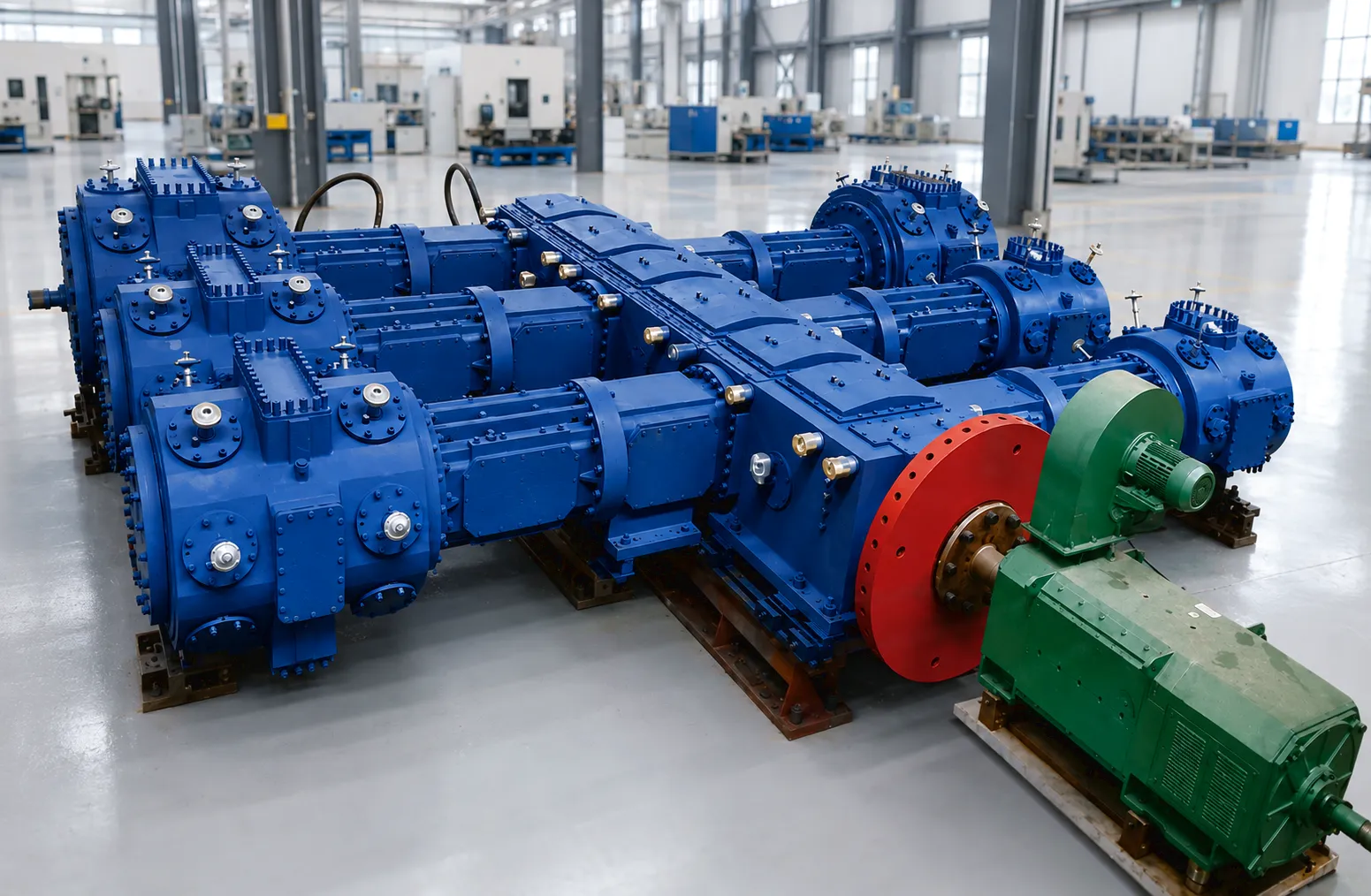
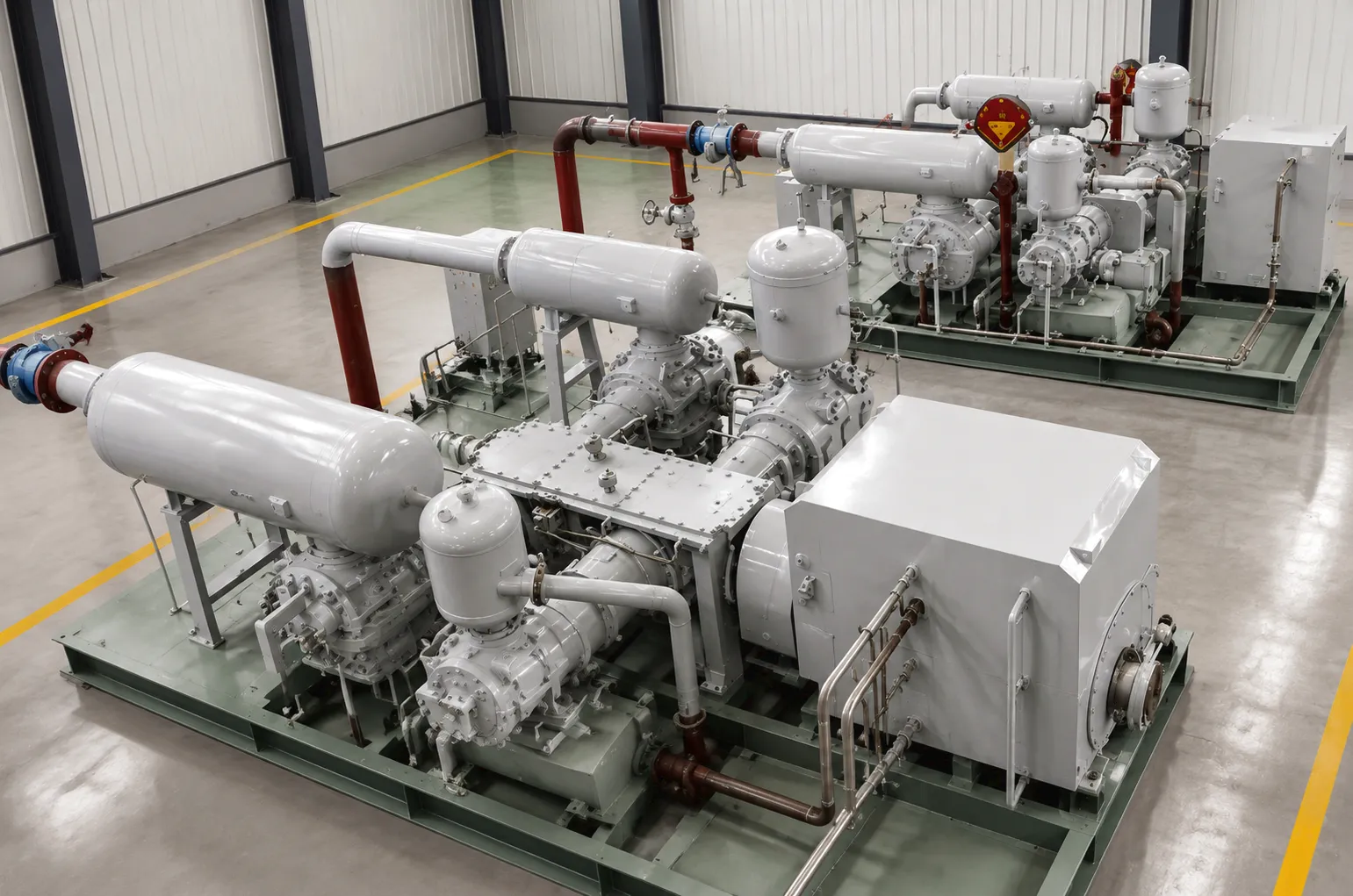
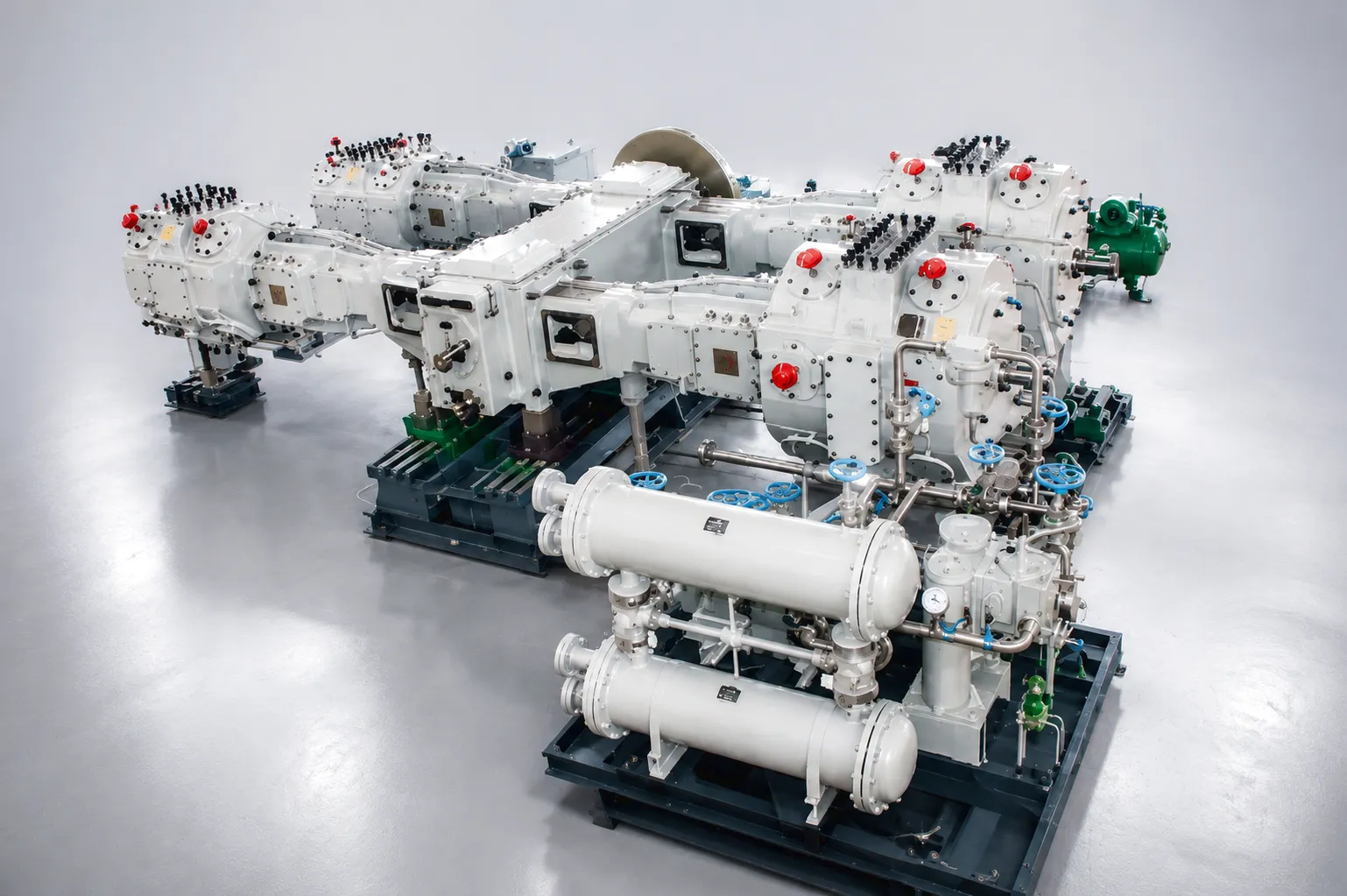
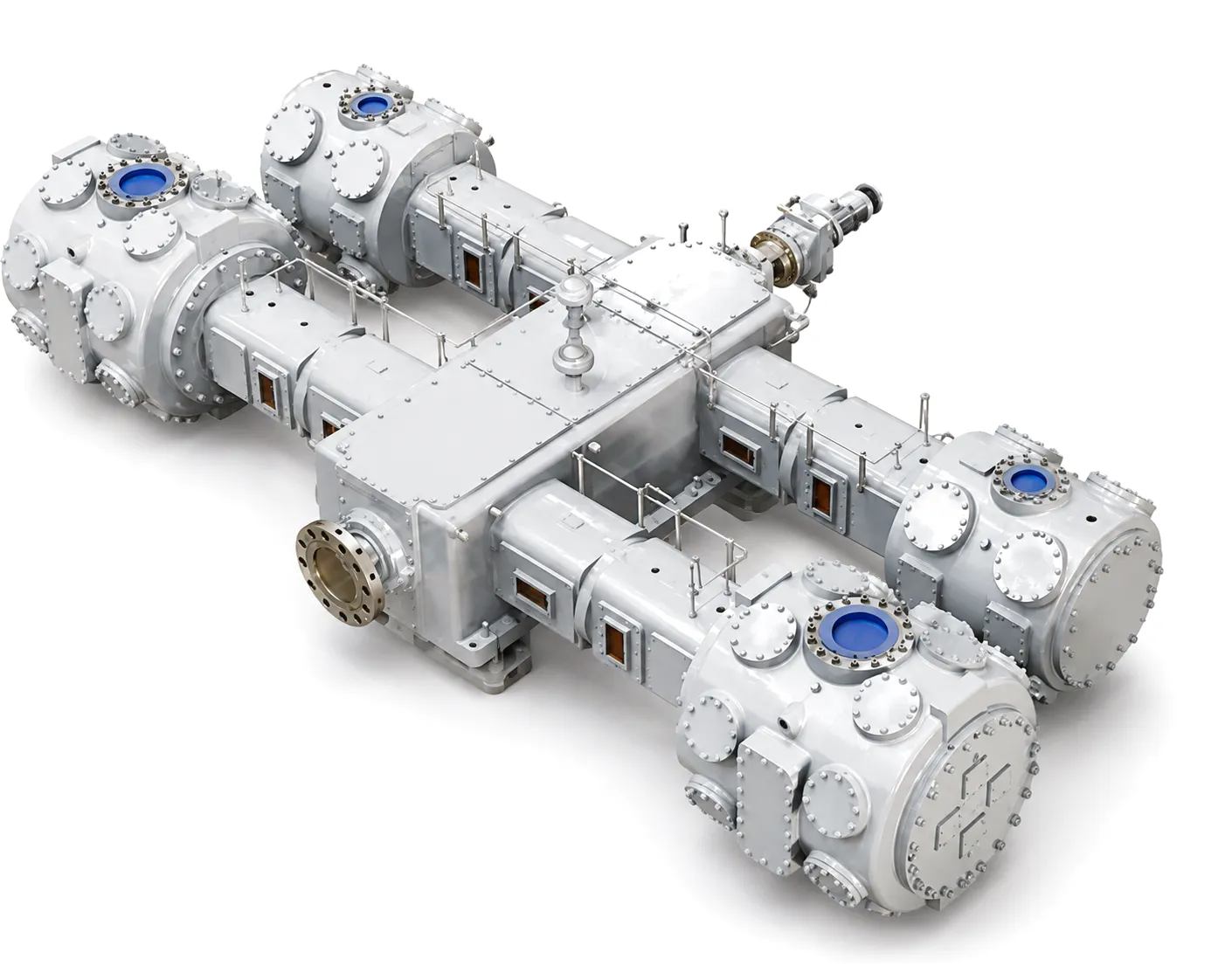
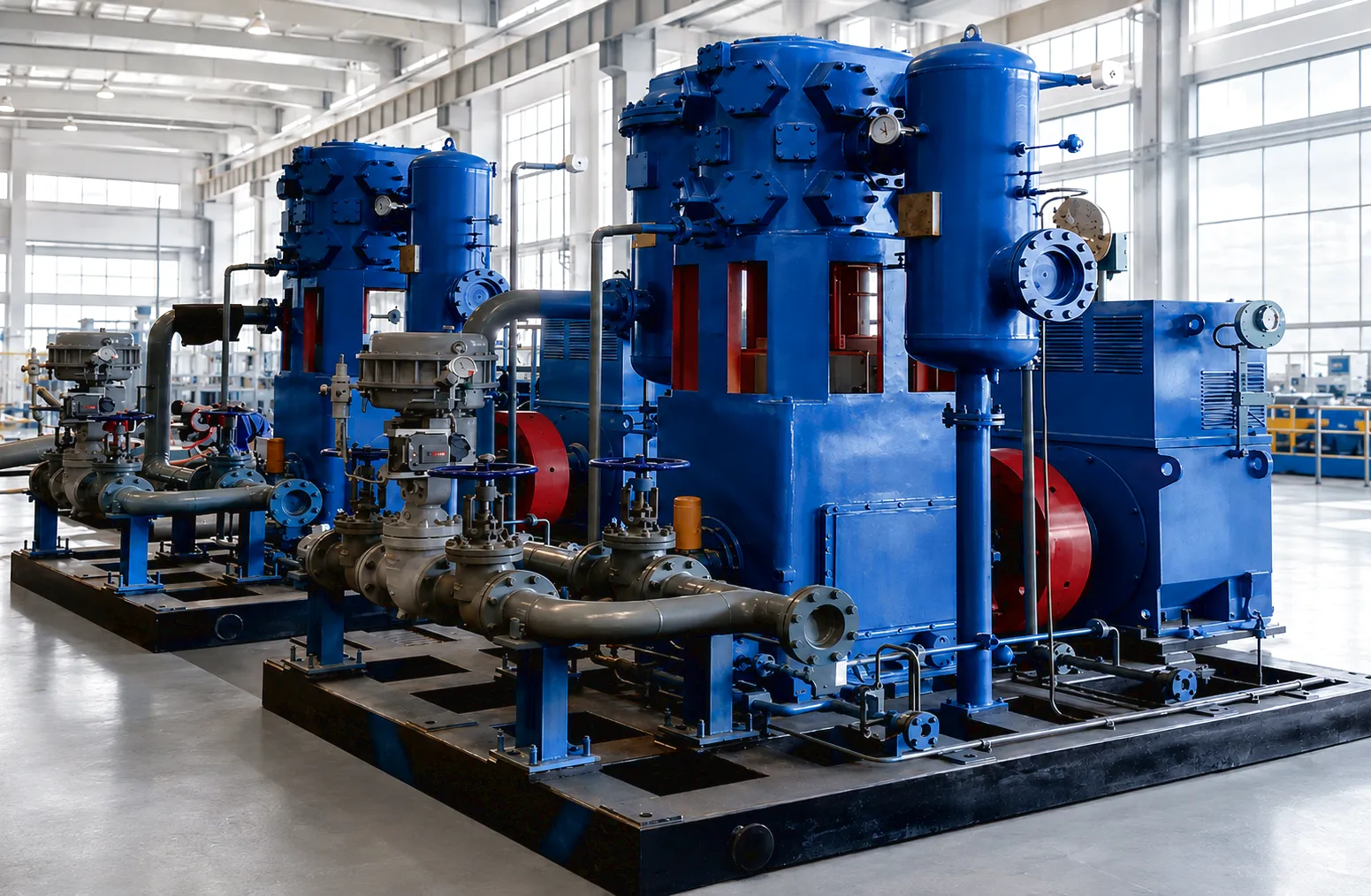
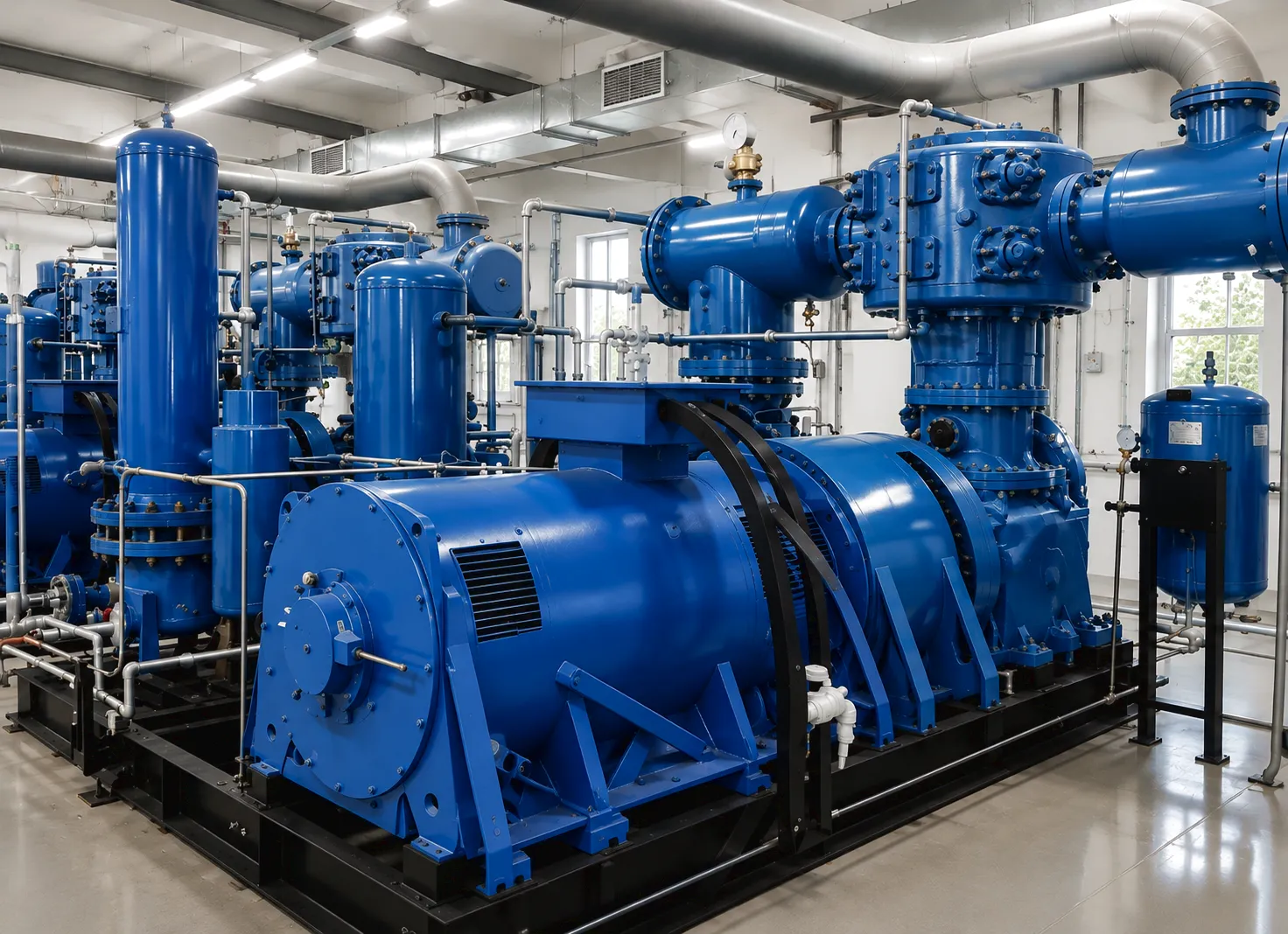
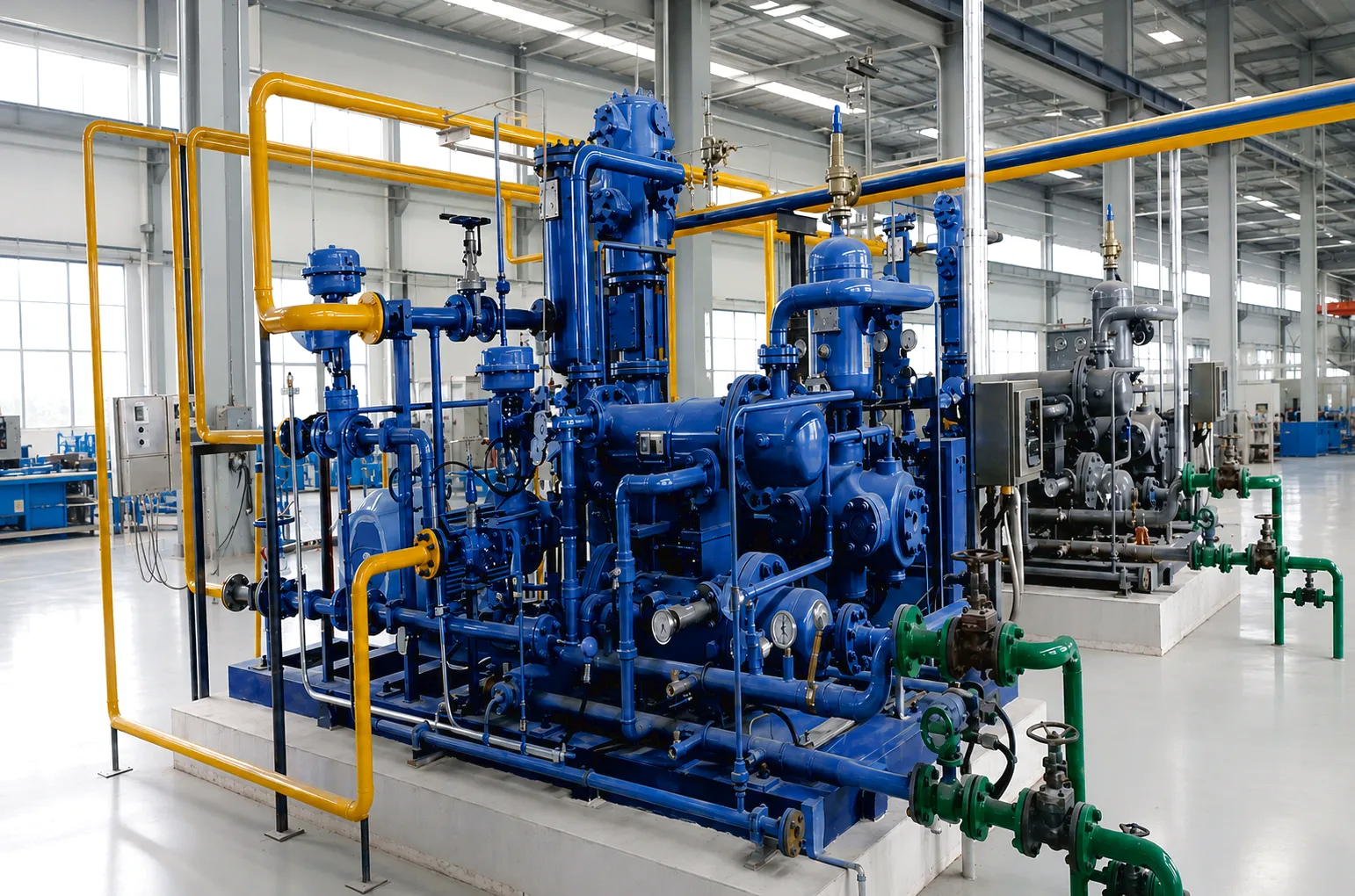
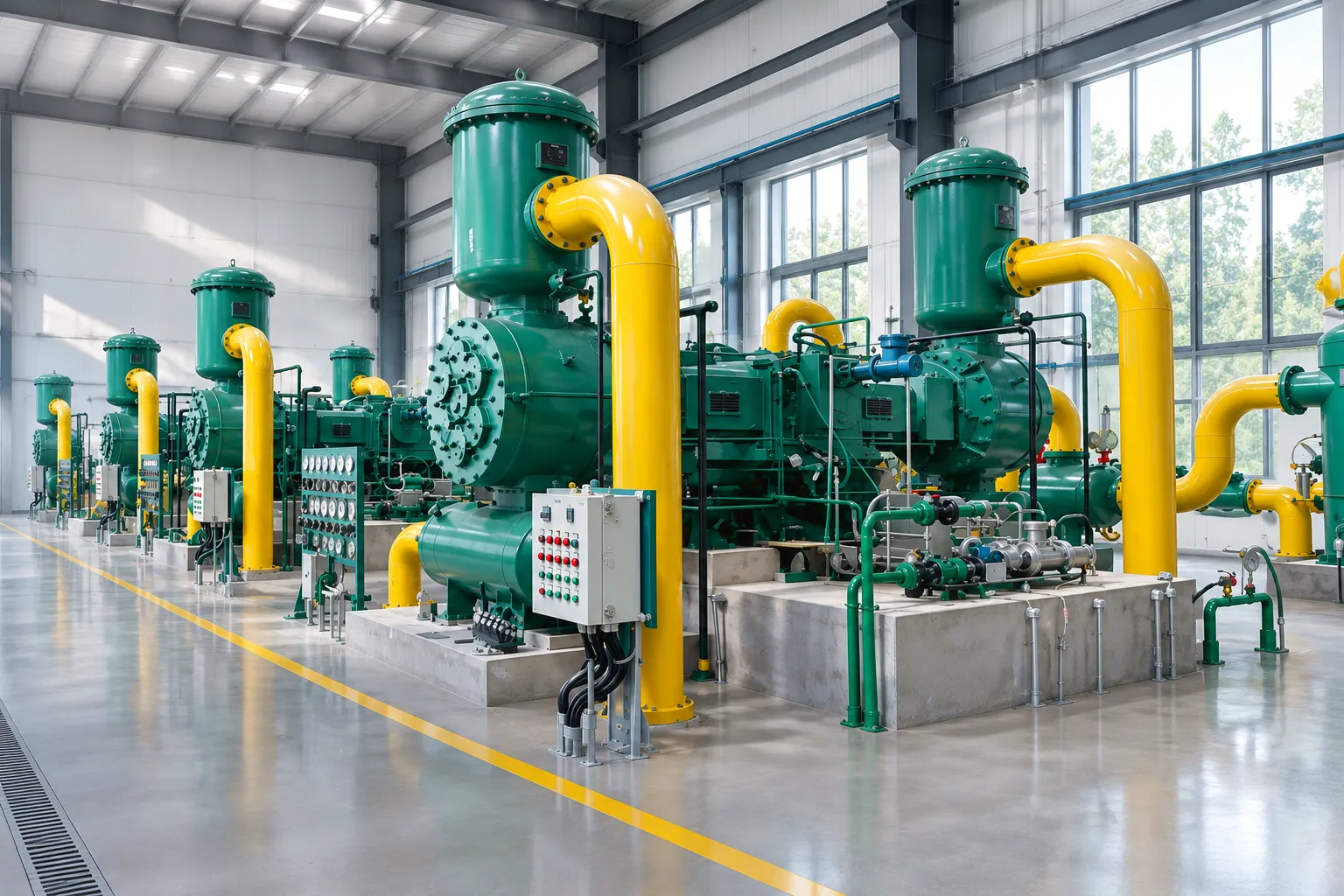
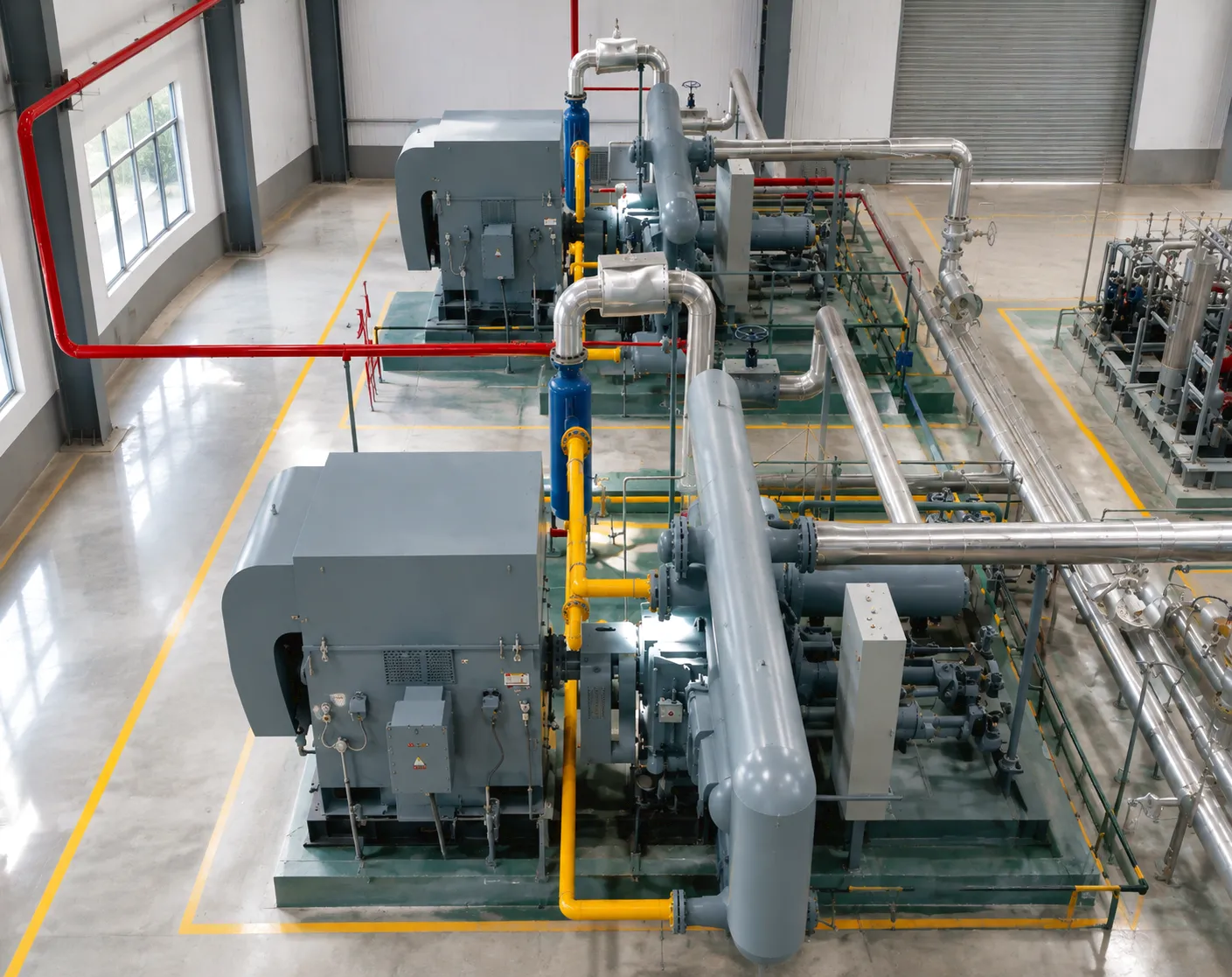
An industrial gas compressor is not a general-purpose machine. It is a precision-engineered system designed to handle chemically aggressive, flammable, or high-temperature process gases that standard air compressors are entirely unsuitable for. In steelworks and coking plants across the UK — from South Yorkshire to South Wales — coke oven gas must be recovered, pressurised, and redirected with zero tolerance for leakage or contamination. The consequences of gas compressor failure in these environments range from production stoppage to serious safety incidents. Our range is built specifically for these stakes, with gas-tight shaft sealing, explosion-proof motor options, and materials selected for long-term compatibility with the target medium.
Each machine in the portfolio is a reciprocating piston gas compressor, which remains the preferred architecture for high-pressure specialty gas work. Unlike rotary designs, the reciprocating mechanism delivers precise pressure ratios across a wide range of molecular-weight gases — from light hydrogen-rich coke oven gas through to heavier water coal gas. The pistons, rings, and valves are matched to the specific gas composition, inlet temperature, and target delivery pressure specified by the buyer, making the design inherently configurable. This configurability is a core reason why industrial buyers across the UK’s chemical processing and metallurgical sectors keep returning to this platform.
Technical Specifications — General Series Parameters
The table below shows the common-range parameters shared across all nine variants. For the precise datasheet of any individual model (e.g., EP DW-100/8 or EP 4MW-56/36), please contact us at [email protected].
Working Principle, Materials & Application Environments
⚙ Reciprocating Piston Action
The crank converts rotary motor motion into linear piston travel. On the suction stroke the inlet valve opens and gas enters the cylinder at low pressure. On the compression stroke the valve closes and the piston reduces cylinder volume, raising the gas pressure to the target discharge level. This thermodynamic cycle repeats at speeds between 200 and 740 rpm depending on model, achieving the precise volumetric efficiency required for high-purity gas applications. Multi-stage configurations allow discharge pressures up to 32 MPa without temperature-induced degradation of the gas composition.
🛠 Material Selection for Aggressive Gases
Cylinders are cast from high-strength grey iron or ductile iron for standard gas service, with stainless steel internals where corrosive sulphur compounds are present. Piston rods are manufactured from high-tensile alloy steel with hard-chrome or tungsten carbide coating to resist both abrasive wear and gas-side corrosion. Valves use stainless steel plates with PTFE or nylon seat inserts. O-rings and packing rings are selected from a matrix of materials — Viton, PTFE, or PEEK — based on the operating gas, pressure, and temperature profile specified at order.
🏭 Key Application Sectors in the UK
Integrated steel plants in South Yorkshire and Teesside use coke oven gas compressors to recover and recirculate by-product gas as plant fuel. Chemical production sites in the North West compress carbon monoxide for methanol and acetic acid synthesis. Coal mine drainage operations in Wales deploy coal seam gas compressors for CMM capture prior to ventilation. Analytical laboratories and calibration gas producers rely on our ZW and LW series for contamination-free delivery of reference gases at precisely controlled pressures. Waste-to-energy projects use water coal gas compressors to handle producer gas streams from gasification plant.
📈 Why Reciprocating Beats Rotary for Specialty Gas
Rotary screw compressors excel at high-volume, low-pressure air service — but they struggle with variable molecular weight gases, very high discharge pressures, and the need for oil-free delivery. Reciprocating piston gas compressors maintain consistent volumetric efficiency across a much wider range of inlet conditions, making them the established standard in chemical process plants, petroleum refineries, and industrial gas operations worldwide. The ability to add compression stages, change valve geometry, and swap sealing materials gives the platform a long service life even as process conditions evolve over the asset’s lifetime.
Why Industrial Buyers Choose This Gas Compressor Series
🔒
Gas-Tight Sealing System
Multi-stage piston rod packing with purge gas barrier ensures zero fugitive emissions — a legal requirement under the UK Industrial Emissions Directive for flammable and toxic media.
⚡
Massive Power Range — One Platform
From a 5.5 kW laboratory compressor to a 10 MW plant-scale machine, the series covers every scale of industrial gas demand without switching supplier or system architecture.
🎯
Engineered for High-Pressure Gas Duty
Discharge pressures up to 32 MPa are achievable through multi-stage cylinder arrangements, serving applications like high-pressure chemical synthesis and CNG-grade gas storage that rotary compressors cannot reach.
🔨
Long Service Life & Easy Maintenance
Replaceable cylinder liners, accessible valve nests, and standardised piston rod dimensions keep planned maintenance intervals predictable. Mean time between overhaul typically exceeds 16,000 running hours.
🌐
Full UK Compliance Packages
CE marking, ATEX-certified motor variants, and documentation packs aligned with UK PSSR 2000 and PSER 2000 pressure system regulations. We support UK buyers from enquiry through to site commissioning sign-off.
🔧
Full Customisation Available
Cylinder bore, stroke, staging, sealing arrangement, PLC-based control package, skid design, and inlet/outlet nozzle orientation can all be modified at factory stage to match your site layout and process conditions precisely.
Looking for a Rotary Screw Air Compressor?
If your application involves instrument air, laser cutting gas supply, or general plant compressed air rather than specialty process gas, our rotary screw range may be more appropriate. The CM160PVF Variable Frequency Screw Air Compressor is an energy-efficient choice for production lines where demand fluctuates throughout the shift, using a variable-speed drive to match output to actual consumption and avoid the energy penalty of unloaded running. For a broader category overview of speed-controlled screw technology, see our Variable Speed Drive Screw Air Compressor range page, which covers multiple frame sizes and pressure ratings suited to UK manufacturing environments.
Customer Success Case Study
UK · Integrated Steel · Teesside
EP 4MW-95/26 Coke Oven Gas Compressor — Steelworks Recovery Upgrade, Teesside
A major UK integrated steel producer on Teesside was losing approximately 18% of its coke oven gas production through pressure losses in an ageing compressor station dating from the 1990s. The site’s engineering team approached us with a requirement for a replacement gas compressor capable of handling 90–100 Nm³/min of coke oven gas at a stable delivery pressure of 24 MPa for injection into the plant gas network. The existing footprint was constrained, and the new machine had to fit within the original compressor house envelope.
We supplied a customised EP 4MW-95/26 unit with a modified skid layout to match the building column grid, ATEX Zone 1 motor certification, and a dedicated PLC-based control cabinet integrated into the site’s existing DCS via Modbus. The machine was pre-assembled and cold-tested at factory before shipping. Site installation and commissioning took eleven days. Within the first three months of operation the plant recovered gas volumes equivalent to over £180,000 of avoided gas purchases from the grid — a payback period on the gas compressor investment well inside two years.
Project duration: 14 weeks factory-to-commissioned | Custom features: modified skid, ATEX motor, DCS integration | Outcome: 18% gas loss eliminated
“
We had tried two other suppliers before coming to this team. Neither could meet the 26 MPa discharge requirement on coke oven gas without going to a much larger footprint. This machine hit the pressure target on day one and has run without a single unplanned stop in fourteen months. Outstanding engineering.
— Plant Engineer, Integrated Steel, South Yorkshire
“
The analytical grade compressor we ordered — the LW-52/3 — was configured for a very specific calibration gas mixture. The factory application engineers worked through every seal and valve material with us during the selection process. The delivered machine is performing exactly to spec. I would not hesitate to source again.
— Laboratory Director, Specialty Gas Producer, North West England
“
We needed a coal seam gas compressor for a CMM drainage project in South Wales at fairly short notice. The lead time was competitive and the technical support before and during commissioning was genuinely excellent. The 4M-200/4.5 has been running 24/7 since installation with minimal maintenance input from our side.
— Project Manager, Coal Mine Methane, South Wales
Manufacturing & Customisation Capability
Our manufacturing base operates large-scale CNC machining centres, in-house pressure vessel fabrication workshops, and a dedicated gas compressor assembly hall with cold-test and run-test bays for media simulation using inert surrogate gas. Every machine undergoes a full factory acceptance test (FAT) before despatch, and detailed test records are supplied with the shipment documentation. For UK buyers, this means that on-site commissioning time is minimised and PSSR Written Scheme compliance documentation is ready on arrival.
Our product customisation service covers: cylinder bore and stroke re-sizing; addition or removal of compression stages; bespoke skid fabrication with your layout constraints; choice of motor make and protection class; PLC and control panel configuration to your I/O specifications; nozzle orientation and flanging standard (ASME, BS, or DIN); and surface treatment for marine or coastal environments. We support UK engineering contractors, EPCs, and end-user procurement teams with full ITP documentation, material test certificates, and third-party inspection coordination (Lloyds, Bureau Veritas, SGS).
Frequently Asked Questions
Ready to specify your gas compressor? Our application engineers are available now.
Flow rate · Discharge pressure · Gas composition · Lead time · Customisation options · UK compliance documentation
edit by gzl