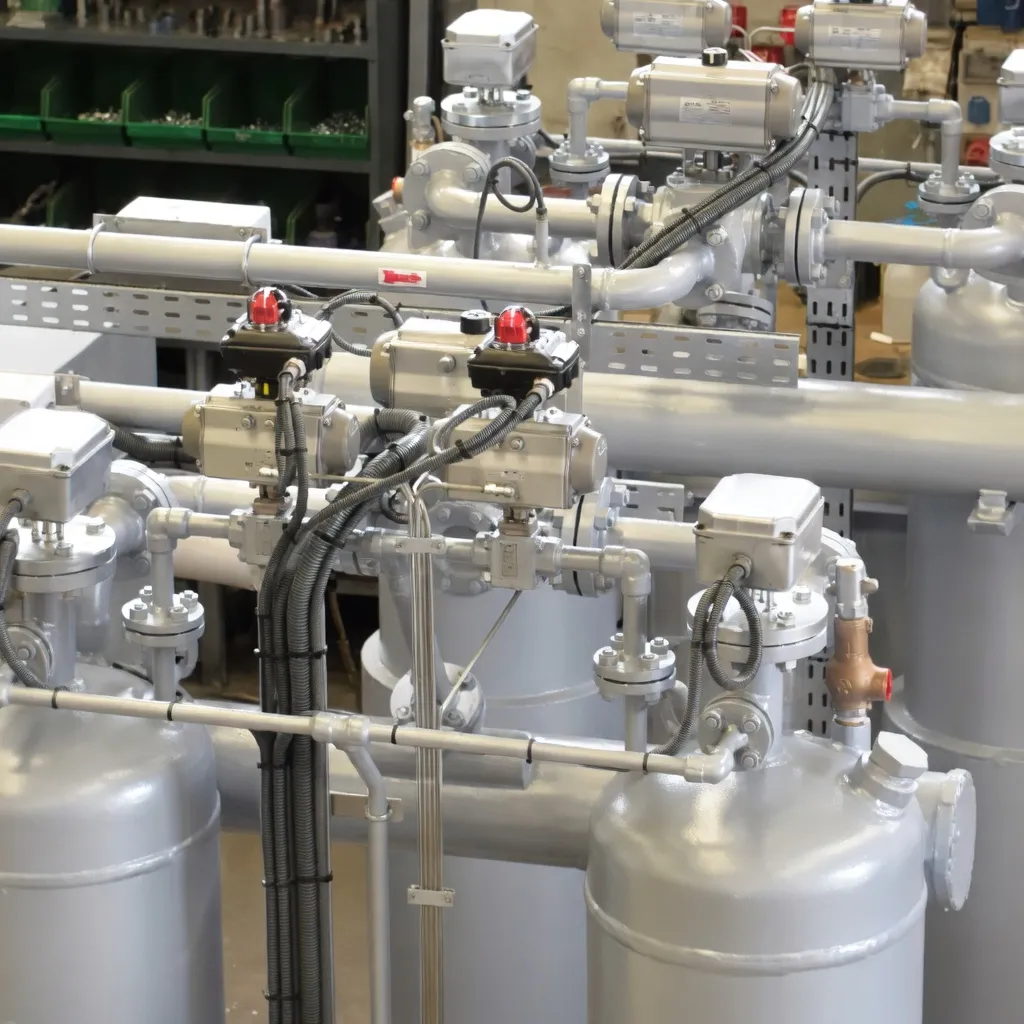
 Step inside any well-run controlled atmosphere (CA) apple store in Kent, a soft-fruit MAP packing facility in Perthshire, or a multi-commodity distribution hub in the East Midlands, and you will find one piece of equipment doing the most consequential job nobody photographs for the brochure: the air compressor feeding the nitrogen generation system. Whether that nitrogen comes from a Pressure Swing Adsorption (PSA) unit packed with zeolite molecular sieve or a hollow-fibre membrane separator, both technologies share a single critical dependency — the compressed air entering them must contain no measurable oil whatsoever. That is not a preference or a best practice recommendation. It is a functional requirement, and the consequences of ignoring it are expensive, sometimes irreversible, and potentially serious enough to compromise food safety certification.
Controlled atmosphere storage extends the shelf life of fresh produce by precisely managing the gas composition inside sealed storage rooms — typically holding oxygen below 3% and carbon dioxide between 1% and 5%, with nitrogen making up the remainder. For top fruit varieties like Braeburn, Cox, and Gala apples, this environment can extend viable storage from eight weeks under refrigeration alone to ten months or more. The quality of that nitrogen, and the integrity of the equipment generating it, depends entirely on the cleanliness of the compressed air upstream. This is where specifying an oil-free air compressor transitions from a technical preference into a business-critical decision with measurable financial and compliance implications.
This article covers the engineering case for oil-free air compressors in CA storage systems, the specific failure mechanisms triggered by oil contamination, UK regulatory considerations, technical specifications, real operator experience, and guidance on selecting and sizing the right equipment for your facility. It draws on over 18 years of applied compressor engineering in food-sector environments across Europe and the United Kingdom.
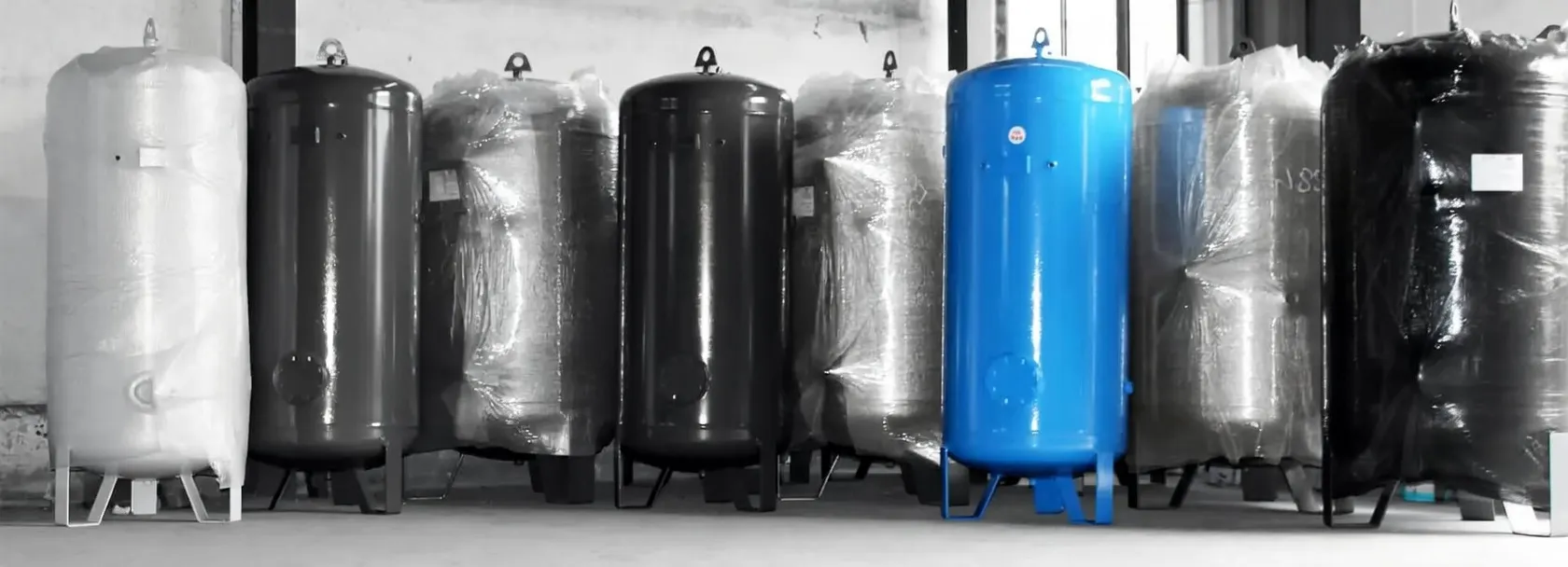
How CA Storage Systems Depend on Compressed Air Purity
A CA storage installation is fundamentally a sealed gas management system. The store operator defines target concentrations for each produce variety and variety-specific storage programme — for a typical UK Cox apple store, that means holding O₂ at 1.2%, CO₂ at 3.5%, and filling the remainder with nitrogen. Achieving and sustaining these levels throughout an eight-to-ten-month storage window requires a continuous, reliable source of high-purity nitrogen and a gas management system capable of monitoring and adjusting the atmosphere in real time.
The two dominant on-site nitrogen generation technologies in UK CA facilities are Pressure Swing Adsorption (PSA) and hollow-fibre membrane separation. PSA units cycle compressed air through twin beds of zeolite molecular sieve, which preferentially adsorb oxygen and CO₂ molecules while allowing nitrogen to pass through at purity levels of 99.5–99.999%, depending on bed sizing and cycle speed. Membrane separators push compressed air through bundles of hollow polymer fibres; the smaller oxygen molecules permeate through the fibre walls faster than nitrogen, and the result leaving the dry end of the module is a nitrogen-enriched gas stream. Both are mature, proven technologies in wide use across UK cold chain infrastructure.
Both technologies are also uniquely vulnerable to oil contamination in the inlet compressed air stream. Zeolite molecular sieve has an enormous surface area — approximately 700–900 m² per gram — and it will adsorb oil aerosol molecules at least as readily as it adsorbs oxygen. Once oil begins coating the active sites, adsorption capacity for oxygen falls, nitrogen purity drops, and the only remedy is full sieve replacement. In membrane systems, oil causes the polymer fibres to swell and lose selectivity, and unlike sieve beds, membrane modules cannot be regenerated. They must be replaced in their entirety. This is why the specification of an oil-free air compressor at the inlet is not a premium option — it is the only technically defensible baseline for a CA storage system intended to operate reliably throughout a full storage season.
The Real Cost of Oil Contamination in Cold Store Compression
Zeolite Sieve Poisoning
Oil aerosol at concentrations as low as 0.005 mg/m³ accumulates on zeolite surface sites within PSA beds over a storage season. The effective adsorption capacity declines progressively, pulling nitrogen purity below the 99.5% threshold required for reliable CA control. A full sieve bed replacement in a commercial UK facility typically costs £8,000–£25,000 per bed, not counting downtime and product risk.
Irreversible Membrane Failure
Hollow-fibre membrane nitrogen generators cannot be recovered once oil-fouled. The polymer fibres swell and lose their selective permeability permanently. Module replacement on a large UK facility costs £15,000–£40,000 per unit, with overseas-sourced lead times of 10–16 weeks — a potentially catastrophic gap during the storage season. Several UK membrane nitrogen generator manufacturers explicitly void equipment warranties if the inlet compressor is not oil-free certified.
Food Safety & BRCGS Compliance Risk
Trace oil entering the nitrogen stream migrates into the storage atmosphere and can deposit hydrocarbon residues on fruit surfaces. Under BRCGS Issue 9 Clause 4.9, this represents a Category 2 contamination risk. Store loads can be quarantined pending investigation, and the audit finding — “compressed air source not verified as oil-free” — is increasingly common in UK food business operator third-party audits. No coalescent filter can provide the same documented assurance as a genuinely oil-free air compressor.
Why Ever Power Oil-Free Compressors Are Engineered for CA Storage
Six performance pillars that matter in round-the-clock British cold chain operation.
ISO 8573-1 Class 0 — Verified Zero Oil
Oil content measured below 0.001 mg/m³ — the highest attainable purity class in the international standard. Eliminates contamination at the source rather than managing it downstream. Every unit ships with a third-party certified air purity test report, directly usable in BRCGS audit documentation.
IE4 Super Premium Efficiency Motor
CA storage runs continuously for up to ten months per season. IE4-rated motors cut energy consumption by 8–12% against IE3 equivalents. With UK industrial electricity tariffs above 28p/kWh in 2024–2025, this translates to hundreds of pounds in annual savings per compressor unit — and a meaningfully smaller carbon footprint per tonne of produce stored.
8,000+ Hour Service Intervals
Without oil circuits, separator elements, or oil-wetted seals to manage, our oil-free air compressors run from September to the following June with no major maintenance events. Mean time between planned services exceeds 8,000 operating hours — more than double the 2,000–4,000 hour intervals typical of oil-lubricated rotary screw machines.
BRCGS, HACCP & FSA Audit Ready
Full documentation pack ships with every unit: ISO 8573-1 Class 0 air purity certificate, UKCA Declaration of Conformity, maintenance schedule, and operating manual. Designed for immediate insertion into BRCGS Issue 9 compliance files without additional third-party testing. Auditors working under Tesco, Marks & Spencer, and Sainsbury’s QA frameworks can verify compressed air provenance directly from the supplied documents.
−10°C to +45°C Operating Range
Cold store compressor rooms in the UK can drop below 5°C in January, and see ambient temperatures climb above 30°C during summer pre-season testing and load-in operations. Our machines are rated across the full range, delivering consistent rated output whether it is a sharp February morning in Lincolnshire or a humid August afternoon in the Surrey Hills.
≤ 68 dB(A) — Quiet Enough for Proximity Installation
Built-in acoustic enclosures reduce operational noise to below 68 dB(A) at 1 metre. This matters for UK rural facilities where planning conditions can restrict outdoor equipment noise, and for installations where the compressor plant room adjoins operational staff areas. Proximity installation eliminates the pipe friction and pressure drop losses that come with long service runs to remote compressor houses.
Technical Specification: Ever Power EP-OF Series for CA Storage Applications
* Standard configuration values. Custom pressure ratings, flow capacities, VFD control, BMS integration, and ATEX-rated variants available on request. Contact the UK sales team for site-specific engineering.
Application Scenarios Across UK Cold Chain & Agricultural Storage
The range of applications where an oil-free air compressor delivers measurable operational benefit within British cold chain infrastructure is wider than many procurement teams initially anticipate. The nitrogen generation interface is the most technically demanding — but the same compressed air infrastructure often serves multiple roles within a single CA facility, making the decision on compressor type more consequential still. Below are four application areas where UK operators are standardising on oil-free technology.
🍎 Top-Fruit Long-Term Storage — Kent, Herefordshire, East Anglia
This is the largest single application category for oil-free air compressors in UK CA storage. Commercial apple and pear stores holding Braeburn, Gala, Cox, and Conference varieties require nitrogen injection throughout an 8–10 month season. An oil-free screw compressor rated at 0.75–0.80 MPa and 3–12 m³/min free air delivery supplies a matched PSA generator with Class 0 air, maintaining nitrogen purity above 99.9% from September through to the following July without sieve bed intervention.
🫐 Soft Fruit MAP Packaging — Scotland, Lincolnshire, Kent
Modified atmosphere packaging lines for blueberries, strawberries, and raspberries inject a precise N₂/CO₂ gas blend into retail punnets at the point of sealing. The gas mix generation equipment shares the same oil sensitivity as CA store nitrogen generators. Scottish soft fruit exporters supplying major UK supermarket chains — where product shelf-life guarantee claims are contractually linked to MAP gas quality — now routinely specify oil-free air compressors as a baseline packaging line requirement.
🥔 Root Vegetable & Brassica Store Gas Management — Yorkshire, Lincolnshire
Potato and brassica long-term storage uses modified atmospheres with different gas ratios from top-fruit CA, but the compressed air feeding CO₂ scrubbers, humidification systems, and nitrogen top-up circuits demands the same cleanliness standard. Yorkshire and Lincolnshire pack house operators pursuing BRC certification have included oil-free compressor specification in their compressed air utility upgrade programmes as a direct response to increased auditor scrutiny of utility quality controls.
🏭 Multi-Commodity Distribution Hubs — Midlands, South-East England
Large distribution centres serving major UK retailers often operate 10–30 CA chambers of varying configurations on a single site, served by centralised compressed air infrastructure. These facilities may require oil-free air compressor banks with full N+1 redundancy to guarantee nitrogen supply continuity. Ever Power designs and supplies multi-unit systems for installations of this scale, with integrated Variable Frequency Drive (VFD) control, BMS communication (Siemens, Schneider, ABB compatible), and remote monitoring capability for facilities management teams.
British Regulations, UKCA Marking & the Growing Audit Expectation for Oil-Free Compression
Since Brexit, machinery placed on the Great Britain market requires UKCA marking in addition to or in place of CE marking. Ever Power’s oil-free air compressor range carries both marks, maintaining compliance for England, Scotland, and Wales, while CE-marked variants remain appropriate for Northern Ireland installations under the Windsor Framework. This dual certification matters for UK importers and operators who need to demonstrate regulatory compliance during FSA, local authority, and retailer-commissioned audits.
BRCGS Food Safety Issue 9, the dominant audit framework for UK food manufacturers and storage operators, specifically addresses compressed gas and utility quality under Clause 4.9. Auditors working to this standard increasingly flag facilities where the compressed air feeding nitrogen generation cannot be verified as oil-free at source. The distinction between a genuinely oil-free air compressor and a lubricated machine with multi-stage filtration is now routinely probed during certification visits, particularly at sites supplying Tesco, Sainsbury’s, and M&S under their own supplier approval schemes. Documented ISO 8573-1 Class 0 certification from the compressor manufacturer provides the cleanest audit trail.
Applicable UK Regulatory References
- BRCGS Food Safety Standard Issue 9 — Clause 4.9 (Utilities)
- ISO 8573-1:2010 — Compressed Air Purity Classes
- UKCA Machinery Directive (SI 2008/1597 as amended)
- Pressure Systems Safety Regulations 2000 (PSSR)
- Food Standards Agency (FSA) — Contaminants Guidance
- HSE COSHH Regulations — Oil mist exposure limits
“The shift toward oil-free compression in CA storage is no longer just a technical preference — it is becoming a documented audit expectation. UK facilities that cannot demonstrate clean air at the nitrogen generator inlet are increasingly flagged during BRCGS and retailer-led third-party reviews.”
— Cold Chain Engineering Observation, UK, 2024
Customer Success: Whitmore Agricultural Storage Ltd, Lincolnshire
Case Study — UK, 2023
From Failing Sieve Beds to 14 Months of Uninterrupted CA Storage
Whitmore Agricultural Storage Ltd operates six CA rooms in rural Lincolnshire, storing Bramley and Cox apples through the autumn and winter season for supply to UK jam manufacturers and retail fruit packers. From 2020 to 2022, the facility experienced accelerating PSA sieve bed degradation — nitrogen purity was dropping below 99.5% within four months of each seasonal start-up, requiring costly mid-season bed replacement. Each replacement event ran to approximately £11,000 for materials and labour, plus several days of elevated O₂ in the affected store while the nitrogen generator ran at reduced efficiency.
A thorough engineering investigation traced the root cause to the existing oil-lubricated rotary screw compressor. Despite three stages of downstream coalescent filtration, oil aerosol concentration at the PSA inlet was consistently measuring at 0.02–0.04 mg/m³ — twenty to forty times the ISO 8573-1 Class 0 threshold. The zeolite sieve was accumulating oil far faster than the original system design had anticipated, particularly during the warmer compressor room temperatures of late September when the oil carry-over rate from the lubricated machine peaked.
Solution implemented June 2023: Ever Power EP-OF 15 oil-free rotary screw compressor — 15 kW, 2.1 m³/min FAD, 0.8 MPa rated, ISO 8573-1 Class 0 certified, with integrated refrigerant dryer and UKCA Declaration of Conformity. The outcome after 14 months of continuous operation through to August 2024: zero sieve bed intervention required, nitrogen purity held above 99.9% throughout every storage week of the season, and BRCGS audit documentation for compressed air utility accepted without additional testing. Payback period on the compressor investment relative to the cost of continued sieve bed replacement: 22 months.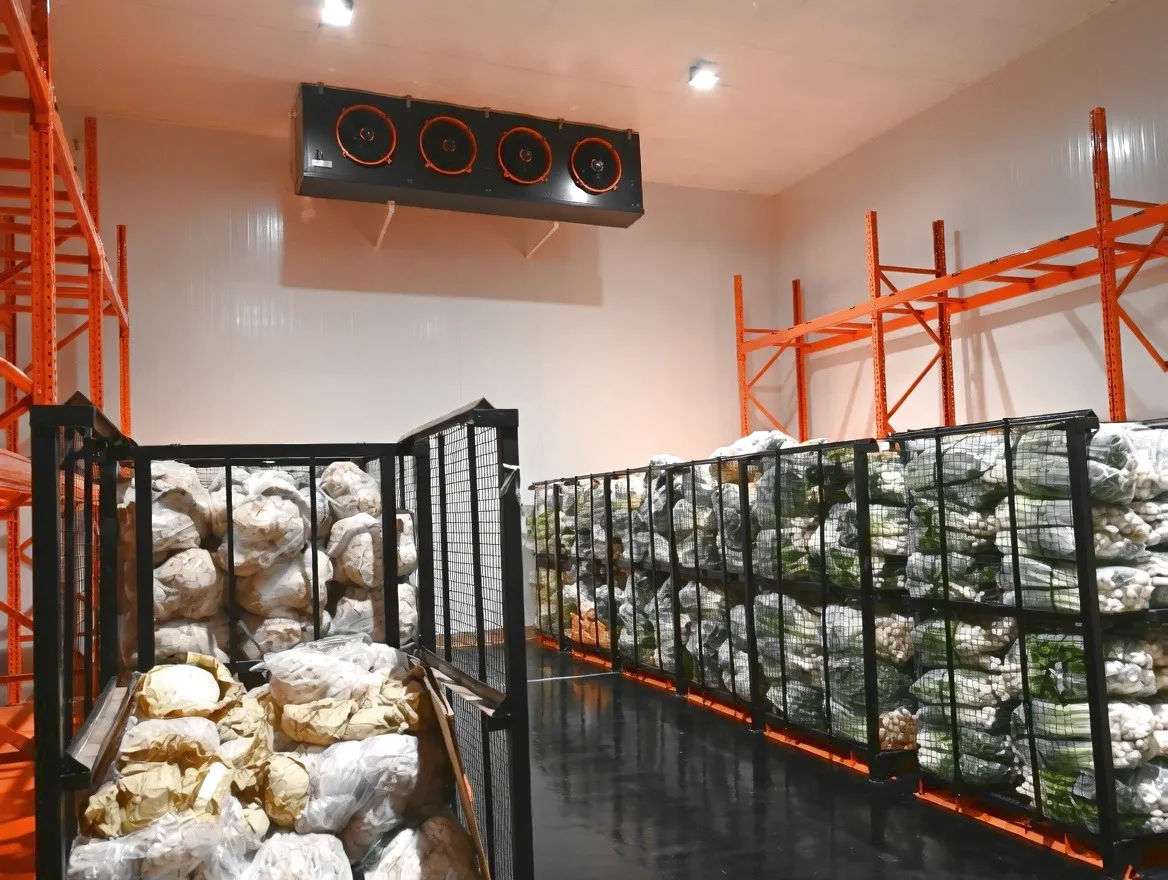
What UK Operators Say
“We’d been losing sieve bed life every season for three years and couldn’t pin it down. The Ever Power máy nén không dầu fixed it completely — no PSA bed changes in 14 months, nitrogen purity solid at 99.9% throughout. The BRCGS auditor actually commented positively on the air quality documentation during our most recent review. That alone was worth the switch.”
— James R., Operations Director
Whitmore Agricultural Storage Ltd, Lincolnshire
“Our MAP packaging line supplies blueberries to three major UK supermarket chains. The membrane nitrogen generator module was failing roughly every 18 months under our old oil-lubricated setup. Two years after switching to an Ever Power oil-free compressor, the same membrane is still performing at full spec. We’ve had zero gas quality incidents and no food safety flags from retailers. The saving on module replacement alone has been substantial.”
— Sarah T., Engineering Manager
Highland Berry Packers Ltd, Perthshire, Scotland
“Our Nottingham distribution hub runs 18 CA rooms for mixed produce on behalf of a national UK retailer. Ever Power supplied a bank of three EP-OF 37 units with N+1 redundancy and full BMS integration. Commissioning support was thorough, and the remote monitoring has flagged two potential issues before they became downtime events. Eighteen months in, the system is running exactly as specified — consistently clean air, excellent reliability.”
— David M., Technical Director
Meridian Cold Chain Logistics Ltd, Nottingham
Ever Power — Bespoke Engineering
Custom Oil-Free Compressor Solutions Designed Around Your CA Facility
Standard catalogue configurations solve a large proportion of CA storage compressed air challenges — but the reality of British cold chain infrastructure is that no two facilities are identical. Whether you are designing a new multi-room store from the ground up in the Vale of Evesham, retrofitting a nitrogen system in an existing Herefordshire facility, or specifying compressed air infrastructure for a new-build multi-temperature distribution centre in the East Midlands, our engineering team works directly from your project specification.
Our integrated manufacturing facility runs a complete R&D-to-production pipeline with the capability to configure custom solutions across the full EP-OF range. Options include non-standard discharge pressures, Variable Frequency Drive (VFD) speed control, stainless steel internal components for hygienic-area applications, bespoke acoustic enclosure designs for planning-sensitive rural locations, integral pre-dryer and pre-filter assemblies, remote monitoring modules compatible with Siemens SIMATIC, Schneider EcoStruxure, and ABB Ability platforms, and ATEX-rated variants for classified zone installations. Every custom unit undergoes a full Factory Acceptance Test (FAT) with third-party witnessed air purity verification before despatch, and our engineering team supports site commissioning at locations throughout mainland UK.
Câu hỏi thường gặp
Questions from UK cold chain operators, procurement managers, and CA facility engineers — answered plainly.
What type of oil-free air compressor works best for a CA storage facility running a PSA nitrogen generator in the UK, and what pressure rating do I actually need?
For a UK CA storage installation with a PSA nitrogen generator, an oil-free rotary screw compressor rated at 0.7–0.85 MPa is the standard choice for medium to large facilities — roughly any store above 500 m³ total volume. Oil-free scroll compressors are well suited to smaller single-room installations where free air delivery demand sits below 1.5 m³/min. Regardless of compression type, the non-negotiable specification is ISO 8573-1 Class 0 for oil content, which ensures PSA sieve beds receive uncontaminated inlet air throughout the full storage season. UKCA marking is required for equipment placed on the Great Britain market.
How much does an oil-free air compressor for controlled atmosphere storage cost in the UK, and what is a realistic return on investment compared with a filtered oil-lubricated machine?
A commercial-grade oil-free air compressor for CA storage in the UK — typically 11–37 kW — costs approximately £6,500–£22,000 at point of supply, which is around 25–40% above an equivalent oil-lubricated machine. The ROI calculation needs to include avoided costs: PSA sieve bed replacement events at £8,000–£25,000 each, membrane module replacements at £15,000–£40,000, downstream filter consumables, oil waste disposal compliance costs, and the financial risk of a food safety incident or mid-season nitrogen failure. Most UK facilities with PSA nitrogen generation recover the price premium within 18–30 months. Contact our team for a site-specific cost-benefit comparison.
Which ISO compressed air purity class do I actually need for my CA storage nitrogen generator — is ISO 8573-1 Class 1 really not good enough?
For CA storage PSA and membrane nitrogen generators, Class 0 (below 0.001 mg/m³ total oil) is the correct specification — not Class 1 (0.01 mg/m³). The tenfold difference in permissible oil content matters significantly across a ten-month storage season. At Class 1 levels, measurable oil accumulation on zeolite sieve surfaces begins to reduce adsorption capacity by month four to six, pulling nitrogen purity progressively below the 99.5% threshold. Membrane nitrogen systems are more sensitive still, and multiple major European membrane module manufacturers explicitly void their product warranty if the inlet air purity cannot be confirmed at Class 0 through a certified oil-free compressor. Class 1 from a lubricated machine with high-performance filtration is simply not the same documentation position as Class 0 from a certified oil-free machine.
Where can I find a reliable oil-free air compressor supplier in the UK who can provide after-sales service and technical support for a CA storage application?
Ever Power supplies oil-free air compressors to UK cold chain and CA storage operators with full after-sales technical support. Our UK sales team handles commissioning, preventive maintenance planning, remote diagnostics for connected units, and rapid spare parts despatch to mainland UK addresses. All units ship with full documentation including air purity test certificates, UKCA declarations, maintenance schedules, and operating manuals. To discuss your specific site — whether that is a new build in Kent, a retrofit in Herefordshire, or a large distribution hub in the Midlands — contact us at [email protected]. We typically respond within one UK business day.
How does an oil-free air compressor help a UK cold chain facility pass BRCGS Issue 9 audits for compressed air and gas utility quality?
BRCGS Issue 9 Clause 4.9 requires that all utilities — including compressed air that contacts food or food-contact surfaces, or feeds gas systems in direct contact with food — are assessed for hazard potential and appropriately controlled. An oil-free air compressor certified to ISO 8573-1 Class 0 provides documented, auditable evidence that oil contamination has been eliminated at the point of generation rather than managed through downstream filtration. UK auditors working under BRCGS certification increasingly distinguish between these two positions in their findings. Ever Power units are supplied with third-party witnessed air purity certificates that insert directly into BRCGS utility control documentation without requiring additional field testing.
What is the real difference between an oil-free scroll compressor and an oil-free screw compressor for CA storage — which one should I specify for a UK apple or soft-fruit operation?
Both are genuinely oil-free technologies and both eliminate the contamination risk to nitrogen generators — but they suit different operating scales. Oil-free scroll compressors are exceptionally quiet (typically 55–63 dB(A)), mechanically simple, and cost-effective for smaller CA stores where nitrogen demand is below approximately 1,500 litres per minute. Oil-free screw compressors scale from 7 kW to well above 200 kW, handle variable demand more efficiently, and are standard for commercial fruit stores, large pack houses, and multi-room distribution hubs. For most UK CA storage projects above 1,000 m³ total room volume, and certainly for any facility with PSA generators rated above 30 Nm³/hour, an oil-free screw compressor — ideally with Variable Frequency Drive control — will deliver the best lifecycle cost and operational flexibility.
Can I get a custom-built oil-free air compressor for a large CA storage warehouse in Scotland or Kent, and what does the lead time typically look like?
Ever Power specialises in bespoke oil-free air compressor configurations for large-scale CA storage projects across the UK, including custom flow rates, non-standard pressure ratings, integrated VFD control, BMS communication modules for Siemens and Schneider platforms, and custom acoustic enclosures for planning-sensitive rural locations across Scotland, Kent, Herefordshire, and beyond. Standard lead time for a customised unit runs to 6–10 weeks from confirmed order and approved engineering drawings. For installations tied to the September harvest loading window — which is effectively the hard deadline for most UK apple and pear stores — we recommend submitting your initial enquiry no later than April to allow adequate time for site survey, engineering review, manufacturing, testing, and UK commissioning. Contact our team early in your project timeline; we work with UK growers, pack houses, and cold chain developers year-round.
When is the best time to replace an oil-lubricated compressor with an oil-free machine in an operating UK CA storage facility — do I need to shut down the store completely?
The ideal replacement window for UK apple and pear CA stores is late May through early August — the period after store drawdown and product despatch, and before the new season’s harvest begins arriving in September. This gives a clean 8–12 week window for compressor removal, new unit installation, pipework connections, leak testing, commissioning runs, and third-party air purity verification — all before the critical loading period. For year-round facilities handling imported produce where shutdown windows are limited, a phased replacement using a short-term rental compressor can maintain nitrogen supply continuity during the changeover. Our UK engineering team assists with full replacement planning: P&ID review, site surveys, commissioning scheduling, and coordination with your nitrogen generator manufacturer where required.
Ready to Protect Your CA Storage System?
Talk to our engineering team about the right oil-free air compressor configuration for your UK controlled atmosphere facility. We provide technical consultations, site-specific sizing recommendations, and full project support from initial enquiry through to commissioning and compliance documentation.
chỉnh sửa bởi gzl