
Air Compressor for Industrial Applications: The Complete UK Buyer’s Technical Guide
From laser cutting workshops in Birmingham to precision manufacturing plants in Sheffield — this guide covers everything UK industrial buyers need to know about selecting, specifying, and sourcing the right air compressor.
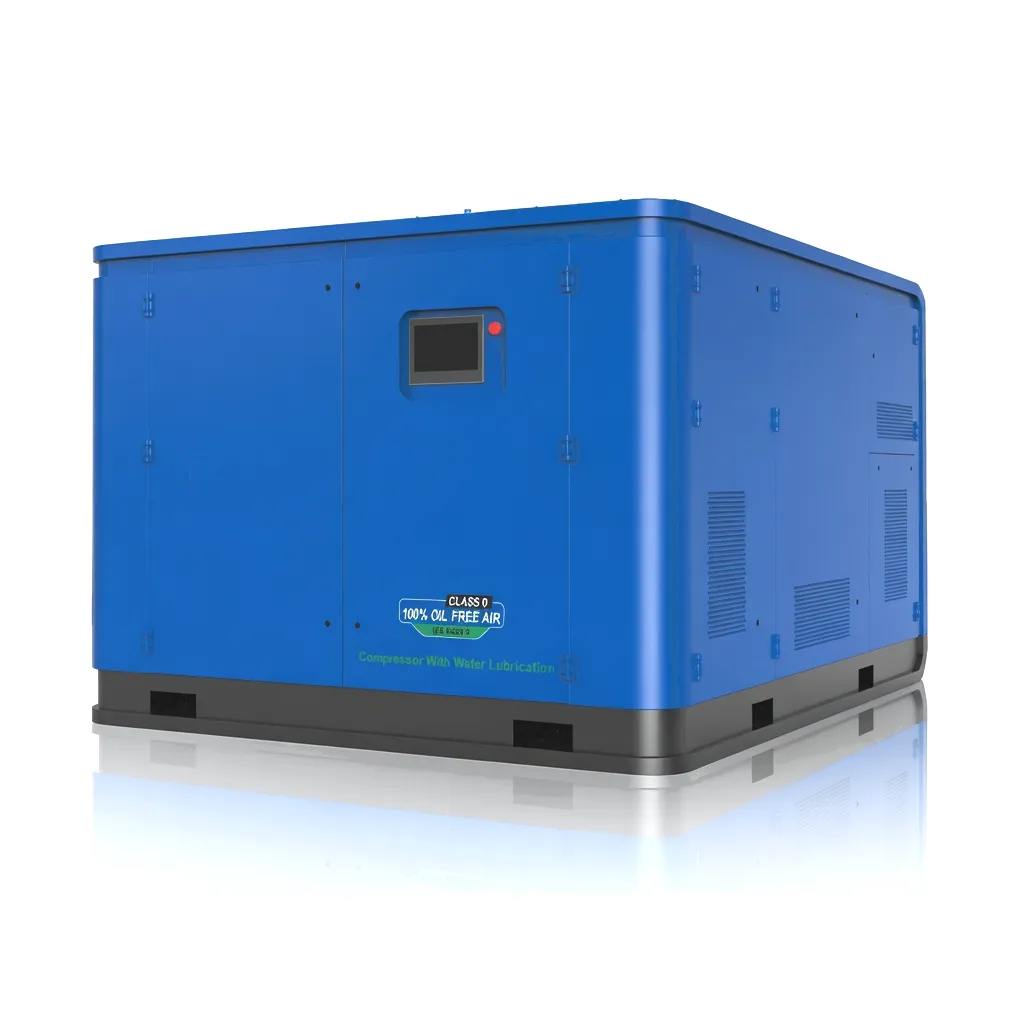 Compressed air is the invisible backbone of modern manufacturing. Walk the shop floor of any precision engineering firm in the West Midlands, or step into a fabrication unit along Sheffield’s Lower Don Valley, and you will hear the steady rhythm of an air compressor working behind every pneumatic tool, robotic arm, and laser cutting head. Yet for all its ubiquity, the air compressor is frequently misunderstood, under-specified, or sourced without adequate technical scrutiny — a mistake that costs UK manufacturers thousands of pounds in downtime, energy waste, and premature equipment failure each year.
This guide is written for procurement engineers, plant managers, and technical directors who are ready to move beyond catalogue browsing and understand the engineering that separates an adequate compressed-air solution from an outstanding one. Whether you are upgrading an ageing reciprocating plant in a Coventry pressings shop, or specifying compressed-air supply for a new fibre-laser cutting cell in the East Midlands, the principles here apply directly to your decision.
Ever Power manufactures variable-frequency screw air compressors and supporting ancillary equipment to exacting tolerances, backed by a supply chain that can fulfil UK purchase orders with full documentation, CE marking, and compressed-air quality compliance. Speak to the sales team directly to get specifications matched to your duty cycle and pressure demand.
How a Screw Air Compressor Works: Engineering Principles
Rotary Screw Compression
Two precision-machined helical rotors — a male and a female rotor — mesh together inside an aluminium or cast-iron housing. Atmospheric air enters the inlet port and is trapped in the interlobes. As the rotors turn, the trapped volume progressively decreases, compressing the air continuously. Unlike reciprocating compressors, there are no valves and no piston rings. This gives rotary screw machines their defining characteristics: virtually pulsation-free delivery, low vibration, and the ability to run continuously at 100% duty cycle without overheating.
Variable Frequency Drive (VFD) Control
A VFD — also called variable speed drive (VSD) — adjusts the motor speed in real time to match fluctuating air demand. Traditional fixed-speed compressors load and unload by opening and closing an inlet valve, wasting energy in idling mode. A variable-frequency screw air compressor eliminates this inefficiency by running the motor only as fast as demand requires. In a typical UK manufacturing environment where demand varies throughout the shift, VFD control typically delivers 35% to 50% energy savings compared with a fixed-speed equivalent. In an era of volatile UK electricity pricing, that figure is commercially compelling and forms a core part of any competent energy audit.
Oil Injection and Cooling Circuit
Lubricant oil is injected directly into the compression chamber to seal clearances between the rotors, to cool the compressed air, and to lubricate the rotor bearings. The oil-air mixture exits together, then passes through an oil separator where the lubricant is captured and recirculated. A thermostatic bypass valve controls the oil cooler so that the oil temperature stays within an optimal band — typically 70°C to 95°C — regardless of ambient conditions. The compressed air then passes through an aftercooler and moisture separator before entering the distribution pipework. This complete thermal management system is what enables a modern screw compressor to achieve rotor-to-rotor clearances measured in micrometres, without the thermal distortion that would otherwise compromise efficiency.
Core Materials in Industrial Air Compressor Construction
The reliability and efficiency of a screw air compressor are ultimately determined by the materials chosen for its most stressed components. Each material selection represents an engineering trade-off between cost, durability, thermal performance, and compatibility with the compressed-air process fluid. Understanding these choices gives buyers a meaningful basis on which to evaluate competing products.
Rotors are typically machined from high-grade alloy steel — often 42CrMo4 or equivalent. The material offers high tensile strength to resist bending stresses in the shaft, excellent machinability for achieving the complex helical profile, and sufficient hardness (typically HRC 28–34 after heat treatment) for wear resistance in the rotor bore contact zones.
Compressor casings are predominantly grey cast iron, grade GG25 or GG30. This material damps vibration effectively, has good machinability for the close-tolerance bore that houses the rotors, and maintains dimensional stability across the operating temperature range. In premium or corrosive-environment variants, aluminium alloy ADC12 housings reduce unit weight by up to 35% while improving heat dissipation.
Precision filters, receiver tanks, and moisture separators are fabricated from 304 or 316L stainless steel. This material resists the condensate that accumulates when warm compressed air cools in the distribution system, prevents internal rust that would otherwise contaminate air tools or laser cutting heads, and satisfies food-grade and pharmaceutical requirements. The stainless construction also withstands the mild acids that can form when CO2 dissolves in condensate.
Rotor shaft bearings are typically deep-groove ball bearings or cylindrical roller bearings manufactured to ISO P5 or P4 tolerance class. Through-hardened bearing steel (100Cr6 / SAE 52100) provides the Hertzian contact fatigue life needed in a machine that may run 8,000 hours per year. Bearing selection determines the maintenance interval: premium-grade bearings typically support 20,000-hour grease-replenishment intervals versus 4,000 hours for economy alternatives.
Stainless Steel Precision Filters: Why They Matter
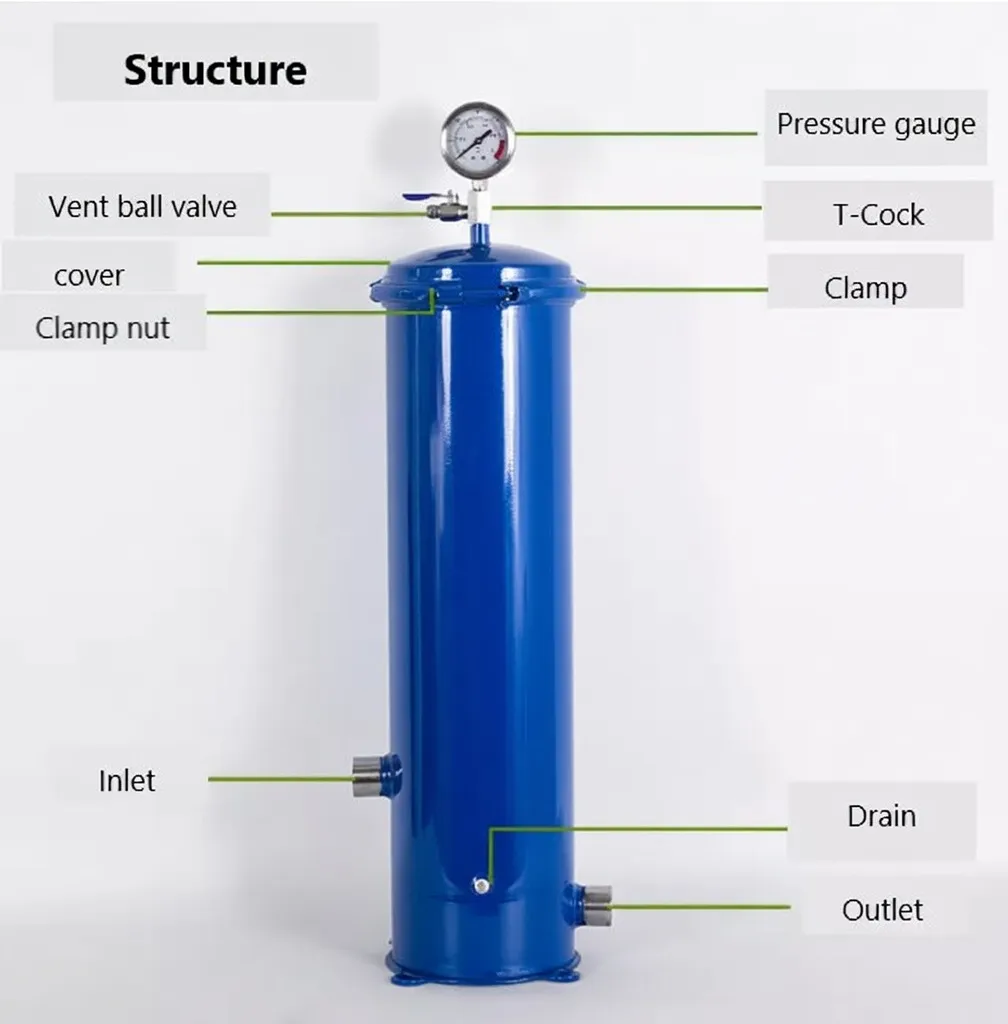
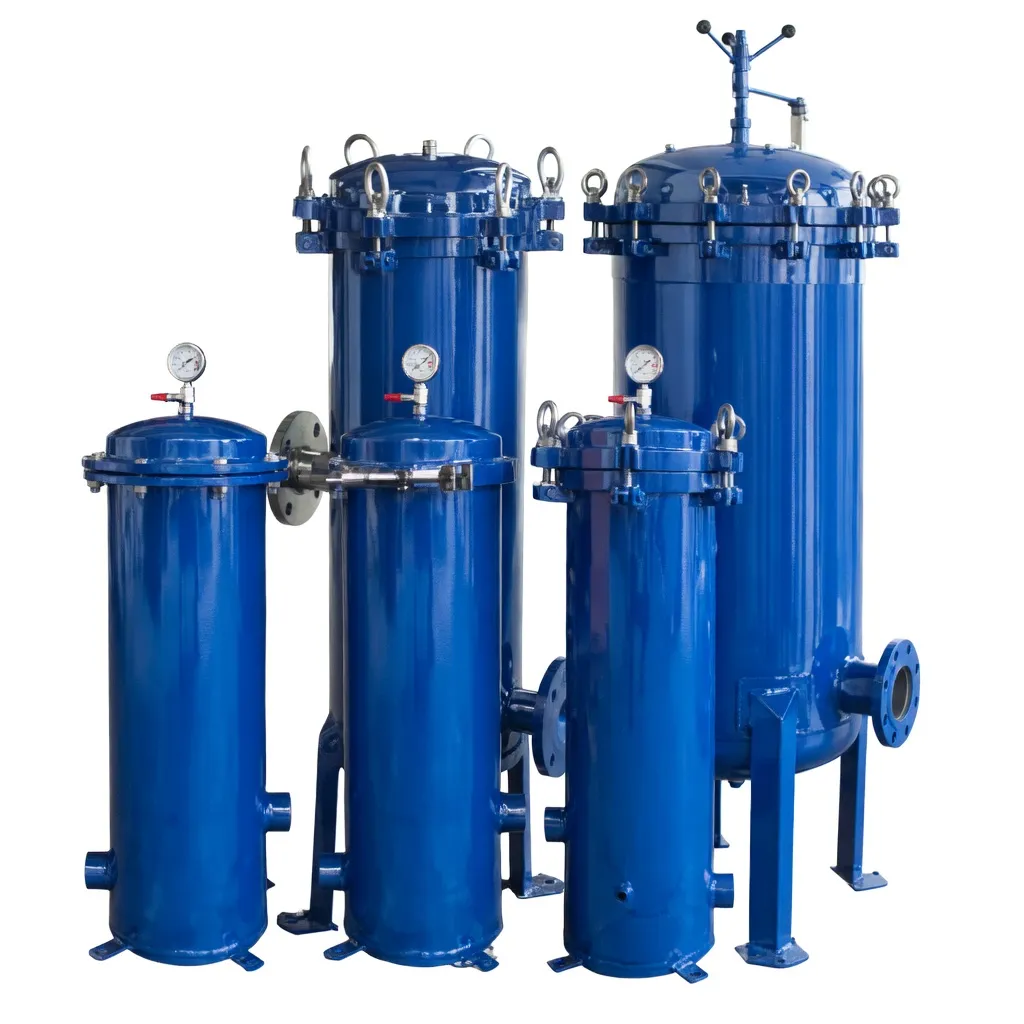 Even the best screw compressor delivers air that carries traces of oil aerosol, water vapour, and sub-micron particulates. For laser cutting, pharmaceutical packaging, and food processing applications, these contaminants are unacceptable. Stainless steel coalescing filters downstream of the compressor are the front line of air quality management. The 316L stainless steel shell resists both the condensate acids and the cleaning agents used during scheduled maintenance, while the borosilicate glass fibre filter element captures oil aerosols down to 0.01 mg/m³ at rated flow.
In Birmingham and West Midlands pressing and stamping plants, where compressed air feeds both production pneumatics and instrument air circuits simultaneously, a properly staged filtration train — pre-filter, coalescing filter, activated-carbon filter — removes all oil and odour, protecting sensitive instrumentation and preventing batch rejections. The pressure drop across a clean filter element is typically under 0.2 bar; monitoring that differential pressure is the single most important maintenance activity in a compressed-air treatment system.
Key Technical Advantages of Variable-Frequency Screw Air Compressors
VFD motor control matches output to demand in real time. No idling losses, no excessive blow-off. At UK industrial electricity tariffs above 25p/kWh, a 37 kW VFD compressor running a mixed-demand profile can return its premium over a fixed-speed machine in under eighteen months through electricity savings alone.
Laser-cutting assist-gas circuits, CNC pneumatic tool changers, and textile machinery demand stable pressure to maintain cut quality or dimensional accuracy. A VFD compressor adjusts speed smoothly in response to demand changes, maintaining system pressure within ±0.1 bar — a level of stability that fixed-speed load/unload control cannot match.
Soft starting via VFD eliminates the high inrush current and mechanical shock that shortens belt life, motor winding life, and rotor bearing life on fixed-speed machines. Starting current is limited to rated current or below, reducing stress on the factory electrical supply — an important consideration when motors exceed 22 kW and supply transformer capacity is limited.
Modern variable-frequency screw compressors run at lower rotor tip speeds during partial-load operation, significantly reducing noise. An enclosure-mounted unit with acoustic foam panel inserts typically achieves below 68 dB(A) at one metre — relevant where UK Health and Safety Executive noise-at-work regulations require hearing protection above 80 dB(A) averaged exposure.
Integrated PLC controllers with Modbus RTU / TCP-IP output allow air-compressor data — pressure, temperature, run hours, fault codes — to be integrated into factory SCADA or building management systems. UK facilities managers can track specific power consumption (kW/m³ per minute) continuously and benchmark against ISO 1217 Annex E class performance limits, building a documented case for capital replacement grants under UK industrial energy-efficiency schemes.
Integrating the VFD, motor, separator vessel, cooler, and controller into a single powder-coated steel enclosure reduces the installed footprint by up to 40% versus a comparable reciprocating plant with separate receiver and after-cooler. That space saving is commercially significant in UK manufacturing premises where floor space is valued at a premium and planning constraints on building extensions are often tight.
Technical Performance Specification Table
| पैरामीटर | इकाई | 11 kW Model | 22 kW Model | 37 kW Model | 75 kW Model | 160 kW Model |
|---|---|---|---|---|---|---|
| मोटर शक्ति | किलोवाट | 11 | 22 | 37 | 75 | 160 |
| मुफ़्त हवाई डिलीवरी | m³/min | 0.9–1.8 | 2.2–3.8 | 3.5–6.0 | 8.0–13.0 | 18.0–28.0 |
| कार्यशील दाब सीमा | बार(जी) | 5.5–13 | 5.5–13 | 5.5–13 | 5.5–13 | 5.5–13 |
| VFD Speed Range | Hz | 25–65 | 25–65 | 25–65 | 25–65 | 25–65 |
| Rotor Profile | — | 5+6 asymmetric (all models) | ||||
| शोर का स्तर (1 मीटर) | डीबी(ए) | <65 | <67 | <68 | <70 | <72 |
| Outlet Temperature Rise | °C above ambient | ≤ 8°C (all models) | ||||
| तेल का रिसाव | mg/m³ | ≤ 3 (ISO 8573-1 Class 3) | ||||
| Rotor Material | — | 42CrMo4 alloy steel | ||||
| Separator Vessel Material | — | 304 / 316L Stainless Steel | ||||
| मोटर दक्षता वर्ग | — | IE3 / IE4 (ErP Directive compliant) | ||||
| Control Interface | — | 7-inch colour touchscreen, Modbus RTU/TCP | ||||
| प्रमाणन | — | CE, ISO 9001:2015, PED 2014/68/EU | ||||
Industrial Application Scenarios Across UK Manufacturing
 The flexibility of a modern variable-frequency screw air compressor means it appears across an extraordinary breadth of UK industrial sectors. Each sector places distinct demands on pressure range, air quality, duty cycle, and control integration, and understanding those demands is essential for correct specification.
Laser Cutting and Sheet Metal Fabrication
Fibre-laser and CO2-laser cutting machines use compressed air both as an assist gas (for lower-cost general-purpose cutting) and to actuate pneumatic clamping, height-sensing, and nozzle-purge functions. In the West Midlands fabrication cluster that spans Walsall, Dudley, and Birmingham, air-assist laser cutting at pressures of 5 to 8 bar delivers clean, dross-free cuts on mild steel up to 5 mm without the cost of nitrogen. The air quality requirement is ISO 8573-1 Class 1.4.1 when cutting stainless or aluminium, demanding a dryer and fine filter downstream of the compressor. Pressure stability is critical: a 0.5 bar excursion during a contour cut produces visible striations on the kerf wall. A variable-frequency screw air compressor with ±0.1 bar pressure control satisfies this requirement reliably.
Automotive Components Manufacturing
The UK automotive supply chain — centred on plants in the Midlands, Sunderland, and Swindon — consumes compressed air at enormous volume for body-panel blow-off, paint-spray atomisation, pneumatic nut runners, robotic gripper actuation, and end-of-line leak testing. Paint-spray booths demand oil-free or oil-injected compressors with downstream adsorption filters to prevent silicon and oil contamination of paint films. Robotic assembly cells demand uninterrupted supply: a compressor trip during a robotic welding sequence can scrap an entire body-in-white assembly worth thousands of pounds. Redundant compressor duty/standby configurations, automatically controlled by a network controller, are standard practice on high-OEE automotive lines.
Pharmaceutical and Food Processing
UK pharmaceutical manufacturers operating under MHRA GMP guidelines must document compressed-air quality to ISO 8573-1 with Certificate of Analysis. Tablet coating pans, capsule filling machines, and clean-room isolators use air that must meet Class 1 total oil content (0.01 mg/m³) and Class 2 or better for water vapour. In the food and beverage sector — from Scottish whisky distilleries to Yorkshire bakery operations — compressed air that contacts product or packaging must comply with British Compressed Gases Association BCGA TIS 19 guidance. Stainless steel construction throughout the ancillary equipment train is the norm, not the exception.
Civil Engineering and Construction Equipment
Portable diesel-driven screw compressors and electric station compressors both find use across UK civil engineering. Jackhammer drills, concrete vibrators, pipe-pressure testing, and abrasive blasting for structural steelwork preservation all draw from compressed-air systems operating in the 6 to 10 bar range. Sheffield, with its long history of structural steel fabrication for bridge and rail infrastructure, has a particular concentration of businesses requiring high-volume industrial air compressors for shot-blasting of rolled sections and the pneumatic tools used in assembly bay fitting.
Textile and Nonwoven Manufacturing
Air-jet weaving machines depend on high-velocity bursts of clean compressed air to carry the weft thread across the loom at speeds exceeding 2,000 insertions per minute. The compressed-air quality required is extremely demanding: any oil or moisture causes thread damage, staining, and loom downtime. In the Huddersfield and Bradford woollen and worsted textile districts, air-jet looms represent the highest per-metre air consumption of any industrial machine type, making the specific power of the compressor — measured in kW per m³/min — the dominant factor in long-run production cost calculations.
Stainless Steel Receiver Tanks: Pressure Buffer and System Stability
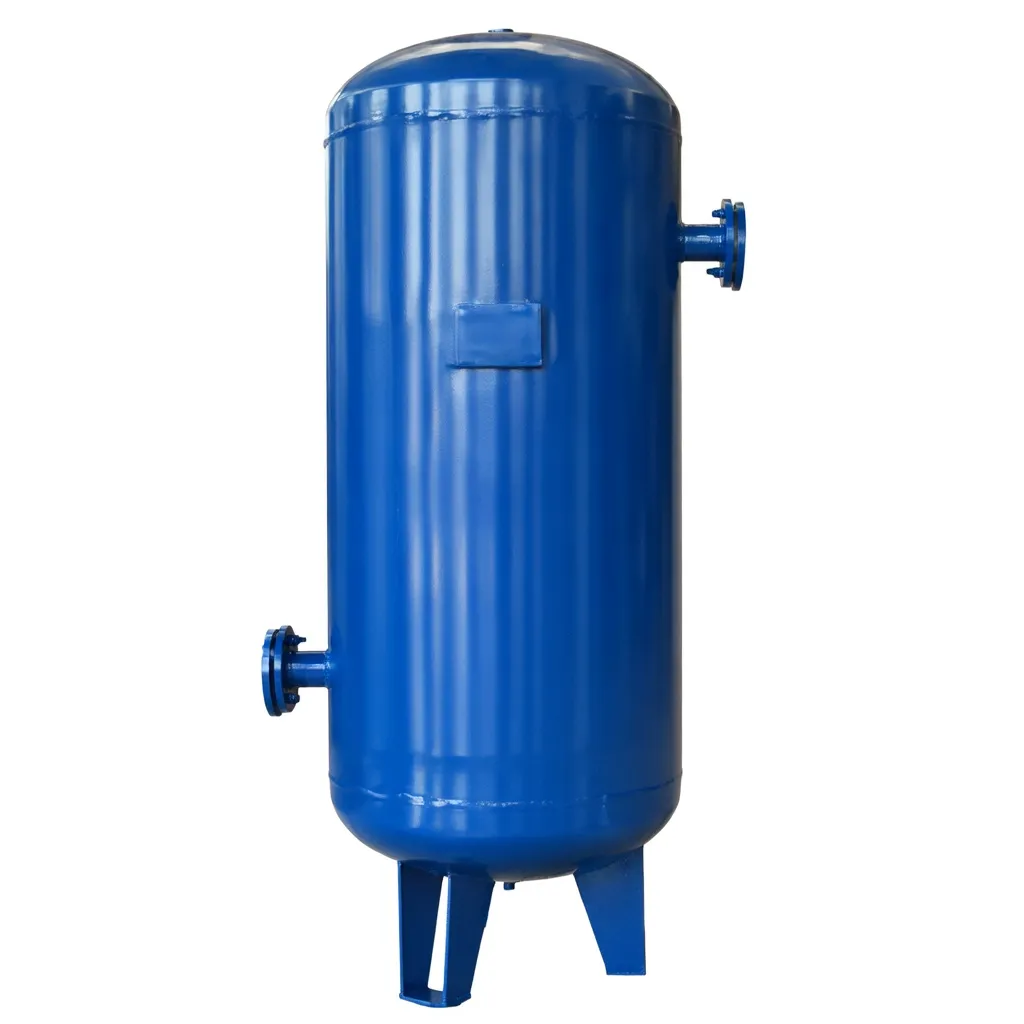 A correctly sized receiver tank is not simply a storage vessel — it is a dynamic pressure buffer that decouples the compressor duty cycle from instantaneous demand fluctuations. When a laser-cutting machine opens its assist-gas valve for a pierce, the short high-flow demand spike is met by the receiver, preventing the compressor from surging and preventing a pressure dip at the cutting head. As a general rule, UK compressed-air system designers specify a receiver volume of 10 litres per cubic metre per minute of installed compressor capacity at 7 bar, with a minimum of 200 litres for any fixed installation.
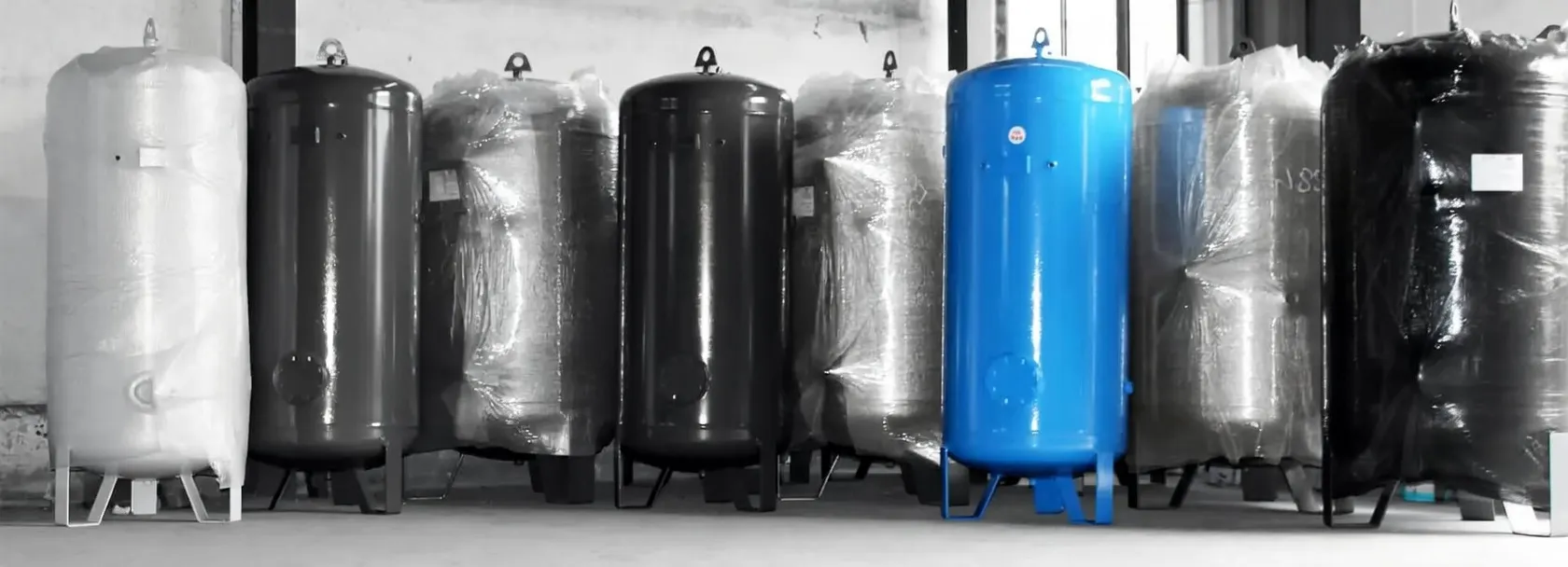
Ever Power’s stainless steel gas tanks are manufactured in 316L austenitic stainless, TIG-welded throughout, and pressure-tested to 1.5× working pressure before despatch. The tanks carry CE marking under the Pressure Equipment Directive 2014/68/EU (which continues to apply in Great Britain under the UK Pressure Equipment (Safety) Regulations 2016). Every tank is supplied with a safety pressure-relief valve, a drain valve, and an inspection access port complying with PSSR 2000 requirements for written schemes of examination. Available sizes range from 200 litres through to 5,000 litres.
For food-grade or pharmaceutical applications, the internal surface is electropolished to Ra 0.4 µm or better, eliminating bacteria-harbouring crevices. For outdoor installations in UK coastal or marine environments — common around Portsmouth shipyards and Aberdeen oil and gas support facilities — full 316L specification and optional polyurea external coating provide corrosion protection over a twenty-year service life.
Ever Power: Precision Manufacturing and Customisation Capability
Ever Power operates a purpose-built manufacturing facility equipped with CNC rotor-grinding machines, coordinate-measuring equipment, automated assembly lines, and a dedicated test bay where every compressor unit runs a full-load performance acceptance test before packing. The quality management system is certified to ISO 9001:2015 and the manufacturing processes comply with PED 2014/68/EU for pressure-equipment supply into European and UK markets. The factory’s supply chain includes forged-steel rotor blanks sourced from qualified metallurgical partners, IE3 and IE4 efficiency-class motors from major European and Asian motor manufacturers, and VFD drive units from recognised inverter brands with proven MTBF records exceeding 80,000 hours.
Customisation is a genuine capability at Ever Power, not a sales promise. The engineering team routinely undertakes bespoke assignments: non-standard pressure ratings (up to 16 bar for specialist applications), extended-ambient-temperature configurations for Middle-Eastern distribution partners, 60 Hz motor and VFD specifications for North American export, and dual-compressor frame assemblies for offshore container skid installations. For UK buyers, this translates to a supplier able to meet specific British Standards cross-references, supply documentation packages for PSSR 2000 written schemes of examination, and configure communication protocols for integration with existing Siemens or Rockwell SCADA infrastructure.
Featured Ever Power Air Compressor Products
CM160PVF वेरिएबल फ्रीक्वेंसी स्क्रू एयर कंप्रेसर
The CM160PVF is a 160 kW variable-frequency screw air compressor designed for large-scale manufacturing operations where high free-air delivery — up to 28 m³/min — is required continuously. Its integrated VFD and IE4 motor deliver specific power as low as 5.8 kW per m³/min at 7 bar, making it one of the most energy-efficient air compressors in its class. The unit is fully packaged and ready for connection, with a CE declaration of conformity included as standard for UK and European markets.
परिवर्तनीय गति ड्राइव स्क्रू एयर कंप्रेसर
This modular variable-speed-drive screw compressor range spans 11 kW to 75 kW and addresses mid-scale manufacturing demand with precision. Available in both standard and premium configurations, each unit features a touchscreen controller with Modbus TCP connectivity, a high-efficiency aftercooler that limits outlet air temperature to ambient plus 8°C, and a 316L stainless oil separator vessel. It is the right choice for UK engineering firms that need a capable, CE-marked air compressor from an audited manufacturing source with responsive after-sales support.
Customer Success Story: Sheffield Precision Fabrications Ltd
Sheffield Precision Fabrications Ltd is a structural steel and sheet-metal fabrication company based in the Lower Don Valley, Sheffield, employing 84 people across a 4,800 m² manufacturing site. The business serves the rail infrastructure, defence, and energy sectors, operating two 3 kW fibre-laser cutting cells alongside CNC press brakes, robotic welding stations, and a shot-blasting bay for structural steelwork.
When the company won a major frame contract for rail trackside enclosures, it needed to double its laser-cutting capacity and simultaneously upgrade the compressed-air supply, which had been running two ageing 22 kW reciprocating compressors that were unreliable, noisy, and consuming over 310 kWh per day. The plant engineer, working with Ever Power’s technical sales team, specified two Ever Power variable-frequency screw air compressors — a CM160PVF and a 37 kW VSD unit — configured in duty/standby with automatic lead/lag control. Both units were fitted with stainless steel precision filter trains and a shared 1,500-litre 316L stainless steel receiver vessel.
After commissioning, the compressed-air system’s total daily electricity consumption fell to 178 kWh — a 43% reduction. Laser-cut edge quality improved measurably, with kerf-face striations eliminated on 3 mm mild steel cuts at 8 bar assist pressure. The noise level in the compressor room fell from 83 dB(A) to 68 dB(A), removing the requirement for mandatory hearing protection in the adjacent fabrication bay. The total investment payback period was calculated at twenty-two months at prevailing Sheffield industrial electricity tariff rates. The shot-blasting bay — previously starved of air during laser cutting peaks — now operates simultaneously without system pressure dipping below 6.5 bar.
हमारे यूके के ग्राहक क्या कहते हैं
“The pressure stability out of the Ever Power VFD unit is a different world from the old reciprocating machines. Our laser cutting head no longer fluctuates mid-pierce, and the cut quality on 4 mm stainless has improved to the point where we can quote tighter tolerances. The lead time from order to delivery was under five weeks, and the documentation pack for our PSSR written scheme was complete and accurate.”
“We needed a non-standard 13 bar configuration with a specific Modbus data map for our Siemens SCADA system. Ever Power’s technical team turned around a revised drawing pack within three working days and the final unit matched the specification exactly. The stainless steel filter assembly has been running for fourteen months without a filter change being triggered — the element condition monitoring works exactly as described.”
“We purchased two CM160PVF units for a new pharmaceutical blister-pack line in our Huddersfield facility. The air quality documentation — including oil carryover test certificates and ISO 8573-1 class confirmation — was supplied proactively without us having to chase. The units have run continuously since installation with no unplanned stops. Ever Power’s after-sales responsiveness has been genuinely impressive.”
अक्सर पूछे जाने वाले प्रश्नों
जीजेडएल द्वारा संपादित