
Plus de 18 ans d'expérience en ingénierie de l'air comprimé · Mise à jour : juin 2025
10 min de lecture
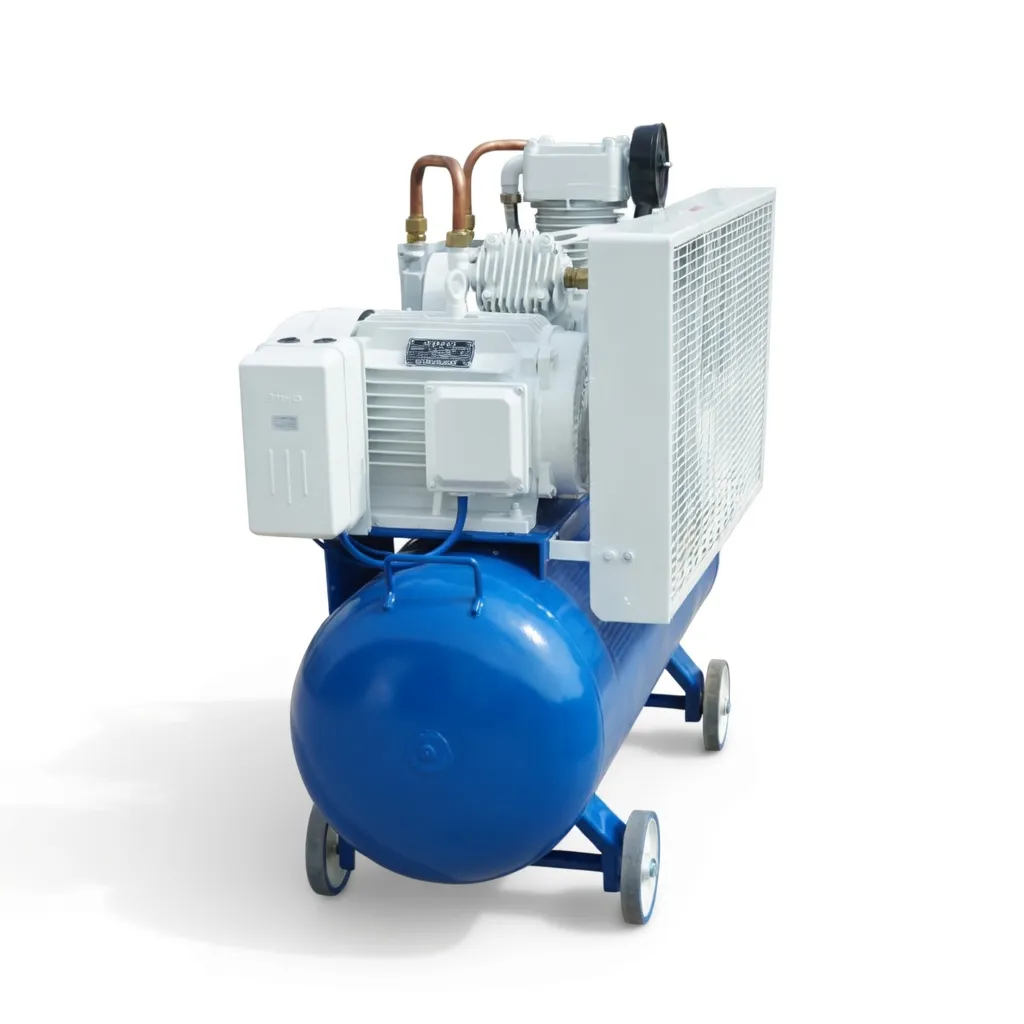 Visitez n'importe quelle usine de chips, torréfaction de café ou chaîne de production de biscuits au Royaume-Uni, et vous constaterez qu'un élément d'infrastructure essentiel, bien que discret, est à la base de tout : le système d'air comprimé. Il scelle les emballages, achemine les produits par canalisations, actionne les vannes et, point crucial pour les emballages sous atmosphère modifiée, remplace l'oxygène par des mélanges gazeux sans danger pour les aliments. Or, de nombreuses équipes d'approvisionnement sous-estiment encore que la qualité de cet air comprimé détermine directement si les aliments qui arrivent en rayon sont sûrs, stables à température ambiante et conformes à la réglementation.
Un compresseur lubrifié à l'huile, même avec filtration en aval, présente un risque de contamination résiduelle à peine toléré par la norme ISO 8573-1 classe 1 et totalement proscrit par la classe 0. Pour les produits alimentaires tels que les en-cas, les noix et le café – des produits riches en matières grasses qui s'oxydent rapidement et absorbent fortement les contaminants – l'utilisation d'un compresseur d'air sans huile n'est pas une simple hypothèse. Il s'agit d'une nécessité impérieuse, tant sur le plan commercial que pour la sécurité alimentaire. Ce guide présente les aspects techniques, le cadre de conformité, les données de performance réelles et les décisions pratiques que les fabricants de produits alimentaires britanniques devront prendre en 2025.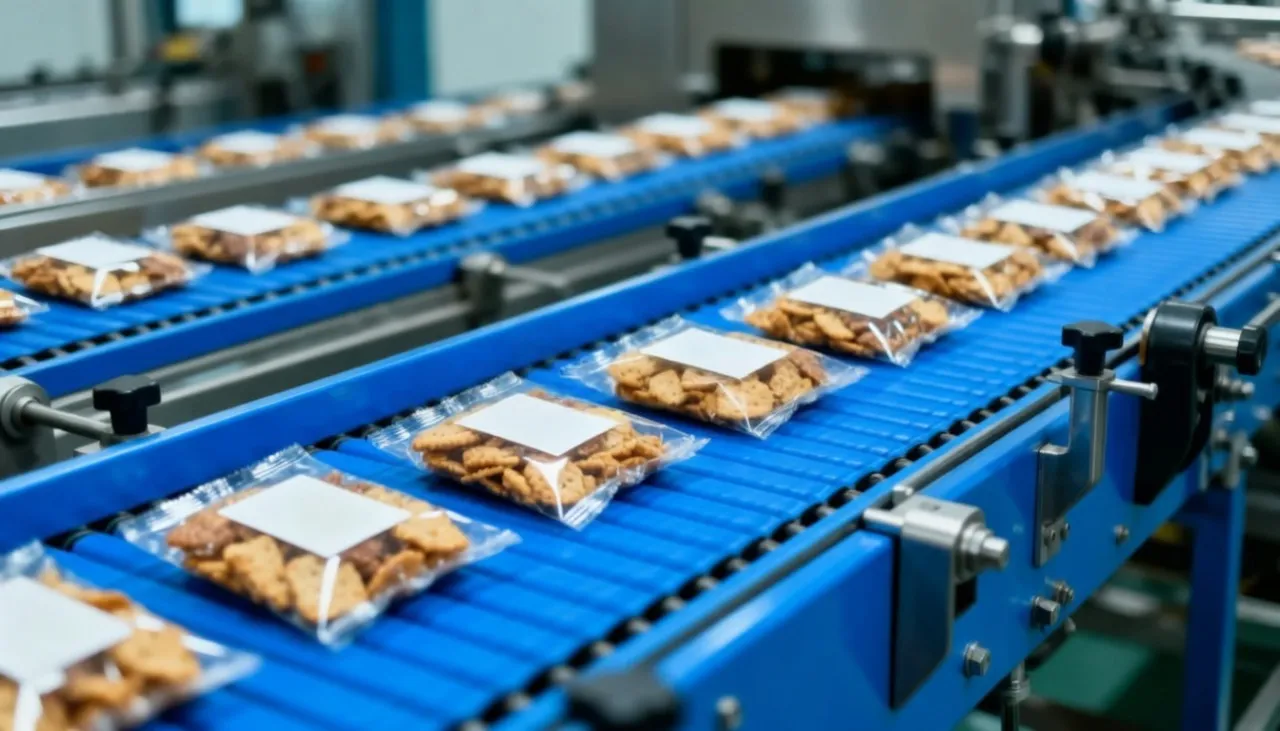
Pourquoi l'huile dans l'air comprimé représente un danger critique pour la sécurité alimentaire
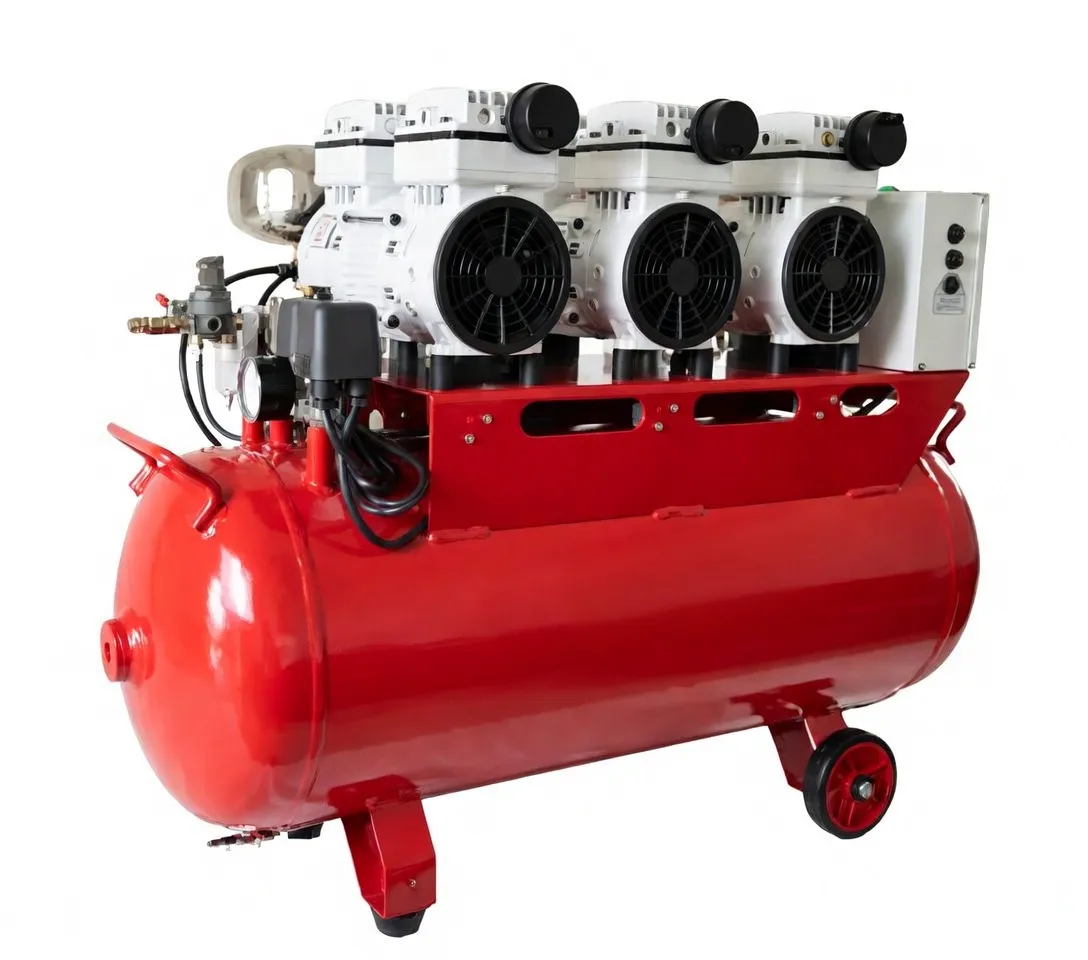 L'air comprimé utilisé dans l'industrie agroalimentaire est considéré comme un matériau en contact avec les aliments en vertu des réglementations britanniques et européennes, même après le Brexit, ce qui a maintenu le cadre essentiel de sécurité alimentaire défini par le système HACCP britannique. Cela signifie que le même niveau d'exigence appliqué aux films d'emballage, à l'eau de process ou aux lubrifiants de qualité alimentaire doit être appliqué à chaque mètre cube d'air entrant en contact avec un produit, le transportant ou assurant son scellage.
Les aérosols d'huile provenant d'un compresseur lubrifié, même à des concentrations de l'ordre du ppm (parties par million), engendrent quatre types de problèmes distincts. Le plus immédiat est d'ordre sensoriel : les aliments gras comme les chips et les noix absorbent les odeurs d'hydrocarbures de l'huile minérale en quelques jours, développant un goût rance que les consommateurs perçoivent avant même qu'un instrument d'analyse ne détecte la contamination. Le deuxième problème est d'ordre microbiologique : les films d'huile présents sur les parois internes des tuyaux retiennent l'humidité et fournissent les nutriments nécessaires à la formation de biofilms. Un système d'air comprimé contaminé constitue donc également un vecteur de Listeria et de Pseudomonas dans un environnement de production réfrigéré.
Troisièmement, et c'est une préoccupation croissante pour les responsables des achats suite à des rappels de produits très médiatisés, il y a le risque de non-conformité réglementaire. Les contrôles de la Food Standards Agency (FSA) au Royaume-Uni, les audits BRCGS et les codes de bonnes pratiques des distributeurs (Tesco, Sainsbury's et M&S appliquent tous leurs propres normes de qualité fournisseurs) font explicitement référence à la qualité de l'air comprimé. Un seul audit d'air comprimé non concluant peut entraîner la suspension des approvisionnements, pour un coût de plusieurs centaines de milliers de livres sterling. Enfin, il y a la réalité opérationnelle : les traces d'huile accélèrent l'usure des vannes pneumatiques et des débitmètres, augmentent la fréquence de maintenance et réduisent la durée de vie des analyseurs de gaz MAP – autant de coûts qui n'apparaissent pas sur la facture d'achat du compresseur, mais qui s'accumulent insidieusement au fil des équipes de production.
Dommage sensoriel
Les odeurs d'hydrocarbures sont absorbées par les produits riches en matières grasses en quelques jours.
Risque lié au biofilm
Les films d'huile favorisent la prolifération de Listeria et de Pseudomonas dans les canalisations.
Échec de l'audit
Les codes BRCGS et les codes des détaillants signalent l'air comprimé non conforme.
Équipement d'usure
Dégradation accélérée des vannes et des débitmètres sur la ligne
ISO 8573-1 : La norme que tout producteur alimentaire britannique doit connaître
La norme ISO 8573-1 est la norme internationale qui spécifie les classes de pureté de l'air comprimé selon trois catégories de contaminants : particules, humidité (eau) et huile. Pour les applications en contact avec les aliments, la classification relative à l'huile est le paramètre déterminant. La norme comprend trois classes, de la classe 0 (la plus exigeante – aucune trace d'huile détectable) à la classe 4 (jusqu'à 5 mg/m³). Les fabricants de produits alimentaires britanniques qui approvisionnent les grandes enseignes de la grande distribution sont de plus en plus tenus de démontrer leur conformité aux classes 0 ou 1, la classe 0 devenant la norme pour les gaz d'emballage à contact direct et le rinçage à l'azote des emballages sous atmosphère modifiée (MAP).
| Classe ISO | Teneur totale en huile (mg/m³) | Adéquation à l'application alimentaire | Type de compresseur requis |
|---|---|---|---|
| Classe 0 | Comme spécifié (généralement < 0,001) | ✓ Contact direct — Gaz MAP, aseptique | Sans huile seulement |
| Classe 1 | ≤ 0,01 | ✓ Emballage et transport quasi-contact | Sans huile (recommandé) |
| Classe 2 | ≤ 0,1 | ⚠ Utilitaires sans contact (actionneurs, outils) | Lubrification + filtration haute efficacité |
| Classe 3-4 | ≤ 1,0 – 5,0 | ✗ Ne convient pas à la fabrication de produits alimentaires | lubrifié standard |
Source : ISO 8573-1:2010. La classe 0 est définie par accord entre l'utilisateur et le fournisseur et doit être spécifiée dans le contrat d'achat.
Comment fonctionne réellement un compresseur d'air sans huile
Le terme « sans huile » se rapporte à l'étage de compression interne du compresseur, et non à la simple filtration en aval. Dans une conception véritablement sans huile – qu'il s'agisse d'un compresseur à vis rotatif, à spirale ou centrifuge – la chambre de compression est étanche grâce à des rotors revêtus de PTFE (polytétrafluoroéthylène) ou à des joints toriques en carbone, ce qui élimine tout besoin d'huile comme lubrifiant ou fluide de refroidissement dans la zone de compression. Les paliers sont logés dans des compartiments étanches séparés, avec des barrières anti-huile empêchant toute migration d'huile dans le circuit d'air. Ceci est fondamentalement différent d'un compresseur à vis lubrifié avec filtres coalescents ; même un système de filtration parfaitement entretenu ne peut garantir une pureté de classe 0 si de l'huile est présente en amont.
Pour le conditionnement alimentaire, les deux technologies les plus pertinentes sont les compresseurs à vis rotatifs sans huile (idéaux pour le conditionnement sous atmosphère modifiée (MAP) à haut débit et continu, ainsi que pour le transport pneumatique d'ingrédients secs) et les compresseurs à spirale sans huile (privilégiés pour les petites stations de conditionnement, l'alimentation en gaz des laboratoires et les installations où le bruit est un facteur important dans les environnements industriels ouverts). Les compresseurs à vis à injection d'eau offrent une troisième option : l'eau sert à la fois de fluide de refroidissement et de joint. Ils produisent de l'air conforme à la norme ISO 8573-1, classe 0, et offrent des températures de sortie inférieures à celles des compresseurs à sec, un avantage crucial pour le conditionnement de produits thermosensibles.
| Technologie | Plage de débit | Idéal pour | Niveau sonore | Classe ISO |
|---|---|---|---|---|
| Vis rotative sans huile | 2 – 100+ m³/min | MAP à haut volume, transportant | 65–75 dB(A) | Classe 0 / 1 |
| Rouleau sans huile | 0,1 – 3 m³/min | petites lignes, laboratoire, stations d'emballage | 55–65 dB(A) | Classe 0 |
| Vis injectée d'eau | 1 – 50 m³/min | Produits thermosensibles, basse température | 66–72 dB(A) | Classe 0 |
| Centrifuge (Turbo) | 50 – 500+ m³/min | Grandes boulangeries, brasseries | 70–80 dB(A) | Classe 0 |
Scénarios d'application dans le secteur de l'emballage alimentaire au Royaume-Uni
Les besoins en air comprimé d'une usine d'emballage alimentaire se répartissent sur plusieurs zones de traitement distinctes, chacune présentant ses propres caractéristiques de pureté, de pression et de débit. Comprendre ces différentes zones est la première étape pour concevoir un système ni surdimensionné, ni au détriment de la qualité.
Rinçage à l'azote MAP
Le conditionnement sous atmosphère modifiée (CAM) des chips, des noix et du café utilise de l'azote (N₂) ou des mélanges azote/CO₂ pour remplacer l'oxygène et prolonger la durée de conservation de 3 à 6 fois. Le générateur d'azote à membrane ou à pression positive (PSA) alimentant la ligne CAM requiert de l'air comprimé exempt d'huile. Toute trace d'huile empoisonne les tamis moléculaires et contamine le gaz produit ; ce double dysfonctionnement peut immobiliser une ligne de conditionnement entière en quelques heures.
Transport pneumatique — Aliments secs
Le sucre, la farine, le cacao en poudre, les fruits secs et les produits soufflés sont régulièrement transférés entre les silos, les trémies de pesage et les machines d'emballage grâce à un système de transport pneumatique en phase diluée ou en phase dense. L'air de transport enveloppe entièrement le produit. L'air comprimé sans huile, à une pression relative de 0,5 à 1,5 bar (phase diluée), empêche l'absorption de contaminants par le produit et protège les conduites de transport et les filtres contre le colmatage prématuré dû aux particules huileuses.
Scellage et formage (VFFS / HFFS)
Les machines de formage-remplissage-scellage verticales et horizontales utilisent de l'air comprimé à 5-7 bars pour actionner les vérins à mâchoires, les lames de coupe et les systèmes de repérage. Bien que cet air ne soit pas en contact direct avec le produit, dans un environnement de production ouvert, il est rejeté à proximité des flux de produit. Les auditeurs BRCGS considèrent de plus en plus l'air des zones exposées comme un risque potentiel de contamination et recommandent une classe 1 ou supérieure pour l'ensemble de l'espace de production.
Gonflage et calage des emballages
Les systèmes d'emballage à coussin d'air et les lignes de gonflage de sachets-boîtes pour biscuits et confiseries nécessitent un apport d'air propre et sec pour gonfler les films de calage. Même un contact indirect via le matériau d'emballage rend l'air exempt d'huile indispensable, notamment pour les gammes de produits biologiques et haut de gamme où l'intégrité de la marque et les bonnes pratiques des distributeurs sont scrutées de près par les acheteurs.
Spécifications techniques et de performance
Le tableau ci-dessous présente les principaux paramètres de performance de la gamme de compresseurs à vis rotatifs sans huile de qualité alimentaire d'Ever Power. Ces valeurs sont vérifiées selon la norme ISO 1217 et correspondent à un fonctionnement continu à une température ambiante de 20 °C et à une altitude de 0 à 500 m. Tous les appareils sont conformes à la réglementation britannique relative aux équipements sous pression (sécurité) de 2016.
| Modèle | Puissance (kW) | Débit (m³/min) | Pression (bar) | Bruit dB(A) | Classe ISO | Conduire |
|---|---|---|---|---|---|---|
| EP-OF-11 | 11 | 1,3 – 1,8 | 7 / 8 / 10 | 64 | Classe 0 | Fixe / VFD |
| EP-OF-22 | 22 | 2,6 – 3,7 | 7 / 8 / 10 | 66 | Classe 0 | Fixe / VFD |
| EP-OF-37 | 37 | 4,4 – 6,2 | 7 / 8 / 10 | 68 | Classe 0 | Fixe / VFD |
| EP-OF-55 | 55 | 6,8 – 9,5 | 7 / 8 / 10 / 13 | 69 | Classe 0 | Norme VFD |
| EP-OF-75 | 75 | 9.2 – 13.0 | 7 / 8 / 10 / 13 | 71 | Classe 0 | Norme VFD |
| EP-OF-110 | 110 | 14,0 – 19,5 | 7 / 8 / 10 / 13 | 72 | Classe 0 | Norme VFD |
Variateur de fréquence (VFD). Débits à la pression de service nominale. Plages de pression et tensions personnalisées disponibles sur demande.
Pourquoi les fabricants de produits alimentaires britanniques choisissent Ever Power Compresseurs sans huile
Pureté certifiée de classe 0
Testé par un organisme tiers selon la norme ISO 8573-1 Classe 0. Livré avec des certificats de test traçables pour les audits BRCGS et des détaillants.
Norme moteur IE4 + variateur de fréquence
Les moteurs IE4 à très haut rendement avec variateurs de fréquence intégrés réduisent la consommation d'énergie jusqu'à 35% par rapport aux prédécesseurs à vitesse fixe — un point crucial face aux coûts de l'électricité au Royaume-Uni, supérieurs à 25 pence/kWh.
Intervalles d'entretien de 6 000 heures
Les rotors revêtus de PTFE et les refroidisseurs finaux refroidis à l'eau prolongent la durée de vie des éléments du rotor à 6 000 heures entre les interventions majeures, minimisant ainsi les temps d'arrêt planifiés sur les lignes d'emballage fonctionnant 24 h/24 et 7 j/7.
Basse température de décharge
Les refroidisseurs finaux intégrés refroidis à l'eau ramènent la température de l'air de sortie à moins de 5 °C de la température ambiante, réduisant ainsi la charge du séchoir et le volume de condensats — particulièrement précieux dans les environnements industriels britanniques à forte humidité.
Contrôleur IoT intelligent
Le contrôleur Modbus/PROFINET intégré permet la surveillance à distance de la pression, de la température, du point de rosée et de la consommation d'énergie — avec une intégration du tableau de bord OEE disponible pour les sites britanniques de l'industrie 4.0.
Normes relatives aux matériaux de qualité alimentaire
Tous les composants du circuit d'air (carters de rotor, raccords de tuyauterie, noyaux de refroidisseur final) sont fabriqués en acier inoxydable 316L ou en aluminium anodisé de qualité alimentaire. Aucun risque de contamination métallique de la zone de production.
Capacités de production et ingénierie sur mesure
Ever Power exploite un site de production de 38 000 m² doté de capacités intégrées d'usinage, de rectification de rotors et d'assemblage. Notre équipe d'ingénierie compte 47 ingénieurs mécaniciens et électriciens possédant une solide expérience des industries agroalimentaire et pharmaceutique. Nous savons qu'aucune usine agroalimentaire britannique ne possède une infrastructure identique : surface au sol, alimentation électrique, réseau d'air comprimé et équipements de production d'azote existants diffèrent. C'est pourquoi la personnalisation des produits est au cœur de notre offre, et non une option périphérique.
Nos services d'ingénierie sur mesure pour les applications d'emballage alimentaire comprennent : des configurations de pression et de débit personnalisées hors de notre gamme standard ; des boîtiers en acier inoxydable pour les environnements de lavage intensif ; des variantes certifiées ATEX Zone 2 pour les minoteries et les usines d'épices ; des systèmes intégrés de réfrigération et de séchage par dessiccation, testés en usine ; et des conceptions de hottes silencieuses conformes aux normes de 60 dB(A) pour les environnements de production ouverts au Royaume-Uni, soumis à la réglementation relative au bien-être des opérateurs. Les délais de livraison pour les unités personnalisées sont de 6 à 12 semaines départ usine, avec marquage CE/UKCA et documentation complète.
47
Ingénieurs internes
6 à 12 semaines
Délai de livraison personnalisé
38 000 m²
Zone de production
Royaume-Uni CA / CE
Norme de marquage
Succès client : Fabricant de snacks des Midlands, Royaume-Uni
Étude de cas : Hartley & Park Foods Ltd, Coventry — Modernisation de la ligne MAP
Hartley & Park Foods exploitait depuis plus de dix ans un système d'air comprimé conventionnel à injection d'huile avec des filtres coalescents haute efficacité. Suite à un audit BRCGS AA en 2023 ayant révélé des performances marginales de classe 1 et une note de recommandation concernant la documentation sur la pureté de l'air comprimé, le directeur technique a lancé un projet de modernisation de la ligne MAP alimentant trois machines d'emballage sous atmosphère modifiée (azote) produisant des chips et des mélanges de noix à une cadence de 120 sachets par minute.
Suite à une étude de site et une analyse du profil de flux réalisées par l'équipe d'application britannique d'Ever Power, deux groupes électrogènes EP-OF-55 à variateur de fréquence ont été sélectionnés en configuration double, avec un réservoir commun de 3 000 litres et un sécheur frigorifique intégré à cycle continu. Les variateurs de fréquence ont permis au groupe principal de moduler sa capacité entre 30% et 1 00%, en fonction de la demande variable du générateur d'azote et des machines de scellage VFFS sur trois équipes.
32%
Économies d'énergie par rapport au système précédent
Classe 0
Pureté atteinte – vérifiée trimestriellement
AA*
Prochain résultat d'audit BRCGS
14 mois
Période de retour sur investissement complet
Ce que disent nos clients
« Pendant des années, nous avons bricolé notre ancien système avec des filtres supplémentaires, en prétendant qu'il était conforme aux normes alimentaires. Le système EP-OF-55 a tout changé. Nos documents d'audit d'air comprimé sont désormais une source de fierté au lieu d'être quelque chose que nous espérions voir survolé par les auditeurs. »
Directeur technique, Hartley & Park Foods Ltd, Coventry
« Nous produisons du café torréfié haut de gamme à Leeds et nos acheteurs, dont une grande chaîne de supermarchés nationale, exigent une documentation de classe 0. Ever Power nous a fourni un système complet comprenant un séchoir, un récepteur et un anneau de distribution, mis en service un samedi afin de ne pas interrompre notre production. »
Responsable des opérations, Northern Roast Co., Leeds
« Le variateur de fréquence de notre compresseur EP-OF-37 fait toute la différence. La demande fluctue énormément entre le démarrage et le régime permanent de nos lignes de production de biscuits. Le compresseur s'adapte automatiquement, sans que nous ayons à intervenir. La facture d'énergie a sensiblement diminué. »
Responsable de l'ingénierie, Ashworth Biscuits Ltd, Bristol
Foire aux questions
Contenu audio : Cette section FAQ est structurée pour la recherche vocale et la lecture par assistant vocal.
Prêt à moderniser votre système d'air comprimé pour l'emballage alimentaire ?
Obtenez une proposition personnalisée de l'équipe d'Ever Power spécialisée dans les applications pour l'industrie agroalimentaire. Nous intervenons dans tout le Royaume-Uni et fournissons une documentation complète conforme à la norme ISO 8573-1, le marquage UKCA et une assistance à la mise en service.
[email protected] · Réponse sous 24 heures · Sans engagement
© Ever Power Compressor Systems · Réseau de distribution au Royaume-Uni · Certifié UKCA et CE · Vérifié ISO 8573-1 Classe 0
édité par gzl