 Walk into any modern nuclear power facility — whether Hinkley Point C in Somerset, a Hualong One reactor in Fujian Province, or a Westinghouse AP1000 installation in Georgia, USA — and the steady hum of an oil-free screw air compressor is part of the operational baseline. It is not incidental background noise. It is the heartbeat of every pneumatically actuated safety valve, every containment isolation control loop, and every emergency depressurisation mechanism on the plant. Contaminated instrument air has been identified as a root cause of safety valve failures during transient events in operating experience reviews published by both the IAEA and the World Association of Nuclear Operators. That documented history is precisely why plant designers, nuclear safety engineers, and regulators worldwide have standardised on the oil-free screw air compressor as the only acceptable technology for nuclear safety-grade instrument air systems. The designation is not simply a commercial preference — it is an engineering imperative underpinned by physics, radiological safety logic, and hard operational data. This guide is written for UK nuclear operators, instrumentation engineers, plant engineers, and procurement managers who need to understand what these machines actually do, why they are categorically different from the standard industrial compressors populating most manufacturing sites, and how to specify one correctly for a nuclear safety-related application.
At Ever Power, our engineering team has spent more than 18 years supplying compressed air systems to power generation industries across Europe, Asia, and the Middle East. Nuclear instrument air remains the most demanding application category we handle — and the area where we invest most heavily in materials engineering, quality assurance infrastructure, and regulatory qualification documentation. Whether you are commissioning a new-build nuclear island instrument air package, replacing ageing reciprocating oil-lubricated compressors on an existing AGR station, or supporting a post-Fukushima hardened core upgrade programme, the technical framework in this article provides the foundation for an informed procurement decision.
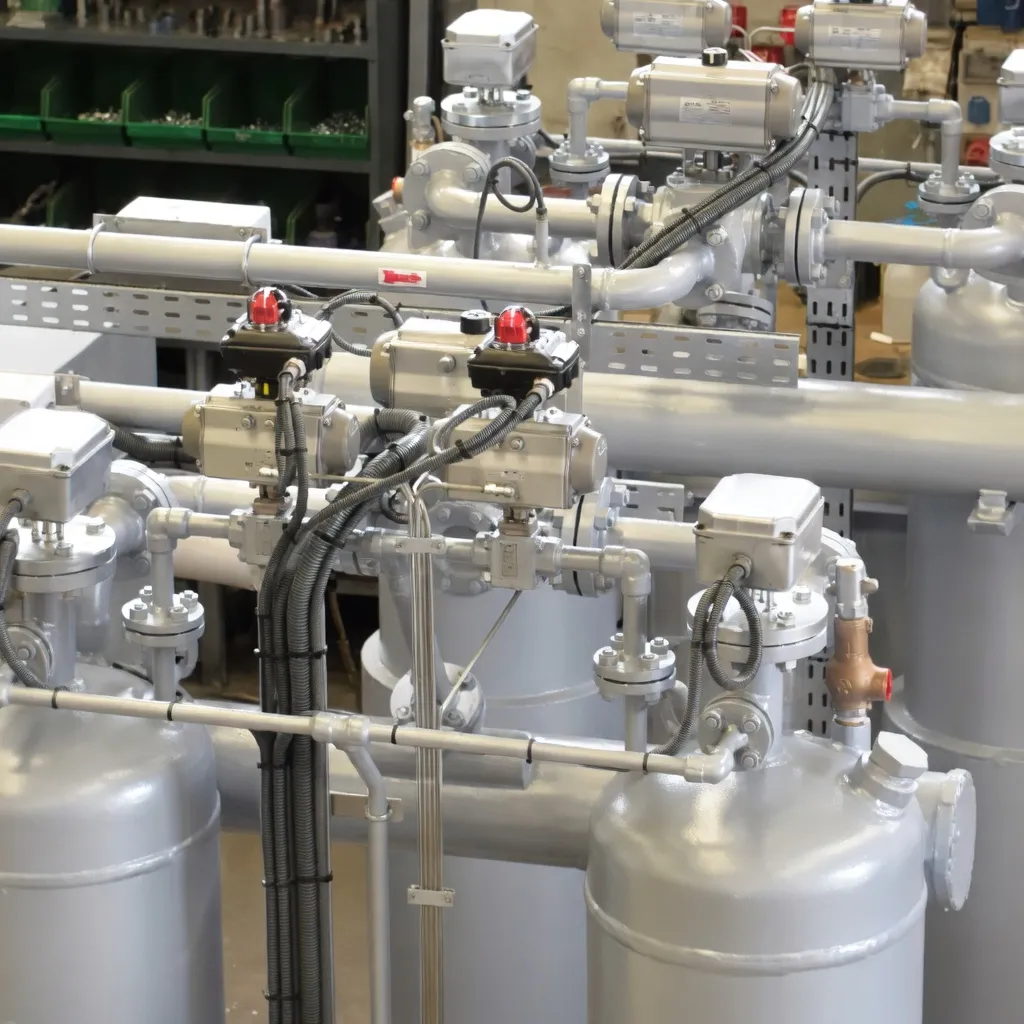
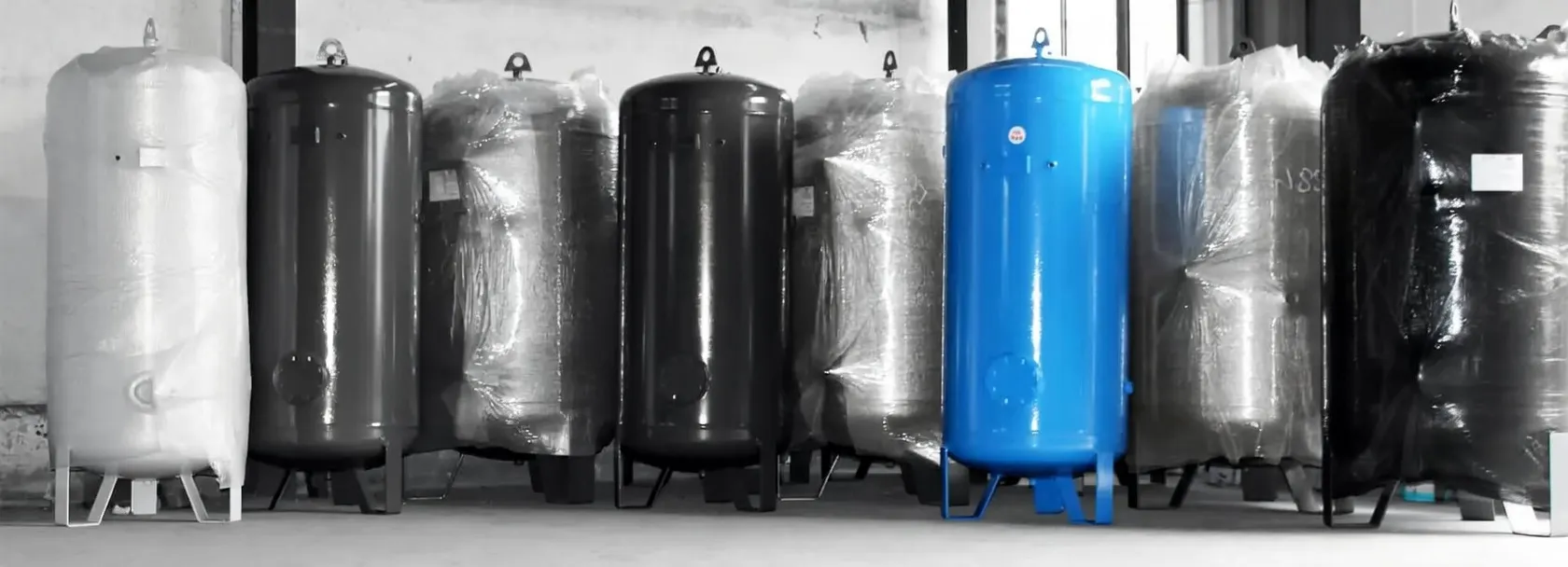 Ever Power nuclear-grade oil-free screw air compressor — IAEA GS-R-3 aligned QA · ISO 8573-1 Class 0 · Seismic-qualified to IEEE 344 · UK nuclear fleet approved
Nuclear project specialists · Response within one business day · UK & international projects welcome
Why Nuclear Instrument Air Demands an Inherently Oil-Free Compressed Air Source
Standard industrial compressed air — even when passed through a high-efficiency coalescing filtration train — carries a residual oil concentration that is categorically unacceptable inside a nuclear plant’s safety-class instrument air system. ISO 8573-1 Class 0 certification, the highest achievable purity grade, means zero detectable oil in any phase: no aerosols, no vapour, no liquid carryover. An oil-free screw air compressor achieves this condition by fundamental design, because lubricating oil never enters the compression chamber in the first place. The airend rotors are manufactured to sub-50-micrometre tip clearance tolerances and coated with PTFE-based polymer compounds that provide intrinsic lubrication from the material matrix itself. The timing gears that synchronise rotor rotation are lubricated in a completely sealed gearbox that is physically isolated from the air pathway. This is not a filtration advantage over oil-injected compressors — it is a categorical engineering distinction. Downstream filtration can fail. An oil-free compression principle cannot produce oil-contaminated air by definition, and this is the argument that satisfies both nuclear safety engineers and regulatory inspectors during design review.
Nuclear Safety Instrumentation Systems are designed to operate on a fail-safe principle. Every solenoid-operated containment isolation valve, every pneumatically actuated emergency feedwater control, and every depressurisation relief positioner draws on a clean, dry, oil-free compressed air supply maintained at a stable pressure — typically 0.6 to 0.8 MPa — delivered continuously and reliably even during a design-basis accident scenario. If oil degradation causes a valve elastomeric seat to swell and stick, a containment isolation valve might fail to close on a protective action demand signal. Under the IAEA Event Scale and UK ONR reporting requirements, that constitutes a significant event with potential regulatory, financial, and reputational consequences that far outweigh any capital cost saving from specifying a lower-grade compressor. The Office for Nuclear Regulation’s Safety Assessment Principles require instrument air systems serving nuclear safety functions to be designed to Defence-in-Depth principles — meaning multiple independent trains of compressed air, each capable of sustaining the full load independently, must be maintained without degradation throughout the station’s licensed operating life, which for new build facilities like Hinkley Point C is 60 years.
The seismic qualification dimension adds a further layer of complexity that distinguishes nuclear procurement from any other compressed air application. Nuclear safety-related mechanical equipment must be qualified to remain functional — or to recover to functional status within a defined period — following a Design Basis Earthquake event. This requires full qualification testing on a triaxial shake table facility, generating a test report that demonstrates the compressor’s ability to operate under the plant-specific Required Response Spectrum. Ever Power’s nuclear-grade oil-free screw air compressors are designed and tested to meet IEEE 344 seismic qualification requirements, with full test documentation — including pre-test baseline, during-test operational records, and post-test inspection reports — supplied as part of the standard nuclear QA package.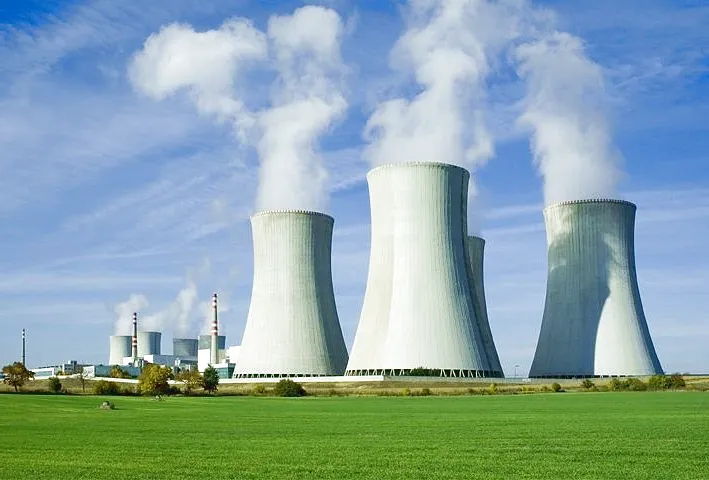
Six Engineering Advantages of Nuclear-Grade Oil-Free Screw Technology
Every specification point exists because a nuclear failure consequence exists behind it.
ISO 8573-1 Class 0 Air Quality — By Design, Not by Filtration
Zero detectable oil in any phase — liquid, aerosol, or vapour. The twin-screw airend uses PTFE-coated rotor profiles running in non-contact configuration with oil-isolated timing gears, so the compression chamber is physically inaccessible to lubricants. Third-party air quality certification by TÜV Rheinland or Bureau Veritas is available as standard on nuclear supply contracts, with witnessed testing included in the factory acceptance test programme.
Redundant N+1 and 2×100% Configuration Capability
Nuclear safety functions tolerate zero interruptions to instrument air supply. Our packaged systems are configurable as 2×100% duty/standby pairs, 3×50% ring-main arrangements, or N+1 configurations with automatic changeover and continuous health monitoring. All changeover logic is integrated into the plant’s DCS or delivered as a standalone safety PLC package with SIL assessment documentation where required by the project safety specification.
Full Seismic and Environmental Qualification (IEEE 344 / IEC 60780)
Vibration table testing to plant-specific Required Response Spectra, thermal cycling test records, radiation dose qualification evidence, and complete material traceability documentation — all supplied as part of the standard nuclear qualification package. Ever Power’s nuclear engineering team coordinates the qualification programme directly with the project’s independent verification and validation authority to meet ONR hold point inspection requirements.
Nuclear QA Documentation to EN 10204 3.1 / IAEA GS-R-3
Every pressure-retaining component carries full material certification to EN 10204 3.1 or 3.2. Weld procedure qualifications, NDE inspection records, pressure test certificates, and dimensional verification reports are maintained in a controlled document management system aligned with IAEA GS-R-3 and ISO 9001:2015. A dedicated nuclear QA engineer is assigned to each nuclear supply contract and serves as the single point of contact for all quality documentation queries during the project lifecycle.
Variable Speed Drive (VSD) Efficiency — 30–45% Energy Reduction
Nuclear stations operate continuously over multi-decade lifecycles. A VSD-equipped oil-free screw air compressor that precisely matches output to actual instrument air demand can reduce compressed air energy consumption by 30–45% versus fixed-speed units. On a 40-year station operating licence, the cumulative energy saving is substantial and directly supports UK government low-carbon energy commitments. VSD units also reduce mechanical stress during start-stop cycling, extending airend life and reducing planned maintenance frequency.
8,000-Hour Service Intervals with IIoT Condition Monitoring
Planned maintenance in a radiation-supervised area requires meticulous outage management to minimise ALARP dose exposure. Ever Power nuclear-grade machines are designed for 8,000-hour airend service intervals — four times the interval typical of oil-free reciprocating compressors — and are fitted with IIoT-capable vibration and temperature sensors that feed predictive condition data into the plant’s CMMS. Maintenance actions are planned during scheduled outage windows, not triggered reactively by alarms during power operation.
Compression Principle, Materials Science, and Nuclear-Grade Construction
The working principle of a twin-screw compressor is well understood in mechanical engineering: two intermeshing helical rotors — one male and one female — rotate within a precision-machined casing. Ambient air enters at the suction end, is trapped between the rotor lobes and the bore wall, and is progressively compressed as the pocket volume decreases toward the discharge port. In a conventional oil-injected machine, oil is injected into the compression chamber to seal the clearance gap between rotor tips and casing and to absorb the heat of compression. In an oil-free screw air compressor, that same gap must be controlled entirely through ultra-tight manufacturing tolerances — typically below 50 micrometres across the full operating temperature range — and the rotor profiles are designed so that no mechanical contact, and therefore no boundary lubrication requirement, exists during normal operation. The rotors run synchronised by external timing gears housed in a fully enclosed, sealed gearbox that never communicates with the air pathway. This architectural separation of lubrication and compression functions is the foundational design feature that makes ISO 8573-1 Class 0 performance inherent rather than dependent on downstream treatment.
For nuclear applications, the material selection across the compression circuit departs significantly from commercial practice. Wetted surfaces — the casing bore, rotor profile coatings, intercooler tubes, aftercooler shells, and moisture separator internals — are specified in austenitic stainless steel to ASTM A182 Grade F316L, or in hard-anodised aerospace-grade aluminium alloy for lower-pressure sections where weight reduction is a skid design constraint. Elastomeric components — shaft seals, flexible couplings, and instrumentation connections — are specified in EPDM or PTFE compounds qualified for the specific radiation dose environment defined in the plant’s Safety Analysis Report, with radiation dose qualification records provided to EN 61000 or IEEE 323. The complete assembly is designed to operate without shedding airborne fibrous or particulate debris, to maintain radiological cleanliness of the instrument air compressor room and protect the downstream air treatment train from particulate loading beyond its design basis.
Cooling of the compression heat in a nuclear application is typically achieved through a two-stage intercooled design. Water-cooled shell-and-tube heat exchangers are the preferred configuration on nuclear sites because they eliminate the dependency on ambient temperature conditions — important where the instrument air compressor room HVAC is itself subject to safety-class temperature control constraints. The downstream air treatment train — comprising pre-filter, refrigerated or desiccant dryer, afterfilter, and stainless-steel receiver vessel — is integral to the skid assembly and designed to achieve a pressure dewpoint of -40 degrees Celsius minimum, meeting ISO 8573-1 Class 1 moisture specification. For applications where the instrument air piping passes through outdoor exposed sections — relevant on some UK nuclear sites where aboveground pipework traverses building expansion joints — a -70 degrees Celsius PDP specification is achievable using twin-tower heated regenerative desiccant dryer technology integrated into the same skid package.
Technical Performance Parameters — Nuclear-Grade Oil-Free Screw Air Compressor
| Параметр | Standard Nuclear Grade | High-Capacity Nuclear Grade | Custom Configuration |
|---|---|---|---|
| Rated Flow (FAD) | 1.0 – 5.0 m³/min | 5.1 – 20.0 m³/min | Up to 35 m³/min |
| Discharge Pressure | 0.6 – 0.8 MPa | 0.6 – 1.0 MPa | Up to 1.3 MPa |
| Oil Carryover | 0 mg/m³ (Class 0) | 0 mg/m³ (Class 0) | 0 mg/m³ (Class 0) |
| Pressure Dewpoint (PDP) | -40 °C (with dryer) | -40 °C (with dryer) | -70 °C available |
| Motor Power Range | 7.5 – 37 kW | 37 – 160 kW | Up to 400 kW |
| Ambient Temperature | 5 – 45 °C | 5 – 45 °C | -20 – 55 °C |
| Sound Pressure Level | ≤ 68 dB(A) | ≤ 72 dB(A) | ≤ 75 dB(A) |
| Rotor / Casing Material | PTFE-coated alloy steel / cast iron | PTFE-coated alloy steel / cast iron | 316L SS rotors available |
| Redundancy Arrangement | N+1 / 2×100% | N+1 / 2×100% | 3×50% / 4×33% |
| Airend Service Interval | 8,000 hours | 8,000 hours | Per project design basis |
| Сертифікати | IAEA GS-R-3 · ISO 8573-1 · ISO 9001 | IAEA · ONR · CE · PED · IEEE 344 | Per project specification |
All performance data measured at ISO 1217 Annex C reference conditions (20 °C, 1 bar, 0% relative humidity). Custom configurations are engineered to project-specific requirements and quoted individually.
Where Oil-Free Screw Air Compressors Are Required Inside a Nuclear Power Station
The term “instrument air” covers a remarkably wide range of pneumatically actuated systems distributed across every functional area of a nuclear station. Each application presents slightly different pressure, flow rate, dewpoint, and contamination control requirements — but every single one shares the non-negotiable requirement for an oil-free screw air compressor as the upstream compressed air source. The five primary instrument air consumers described below account for the majority of instrument air demand in a typical pressurised water reactor or advanced gas-cooled reactor station, and each illustrates a specific consequence of substandard air quality that justifies the nuclear specification.
Safety Instrumentation System (SIS) Actuators
Fail-safe pneumatic actuators on SIS-classified valves require a guaranteed instrument air supply survivable to design-basis accident conditions. The compressed air must meet -40 °C PDP minimum, ISO 8573-1 Class 1 for solid particulates, and absolute Class 0 oil content. Any contamination event that causes an SIS valve to fail on a protective action demand signal constitutes a significant event requiring mandatory ONR notification under the nuclear site licence conditions.
Containment Isolation Valves (CIVs)
Containment isolation valves form the primary engineered barrier between the primary circuit and the external environment. Pneumatically operated CIVs must close within seconds of a containment isolation signal and hold leak-tight against the design containment pressure. Valve seat leakage rates — measured to ANSI/FCI 70-2 Class VI — are critically sensitive to oil film contamination on the elastomeric seat faces, which can cause swelling, loss of seating force, and ultimately failed seat tightness during post-accident leakage testing.
Emergency Core Cooling System (ECCS) Controls
During a Loss of Coolant Accident, ECCS injection must commence within seconds. High-pressure injection, accumulator discharge, and low-pressure recirculation control valves are all pneumatically actuated, drawing on Class 1E qualified compressed air accumulators maintained at pressure by redundant oil-free screw air compressors that are seismically qualified to the station’s Category I requirements — meaning they must continue to function during and after a Design Basis Earthquake.
Reactor Coolant Pump Seal Purge Air
Reactor coolant pumps use controlled-leakage shaft seals requiring clean instrument air for seal monitoring and purge functions. Oil contamination in the seal purge air degrades mechanical seal faces and can lead to uncontrolled primary coolant leakage — a condition classified as a reactor coolant system leak beyond normal make-up capacity, requiring prompt operator action and potentially an unplanned reactor shutdown with associated radiological clean-up operations.
Spent Fuel Pool Cooling and Post-Fukushima Hardened Systems
Post-Fukushima enhancement requirements mandated by ONR under the Japanese Accident Review (JAR) process require spent fuel pool makeup and cooling flow controls to operate under extended station blackout conditions. Battery-backed instrument air accumulators, charged by nuclear-grade oil-free screw air compressors as the primary source, form part of the Hardened Diverse Backup (HDB) architecture that is now a standard feature of UK nuclear station safety upgrades across the EDF-operated AGR fleet.
Nuclear Compressed Air Procurement in the United Kingdom: What Operators and Project Teams Need to Know
The United Kingdom currently operates 9 licensed nuclear power stations generating approximately 15% of the country’s electricity. The advanced gas-cooled reactor fleet — at Hartlepool, Heysham 1, Heysham 2, Dungeness B, Hinkley Point B, and Torness — is managed through a programme of life extension and safety-system upgrades coordinated with ONR. Alongside these operational stations, the Sizewell B PWR continues as the UK’s youngest operating nuclear station, while the EDF-led Hinkley Point C project in Somerset — the first new nuclear build in the UK for over 30 years — is under active construction. The Sizewell C project in Suffolk is progressing through the regulatory approval framework, and the Great British Nuclear SMR programme is evaluating multiple UK sites for potential deployment of Rolls-Royce SMR technology in the 2030s.
Each of these projects generates distinct procurement requirements for oil-free screw air compressors. For the operational AGR fleet, the priority is typically like-for-like replacement of ageing reciprocating oil-lubricated units on safety-related systems, where the procurement team needs a supplier who can match the existing system performance, provide full Commercial Grade Dedication (CGD) documentation to convert a commercial item to a nuclear safety-related item, and deliver within the planned outage window — typically a 4- to 8-week refuelling and maintenance outage. For Hinkley Point C, the EPR design specifies instrument air system performance requirements that must be met through the Generic Design Assessment (GDA) approved design basis, with procurement governed by EDF Energy’s nuclear supply chain qualification framework. For future SMR projects, the instrument air compressor specifications are still being developed through the technology vendor design certification processes, but the fundamental requirement for Class 0 oil-free compressed air is already established in the pre-licensing safety cases.
Ever Power has developed a UK nuclear supply chain infrastructure specifically to serve both the existing operating fleet and the new build programme. Our field service team includes engineers based in the South West of England — within one hour of Hinkley Point — and in the Midlands, providing rapid response capability to the Hartlepool and Heysham stations. All our UK-based nuclear service engineers hold Security Check (SC) clearance appropriate for nuclear licensed site access and maintain current Nuclear Skills Group (NSG) competency records. Our UK-bonded spare parts inventory, maintained at a Midlands logistics hub, covers all critical airend components for next-day delivery to any UK nuclear licensed site, with emergency out-of-hours call-out available for operational stations.
Proven in Operation: Customer Success
Real results from nuclear operators who have specified Ever Power oil-free screw air compressors.
Featured Case Study · South Korea · Nuclear Power Generation
Korea Hydro & Nuclear Power — Shin-Hanul Unit 2 Instrument Air System Replacement
When Korea Hydro & Nuclear Power undertook the instrument air system overhaul for the Shin-Hanul Unit 2 station in North Gyeongsang Province, the engineering team faced a challenge that many nuclear operators across the world will recognise. The existing oil-lubricated reciprocating compressors had accumulated a maintenance burden that was consuming significant planned outage time, and the system had generated three documented oil-in-instrument-air contamination events over five years — two of which had required unplanned valve maintenance and one of which had resulted in a reportable degraded condition on an SIS-classified actuator. The plant’s safety committee mandated a full replacement with ISO 8573-1 Class 0 certified oil-free technology, qualified to the station’s seismic Category II requirements, and specified redundant N+1 configuration with automatic changeover.
Ever Power supplied a 2×100% redundant package comprising two 11 kW oil-free screw air compressors — each rated at 1.8 m³/min FAD at 0.75 MPa — paired with twin-tower heatless regenerative desiccant dryers achieving a guaranteed -40 °C pressure dewpoint. The complete air treatment skids, including inlet filters, pre-filters, afterfilters, stainless-steel receiver vessels, and all system instrumentation, were fully pre-assembled on common structural steel skid frames and subjected to a comprehensive Factory Acceptance Test programme. KHNP’s nuclear QA engineers witnessed the FAT over a three-day period, reviewing all NDE inspection records, material certifications, calibration documentation, and functional performance test data against the project-specific Quality Plan.
Since commissioning in early 2021, the two Ever Power units have accumulated more than 20,000 combined operating hours without a single unplanned stoppage. The plant instrument air dewpoint has remained at -40 °C PDP throughout, and all eight quarterly ISO 8573 air quality tests conducted since commissioning have recorded 0 mg/m³ oil content. The planned maintenance interval has extended from the previous 2,000-hour cycle to the 8,000-hour interval specified by Ever Power, reducing instrument air system maintenance labour demand by approximately 62% on a lifecycle basis. KHNP’s Engineering Director formally acknowledged the outcome as a model for oil-free compressor specification on future station upgrade projects within the KHNP fleet.
We replaced 12-year-old reciprocating oil-lubricated compressors with Ever Power oil-free screw units at our AGR station. The improvement in air quality was measurable within the first quarterly test — Class 0 across the board. The remote diagnostics integration with our CMMS has transformed how we plan instrument air maintenance; we now schedule interventions during planned outage windows rather than reacting to alarms during power operation, which is exactly what Defence-in-Depth requires.
— Senior Mechanical Engineer
Advanced Gas-Cooled Reactor Station, Northern England, UK
When evaluating suppliers for the Hinkley Point C instrument air package, we assessed four manufacturers against our project specification. Ever Power’s nuclear QA submission was the most complete we received — full material traceability to EN 10204 3.1, witnessed seismic qualification test reports, and a nuclear account manager who understood our ONR hold point programme from day one. The price was competitive, but the documentation quality and the demonstrable nuclear project experience were the deciding factors in the contract award.
— Procurement Manager, Nuclear Island Systems
Major UK Nuclear New Build Project, Somerset
We specified Ever Power oil-free screw air compressors for the spent fuel pool cooling hardened core upgrade at our French PWR station. The 24-month post-commissioning performance has been fault-free. What distinguished this supplier was the genuine custom engineering capability — the control panel was designed from scratch to interface with our Schneider DCS architecture, the skid footprint was modified to fit our existing compressor room layout, and the qualification documentation was structured around our specific ASN regulatory interface. Delivered on time, within budget, and exactly to specification.
— Chief Instruments and Controls Engineer
EDF Nuclear Operations, France
Custom-Engineered Nuclear Instrument Air Packages: Ever Power’s Manufacturing and Design Capability
One of the most significant differentiators for Ever Power in the nuclear supply market is our genuine custom engineering capability — we do not simply relabel standard commercial compressors with nuclear documentation. Our manufacturing facility operates a dedicated nuclear production bay where all safety-related fabrication is physically segregated from commercial production lines. This segregation extends from raw material receiving inspection, where all nuclear-grade materials are independently verified against mill certificates before release to the production floor, through final assembly and test, where nuclear components are assembled by technicians qualified to the relevant nuclear welding and assembly procedures. The nuclear production bay operates under a separate, audited quality management system aligned with IAEA GS-R-3 and witnessed regularly by independent nuclear inspectors from Lloyd’s Register, Bureau Veritas, or the client’s own nuclear QA team. Every production step is documented, every measurement recorded, and every non-conformance formally dispositioned through our nuclear corrective action programme before the item progresses to the next stage.
Our product customisation capability covers the complete scope of a nuclear instrument air skid package. We engineer discharge pressure to any value between 0.5 MPa and 1.3 MPa, configure redundancy arrangements to match the specific safety analysis requirements of the project, and integrate the selected dryer technology — refrigerated, heatless regenerative, or heated regenerative — into a common base-frame assembly. Skid footprints are designed to fit existing compressor room layouts where building modification is not feasible, with structural calculations provided to Eurocode standards for seismic anchorage design. Control panel architecture is configured to interface with Siemens S7 or TIA Portal, ABB 800xA, Schneider EcoStruxure, or Yokogawa CENTUM platforms, or to operate as a standalone self-contained PLC package. For control functions classified under a SIL requirement, we design and document the control logic to IEC 61508 and provide the SIL assessment and verification evidence required by the project safety case. Our 40-year lifecycle support commitment — backed by a guaranteed spare parts availability programme with UK-bonded stock and defined lead times for non-stocked items — addresses the long-term operational reliability requirement that nuclear procurement teams rightfully prioritise above all other factors.
Get a Custom Quote for Your Nuclear Project
Nuclear engineering team · UK and international projects · Preliminary design proposal within 5 working days
Часті запитання
Answers to the questions UK nuclear engineers, procurement managers, and plant operators ask us most often about oil-free screw air compressors for nuclear instrument air applications.
What is the practical difference between an oil-free screw air compressor and an oil-injected unit with downstream filtration, and why does it matter specifically for nuclear power station instrument air systems in the UK?
An oil-free screw air compressor produces compressed air with zero oil content by engineering design — no oil ever enters the compression chamber, so ISO 8573-1 Class 0 is achieved inherently. An oil-injected machine uses oil as a process fluid in the compression chamber and relies on downstream coalescing filters to reduce oil concentration to typically 0.01 mg/m³ (Class 1) — which is still detectable oil, and crucially, a level that is achievable only as long as the filter element is intact and within service life. For UK nuclear stations regulated by ONR under the Nuclear Installations Act 1965, instrument air serving safety-classified valve actuators must meet Class 0. An oil-injected machine with filtration cannot satisfy this requirement because filter element failure — a credible failure mode — would result in unfiltered oil reaching safety valve actuators, with no intermediate detection prior to actuator degradation.
How much does a nuclear-grade oil-free screw air compressor typically cost for a UK nuclear power station project, and what factors most significantly affect the final purchase price and lifecycle cost?
A commercial-grade oil-free screw air compressor in the 11–22 kW range costs approximately £20,000–£40,000. A fully qualified nuclear-grade unit with complete QA documentation package — material certificates to EN 10204 3.1, seismic qualification test reports, witnessed FAT, and ONR-compliant quality documentation — typically costs £60,000 to £200,000 per unit, before integrated dryer, receiver, and ancillary equipment. A complete 2×100% redundant skid package for a UK nuclear site, including all air treatment equipment, controls integration, and documentation, ranges from £180,000 to over £500,000 depending on flow rate and specification depth. Lifecycle costs — including 8,000-hour service intervals rather than 2,000-hour cycles — generally make oil-free screw technology cheaper than oil-free reciprocating alternatives over a 20-year horizon. For a project-specific budgetary estimate, contact [email protected] with your flow and pressure requirements.
Which certifications and qualifications should I verify when choosing a supplier of oil-free air compressors for nuclear safety-related instrument air applications in the United Kingdom?
At minimum, verify: ISO 8573-1 Class 0 certification with independent third-party witness testing (not self-declared); IAEA GS-R-3 quality management system alignment, audited by an accredited body; ISO 9001:2015 with nuclear supply scope; CE marking under the Pressure Equipment Directive (2014/68/EU, retained in UK law as PSSR 2000); seismic qualification evidence to IEEE 344 or IEC 60780 for the specific plant design basis; and EN 10204 3.1 material certificates for all pressure-retaining components. For UK nuclear sites, also check that the supplier’s QMS addresses NS-TAST-GD-058 (ONR’s quality assurance technical assessment guide for nuclear safety purposes), that they have a demonstrated Commercial Grade Dedication procedure for nuclear supply, and that their site-access engineers hold appropriate NSG competency records and security clearance.
Where can I find a qualified and experienced supplier of nuclear-grade oil-free screw air compressors for projects at Hinkley Point C, Sizewell B, or other UK nuclear licensed sites?
Ever Power is an established supplier with a documented track record in nuclear power station instrument air systems across Asia, Europe, and the Middle East. Our UK nuclear supply infrastructure includes field service engineers based in Somerset and the Midlands, a UK-bonded spare parts inventory for next-day delivery to any nuclear licensed site, and a nuclear sales and engineering team experienced in navigating ONR’s procurement qualification expectations. We are engaged with the Hinkley Point C supply chain qualification process and are positioned for Sizewell C pre-FEED procurement engagement. To begin the qualification discussion or request a budgetary quotation, email [email protected] with your project details and specification reference documents.
How does an oil-free screw air compressor demonstrate continued safe operation after a seismic event at a nuclear power plant, and what test evidence is required by the ONR?
IEEE Standard 344 governs the seismic qualification of safety-related mechanical equipment in nuclear power stations. Qualification is achieved by mounting a representative production unit on a triaxial shake table and applying dynamic input motion that envelops the plant-specific Required Response Spectrum (RRS) for both Operating Basis Earthquake (OBE) and Safe Shutdown Earthquake (SSE) conditions. The compressor must demonstrate operational function during OBE input and structural integrity with recovery to function following SSE input. The qualification test report — including pre-test functional baseline, during-test operational records, and post-test inspection findings — is supplied as controlled nuclear QA documentation. ONR does not prescribe a specific standard for seismic qualification of mechanical plant but expects applicants to demonstrate equivalence to the accepted IEEE 344 or IEC 60780 methodology during the Generic Design Assessment or project licensing review process.
What is the expected planned maintenance interval for an oil-free screw air compressor in a nuclear instrument air system, and how does this compare to the oil-lubricated reciprocating compressors that many UK AGR stations currently operate?
Ever Power nuclear-grade oil-free screw air compressors are designed for an 8,000-hour planned maintenance interval for airend preventive inspection and scheduled component replacement. Oil-free reciprocating compressors — still operating on a number of UK AGR stations — typically require valve plate and ring inspection at 2,000 hours and complete piston ring replacement at 4,000 hours, due to the fundamentally higher mechanical wear rate of the reciprocating mechanism. The practical consequence is that an oil-free screw unit requires approximately one-quarter of the planned maintenance interventions over a 40,000-hour operating cycle, representing a direct reduction in radiation dose exposure to maintenance technicians working in supervised radiation areas, a significant reduction in planned outage maintenance duration, and lower lifecycle maintenance cost despite the higher capital purchase price.
Can I get a fully customised oil-free screw air compressor skid designed to match the specific instrument air P&ID, room layout, and DCS control architecture of my UK nuclear power station?
Yes, and this is one of Ever Power’s core differentiating capabilities for nuclear applications. We do not supply nuclear instrument air packages from a catalogue — every nuclear project is custom-engineered from the system P&ID, functional specification, environmental design criteria, and control architecture requirements. Discharge pressure, redundancy configuration, dryer technology, receiver sizing, instrumentation specifications, and control panel design are all defined project by project. We interface with Siemens, ABB, Schneider, and Yokogawa DCS platforms and design control logic to SIL 1 or SIL 2 where the protective function classification requires it. Skid structural design is optimised to fit existing compressor room footprints where building modification is not an option. To initiate a custom design discussion, send your specification document and P&ID to [email protected].
How long does procurement and delivery of a nuclear-grade oil-free screw air compressor typically take from initial enquiry to commissioning handover at a UK nuclear site?
Nuclear-grade procurement timelines are significantly longer than commercial compressed air supply due to QA documentation requirements and the mandatory factory acceptance test programme. A standard nuclear-grade oil-free screw air compressor unit with full qualification package typically requires 20–28 weeks from purchase order placement to FAT completion at our factory, with a further 4–6 weeks for shipping, site installation, and commissioning — giving a total of approximately 24–34 weeks to operational handover. A fully custom-engineered skid package with integrated dryer, controls, and bespoke structural design typically requires 32–40 weeks. For UK nuclear projects with planned outage windows or new build construction schedule constraints, we strongly recommend engaging our nuclear sales team at the earliest possible project stage — ideally during pre-FEED or detailed design — to ensure the procurement schedule is achievable within the project programme.
Ready to Specify Your Nuclear Instrument Air Compressor System?
Our nuclear engineering team is ready to review your specification, answer your technical questions, and prepare a detailed project-specific quotation. Every nuclear instrument air project at Ever Power starts with an engineering conversation — not a sales pitch.
📧 Get a Quote — [email protected]
Response within one business day · UK and international nuclear projects · edit by gzl