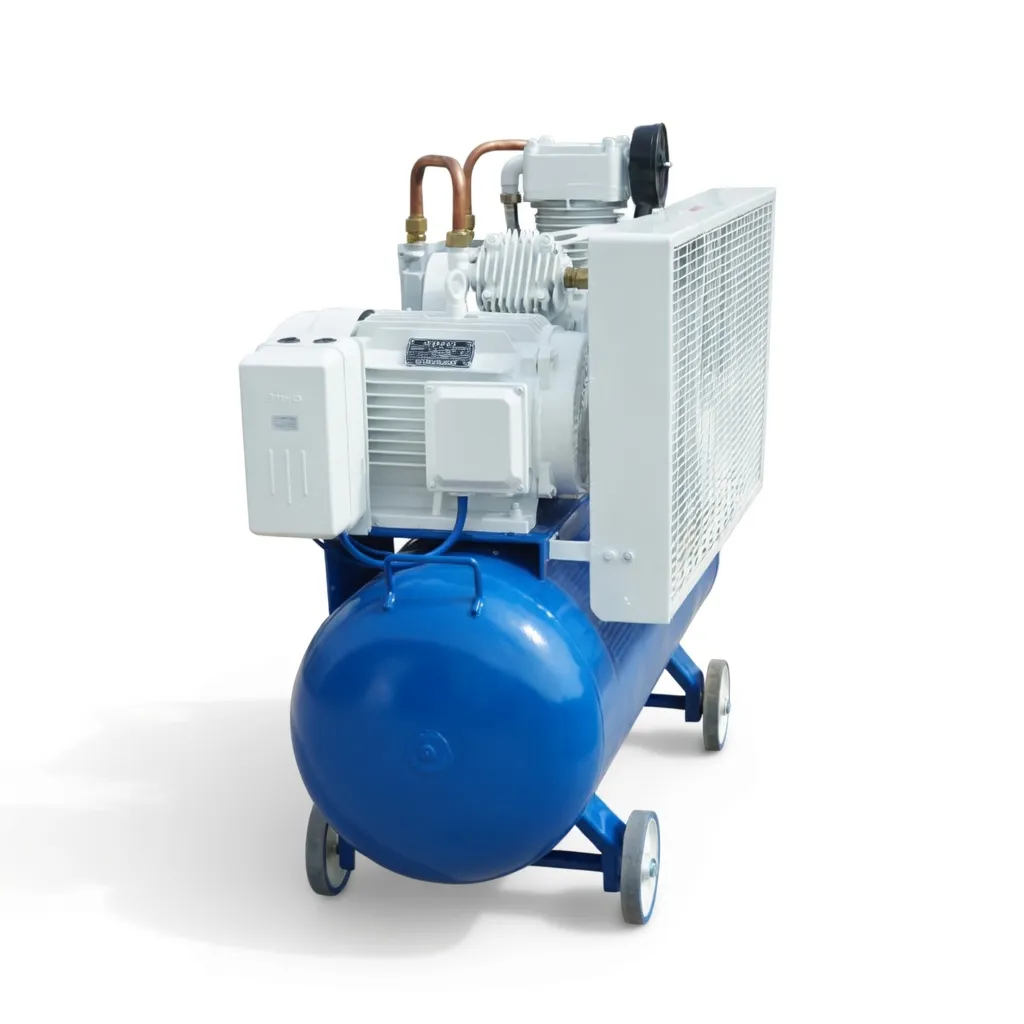
 Walk through any modern beverage plant in the Midlands, Yorkshire, or the South East of England, and you will hear the rhythmic pulse of compressed air long before you see the filling carousel. That sound represents one of the most critical utilities on the site — air compressors for beverage filling and PET bottle blowing are not simply background equipment. They are the backbone of throughput, product safety, and long-term cost control.
The beverage industry places demands on compressed air that few other sectors can match. You need high-pressure, oil-free air at sustained flow rates, delivered with pinpoint reliability twenty-four hours a day, across seasonal peaks and promotional runs that can double line speed almost overnight. Specifying the wrong compressor — or under-sizing a system that looked adequate on paper — creates a cascade of problems: bottles with structural defects, filling-head contamination risks, rejected batches, and the kind of unplanned downtime that costs a UK drinks manufacturer tens of thousands of pounds per hour at the worst possible moments.
Why Air Quality Is Non-Negotiable in Beverage Production
Direct Product Contact Risk
In aseptic filling and carbonation, compressed air or gas comes into direct contact with the beverage or packaging interior. Any trace of compressor oil, microbial contamination, or particulate matter immediately becomes a food safety incident — not merely a quality issue.
ISO 8573-1 Class 0 Compliance
UK food manufacturers operating under BRC, SALSA, or retailer codes of practice routinely require Class 0 oil-free air at critical control points. Oil-free screw and centrifugal compressors deliver this without relying on downstream filtration alone, dramatically reducing audit risk.
Energy as a Margin Driver
Compressed air typically accounts for 20–30% of a beverage plant’s total electricity consumption. Variable-speed drive technology cuts this figure substantially during partial-load operation, which is the majority of real production time for most UK sites running two-shift patterns.
How a High-Pressure Air Compressor Powers PET Bottle Blowing
PET bottle blowing — technically stretch blow moulding — transforms small preforms into finished containers through a two-stage process that demands working pressures between 30 and 40 bar gauge. A preform is reheated to roughly 100–115°C and then placed inside a blow mould. A pre-blowing stage at around 8–12 bar initiates the axial stretch, while the final high-pressure blow — delivered by the air compressor for beverage filling circuits — forces the softened PET against the mould walls with precise uniformity.
The quality of the finished bottle depends directly on the consistency of this air pressure pulse. Even a 1–2 bar drop mid-cycle — caused by a poorly sized receiver, a failing compressor stage, or a leaking distribution ring main — produces bottles with uneven wall thickness. These bottles fail the manufacturer’s own drop-test specifications, cannot withstand carbonation pressure, and present a liability risk if they reach retail before the defect is detected during quality sampling.
The filling side of the operation draws on a separate low-to-medium pressure compressed air circuit, typically running at 6–8 bar, to operate pneumatic actuators, cap-press assemblies, labelling arms, and conveying systems. These applications are less pressure-sensitive but equally dependent on clean, dry, contaminant-free air — particularly where proximity to an open product stream creates splash-back contamination pathways.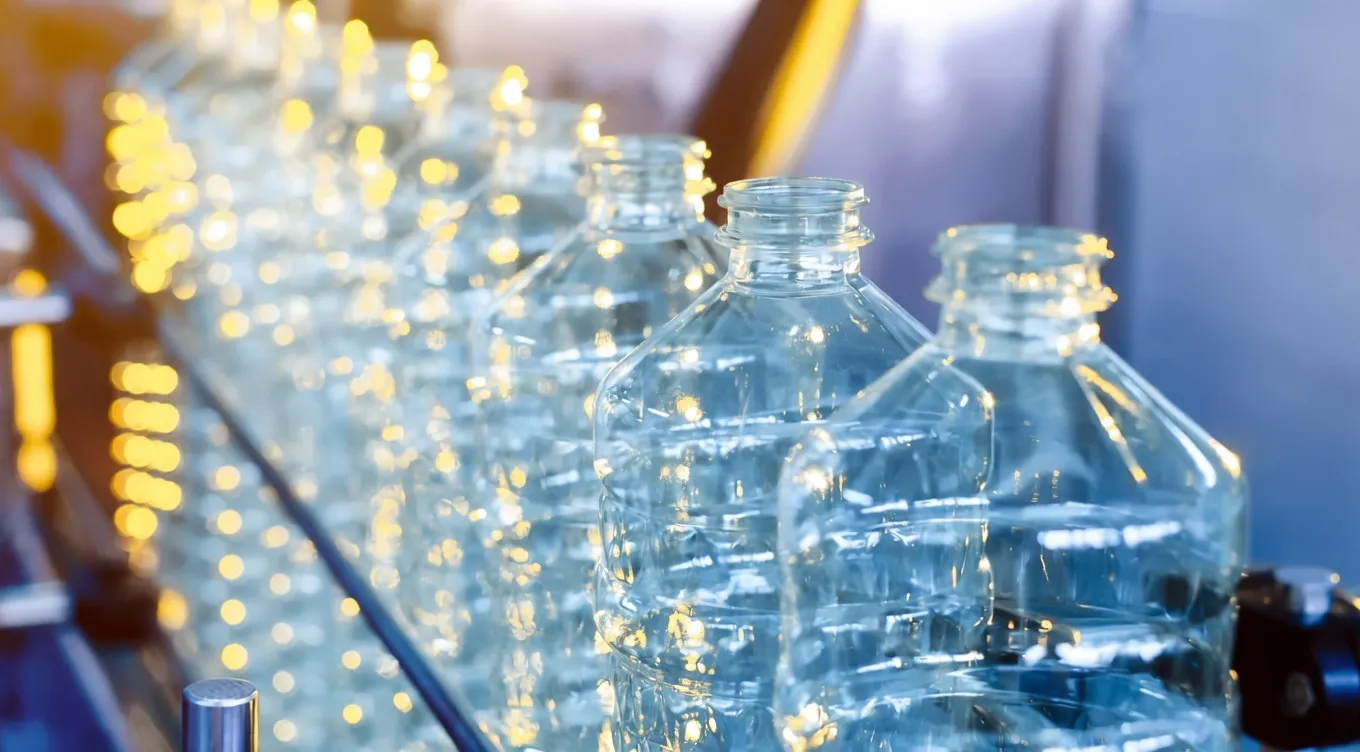
Technical Performance Specifications
| Параметр | Bottle Blowing (HP) | Filling Line (LP) | Стандартний |
|---|---|---|---|
| Working Pressure | 30–40 bar(g) | 6–8 bar(g) | ISO 11011 |
| Air Purity Class | ISO 8573-1 Клас 0 | ISO 8573-1 Клас 0 | ISO 8573-1:2010 |
| Точка роси під тиском | −40°C PDP | +3°C PDP min | ISO 7183 |
| Oil Content | < 0.01 mg/m³ | < 0.01 mg/m³ | ISO 8573-1 |
| Flow Range (FAD) | 1.0–12.0 m³/min | 0.5–20 m³/min | ISO 1217 |
| Drive Type | Fixed / VSD optional | VSD standard | IE3/IE4 motor |
| Noise Level | 68–74 dB(A) | 62–70 dB(A) | ISO 2151 |
| Certification | CE, PED, BRC-ready | CE, PED, BRC-ready | UK Conformity |
Key Advantages of Ever Power Beverage Compressors
100% Oil-Free Technology
Water-injected or dry-running oil-free screw elements eliminate hydrocarbon contamination pathways entirely. No downstream activated carbon polisher can compensate for a leaking oil-lubricated compressor seal — so we remove the source risk completely. This architecture directly supports BRC Global Standard audit compliance and meets UK retailer supply-chain requirements without additional post-treatment hardware.
Variable Speed Drive Efficiency
Our VSD-equipped models adjust motor speed in real time to match actual demand, cutting energy consumption by up to 35% compared with fixed-speed alternatives running in load/unload mode. For a mid-size UK bottling facility running 6,000 operating hours per year, this frequently translates to annual savings exceeding £18,000 on electricity alone — a payback period well under three years in most installations we have sized.
Extended Service Intervals
Bearing designs derived from heavy-duty industrial compressor programmes allow 8,000-hour service intervals on key wear components. For a plant running round-the-clock, this cuts planned maintenance interventions from three to one per year, reducing labour cost and the logistical overhead of scheduling service visits around production windows — a real-world advantage that procurement teams consistently underestimate during the initial cost comparison exercise.
Application Scenarios Across the Beverage Sector
The air compressor for beverage filling operates across a surprisingly wide range of sub-applications within the same plant, and each places subtly different demands on the compressed air system. Understanding these distinctions is what separates a system that performs well from one that delivers year after year without intervention.
CSD Carbonation
Carbonated soft drinks require CO₂ dosing precision. Clean compressed air controls the proportioning pump and pressurises the saturation vessel. Contamination here affects flavour and carbonation consistency directly.
Aseptic & Hot-Fill Lines
Aseptic processing for juices, teas, and dairy-alternative drinks demands sterile air for container flushing and environment maintenance. ISO 8573-1 Class 0 is the minimum credible specification for this task.
PET Preform Blowing
High-pressure air compressors for beverage bottle blowing must deliver consistent 30–40 bar output without pressure dips between blow cycles. Inadequate storage volume or poor flow regulation causes wall-thickness defects across entire production batches.
Label Application & Sleeving
Pneumatic gripper arms and heat-tunnel conveyors in labelling systems run on medium-pressure compressed air. Air quality requirements are slightly less stringent here, but moisture-free supply is still essential to prevent actuator corrosion and label adhesion failures.
Capping & Sealing
Cap press and induction sealing systems use compressed air cylinders to apply precise torque or clamping force. Pressure consistency within ±0.2 bar is needed to maintain cap application torque within the narrow range required by cap-integrity testing protocols.
CIP Blow-Off & Cleaning
Clean-In-Place sequences use high-velocity compressed air to evacuate residual cleaning chemicals and rinse water from pipework and vessels. Residue contamination of the next production run is the failure mode engineers are designing against — oil-free air prevents cross-contamination between cleaning and production phases.
Materials, Construction & Compliance Engineering
 The internal wetted surfaces of an oil-free compressor destined for beverage service are built to a different standard than general industrial equivalents. Rotor profiles are machined to tolerances of ±2 microns and coated with PTFE-based or anodised treatments that resist both moisture erosion and the chemical attack possible in high-humidity food-plant environments. Compression chambers in water-injected designs are lined with food-contact-safe materials, and all ancillary piping down to the air receiver outlet is specified in 316L stainless steel with electropolished internals on request.
Cooling system design is also critical for UK conditions. Plants in the North West and Scotland can experience ambient temperatures of 5°C in winter, while summer peaks in the South East can push compressor room temperatures above 35°C. Our thermal management system maintains delivery air quality and operating efficiency across a −5°C to +45°C ambient range, eliminating the seasonal pressure-drop complaints that plague poorly designed installations with standard industrial compressors not adapted for food and beverage duty.
Every compressor we supply for the beverage sector carries CE Marking under the Machinery Directive and Pressure Equipment Directive as retained in UK law post-Brexit (UKCA marking where required), and is engineered to facilitate BRC Global Standard for Food Safety site audits. Documentation packs include design validation test data, air quality analysis certificates, and material declarations for all product-contact surfaces — the paperwork your technical team needs ready when an auditor walks through the door.
Customer Success: How a Yorkshire Soft Drinks Producer Eliminated Blowing Defects
We had tried two other suppliers before Ever Power. The difference is the engineering depth behind the recommendation — they actually understood our blow moulding cycle times and receiver sizing, not just the nameplate pressure. We’ve not had a single bottle-defect batch attributable to air supply in fourteen months.
The energy savings have been genuinely significant. We were sceptical about the 35% claim at the quoting stage, but our metered figures show 31% reduction on the high-pressure circuit. At current electricity prices in the UK that money goes straight back into operational margin — it’s not an abstraction.
Our aseptic juice line has a zero-tolerance policy on compressed air quality — we run third-party oil vapour testing quarterly. Ever Power’s Class 0 certification has held up every single time, and the IoT monitoring gives our quality team a live dashboard without any bespoke integration work. Exactly what you want when you’re producing ambient-stable product at scale.
Bespoke Engineering & Custom Compressor Solutions
No two beverage plants share the same layout, utility constraints, or production profile — which is why off-the-shelf compressors rarely represent the most cost-effective long-term solution for high-value filling and blowing operations. Ever Power’s engineering team provides full custom design and manufacturing capability across the complete drive train: from rotor profile specification and compression stage configuration, through receiver sizing and ring-main layout design, to control panel programming and integration with your existing plant automation system.
We offer bespoke configurations including: dual-pressure packaged systems delivering both high-pressure blowing air and low-pressure utility air from a single footprint-optimised skid; weatherproof outdoor installations for sites with limited machine room space; ATEX-zoned units for production environments with solvent or ethanol vapour risk (common in speciality spirit bottling lines); and fully redundant N+1 architectures for sites where unplanned downtime has a defined cost per minute that dwarfs the capital premium of the spare compressor. Our engineers will visit your UK site, assess the actual demand profile including peak transients, and produce a system design before you receive a single quotation — because the time to resolve sizing questions is before commissioning, not after.
Serving Beverage Manufacturers Across the United Kingdom
The UK beverage manufacturing sector is distributed across several distinct regional clusters, each with its own infrastructure, supply-chain character, and utility cost profile. Major soft drinks and water bottling operations in Yorkshire, the North West, the Midlands, and the South East each face different compressed air challenges — particularly in relation to site access for installation, ambient temperature variation that affects compressor thermal management, and regional electricity pricing that influences the payback calculation for VSD upgrades.
Ever Power maintains sales engineering coverage across England, Scotland, Wales, and Northern Ireland, with service partners capable of responding to compressor faults within four hours at major beverage production sites. We have active installations in Greater Manchester, Leeds, Birmingham, Bristol, Glasgow, and London, and our team has provided air system engineering to some of the best-known names in the UK drinks industry — from regional craft producers to national own-label contract fillers supplying the major supermarket chains.
Whether you are a small independent mineral water bottler in the Lake District exploring your first energy-efficient compressor upgrade, or a multi-site CSD producer managing compressed air across eight facilities from Scotland to Somerset, the engineering challenge is fundamentally the same: clean, dry, reliable high-pressure air delivered at a lifecycle cost that makes commercial sense. That is what we design for, every project, without exception.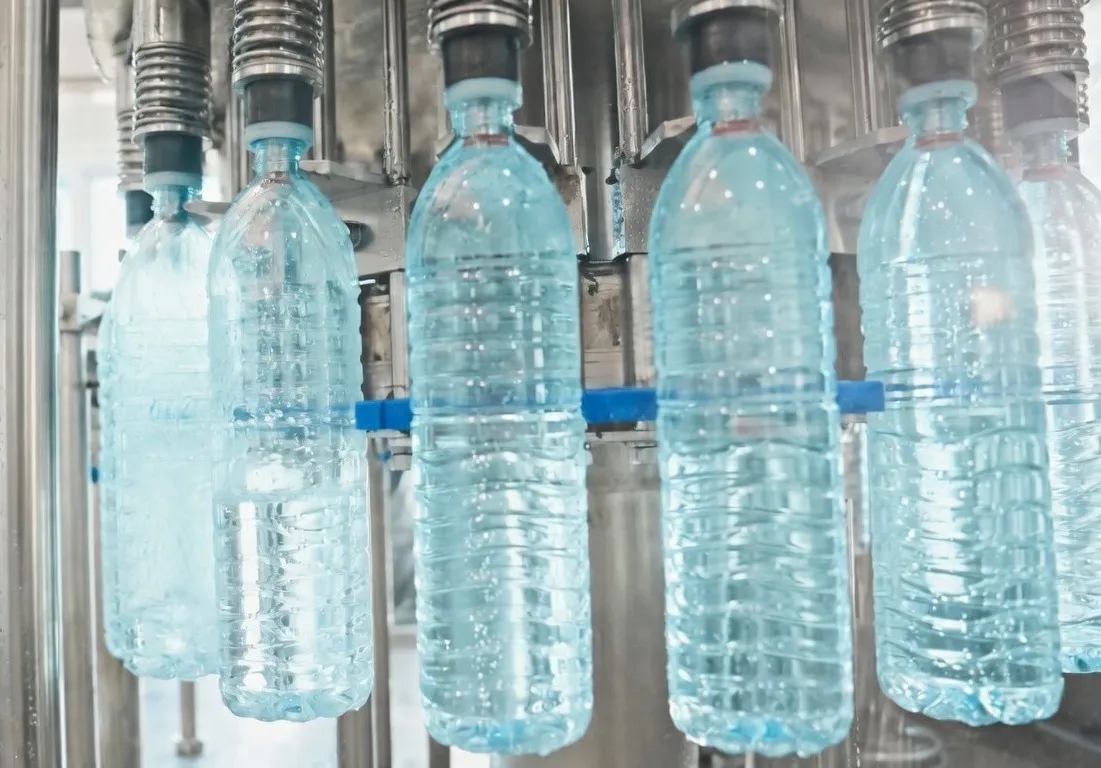
Часті запитання
Ready to Upgrade Your Beverage Plant’s Compressed Air System?
Talk to an Ever Power application engineer about your specific site — fill rate, bottle type, air quality target, and budget. We provide a no-obligation system design and quotation, specific to your UK production facility.
© Ever Power Industrial Air Solutions · Specialists in oil-free air compressors for beverage filling and PET bottle blowing · United Kingdom · edit by gzl