
Oil-Free Screw Air Compressors for Nuclear Power Plant
Instrumentation & Control Air Supply
Delivering contamination-free instrument air to safety instrumentation systems, containment isolation valves, and emergency shutdown systems — engineered to the most demanding nuclear safety standards in the world.
In nuclear power generation, compressed air plays a role that is simultaneously invisible and mission-critical. The pneumatic actuators, positioners, and control valves that govern reactor safety systems depend on a continuous, clean supply of instrument air — and when that supply is compromised, the consequences cascade with extraordinary speed. An oil-free screw air compressor is not simply a preferred specification in nuclear applications; it is frequently a binding safety requirement mandated by the International Atomic Energy Agency, national nuclear regulators, and plant-level probabilistic risk assessments. The reason is straightforward: conventional oil-lubricated compressors introduce hydrocarbon aerosols into the instrument air stream that, even in trace concentrations of a few milligrams per cubic metre, can degrade valve seals, foul solenoid pilot lines, and cause safety instrumentation system failures during transient events. An oil-free screw air compressor eliminates this contamination pathway at the compression stage itself — it does not rely solely on downstream filtration that could fail, become saturated, or be bypassed during maintenance windows. For plant engineers, that distinction is the difference between a manageable maintenance risk and an unacceptable safety vulnerability.
Nuclear power facilities across the United Kingdom — from the operating advanced gas-cooled reactor stations at Heysham, Torness, and Hartlepool managed by EDF Energy, through to the high-profile Hinkley Point C pressurised water reactor under construction in Somerset, and the emerging pipeline of small modular reactor projects championed by Rolls-Royce SMR — increasingly specify oil-free screw compressor packages as the primary and backup instrument air source for nuclear safety category systems. The Office for Nuclear Regulation’s guidance on Safety Assessment Principles requires that safety-related compressed air systems demonstrate adequate reliability, and that the potential failure modes of each component within the system boundary are understood and mitigated. For an oil-lubricated compressor, oil carryover is not a marginal risk — it is a predictable, quantifiable failure mode with a direct pathway to safety system degradation. Choosing an oil-free screw air compressor removes that failure mode from the fault tree entirely, simplifying the safety case and reducing the burden of in-service monitoring and documentation that would otherwise be required to maintain regulatory compliance.
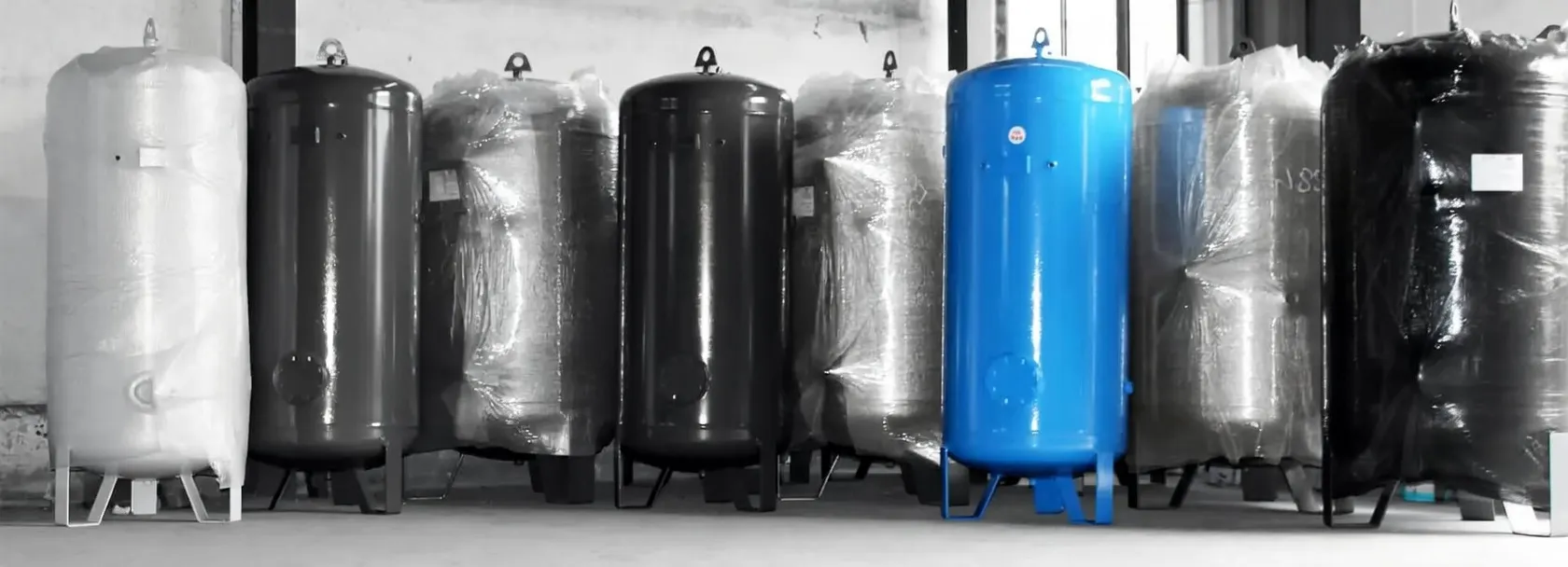
Why Nuclear I&C Systems Cannot Tolerate Oil Contamination
 The safety instrumentation and control infrastructure of a nuclear power plant represents one of the most complex integrated engineering systems in modern industry. Unlike a manufacturing facility where an unexpected shutdown causes production loss, a nuclear plant’s I&C systems are the last engineered line of defence between normal operation and a radiological release to the environment. The pneumatic signal lines, actuator supply headers, and control air reservoirs that feed these systems must receive air that meets or exceeds the ISO 8573-1 Class 0 designation for oil content — meaning zero detectable oil aerosol, oil vapour, or hydrocarbon contamination. An oil-free screw air compressor is the only compression technology that can guarantee this standard at the point of generation, without dependence on downstream coalescing filters that age, saturate, and degrade in service. When the downstream filter is the only barrier, a single oversight in the filter change schedule becomes a potential contributor to a safety system failure — a scenario that nuclear probabilistic safety assessments consistently identify as unacceptable for Category 1 instrument air systems.
The consequences of oil contamination in nuclear instrument air are not theoretical. Hydrocarbon films on solenoid valve orifices increase cracking pressure thresholds, causing valves to respond sluggishly or fail to respond at all during automatic safety actions such as a reactor SCRAM or turbine trip. Oil deposits in pilot-operated relief valves can cause them to open at incorrect set pressures or, more dangerously, remain shut when they should open to protect primary circuit pressure boundaries. In containment isolation systems, oil-contaminated actuators may fail to achieve full travel within the required stroke time — compromising the post-accident radiological boundary at the moment it is most needed. These failure modes are particularly difficult to detect because they may not manifest under routine surveillance testing conditions, only revealing themselves under the higher differential pressure and thermal conditions that accompany an actual plant transient. By selecting an oil-free screw air compressor as the instrument air source, plant operators eliminate this entire class of latent failure from their safety case, replacing a time-dependent maintenance-sensitive risk with a passive engineering guarantee inherent in the machine’s design.
Technical Principles, Construction & Materials
The operating principle of an oil-free screw air compressor differs fundamentally from its lubricated counterpart at the point of compression. In a standard rotary screw machine, oil is injected directly into the rotor chamber to seal the intermeshing male and female rotor profiles, to cool the gas being compressed, and to lubricate the rotor surfaces. In an oil-free design, these three functions are achieved through alternative engineering solutions, each carefully validated for long-term reliability in continuous-duty service. The rotor profiles are machined to extremely tight tolerances — typically within 5 to 10 micrometres across the full working lobe length — using precision CNC gear-grinding centres, so that the intermesh sealing is achieved by geometric precision alone, without requiring a liquid seal medium. Thermal management is handled either by two-stage compression with an intercooler between stages (allowing each stage to operate within manageable temperature limits that preserve rotor coating integrity), by direct water injection into the compression chamber in water-injected oil-free variants, or in some designs by a combination of both approaches. Rotor bearings are lubricated with isolated sealed-grease packs or with an enclosed oil sump arrangement that is positively separated from the compression path by a series of labyrinth seals, piston rings, and in many designs a dry-running shaft seal zone that vents to atmosphere, providing a visible indicator of seal condition during routine inspection rounds.
The rotor element itself is typically manufactured from aerospace-grade aluminium alloy for smaller units or from nodular cast iron for higher-capacity machines, with the rotor lobe surfaces coated with a specialised polymer layer — commonly a PTFE-infused fluoropolymer or a proprietary carbon-fibre-reinforced composite — that provides a self-lubricating effect during the running-in period and a degree of dimensional accommodation if minor contact occurs during startup transients. The housings are precision-bored from high-grade grey iron castings and undergo dimensional inspection at multiple stages during manufacture, including coordinate measuring machine verification of rotor bore concentricity. For nuclear-grade applications, material traceability is maintained from raw material certification through each machining operation and assembly step, with full QA documentation packages compiled in accordance with ISO 10005 quality plans and available to support procurement quality plan submissions and nuclear safety case documentation submitted to the ONR, the French ASN, the Canadian CNSC, or other competent nuclear regulators as applicable.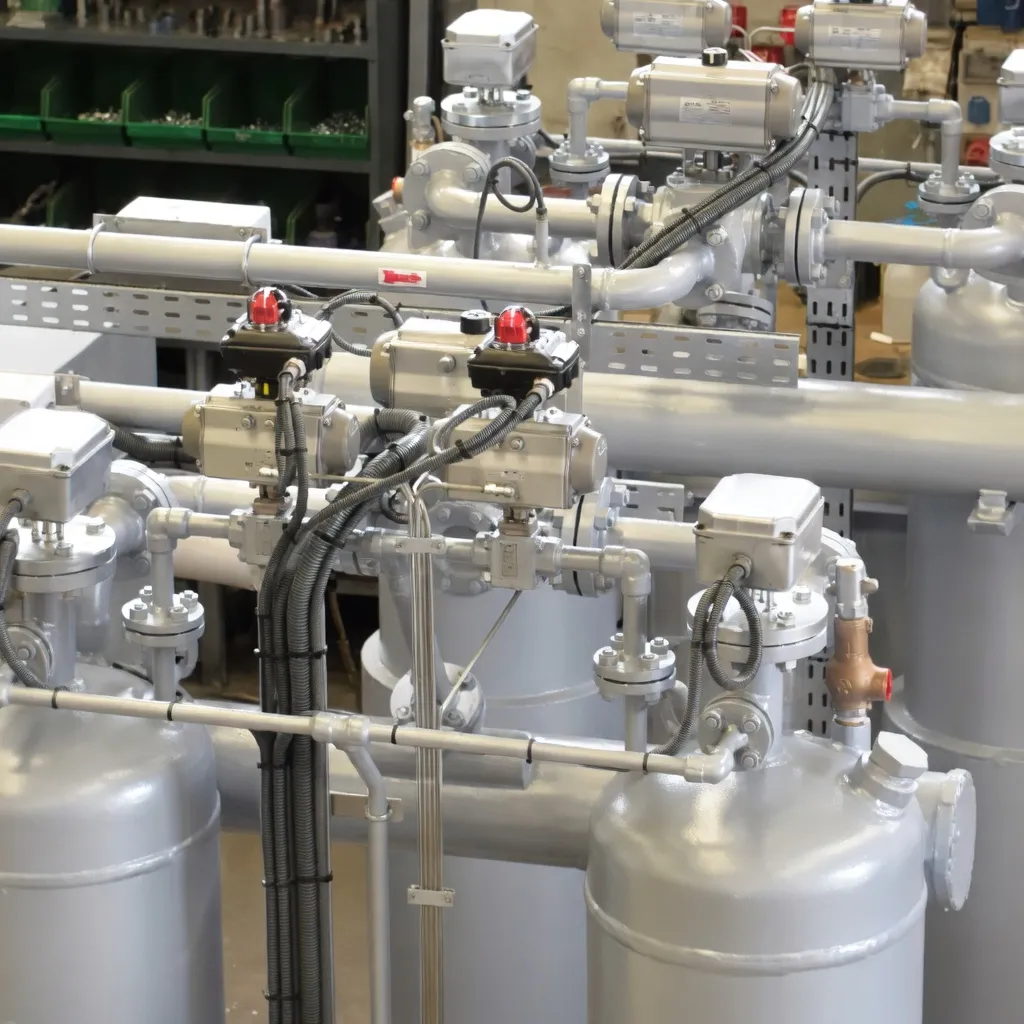
Technical Performance Parameters
The table below presents the standard and nuclear-grade performance envelope for our oil-free screw air compressor range. All figures are indicative; contact our team for site-specific engineering data sheets.
| Parameter | Standard Range | Nuclear-Grade Spec | Unit |
|---|---|---|---|
| Free Air Delivery | 0.5 – 120 | 2 – 120 | m³/min |
| Working Pressure | 4 – 13 | 6 – 10 | bar(g) |
| Oil Content (ISO 8573-1) | Klass 0 | Class 0 (< 0.01 mg/m³) | — |
| Particle Content | Klass 1 | Class 1 (< 0.1 µm) | — |
| Tryckdaggpunkt | −20 to −70 | −40 to −70 | °C |
| Discharge Temperature | < 80 | < 65 | °C |
| Noise Level (1 m) | 62 – 80 | 65 – 75 | dB(A) |
| Motor Power Range | 7.5 – 900 | 22 – 355 | kW |
| Seismic Qualification | N/A | IEEE 344 / IEC 60980 | — |
| Quality Standard | ISO 9001 | ISO 9001 + Nuclear Addendum / ASME NQA-1 | — |
| Redundancy Configuration | Single / Duplex | Duplex / Triplex (N+1, 2oo3) | — |
Six Reasons Nuclear Operators Choose Our Oil-Free Screw Air Compressors
From certifiable air quality to full custom engineering, every aspect of our nuclear compressor offering is built around the specific demands of nuclear safety system procurement.
Certifiable ISO 8573-1 Class 0 Output
Every oil-free screw air compressor in our nuclear series produces compressed air with a verified oil content below 0.01 mg/m³ at the discharge flange — no downstream filtration dependency required to achieve Class 0. Third-party witnessed oil-carryover testing is available as a factory acceptance test hold point, with certification documentation traceable to ISO 8573-1:2010 and IAEA Safety Guide NS-G-1.12. This certification survives regulatory scrutiny without condition.
N+1 Redundancy & Single-Failure Proof Design
Our nuclear instrument air packages are available in duplex and triplex configurations, with dedicated lead/standby/emergency sequencing logic built into an IEC 61511-compliant control system. Each compressor train operates independently with separate power feeds, separate cooling circuits, and separate isolation valve groups — supporting single-failure-proof demonstration in line with ONR Safety Assessment Principles and probabilistic risk assessment targets.
Lower Total Lifecycle Cost
While the capital cost of an oil-free screw air compressor is higher than a lubricated equivalent, the lifecycle economics consistently favour the oil-free choice in nuclear applications. Eliminating oil separator elements, coalescing filter cartridges, oil-water separator maintenance, and the disposal costs associated with contaminated condensate reduces ongoing consumables expenditure by 35–50% over a ten-year operating cycle at nuclear facilities, with significant additional savings in radiological waste categorisation and handling.
Integrated Remote Condition Monitoring
Each unit ships with a comprehensive sensor suite covering bearing temperature, vibration signature, inter-stage pressure differential, discharge dew point, and motor current draw. Data is transmitted via Modbus TCP or Profibus DP to the plant control room, allowing predictive maintenance scheduling without exposing maintenance staff to controlled or supervised nuclear areas during routine data collection rounds — a significant ALARP benefit in radiation protection terms.
Full Bespoke Engineering Capability
No two nuclear facility compressed air systems share identical spatial constraints, pressure requirements, or safety categorisation. Our engineering team works directly with plant I&C designers, civil engineers, and nuclear safety assessors to develop bespoke oil-free screw air compressor packages — from single-skid designs that fit within existing compressor room envelopes, to purpose-built multi-train installations with seismic mounting, blast-resistant enclosures, and passive cooling provisions for post-accident operability requirements.
Full UK Regulatory & Standards Alignment
Our nuclear-grade oil-free screw air compressor packages comply with BS EN ISO 1217, the UK Pressure Equipment (Safety) Regulations 2016, and UKCA marking requirements. Quality management systems are certified to ISO 9001:2015 with nuclear addendum documentation supporting ONR Licence Condition 22 (modification and experiment control) and Licence Condition 28 (examination, inspection, maintenance, and testing) on all UK licensed nuclear sites.
Application Scenarios Across the Nuclear Plant Boundary
The demand for oil-free compressed air within a nuclear generating station is not confined to a single system or building — it permeates every level of the plant’s safety and operational architecture. The safety instrumentation system continuously monitors parameters such as primary circuit coolant temperature, neutron flux, and containment differential pressure, and it relies on instrument air-actuated valves to translate protection system trip signals into physical equipment action. Any delay, hesitation, or failure in these pneumatic actuators during a reactor protection system actuation — caused by oil contamination narrowing a pilot orifice or increasing a diaphragm cracking threshold — could prevent timely isolation of the primary circuit or delay the closure of containment isolation valves. These are actions measured in seconds in accident sequence analysis, and where seconds matter, only an oil-free screw air compressor offers the inherent reliability needed to support a defensible safety case.
Beyond the core protection systems, oil-free screw air compressors serve the emergency core cooling system valve actuators, which must open reliably on receipt of a safety injection signal following a loss-of-coolant accident. They supply the main steam isolation valves that seal the steam generators in PWR designs during certain accident sequences, and they feed the turbine trip and bypass systems that depressurise the secondary circuit. In spent fuel pool cooling systems — which received heightened design attention following the Fukushima Daiichi accident in 2011 and subsequent updates to IAEA Safety Standards — reliable instrument air supply to monitoring and makeup valve controls is now a prerequisite in all new nuclear build safety cases. Post-accident monitoring instrumentation, hydrogen recombiner control systems, and passive autocatalytic recombiner unit actuation all draw on the instrument air header as a clean, reliable operating medium whose quality can be verified and documented throughout the plant’s operational lifetime.
Safety Instrumentation System (SIS)
Pneumatic actuators for protection system trip valves requiring continuous Class 0 instrument air supply with no permitted interruption under design basis conditions.
Containment Isolation Valves
Large-bore air-operated butterfly and gate valves sealing the containment building radiological boundary under accident conditions with rapid stroke-time requirements.
Emergency SCRAM Systems
Rapid-action shutdown rod release mechanisms and secondary shutdown system actuators in AGR and PWR designs requiring fail-safe air supply.
Spent Fuel Pool Cooling Controls
Valve control and monitoring systems maintaining cooling water flow to fuel storage pools, including under station blackout scenarios where essential power is limited.
Post-Accident Monitoring
Instrument air supply to radiation monitoring headers and hydrogen concentration measurement systems operating under design basis accident conditions.
Main Steam Isolation & Turbine Bypass
Reliable actuation of MSIVs and turbine bypass valves to support safe and rapid depressurisation of the secondary circuit during reactor trips and transients.
Supporting Britain’s Nuclear Industry — From Life Extension to New Build
The United Kingdom occupies a distinctive position in the global nuclear industry — simultaneously home to one of the world’s oldest operating nuclear fleets and one of its most ambitious new-build programmes. EDF Energy operates a series of AGR stations across England and Scotland, including Heysham 1, Heysham 2, Hartlepool, Dungeness B, and Torness, all of which require ongoing instrument air system upgrades and replacements as part of their extended lifetime programmes. Each of these sites presents unique engineering constraints shaped by decades of operational history, making the customisation capability of a nuclear oil-free screw air compressor supplier as important as the performance characteristics of the machine itself. The Hinkley Point C EPR construction project in Somerset — the first new nuclear generating station to be built in the UK for over three decades — incorporates a dedicated nuclear-grade instrument air system specified to the highest European Utility Requirements standards, with procurement quality requirements that challenge even well-established nuclear supply chain companies to demonstrate full compliance.
Further along the project pipeline, the Sizewell C project in Suffolk, also an EPR design, and the Rolls-Royce SMR programme targeting multiple candidate sites including Wylfa in Anglesey and locations across England and Wales, will all require nuclear-grade oil-free compressed air infrastructure for their safety and operational instrumentation systems. Our oil-free screw air compressor packages are supplied through a UK-registered entity with full alignment to the UK’s nuclear supply chain quality assurance framework, including registration on the Nuclear Decommissioning Authority’s supply chain portal and technical alignment with the requirements of the Nuclear Industry Association quality standards group. For procurement engineers at EDF Energy, Hinkley Point C’s principal supply chain contractors, or the emerging SMR project developers, we can provide pre-qualification documentation, approved vendor list submissions, and detailed quality plans within a ten-working-day turnaround — supporting the demanding procurement schedules that are characteristic of nuclear projects across England, Scotland, and Wales.
Customer Success: Proven Performance Across Three Continents
From long-running PWR fleets in Europe to CANDU operations in North America, our oil-free screw air compressors have earned the confidence of nuclear engineers in the most demanding regulatory environments in the world.
Philippe Marchetti — Senior Instrumentation Engineer
Civaux Nuclear Power Plant (1,500 MWe PWR), EdF, Vienne, France
“We replaced our ageing oil-lubricated instrument air system at Unit 2 with a duplex oil-free screw air compressor package from Ever Power in 2021. The transition was supported by detailed engineering documentation that our nuclear safety assessors at ASN accepted on first review — something we had not experienced with previous equipment vendors. Eighteen months after commissioning, both units had run without any unplanned stoppages, and the Class 0 air quality was being verified continuously by our inline dew-point monitoring system. The reduction in consumables cost and radiological waste handling effort alone has more than justified the decision commercially, and the maintenance team has commented on how much cleaner the compressor room is without oil mist concerns.”
James R. Holloway — I&C Procurement Lead
Major Nuclear New Build Project, South West England, United Kingdom
“Sourcing nuclear-grade compressed air equipment that meets our quality plan requirements and can be delivered within a nuclear new-build project schedule is always a challenge. The Ever Power team understood from the very first technical discussion that we needed more than a product — we needed a complete documentation package covering material traceability, manufacturing QA records, witnessed hold point results, and seismic qualification test reports to a recognised standard. They delivered everything within the agreed timeframe, and the oil-free screw air compressor units passed our pre-installation inspection review without a single non-conformance report raised. In fifteen years of nuclear procurement, that kind of clean first-article inspection is genuinely uncommon, and it reflects the build quality of the equipment.”
Dr. Catherine Osei — Plant Systems Engineer
Bruce Nuclear Generating Station (CANDU 6), Ontario, Canada
“Our CANDU units operate with a slightly different instrument air philosophy given the moderator and coolant circuit independence, but the fundamental requirement for an oil-free screw air compressor feeding the shutdown system pneumatics is equally non-negotiable from a CNSC regulatory perspective. We selected Ever Power units after a rigorous fourteen-month vendor qualification process that included multiple facility audits, design document reviews, and factory witnessing of pressure tests. The custom skid arrangement they engineered for our compressor room — which has significantly lower headroom than a conventional nuclear facility — demonstrated exactly the kind of application-specific problem-solving that separates a genuine long-term industrial partner from a catalogue supplier. Two years in service without a single reliability event.”
Manufacturing Capabilities & Custom Nuclear Engineering
Our manufacturing facility operates under a quality management system certified to ISO 9001:2015 with nuclear sector supplements, and our compressed air products undergo a staged inspection and test programme that is fully open to customer witness at every major hold and witness point. For nuclear applications, we routinely prepare custom material test reports to EN 10204 Type 3.1 and 3.2, weld procedure qualification records to EN ISO 15614, non-destructive examination records to EN ISO 9712 Level 2 personnel qualification, and complete pressure vessel design calculation books to PD 5500 or ASME Section VIII Division 1 — whichever code applies to the specific nuclear project. Our oil-free screw luftkompressor skids can be configured to customer-specific footprint constraints: accommodating low-headroom compressor rooms, ATEX Zone 2 boundary requirements where hydrogen may be present in the surrounding area, seismic Category I mounting and anchorage design for beyond-design-basis earthquake considerations, and emergency DC power supply compatibility for station blackout survivability testing programmes.
Our product customisation capability extends to the full instrument air system level, not merely the compressor unit in isolation. We design and supply complete nuclear instrument air packages including air receivers with full design documentation, regenerative or heat-of-compression desiccant dryers achieving pressure dew points of −70°C, automatic pre-filter and after-filter assemblies with differential pressure monitoring, system pressure control and safety relief valve arrays with calibration documentation, and PLC-based control panels with the SIL assessment documentation required for nuclear safety category I&C procurement. Every element of a custom nuclear instrument air package is designed from first engineering principles against the customer’s specific process requirements, spatial constraints, and nuclear safety classification — there are no off-the-shelf compromises applied to nuclear contracts, and every design deviation from standard product requires documented engineering justification before manufacture commences.
Vanliga frågor
Answers to the questions nuclear procurement engineers, I&C designers, and plant managers ask us most often about oil-free screw air compressors for nuclear service.
What is the difference between an oil-free screw air compressor and an oil-lubricated compressor for nuclear plant instrument air applications in the UK?
An oil-free screw air compressor achieves compression without injecting oil into the rotor chamber, relying instead on precision-machined rotor profiles, specialised polymer coatings, and labyrinth seals to prevent oil from entering the compressed air path. An oil-lubricated compressor injects oil directly into the compression stage for sealing and cooling, requiring downstream coalescing filtration to remove oil carryover from the air stream. In nuclear plant instrument air applications regulated by the UK’s Office for Nuclear Regulation, the oil-free design is strongly preferred because it eliminates the hydrocarbon contamination failure mode at source — no downstream filter can become the single point of failure for instrument air quality, and no filter change schedule oversight can create a latent safety vulnerability. This fundamental design difference underpins the entire safety case argument for oil-free technology in nuclear I&C air supply.
Which ISO or IAEA standard governs the compressed air quality required for nuclear safety instrumentation systems, and how does an oil-free screw compressor satisfy it?
ISO 8573-1:2010 defines compressed air quality classes, with Class 0 representing the highest cleanliness standard for oil content (below 0.01 mg/m³), particulate size, and moisture content. IAEA Safety Guide NS-G-1.12, covering instrumentation and control systems important to safety in nuclear power plants, requires that instrument air supplied to nuclear safety category systems meets the design basis requirements for air quality, flow, and pressure reliability throughout all design basis conditions including loss of off-site power and seismic events. An oil-free screw air compressor, combined with validated desiccant drying and verified final filtration, provides a compressed air stream that meets or exceeds ISO 8573-1 Class 0 across all three quality dimensions, satisfying both standards without reliance on consumable coalescing elements as the primary oil removal mechanism.
How much does a nuclear-grade oil-free screw air compressor package typically cost for a UK nuclear power plant procurement team, and what factors affect the price?
Pricing for a nuclear-grade oil-free screw air compressor package varies considerably depending on free air delivery requirement (typically 2–50 m³/min for instrument air service), redundancy configuration (simplex, duplex, or triplex), qualification documentation scope (seismic testing, Class 1E electrical supply, QA Level), and the extent of system integration (dryers, receivers, control panels, pipework skid). A duplex instrument air package suitable for a UK nuclear facility safety category system typically ranges from GBP 180,000 to GBP 650,000 ex-works, with UK delivery, installation supervision, commissioning support, and documentation packages representing additional scope. We strongly recommend contacting our UK nuclear applications team directly for a site-specific budget estimate, as requirements vary significantly between sites and between nuclear safety classifications within the same facility.
Where in the UK can I find a reliable supplier of oil-free screw air compressors qualified for nuclear safety category service, and what documentation should I request?
UK nuclear plant procurement teams sourcing oil-free screw air compressors for nuclear service should request the following documentation from any potential vendor at the pre-qualification stage: ISO 9001:2015 certification with nuclear sector scope clearly stated; a product quality plan referencing the applicable nuclear safety category; material traceability records to EN 10204 Type 3.1 or 3.2; a seismic qualification report to IEEE 344 or IEC 60980; and an independent witnessed oil-carryover test report to ISO 8573-2. Vendors registered on the Nuclear Decommissioning Authority approved supplier portal or listed as NIA supply chain members provide an additional layer of assurance. Our company holds all the above qualifications and can supply pre-qualification documentation packages within ten working days of initial contact.
How do you configure an oil-free screw air compressor in an N+1 redundant arrangement for a nuclear safety instrumentation system, and how does lead/standby sequencing work?
An N+1 redundant oil-free screw air compressor configuration for nuclear instrument air service typically consists of two fully rated compressor trains — either capable of supplying the full instrument air demand independently — where one runs as the lead unit and the second operates in standby with its inlet valve open and motor ready to start. If the lead compressor fails to maintain the system header pressure setpoint, detected by dual pressure transmitters applying a two-out-of-two voting logic, the standby unit auto-starts within approximately five seconds without manual intervention. The control system manages periodic alternation between lead and standby on a configurable schedule to equalise running hours and confirm standby readiness. For the highest nuclear safety categories, a third compressor powered from the emergency diesel generator electrical bus provides a passive backup capable of starting on essential power alone, supporting station blackout instrument air availability requirements.
Can an oil-free screw air compressor be seismically qualified for nuclear safety category use, and which testing standard applies for facilities in England and Scotland?
Yes — oil-free screw air compressors intended for nuclear safety category service are seismically qualified through a combination of structural analysis and physical shake table testing. The applicable standards are IEEE 344 (Recommended Practice for Seismic Qualification of Class 1E Equipment for Nuclear Power Generating Stations) and IEC 60980, both of which are referenced in ONR Technical Assessment Guides applicable to UK licensed nuclear sites in England and Scotland. Qualification typically involves floor response spectrum analysis for the proposed mounting location within the specific plant building, followed by multi-axis shake table testing at a recognised accredited test laboratory, with operability and structural integrity demonstrated through the required zero period acceleration values for the site seismic hazard category. Our seismic qualification documentation has been accepted on projects in the UK, France, and Canada.
What is the typical maintenance interval for an oil-free screw air compressor in nuclear I&C service, and how does it compare with maintaining a lubricated machine?
Oil-free screw air compressors in nuclear instrument air service typically require major overhaul of the compression element — including rotor coating inspection, bearing replacement, and seal renewal — at 40,000 to 60,000 running hours, depending on duty cycle, ambient conditions, and air intake quality. Intermediate service intervals at 4,000 to 8,000 hours cover bearing lube oil replenishment (on the isolated bearing circuit only, not the air stream), drive coupling inspection, and inlet valve seating examination. By contrast, an oil-lubricated compressor requires oil changes every 2,000 hours, coalescing filter element changes every 4,000 hours, and oil-water separator media replacement — consumables that add both cost and radiological contamination risk when handled in nuclear controlled areas where all waste streams require classification and managed disposal routes.
How does an oil-free screw air compressor support the Hinkley Point C instrument air system design in Somerset, and what quality standards apply to the nuclear supply chain?
Hinkley Point C’s instrument air system — classified as a nuclear safety-related system under the European Utility Requirements Vol. 2 — requires oil-free compressed air sources with full QA documentation to RCC-M (the French nuclear mechanical equipment design and construction rules) and, for UK supply chain items, compatible compliance to ASME NQA-1 or ISO 19443. Oil-free screw air compressors supplied to this project must carry a Manufacturing Data Report compiled in accordance with the project quality plan, with each hold and witness point independently signed off by the customer’s QA representative and the applicable notified body. Our team has direct experience supporting nuclear new-build quality plan documentation requirements and can provide a detailed discussion of Hinkley Point C supply chain expectations upon direct enquiry.
What is the fastest way to get an accurate quote for an oil-free screw air compressor for nuclear plant service from a supplier experienced with UK nuclear industry procurement?
The fastest route to an accurate quotation is to contact our nuclear applications team directly at sales@luftkompressor-för-laserskärare.com, providing the following key data points: required free air delivery in m³/min, operating pressure in bar(g), nuclear safety category or classification code, site location and applicable seismic zone, redundancy configuration required, and the type and extent of QA documentation needed for your procurement package. With this information, we typically provide a budgetary estimate within 48 hours and a firm quotation within 10 working days. For complex multi-train nuclear instrument air systems, our engineering team is available for a no-obligation technical review call with your I&C design team before quotation is raised, ensuring the scope is fully understood and the commercial offer reflects actual project requirements rather than a conservative worst-case estimate.
Ready to Specify a Nuclear-Grade Oil-Free Compressor?
Ever Power’s nuclear applications team supports instrument air system design from feasibility study through to plant commissioning. Whether specifying for a UK AGR life-extension programme, a new EPR build project, or an emerging SMR development, we have the engineering depth and quality documentation capability your procurement programme demands.
Get a Quote — Contact Our Nuclear Team
📧 [email protected] · Serving Hinkley Point C, Sizewell C, NDA Sites & SMR Projects Across England, Scotland & Wales