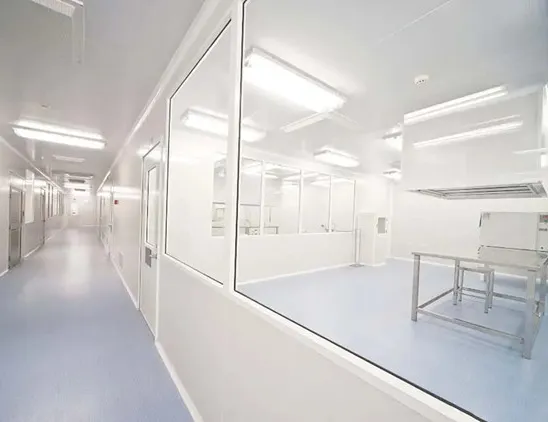
 The manufacturing of liquid crystal displays, OLED panels, and high-precision optical components demands a level of environmental control that most industrial environments simply cannot match. Inside an ISO Class 3 or Class 4 cleanroom, a single airborne oil molecule — measured in parts per billion — is enough to compromise the integrity of an optical coating, introduce a haze defect into a display substrate, or invalidate an entire batch of precision lenses. The financial consequences of such contamination events, compounded by the tight production windows typical of UK display and optics facilities, make compressed air quality not a convenience, but a production-critical variable.
Compressed air is used throughout optical and display panel production lines — from the pneumatic substrate transfer arms and suction-cup handling systems that move fragile glass panels without physical contact, to the high-pressure blow-off nozzles used to clean particles from surfaces before each coating pass, and the instrument air that feeds automated optical inspection equipment. Every one of these touch-points is a potential contamination pathway. When the air supply carries even trace quantities of hydrocarbon oil vapour, the consequences are invisible until they become irreversible.
This guide examines the case for oil-free air compressors in optical and display panel manufacturing environments, explains the engineering principles behind modern Class 0 compressor technology, and helps UK procurement and facilities engineering teams understand what to look for when specifying a compressed air system for their cleanroom operations.
Speak directly with our application engineers — response within one business day.
The Invisible Threat: Why ppb-Level Oil Contamination Destroys Optical Production Yields
Understanding the contamination mechanism is the first step to eliminating it
 The relationship between compressed air purity and optical product quality is not linear — it is catastrophic at the margins. A standard lubricated screw compressor, even when fitted with three stages of downstream filtration, will under certain conditions pass hydrocarbon oil aerosols and vapours at concentrations between 0.003 and 0.1 mg/m³ into the downstream air circuit. For general industrial applications, this is entirely acceptable. For an optical thin-film deposition chamber operating at sub-micron tolerances, it represents a process-destroying contamination event.
Oil vapour condenses onto cooled glass substrates during sputtering preparation, forming invisible hydrocarbon layers that disrupt the adhesion of anti-reflective, anti-glare, and wavelength-selective coatings. On LCD and OLED substrates, even a monolayer of oil contamination interferes with the alignment of liquid crystal polymers and organic emitter materials, resulting in pixel non-uniformity, reduced contrast ratios, and accelerated luminance decay. Optical sensor and camera module lenses coated in contaminated cleanrooms show increased stray light — a fault detectable only after final assembly, at maximum rework cost.
⚠ Industry Data Point
Cleanroom audit data from UK optics manufacturers indicates that compressed air oil contamination is responsible for up to 34% of unexplained coating adhesion failures — faults typically attributed to substrate preparation or process chemistry until air quality is tested.
The solution is straightforward in principle: remove oil from the compressor technology entirely. Oil-free compressors — whether centrifugal or screw-type — eliminate the contamination source rather than attempting to filter it downstream. The result is a guaranteed, measurable, and documentable air purity standard that no oil-flooded compressor, however well-filtered, can reliably match across all operating conditions and filter service cycles.
Engineering Principles: How Oil-Free Compressors Achieve Class 0 Purity
Two proven technologies, both delivering zero-oil compressed air for the most demanding cleanroom applications
Oil-Free Screw Compressors
Oil-free screw compressors use a pair of precision-machined helical rotors — typically coated with PTFE (polytetrafluoroethylene) or a water-injection system — that compress air without any contact between metal surfaces. The compression chamber is physically isolated from the bearing and gearbox lubrication circuits by a series of labyrinth seals and pressurised barrier air systems. This mechanical separation ensures that no oil can migrate into the compressed air path under any operating condition.
Modern oil-free screw compressors operate across a flow range of approximately 1 to 30 m³/min at pressures from 6 to 13 bar, making them the preferred choice for mid-scale optical and display panel cleanrooms. Their variable speed drive (VSD) capability allows precise flow matching to demand, reducing energy consumption by up to 35% compared with fixed-speed equivalents — a significant factor given the continuous 24/7 operation typical of display manufacturing lines.
Oil-Free Centrifugal Compressors
Centrifugal compressors compress air dynamically, using the kinetic energy of high-speed impellers (rotating at 20,000–80,000 rpm) to accelerate and then decelerate the air stream, converting velocity into pressure. Because compression is achieved through fluid dynamics rather than positive displacement, there is no contact between moving components within the air path, and oil-based lubrication is entirely absent from the compression stage. The result is inherently oil-free output at Class 0 levels.
These systems are the workhorse of large-scale LCD glass panel fabrication and semiconductor cleanrooms, capable of delivering flows in excess of 100 m³/min with exceptional efficiency. Their continuous, pulse-free air delivery is particularly valued in sputtering and chemical vapour deposition (CVD) processes, where pressure fluctuations can disrupt coating uniformity. The absence of wearing compression elements also means lower maintenance overhead compared with lubricated screw alternatives.
🔔 The Drying System: The Other Half of the Equation
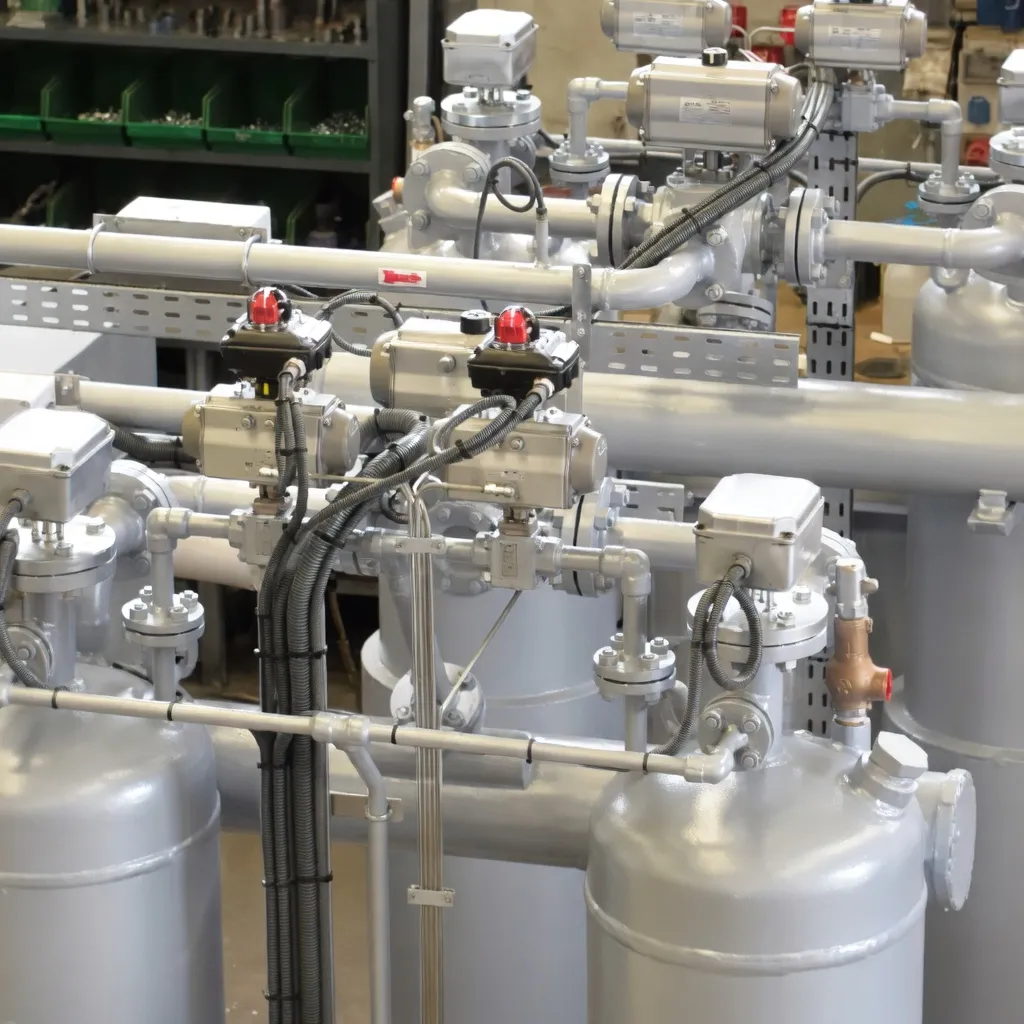
An oil-free compressor alone is necessary but not sufficient for cleanroom-grade compressed air. Atmospheric air drawn into the compressor intake contains water vapour that, upon compression, becomes liquid condensate — a carrier for microparticles and microbial contamination. Cleanroom optical production lines require compressed air with a pressure dewpoint of -40°C or lower (ISO 8573-1 Class 2 moisture) to prevent condensation within pneumatic lines and at nozzle points. Adsorption desiccant dryers using activated alumina or molecular sieve media are the standard technology to achieve this, and are specified as an integrated package with every Ever Power cleanroom compressor system. Regenerative heat-of-compression (HOC) dryers, which use the thermal energy of compression itself to regenerate the desiccant, are also available for energy-optimised installations.
Technical Specifications & Performance Data
Ever Power Cleanroom Series — Oil-Free Screw Compressor Range (representative models)
* All models CE marked. Dewpoint performance achieved with integrated desiccant dryer package. VSD models include energy recovery option. Custom pressure and flow configurations available on request.
Where Oil-Free Compressed Air Makes the Difference: Key Application Scenarios
Six critical process stages where compressed air purity directly determines product quality
Substrate Surface Cleaning & Blow-Off
Compressed air blow-off nozzles remove sub-micron particles from glass substrates before each deposition cycle. Any oil mist in the air stream deposits directly onto the cleaned surface, negating the cleaning step entirely. Class 0 air ensures the blow-off process achieves its intended result.
Pneumatic Substrate Handling & Transfer Arms
Vacuum suction cups and pneumatic end-effectors that handle bare LCD glass or OLED mother substrates require oil-free air to prevent contamination transfer at every pick-and-place operation. Even momentary contact between an oil-contaminated suction cup and a display substrate can cause permanent adhesion marks that appear only after final lamination.
Thin-Film Sputtering & PVD Preparation
Physical vapour deposition (PVD) chambers used to apply ITO (indium tin oxide) and metal electrode layers require purge gas lines to maintain controlled atmospheres during substrate loading. Oil vapour introduced via purge lines contaminates the deposition chamber wall and target material, degrading film stoichiometry and requiring costly chamber cleaning cycles.
Optical Lens Centring & Assembly Fixtures
In optical lens manufacturing, air-bearing spindles and pneumatic lens-centring fixtures depend on ultra-clean compressed air to maintain micron-level alignment accuracy. Oil contamination in the air bearing gap increases friction unpredictably, introducing tilt errors that propagate through the entire optical assembly and require expensive realignment post-coating.
Optical Inspection & Metrology Equipment
Automated optical inspection (AOI) systems and interferometric metrology tools are purged with clean dry air to prevent condensation on high-value optical reference elements and CCD sensors. Contaminated air causes gradual degradation of instrument accuracy, introducing false-positive defect calls and eroding measurement traceability — both serious concerns for UK facilities operating under BS EN ISO quality frameworks.
Cleanroom HVAC & Pneumatic Door Seals
Compressed air is also used in cleanroom infrastructure itself — inflatable door seals, air curtain systems, and pneumatic interlocks that maintain differential pressure between cleanroom grades. Oil-contaminated air in these systems degrades elastomeric seal materials, shortens service life, and can introduce volatile organic compound (VOC) off-gassing into the cleanroom environment — a particular concern for optical coating chemistries.
Materials, Construction & Industry Certifications
The compression elements of Ever Power oil-free screw compressors are machined from high-grade cast iron housings with rotor profiles precision-ground to tolerances of ±2 micrometres. Rotor surfaces are coated with a proprietary PTFE-composite layer that provides low-friction operation, dimensional stability across the full operating temperature range, and complete chemical inertness to all standard cleanroom process gases and cleaning agents. The absence of any oil-based lubricant in the compression chamber is inherent to the design — it is not achieved by filtration and cannot be negated by a maintenance oversight or filter failure.
Internal air paths are constructed from 316L stainless steel or electropolished aluminium alloy, both materials with surface roughness values of Ra ≤0.4 µm that minimise particle adhesion and simplify internal validation cleaning procedures. All wetted elastomers and gasket materials are selected for compatibility with ISO Class 5 cleanroom chemistry, using EPDM or Viton formulations that meet outgassing standards per ASTM E595.
Every unit in the Ever Power Cleanroom Series carries third-party certification to ISO 8573-1 Class 0 for total oil content, issued by TÜV Rheinland. The CE marking confirms compliance with the European Machinery Directive 2006/42/EC and Pressure Equipment Directive (PED) 2014/68/EU — both directives that remain adopted into UK law post-Brexit under the retained EU law framework, with UKCA marking available for UK-only supply.
✅ Certifications & Standards
- ✓ ISO 8573-1 Class 0 (Oil Content)
- ✓ BS EN ISO 14644-1 Cleanroom Ready
- ✓ CE & UKCA Marked
- ✓ TÜV Rheinland Third-Party Certified
- ✓ PED 2014/68/EU Compliant
- ✓ IE3 / IE4 Motor Efficiency Class
- ✓ ATEX Zone 2 Option Available
NEED CUSTOM CERTIFICATION DOCUMENTATION?
We provide full material data sheets, FAT reports, and cleanroom validation packages for every system.
Serving the UK Optical & Display Manufacturing Sector
From Cambridge science parks to Scottish precision optics clusters — trusted compressed air solutions for British manufacturers
The United Kingdom hosts a substantial and growing cluster of optical and display-adjacent manufacturing operations, spanning medical imaging device producers in the Thames Valley and South East, precision optics specialists serving aerospace and defence clients in the Bristol–Bath corridor, university spin-out photonics manufacturers in Cambridge and Oxford, and display technology integrators supporting the automotive HMI sector across the Midlands. Each of these facilities operates under different production scales and cleanroom classifications, but shares one common requirement: a verified, auditable, oil-free compressed air supply.
UK cleanroom standards are governed by BS EN ISO 14644, which mirrors the international ISO standard and classifies cleanrooms from ISO Class 1 (the cleanest, particle count ≤10/m³ at 0.1 µm) to ISO Class 9. The majority of optical coating and display panel production environments operate within ISO Class 4 to Class 6 ranges, where total particle counts are tightly controlled and any process-introduced contamination source — including compressed air — must be validated and documented as part of the facility’s contamination control strategy (CCS) under the relevant sector standards.
UK Stock & Fast Delivery
Standard models available from UK-based stockholders with 2–4 week delivery to any UK mainland facility.
British-Based Service Team
Field service engineers available across England, Scotland and Wales for installation, commissioning and PPM contracts.
UKCA Documentation
Full UKCA marking, UK PSSR 2000 compliance, and British Standards documentation provided with every unit.
GBP Pricing Available
All quotes issued in pounds sterling with UK VAT treatment. Financing and lease options available through UK partners.
Customer Success Stories
Real-world results from optical and display manufacturers who standardised on Ever Power oil-free systems
UK Automotive HMI Display Integrator — Midlands, England
Display panel assembly | ISO Class 5 cleanroom | 3 × EP-OF 55 VSD units installed
A Midlands-based manufacturer supplying curved OLED display modules to three major European automotive OEMs was experiencing an average defect rate of 4.7% at final optical inspection — predominantly manifesting as haze banding and pixel-level non-uniformity across the display centre. Internal quality investigations had ruled out substrate sourcing, clean-room lamination equipment, and process chemistry as root causes over an eighteen-month investigation period. Air quality testing, conducted as part of a compressed air audit commissioned after a consultancy recommendation, revealed total hydrocarbon content at point-of-use nozzles of 0.038 mg/m³ — well above the acceptable threshold for OLED substrate handling.
Three EP-OF 55 VSD oil-free screw compressor units were installed in a parallel ring-main configuration, replacing two ageing oil-flooded rotary screw compressors with three-stage downstream filtration. Integrated desiccant dryers delivering a -40°C pressure dewpoint were included. Post-installation air quality validation confirmed 0.000 mg/m³ total oil content across all twenty-four point-of-use test positions.
Within eight weeks of commissioning, the facility’s optical inspection rejection rate fell from 4.7% to 0.6% — a reduction of 87%. Annualised rework and scrap cost savings were calculated at £620,000, delivering complete return on capital investment within eleven months. The facility has since expanded with a fourth EP-OF 55 unit to support a new OLED module production line.
Key Results
“We’ve been running Ever Power oil-free units in our Cambridge photonics cleanroom for three years now. The consistency of air quality is simply not something we have to think about anymore — the systems run 24/7 with no surprises. The team was extremely knowledgeable about our specific process requirements during the design phase, which gave us confidence before we committed.”
— Facilities Engineering Manager
Photonic sensor manufacturer, Cambridge, UK
“What I appreciate most is the documentation package. For our ISO 13485-regulated medical imaging optics line, we need full traceability on every critical utility. Ever Power provided a complete FAT report, material certificates, and TÜV oil-content certification that our quality team approved without any requests for additional information. That’s rare in my experience.”
— Head of Process Engineering
Medical optical device manufacturer, Surrey, England
“We evaluated four suppliers before choosing Ever Power for our Scottish AR lens coating facility. The deciding factor was their willingness to engineer a custom skid layout to fit our existing plant room — width-constrained to 900mm between columns. Other suppliers gave us a catalogue item and a shrug. Ever Power gave us a bespoke solution that fit perfectly and was delivered on time.”
— Plant Director
AR optical lens manufacturer, Edinburgh, Scotland
Custom Engineering & Manufacturing Capability
No two cleanroom facilities are identical — our solutions shouldn’t be either
Ever Power’s manufacturing facility operates a dedicated custom engineering division that handles non-standard compressor configurations from initial concept through to factory acceptance testing (FAT). This capability is especially valued in the optical and display manufacturing sector, where space constraints, specific power supply configurations, integration with Building Management Systems (BMS), and the need for bespoke validation documentation packages make off-the-shelf solutions inadequate.
Custom projects we have engineered for UK and international cleanroom customers include: narrow-profile skid-mounted systems for retrofit into existing plant rooms, low-vibration baseframe designs for facilities where seismic isolation is required for sensitive metrology equipment, redundant duty/standby parallel configurations with automatic changeover for 99.99% uptime assurance, integrated SCADA connectivity with OPC-UA protocol for Industry 4.0 facility monitoring, and special compressed air purity verification systems with continuous online oil vapour monitoring and automated shutdown on threshold exceedance.
If your optical component or display panel facility has a requirement that standard catalogue products cannot meet, our application engineers want to hear from you. We work with facilities teams at the earliest design stage of new cleanroom builds and retrofits, and can provide pre-FEED (pre-front-end engineering and design) consultancy at no charge for qualified projects. The goal is a compressed air system specification that is correctly sized for your demand profile, future-proofed for production expansion, and delivers the air quality standard your processes demand — without overspending on capacity you don’t need today.
🔧 Our Custom Capabilities
- ✦ Bespoke skid dimensions & layouts
- ✦ Non-standard voltage & frequency
- ✦ Integrated dryer & filter packages
- ✦ Redundant duty/standby systems
- ✦ SCADA / BMS / OPC-UA integration
- ✦ Online oil vapour monitoring
- ✦ Factory Acceptance Testing (FAT)
- ✦ Full cleanroom validation documentation
- ✦ ATEX / low-temperature variants
Vanliga frågor
Answers to the questions UK optical and display manufacturers ask most
Ready to Secure Class 0 Air Purity for Your Cleanroom?
Talk to an application engineer who knows the difference between a substrate blow-off nozzle and a sputtering chamber purge line. We’ll help you specify exactly what your optical manufacturing process needs — nothing more, nothing less.
✉ Get a Free Engineering Consultation
[email protected] | Response within 1 business day | UK & International projects welcome
© Ever Power Compressor Technology. All product specifications subject to change. ISO 8573-1 Class 0 certification verified by TÜV Rheinland. For project enquiries: [email protected] | redigerad av gzl