Cleanroom Technology · Optical Manufacturing · UK Industrial Guide
Oil-Free Air Compressor for LCD & OLED Display Panel Manufacturing: The Complete UK Cleanroom Guide
How UK optical and display panel producers eliminate ppb-level contamination risks, protect coating yields, and future-proof their facilities with the right oil-free compressed air infrastructure.
✔ ppb-Level Oil-Free
✔ Custom-Built for UK Factories
✔ 18+ Years Cleanroom Experience
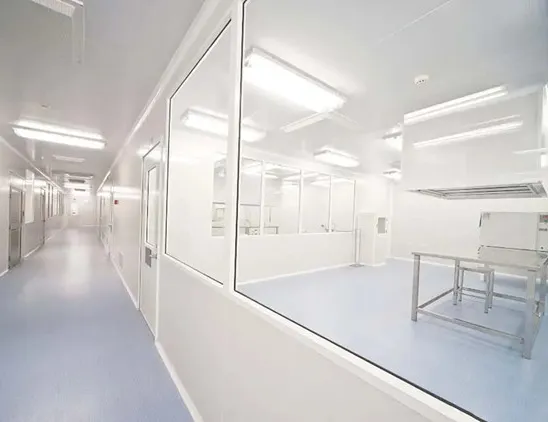 Walk into a display panel production line in the East Midlands, Cambridge Science Park, or a Scottish defence optics facility, and one fact becomes immediately clear: the air itself is a manufacturing input. Inside ISO Class 1 through Class 10 cleanrooms, engineers deposit optical thin-film coatings measured in atomic layers, align liquid-crystal substrates to tolerances below one micron, and bond OLED emitter stacks where a single hydrocarbon molecule on the surface can trigger catastrophic electroluminescent failure. In this world, a conventional lubricated air compressor is simply not an option. Even trace oil aerosols at the parts-per-billion level — invisible to any human sense — will degrade the adhesion of anti-reflective coatings, scatter polarised light through contaminated alignment layers, and produce the kind of cosmetic defects that trigger 100% rejection at final automatic optical inspection.
The solution is an oil-free air compressor system engineered specifically for precision optical environments. Whether your facility produces large-format LCD panels for medical imaging, OLED microdisplays for defence HUDs, optical lenses for LiDAR sensors in autonomous vehicles, or precision camera modules for the aerospace sector, the compressed air specification must meet ISO 8573-1 Class 0 for oil content — guaranteed zero oil carryover at every moment of operation, not merely during routine sampling windows. At Ever Power, we have designed and commissioned oil-free compressor installations across the UK and Europe for more than 18 years, and this guide distils the engineering knowledge that matters most when specifying, selecting, and operating your system.
The compressed air demands of LCD, OLED, and precision optical manufacturing span five distinct process functions: substrate cleaning and particle blow-off, vacuum chuck and robotic handling actuation, sputtering target cooling, photolithography reticle purging, and atmosphere control within deposition chambers. Each function places different purity, pressure stability, and flow demands on the compressed air system — and an oil-free air compressor must satisfy all of them simultaneously, around the clock, with zero tolerance for excursions.
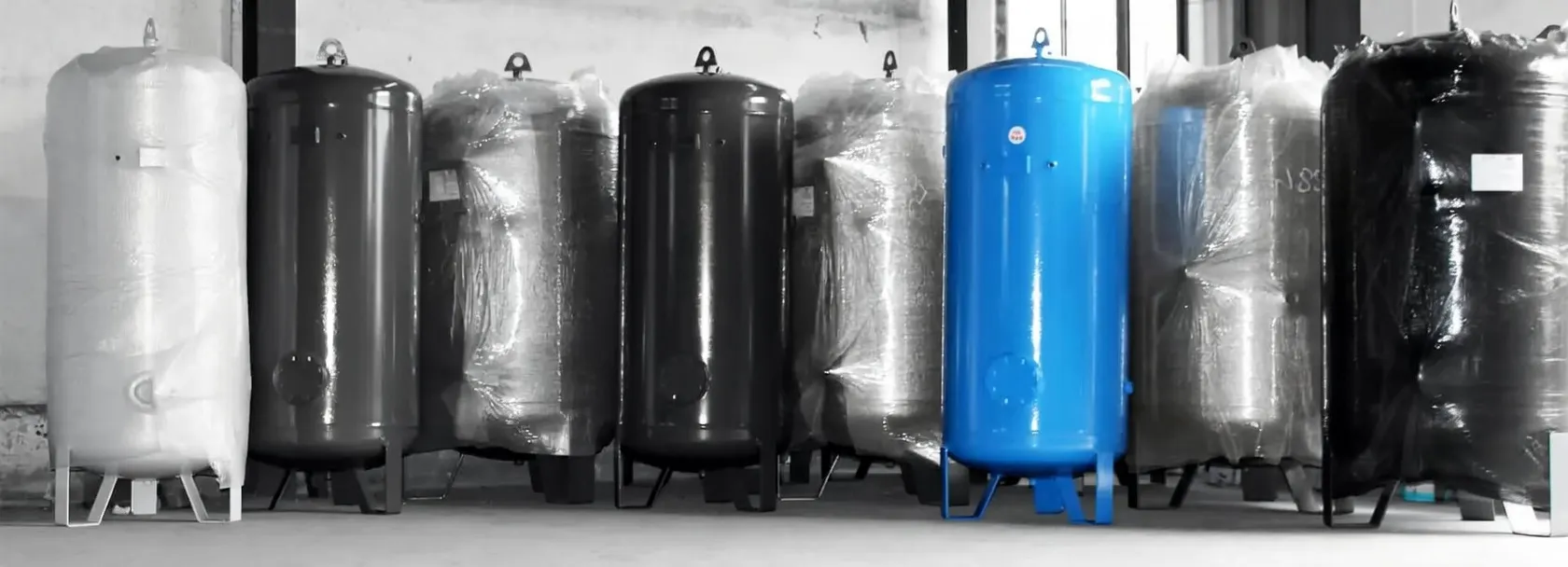 Ever Power oil-free centrifugal and screw compressor systems — engineered for ISO Class 0 purity in LCD, OLED, and precision optical cleanroom environments across the United Kingdom
✉ Request a Free Technical Quote
Respond within 24 hours · Custom specifications welcome · UK-based technical support
Why Oil-Free Compressed Air is Absolutely Non-Negotiable in Optical Cleanrooms
The physics and chemistry behind contamination-driven yield loss
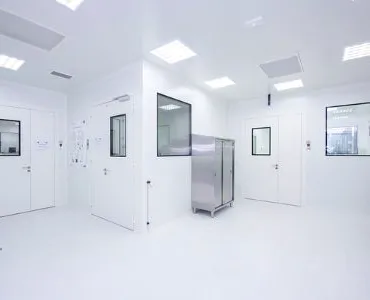 A standard lubricated rotary screw compressor operating at 7 bar typically produces compressed air with an oil content between 1 and 5 milligrams per cubic metre. After passing through a high-efficiency coalescing filter, this figure might drop to 0.01 mg/m³ — which still represents approximately 10,000 parts per billion by mass. In automotive bodyshop painting or food-grade pneumatics, this may be entirely acceptable. In an LCD polariser lamination cell or an OLED thin-film encapsulation chamber, it is a production catastrophe waiting to happen.
The damage mechanism is well understood. Hydrocarbon molecules from compressor lubricant travel through the distribution network as sub-micron aerosol droplets and vapour-phase species that pass straight through most filter media. When they contact a glass substrate or polymer film, three destructive processes occur. Surface energy is reduced, preventing the nanometre-precision adhesion of anti-reflective or anti-smudge coatings. The hydrophobic oil layer disrupts the alignment of liquid-crystal director fields in TN or IPS displays, creating visible “oil spots” that cannot be reworked. In OLED stack deposition, residual hydrocarbons quench exciton formation in the emissive layer, slashing luminous efficiency and accelerating dark-spot growth. Even a single contamination event can invalidate thousands of panels in a bonded batch — the kind of quality failure that triggers immediate supplier delisting from Tier-1 OEM contracts.
An oil-free air compressor eliminates these risks at source rather than attempting to filter them out downstream. The ISO 8573-1:2010 Class 0 certification — the highest purity class in the international standard — specifies that total oil concentration in the compressed air must be lower than the best measurement capability available at the time the standard was written. In practice, Class 0 compressors deliver oil content below 0.003 mg/m³, which is three orders of magnitude cleaner than even a triple-filtered lubricated machine. This is not a luxury specification: it is the baseline that every credible cleanroom operator in the UK optical sector must meet.
Contamination Threshold
Optical coating adhesion fails at oil concentrations above 0.01 mg/m³. ISO Class 0 delivers below 0.003 mg/m³ — safe by a factor of 3×.
Yield Impact
Facilities switching from filtered lubricated to true oil-free systems report first-pass yield improvements of 3–8 percentage points in thin-film deposition lines.
Audit Requirement
Major UK OEM customers in defence and medical imaging now mandate ISO Class 0 compressed air evidence as a supplier qualification condition — not a recommendation.
How an Oil-Free Air Compressor Works: Principle, Materials & Construction
Two primary technologies dominate modern cleanroom compressed air systems
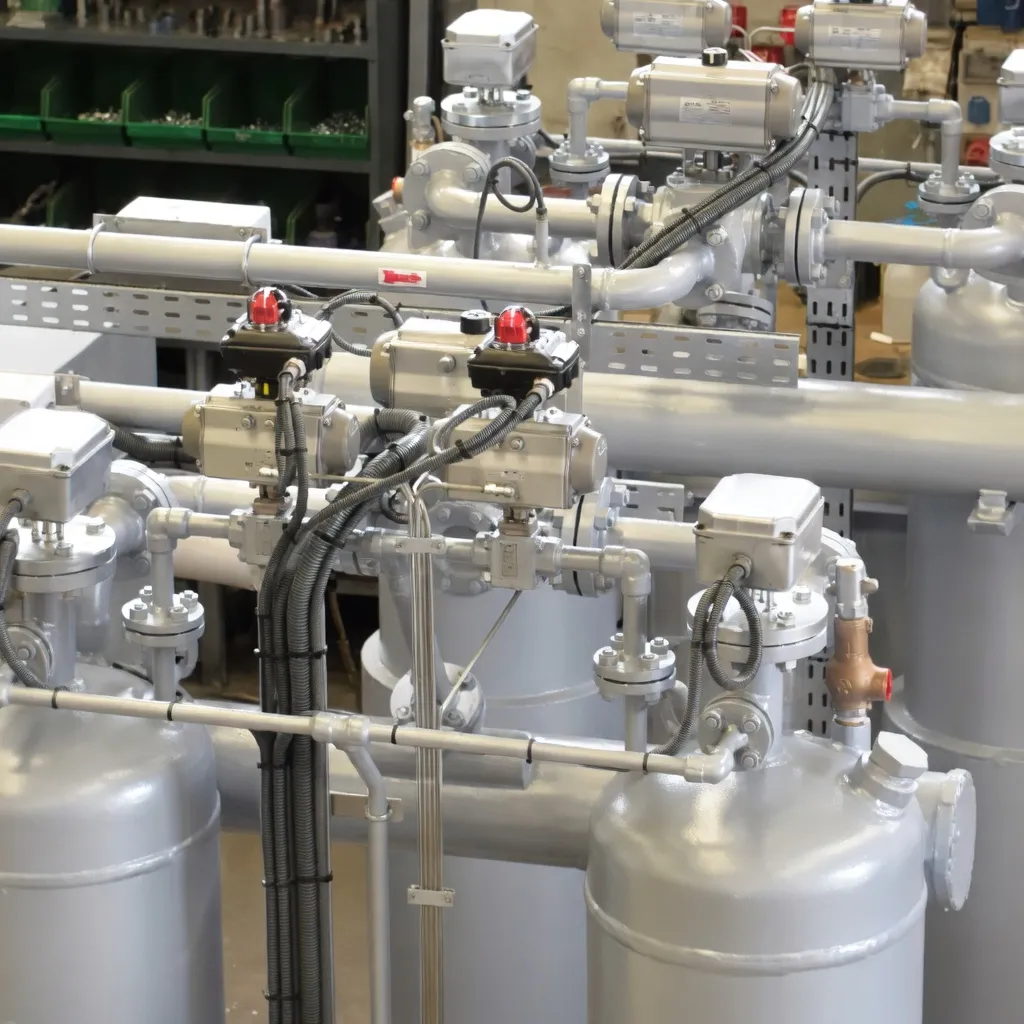 The term “oil-free air compressor” refers to machines engineered so that no lubricating oil enters the compression chamber at any point in the cycle. Two technologies dominate this category for cleanroom applications: oil-free rotary screw compressors and oil-free centrifugal (turbo) compressors. Both achieve oil-free compression through fundamentally different mechanisms, and understanding the difference matters when specifying a system for your specific cleanroom duty.
In an oil-free rotary screw compressor, the male and female rotors are precision-ground and coated with PTFE or specialist polymer coatings that provide lubrication and sealing without oil contact. The rotors maintain a precise clearance gap, eliminating the metal-to-metal contact that would otherwise require lubrication. Gearbox and bearing lubrication systems are completely isolated from the compression chamber by shaft seals and labyrinth passages. Water injection variants use purified water as the sealing and cooling medium, delivering compressed air with residual moisture that is then removed downstream by a refrigerant or desiccant drying system. This technology is ideal for cleanroom duties at flow rates from 1 m³/min to approximately 30 m³/min, covering most small and medium UK optical production facilities.
Oil-free centrifugal compressors use high-speed impellers — typically spinning between 20,000 and 80,000 RPM — to impart velocity to air molecules, which is then converted to pressure in the diffuser. Because the compression mechanism is entirely aerodynamic, there is no physical contact between rotating and stationary components in the gas path, and absolutely no possibility of lubricant ingress into the air stream. Aerodynamic bearings (air foil or magnetic levitation bearings) eliminate even the oil-lubricated bearing chambers found in conventional turbo machinery, making these machines the definitive ISO Class 0 solution for large display panel fabs and multi-cleanroom campuses requiring 30 m³/min and above. Ever Power’s centrifugal range uses proprietary titanium alloy impellers with surface roughness Ra ≤ 0.2 µm and integrated variable inlet guide vanes for load-following efficiency.
Technical Performance Comparison: Oil-Free Compressor Types for Optical Cleanrooms
✦ Best-in-class figure for the parameter shown. All values at 7 bar(g) discharge pressure, 20°C inlet temperature, sea-level conditions. Performance verified to ISO 1217 Annex E.
Where Oil-Free Compressed Air Does the Real Work: Six Critical Production Scenarios
Specific process stages where compressed air purity determines product quality
Cleanroom compressed air is not a single utility serving a single purpose. Across a typical display panel or optical component production floor, an oil-free air compressor system simultaneously serves multiple distinct process steps, each with its own purity, pressure, and flow profile. Understanding these use cases in depth allows plant engineers to specify the right system architecture — whether that means a single large centralised oil-free compressor with dedicated distribution loops, or a modular distributed approach with point-of-use oil-free units for the most critical deposition tools.
1 · Substrate Cleaning & Particle Blow-Off
Glass substrates for LCD and OLED panels must be free of particles larger than 0.1 µm before any coating or bonding step. High-velocity compressed air jets at 3–6 bar, delivered by an oil-free air compressor at purity Class 0, are used in conjunction with ionising nozzles to remove residual particulates from substrate surfaces without depositing organic contamination. Even sub-nanometre oil film deposition from a non-oil-free source would be detected by post-clean contact angle measurement and trigger immediate rework or scrap.
2 · Vacuum Chuck & Robotic Substrate Handling
Venturi vacuum generators powered by compressed air at 5–7 bar create the suction force that holds 1.8 mm and 2.2 mm glass substrates on robotic end-effectors and precision stage chucks during inspection, bonding, and cutting operations. Any oil carryover from a non-oil-free compressor would form a boundary lubricant film on the chuck contact faces, reducing holding force and risking substrate slip — a costly cause of breakage for large Gen 8 substrates.
3 · Sputtering & CVD Chamber Atmosphere Control
Physical vapour deposition (PVD) and chemical vapour deposition (CVD) chambers used for ITO transparent conductor deposition and PECVD silicon nitride passivation layers require periodic purge cycles using ultra-dry, ultra-clean compressed air or nitrogen. An oil-free air compressor feeding the purge train guarantees that no hydrocarbon species contaminate the chamber walls during idle or maintenance states, protecting the multi-million-pound deposition equipment from cross-contamination.
4 · Photolithography Reticle & Lens Purging
Projection photolithography steppers used to pattern TFT-backplane circuits require continuous purging of the reticle space with Class 0 dry compressed air or nitrogen to prevent lens fogging and reticle haze. Lens haze formation — driven by organic contamination reacting with deep-UV photons — is one of the most expensive failure modes in display backplane manufacturing. An oil-free compressor feeding the reticle purge system prevents this mechanism entirely.
5 · Optical Lens & Sensor Final Inspection Blow-Off
Precision optical lenses, LiDAR sensor windows, and camera module cover glasses undergo final blow-off with oil-free compressed air before sealing to remove any residual particles deposited during assembly. This last-chance cleaning step, using filtered compressed air from an oil-free compressor at 2–4 bar through laminar-flow nozzles, is critical to achieving the transmittance and scatter specifications required in automotive and medical optical applications.
6 · Pneumatic Actuators & Control Systems
Cleanroom-compatible pneumatic actuators controlling panel transfer robots, alignment stages, and lamination press cylinders consume compressed air at 5–8 bar and represent high-cycle applications operating millions of times per year. Using oil-free compressed air in actuator circuits eliminates the need for oil separators and drain maintenance, reduces particle shedding from actuator seals, and extends seal service life — all critical advantages in 24/7 production environments where actuator downtime translates directly to production shortfall.
Seven Reasons UK Optical Manufacturers Choose Ever Power Oil-Free Systems
Technical and commercial advantages that go beyond the certificate
ISO Class 0 Certified — Always
Every Ever Power oil-free compressor carries third-party ISO 8573-1 Class 0 certification validated by TÜV Rheinland — not a declared value, but a measured and certified fact.
Variable Speed Drive (VSD) as Standard
Integrated VSD matches compressor output precisely to instantaneous cleanroom demand, delivering energy savings of 25–40% versus fixed-speed alternatives and eliminating pressure band fluctuations that destabilise sensitive coating processes.
Integrated Heat Recovery
Up to 80% of input electrical energy is recoverable as usable heat via the optional heat exchanger package, reducing facility heating load — a significant cost and carbon benefit for UK cleanrooms subject to rising energy tariffs.
Industry 4.0 Remote Monitoring
Ethernet/IP, Profibus, and Modbus RTU connectivity as standard, with optional cloud-based predictive maintenance dashboards providing real-time oil content trending, dewpoint monitoring, and vibration analysis accessible from any UK or global engineering support desk.
Low Total Cost of Ownership
No oil consumables, no oil condensate disposal costs, and extended rotor service intervals of 20,000 hours for centrifugal models dramatically reduce lifecycle cost compared with lubricated systems requiring quarterly oil changes.
Zero Oil Discharge — Full Environmental Compliance
No oil-contaminated condensate means no need for oil-water separators and no discharge consent complexity. UK Environment Agency compliance is simplified, and ISO 14001 auditors find nothing to flag — a genuine advantage for UK facilities under increasing environmental scrutiny.
Full Documentation Package for Supplier Audits
Every Ever Power installation includes a complete IQ/OQ/PQ documentation suite compatible with ISO/IEC 17025-accredited test reports, material traceability certificates, and cleanroom installation qualification records required by Tier-1 OEM customer audits.
Customer Success: How a Scottish Defence Optics Manufacturer Cut Coating Rejects by 74%
A real-world outcome from switching to verified ISO Class 0 oil-free compressed air
Case Study
Caledonian Photonics Ltd · Glasgow, Scotland
Industry: Defence & aerospace precision optics — anti-reflective coatings for thermal imaging sensors and head-mounted display optical combiner assemblies
Facility: 2,400 m² ISO Class 5 cleanroom with three electron-beam PVD coating chambers
Previous compressed air: Dual 15 kW lubricated rotary screw compressors with triple-stage coalescing filtration, yielding measured oil content of 0.008 mg/m³ — nominally compliant with Class 1, but with intermittent excursion spikes to 0.02 mg/m³ detected during filter saturation events
Problem identified: AR coating adhesion failures and scatter haze on HMD combiner optics were running at 18% rejection at final autocollimator inspection, well above the contracted 5% upper control limit. Root-cause investigation by the Ever Power technical team identified hydrocarbon vapour contamination of the substrate blow-off stage as the primary contributor, with the compressor oil filter saturation pattern correlating directly with rejection rate spikes.
Solution installed: Two Ever Power EP-22OF oil-free twin-rotor screw compressors in duty-standby configuration, delivering 4.2 m³/min at 8 bar, paired with Ever Power HLD-40 heatless desiccant dryers achieving –60°C PDP. Distribution ring main in 316L stainless steel with electropolished internal bore.
Result after 90 days: AR coating rejection rate dropped to 4.7% — a 74% reduction in rejected parts. Annual savings from eliminated rework and material scrap exceeded £380,000 against an installed system cost of £68,000, delivering full payback in under 3 months.
74%
Reduction in coating rejects
£380k
Annual savings from reduced scrap
<3 mo
Full investment payback period
0.001 mg/m³
Achieved oil content (vs 0.008 prior)
What UK Optical & Display Manufacturers Say
We specified Ever Power’s oil-free compressor for our new OLED pilot line in Cambridge after reviewing three competing suppliers. The TÜV Class 0 certificate and the clear engineering detail in their proposal — particularly the rotor coating specification and the labyrinth seal data — gave us the confidence to proceed. Twelve months in, we have not had a single oil-related contamination event, and the VSD energy savings are exactly as predicted.
Dr David Hargreaves
Process Engineering Director · OLED Display R&D, Cambridge, UK
The audit trail documentation that came with the Ever Power installation was outstanding — IQ, OQ, material certs, the lot. Our Tier-1 customer accepted it without a single query. For a medical device optics facility, that level of documentation is everything. The system itself has been running 24/7 for 18 months without intervention, and the remote monitoring portal is genuinely useful for our preventive maintenance planning.
Sarah Clements
Operations Manager · Medical Imaging Optics, Birmingham, UK
We were sceptical at first — we’d been using a major European brand’s oil-free system and assumed all Class 0 machines were equivalent. After benchmarking Ever Power side-by-side on our automotive HUD optical combiner line in Bristol, the specific energy figure was 12% lower at our duty point and the outlet dewpoint was more stable. Switching was an easy commercial decision. Technical support response has also been exemplary — same-day callback without exception.
Marcus Fletcher
Plant Utilities Manager · Automotive HUD Optics, Bristol, UK
Ever Power Custom Oil-Free Compressor Solutions for UK Cleanroom Facilities
From standard packaged units to fully bespoke integrated compressed air stations
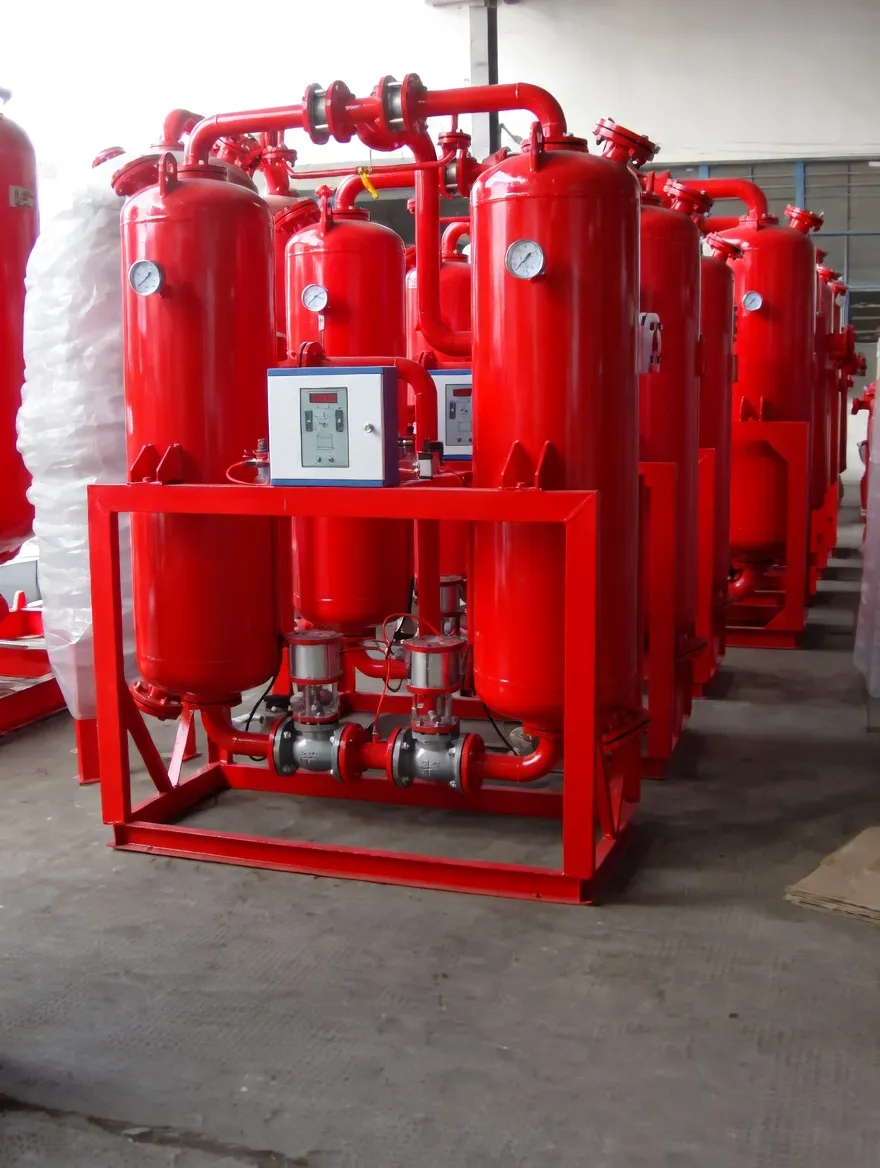 No two cleanroom compressed air requirements are identical. A photonic crystal fibre manufacturing facility in Southampton has fundamentally different air quality, pressure stability, and redundancy needs compared with a large-format LCD glass inspection line in the Scottish Highlands or a micro-optics assembly cell in Stevenage. This is why Ever Power’s engineering approach starts not with a catalogue but with a site survey and process audit. Our application engineers — with over 18 years of hands-on experience in compressed air design for optical and display panel production environments — work directly with your process, facilities, and maintenance teams to design a system that is right-sized, right-specified, and right for your operating context from day one.
Our product customisation capabilities are comprehensive and genuinely differentiated in the market. We manufacture oil-free compressor packages in configurations ranging from compact 5.5 kW sound-attenuated wall-mount units suitable for small R&D cleanrooms, through to multi-machine 500 kW centralised compressed air stations with integrated intelligent master controllers, heat recovery circuits, and N+1 redundancy architectures. Custom pressure options cover 4 to 40 bar, with special metallurgy packages available for corrosive or humidity-sensitive installation environments. Stainless steel pipework integration, ATEX-rated electrical panels for cleanroom boundary penetrations, and seismically isolated anti-vibration mounts for vibration-sensitive optical equipment — all of these are standard customisation options that our factory delivers as standard engineered solutions, not expensive special orders.
5.5 – 500+ kW
Full power range available
4 – 40 bar
Custom pressure configurations
18+ years
Cleanroom installation experience
24h UK Support
Same-day remote & on-site response
Serving Optical & Display Manufacturers Across the United Kingdom
Ever Power provides oil-free luftkompressor supply, installation, commissioning, and long-term service contracts to optical component manufacturers, display panel producers, and precision photonics companies throughout the UK — including facilities in London and the Thames Valley technology corridor, Cambridge and the East of England photonics cluster, Edinburgh and Glasgow in the Scottish defence optics sector, Bristol and Bath in the West of England aerospace and photonics industries, Birmingham and the West Midlands manufacturing heartland, Manchester and Leeds in the Northern Powerhouse technology corridor, and the South East England defence and satellite technology cluster around Stevenage, Guildford, and Fareham.
Our UK-based technical support team provides same-day response to service calls across all these regions, with next-day on-site attendance for critical production facilities. We maintain a stock of common wear parts and control components at our UK logistics hub, eliminating the extended lead times that can come with imported equipment from non-UK-stocked suppliers.
[email protected] · No obligation · Technical specification review included
Vanliga frågor
Real questions from UK display panel and optical manufacturing engineers
Ready to Eliminate Contamination from Your Cleanroom?
Get Your Oil-Free Air Compressor Specification Review — Free, No Obligation, 24-Hour Response
Share your cleanroom process requirements with our application engineers — flow rate, pressure, purity target, facility location — and we will return a written technical recommendation with budgetary pricing within one working day. No sales pressure. Just engineering clarity.
✉ Get a Quote · [email protected]
Serving optical manufacturers across England, Scotland, Wales & Northern Ireland · 18+ years cleanroom compressed air expertise
This article was written by Ever Power’s senior application engineering team with 18+ years of compressed air design experience for precision optical and display manufacturing environments. Technical data verified against ISO 8573-1:2010, ISO 1217:2009 Annex E, and manufacturer test documentation. Last reviewed and updated for current UK market conditions.
redigerad av gzl