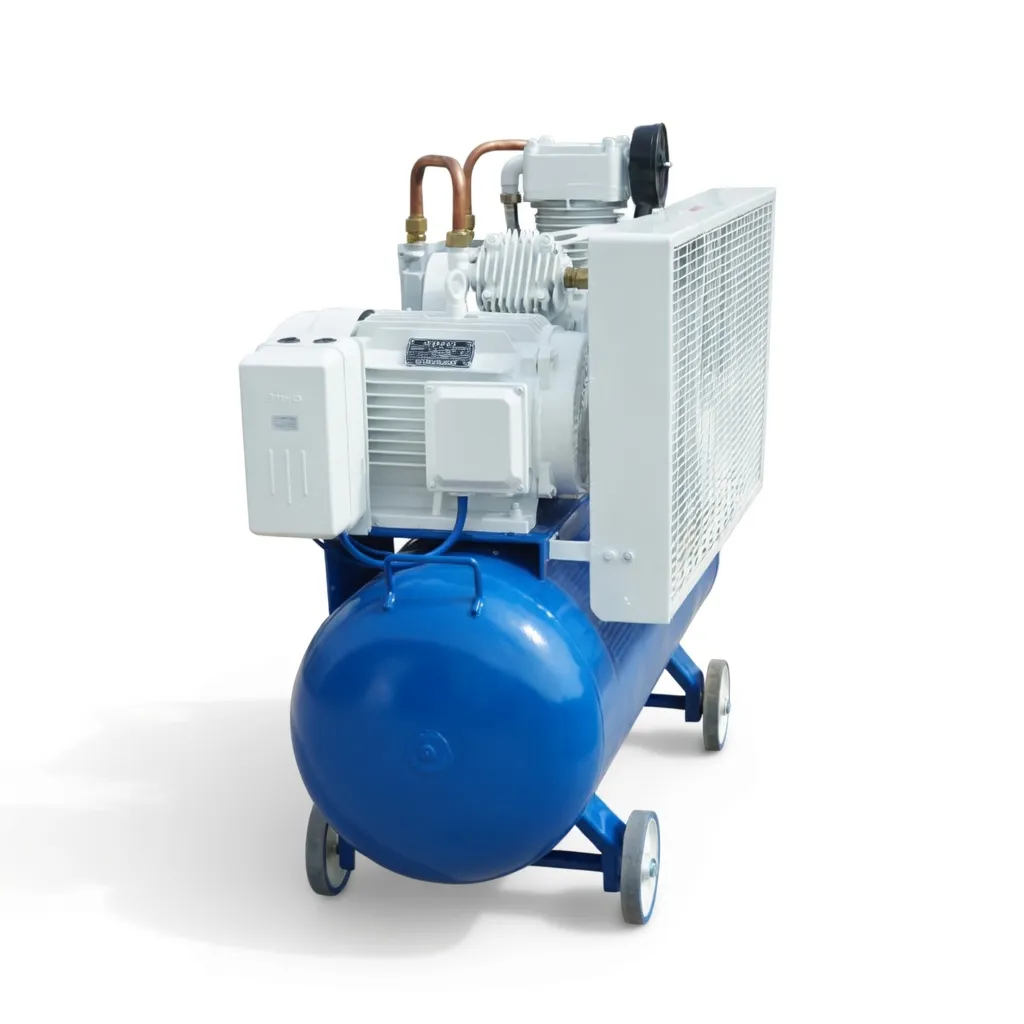
 Compressed air is the invisible heartbeat of every dental surgery. It spins air-turbine handpieces at up to 300,000 revolutions per minute, actuates the air-water syringe, drives pneumatic ultrasonic scalers, and powers the mechanical functions of modern dental chair units. When that air supply contains even trace quantities of lubricating oil, moisture, or microbial contamination, the consequences are not merely technical — they are clinical. Oil aerosol particles irritate the oral mucosa, mask the taste of medicaments, and — critically — create the conditions for cross-infection between patients when deposited on surgical instruments or within prepared cavity margins.
HTM 02-01, the UK Health Technical Memorandum governing medical gas pipeline systems, is unambiguous on this point: dental compressed air must conform to defined purity standards, and practices subject to CQC inspection in England, HIS inspection in Scotland, or HIW inspection in Wales are increasingly required to evidence their compliance. A purpose-built oil-free air compressor for dental chairs addresses this at the source — not through downstream filtration that can fail silently, but through a compression mechanism that produces clean air from the first stage of operation. This guide explains how these systems work, what separates a capable unit from an inadequate one, and why dental practices across the United Kingdom are replacing ageing oil-lubricated equipment with modern oil-free dental compressor technology.
Why Conventional Compressed Air Has No Place in a Dental Surgery
⚠
Oil Aerosol Contamination
Oil-lubricated piston compressors introduce mineral oil aerosol into the air stream. Even at concentrations as low as 0.1 mg/m³ — invisible to the naked eye — this contamination is enough to leave an oily film on the walls of air-powered turbine handpieces, coating the bur, the irrigation port, and the cavity preparation surface. Patients detect the taste immediately, and the irritation to unkeratinised oral mucosa can produce post-operative discomfort that erodes confidence in the practice. For the clinical team, residual oil in the air supply also creates a surface for microbial adhesion within the handpiece itself, complicating decontamination between patients. CQC inspectors in England routinely flag oil contamination as an infection prevention and control issue during dental inspections.
🦠
Microbial Biofilm in Pipework
Oil residue lining the interior walls of compressor tanks, distribution pipework, and air receiver vessels creates a nutrient-rich substrate for bacterial and fungal colonisation. Pseudomonas aeruginosa and Legionella pneumophila are among the organisms documented in contaminated dental air systems, and once established within a biofilm, these pathogens are resistant to standard air flushing and chemical decontamination protocols. Eliminating oil from the compressed air supply removes the primary substrate on which these organisms depend — making an oil-free dental compressor a foundational infection control measure rather than merely a preference. Practices operating under NHS contracts have a particular duty of care to evidence their air quality management as part of mandatory infection control self-assessments.
📋
Regulatory Compliance in the UK
HTM 02-01: Medical Gas Pipeline Systems defines air quality thresholds for dental and healthcare premises across England and Wales, with equivalent guidance applying across Scotland and Northern Ireland. A properly specified oil-free air compressor for dental procedures delivers air consistently within these thresholds — oil content below 0.01 mg/m³ and a pressure dew point below +3°C — without relying on a cascade of downstream filter elements that age, saturate, and bypass silently between service intervals. Practices that have experienced CQC action plans following compressed air quality concerns consistently report that switching to a purpose-built oil-free dental compressor resolved the compliance issue and simplified their ongoing documentation obligations.
Technical Specifications: Ever Power Oil-Free Dental Compressor Range
Designed for UK dental practices operating 1 to 10+ chairs simultaneously. All models ship with integrated refrigerant dryer, three-stage filtration, and auto-drain condensate management as standard.
| Modell | Dental Chairs | Flow (L/min) | Tryck (bar) | Noise (dB) | Tank (L) | Effekt (kW) | Oljeinnehåll |
|---|---|---|---|---|---|---|---|
| EP-D1S | 1–2 | 100 – 160 | 5.5 – 8 | ≤ 55 | 24 | 0.75 | < 0,01 mg/m³ |
| EP-D2S | 2–4 | 200 – 320 | 5.5 – 8 | ≤ 58 | 50 | 1.5 | < 0,01 mg/m³ |
| EP-D4S | 4–6 | 380 – 560 | 5.5 – 8 | ≤ 60 | 100 | 2.2 | < 0,01 mg/m³ |
| EP-D6T | 6–10 | 600 – 900 | 5.5 – 8 | ≤ 62 | 200 | 3.7 | < 0,01 mg/m³ |
| EP-D10T | 10 – 16 | 1,000 – 1,400 | 5.5 – 8 | ≤ 65 | 300 | 5.5 | < 0,01 mg/m³ |
* All models: PTFE-coated oil-free pistons · ISO 8573-1 Class 1 oil · Refrigerant dryer included · UKCA + CE certified · 230 V/50 Hz or 400 V/50 Hz configurable · Dew point ≤ +3 °C. Custom configurations available on request.
Six Reasons UK Dental Practices Choose Ever Power
🫧
Intrinsically Oil-Free Air Delivery
Our dental air compressor range uses PTFE-composite piston rings that require absolutely no lubrication in the compression chamber. There is no oil sump, no oil mist separator, and no downstream coalescing filter acting as the last line of defence against contamination. The air leaving the compression head contains zero lubricant by design. Residual oil content across our entire dental range is consistently below 0.01 mg/m³ — this exceeds ISO 8573-1 Class 1 for oil purity and satisfies the most stringent dental and medical compressed air purity standards in use across the United Kingdom today.
🔇
Near-Silent Operation for the Clinical Environment
Dental anxiety affects a significant proportion of adult patients in the UK — the sound environment of a practice matters clinically, not just aesthetically. Older oil-lubricated compressors commonly operate at 78–90 dB, a noise level that penetrates into waiting areas and treatment rooms, raising patient stress hormones and making clear communication between clinician and patient more difficult. Every model in our oil-free dental compressor range operates between 52 and 65 dB. At 55 dB, the EP-D1S produces less noise than a standard office printer. Many UK practices now install these units adjacent to surgeries without acoustic enclosures, with patients rarely aware the system is running at all.
💧
Built-In Drying and Three-Stage Filtration
Every unit in the range ships with an integrated refrigerant-type compressed air dryer, a moisture separator with automatic float drain, a coalescing filter for sub-micron particulate, and an activated carbon filter for odour and residual vapour removal. The dryer reduces the pressure dew point to below +3°C, preventing moisture condensation anywhere in the distribution network downstream. This integrated approach means your dental equipment installer does not need to source, size, and install separate drying and filtration components — the system arrives as a complete, pre-tested package that can be connected to your dental chair manifold on the day of installation.
📐
Compact Footprint for UK Practice Realities
UK dental premises are extraordinarily varied — Victorian terraced properties converted into surgeries, purpose-built primary care centres, high street retail conversions, and university hospital departments all have different infrastructure constraints. Our smallest dental oil-free compressor (EP-D1S) occupies just 0.28 m² of floor space. The larger twin-head models are available in a floor-standing configuration with a low-profile footprint suitable for standard under-stair plant cupboards. All enclosures are powder-coated steel rated for indoor environments and can withstand the temperature variation of unheated plant rooms through a typical British winter without performance degradation.
🔧
Drastically Reduced Maintenance Burden
The absence of lubricating oil eliminates the entire maintenance workflow associated with oil-lubricated systems: no oil changes every 500–1,000 hours, no oil separator elements costing £80–150 each, no oil-water condensate requiring specialist disposal as hazardous waste, and no risk of a compromised oil separator releasing a slug of contamination downstream without triggering any alarm. Scheduled maintenance for our oil-free dental compressor models consists of annual filter cartridge replacement and a general inspection — a task typically completed in under 45 minutes. Mean time between overhaul for the compression heads exceeds 10,000 operating hours under dental duty cycles, equating to approximately four to six years before any internal component servicing is required.
🏛
Full UK Standards Compliance — UKCA, PED, PSSR 2000
Every unit supplied to the UK market carries UKCA certification and is configured for 230 V single-phase or 400 V three-phase supply as standard. Pressure vessels are constructed and tested in accordance with the UK Pressure Equipment (Safety) Regulations 2016 and the Pressure Systems Safety Regulations 2000. The integrated pressure relief valve, automatic thermal overload protection, and pressure-switch controlled operation ensure the system behaves correctly throughout its duty cycle, consistent with Health and Safety at Work Act 1974 obligations and the specific requirements of HTM 02-01 for dental and healthcare settings.
How an Oil-Free Dental Air Compressor Actually Works
The technical distinction between an oil-free compressor for dental applications and a lubricated industrial unit begins at the piston rings. In an oil-lubricated machine, the rings are metallic and require a film of mineral oil to seal against the cylinder wall and tolerate the heat of compression. Remove that oil and the rings fail rapidly. An oil-free dental compressor solves this engineering challenge by manufacturing the piston rings from self-lubricating composite materials — most commonly PTFE (polytetrafluoroethylene), sometimes blended with carbon fibre or bronze particles — that seal and slide without any external lubrication. The cylinder liners are correspondingly hard-anodised or coated to provide a compatible low-friction surface. Heat management becomes the primary engineering challenge, which is why dental oljefria kompressorer almost universally use two-stage or multi-head configurations with inter-cooling to maintain compression efficiency and component longevity.
An alternative technology increasingly seen in premium UK dental installations is the scroll compressor. Rather than pistons and cylinders, a scroll-type oil-free compressor uses two interlocked spiral elements — one fixed, one orbiting eccentrically — to trap and progressively compress air through diminishing pockets within the scroll geometry. The scroll mechanism produces extremely smooth, low-pulsation airflow with inherently lower noise levels than equivalent piston designs. Scroll-type oil-free dental compressors are particularly favoured in high-end private practices where acoustic environment and vibration-free operation are clinical priorities. Our EP-D1S and EP-D2S models are available in scroll variants on request.
Regardless of compression technology, the downstream treatment train is consistent across our dental range: compressed air leaving the compression head at elevated temperature passes through the refrigerant dryer, where it is cooled to condense moisture before being separated and automatically drained. The dry air then passes through the particulate filter (removing solid particles above 1 micron), the coalescing filter (removing sub-micron aerosols to below 0.01 mg/m³), and finally the activated carbon filter, which adsorbs any residual hydrocarbon vapour and eliminates odour. The result is compressed air meeting ISO 8573-1 Class 1:2:1 — the standard required for direct patient contact applications in dental and medical environments.
Where Oil-Free Dental Compressors Are Used Across UK Practices
From solo practitioner surgeries to university dental teaching hospitals — every application demands the same oil-free air quality.
Application 01
High-Speed Turbine Handpieces
Air-driven turbines spinning at 200,000–300,000 rpm require continuous, oil-free, dry air at 2.2–2.8 bar. Any oil contamination at this rotational speed is aspirated directly into the bur-tooth interface and the intra-oral environment. Our oil-free dental compressor maintains the dew point and oil purity that these precision instruments demand, ensuring consistent cutting performance and protecting handpiece bearings from moisture-accelerated wear.
Application 02
Pneumatic Ultrasonic Scalers
Air-driven scalers used in periodontal maintenance and prophylaxis sessions require a steady supply at approximately 2.5 bar. Moisture carryover causes erratic vibration amplitude and accelerated internal corrosion within the scaler body. Our dental oil-free compressor with integrated dryer eliminates this risk entirely, protecting scaler components and ensuring consistent clinical performance across a full day’s periodontal appointments.
Application 03
Three-in-One Air-Water Syringes
The air-water syringe is among the most frequently used chair-side instruments, deployed for cavity drying, tissue retraction, and fluid irrigation. When the air stream carries oil or particulate, it introduces contamination directly into a prepared cavity prior to placement of adhesive bonding materials — a clinically unacceptable situation that can compromise bond strength and restoration longevity. An oil-free compressor ensures the air jet is suitable for direct intraoral use without supplementary point-of-use filtration.
Application 04
Dental Chair Actuation Systems
Contemporary dental chairs use compressed air to actuate headrests, chair position, foot control, and spittoon functions. These pneumatic actuators contain rubber and EPDM seals that degrade rapidly when exposed to oil contamination, leading to air leaks, inaccurate positioning, and ultimately mechanical failure. UK dental chairs carry replacement costs of £8,000–£25,000 per unit — protecting this investment with a clean, dry oil-free air supply is straightforwardly good economics as well as clinical best practice.
Application 05
Internt tandlaboratorium
Practices operating an in-house laboratory for prosthetics and restoration work use compressed air for air abrasion surface preparation, dental sandblasters, and CAD/CAM milling unit air requirements. Our oil-free dental compressor range delivers air at 4–6 bar suitable for all standard laboratory applications, allowing a single centrally installed unit to serve both the clinical surgeries and the laboratory from one clean, compliant air source.
Application 06
Implant Surgery & Orthodontics
Implant placement requires a surgically clean air environment around the osteotomy site — any contamination at this stage carries documented associations with early implant failure and peri-implantitis. Orthodontic bracket bonding is similarly sensitive to surface contamination from oil or moisture at the enamel surface immediately prior to adhesive application. An oil-free dental air compressor is not optional for these advanced clinical disciplines; it is a prerequisite for predictable outcomes.
Customer Success Story · Leeds, United Kingdom
Bridgewood Dental Group, Leeds — Five-Surgery NHS & Private Practice
Utmaningen
Bridgewood Dental Group, a mixed NHS and private practice operating five surgeries in Headingley, Leeds, was relying on two ageing oil-lubricated kompressorer installed in 2011. During their 2022 CQC inspection, the inspector requested evidence of compressed air quality testing as part of the infection prevention and control review. Routine water and air quality sampling subsequently returned oil aerosol readings above the threshold specified in the practice’s own infection control policy. The practice was placed on a 30-day action plan to remediate the issue and submit written evidence of resolution. Practice manager Sarah Thornton was tasked with finding a permanent, cost-effective solution that would not disrupt the practice’s 60-patient-per-day operating schedule during installation.
Lösningen
After reviewing quotations from two established UK dental equipment dealers and a direct proposal from Ever Power, Bridgewood selected the EP-D6T oil-free dental compressor — a twin-head 3.7 kW unit with a 200-litre receiver, integrated refrigerant dryer, and three-stage filtration package. The system was installed over a single weekend by an Ever Power-approved contractor to avoid clinical disruption. Air quality testing by an independent UKAS-accredited laboratory, conducted 14 days post-installation, confirmed oil content below 0.005 mg/m³ and a pressure dew point of +1 °C — comfortably within HTM 02-01 requirements and the practice’s own infection control specification. The CQC follow-up action was formally closed with a satisfactory outcome, and no further monitoring has been required.
Resultatet
Twenty months post-installation, Bridgewood reports zero unplanned downtime attributable to the compressed air system. Annual maintenance cost for the EP-D6T — covering filter element replacement and a scheduled inspection visit — totals approximately £185, compared to a maintenance spend of over £520 per year on the previous oil-lubricated units, which additionally required two emergency call-outs in their final service year. Total cost-of-ownership has decreased by an estimated 64% on a like-for-like basis. Sarah Thornton notes that the near-silent operation of the new system has measurably improved the acoustic environment within the surgeries, and several members of the clinical team have specifically commented on the reduction in background noise during patient appointments.
Vad brittiska tandläkare säger om Ever Power
"
We run four surgeries in central Birmingham and had been struggling with compressor noise for years. After switching to the EP-D4S oil-free unit, our patients actually commented on how much calmer the practice environment felt. The clinical team is noticeably more relaxed during procedures, the compliance documentation we need for our infection control file is straightforward to produce, and we have not had a single unplanned service visit in eighteen months. It is genuinely one of the best infrastructure investments we have made in the practice.
Dr. Harpreet Sandhu
Principal Dentist — 4-surgery private practice, Birmingham
"
As an oral implantologist working from a two-surgery practice in Edinburgh, I need absolute confidence in my compressed air supply during surgical procedures. The Ever Power oil-free compressor provides that confidence completely. I never see moisture in the chair lines, air quality documentation for my HTM compliance files is straightforward to produce, and the unit requires almost no attention between annual services. For any implant practice operating under Scottish healthcare inspection, I would consider an oil-free system non-negotiable — and this is the one I would recommend without hesitation.
Dr. Fiona MacAllister
Oral Implantologist — 2-surgery specialist practice, Edinburgh
"
Our dental school clinic in Cardiff operates twelve chairs simultaneously during peak teaching sessions. We had genuine concerns about whether an oil-free system could reliably handle that kind of peak demand, but the EP-D6T twin-unit installation has exceeded expectations consistently. Pressure never drops below 5.5 bar even under maximum simultaneous chair load, flow rate is always adequate, and the dental engineering team has found the units very straightforward to inspect and maintain. The university procurement office was also satisfied with the cost justification and the UKCA documentation package provided by Ever Power.
Professor Rhys Williams
Head of Clinical Operations — University Dental Teaching Clinic, Cardiff
Factory-Direct Supply & Bespoke Configuration for UK Dental Buyers
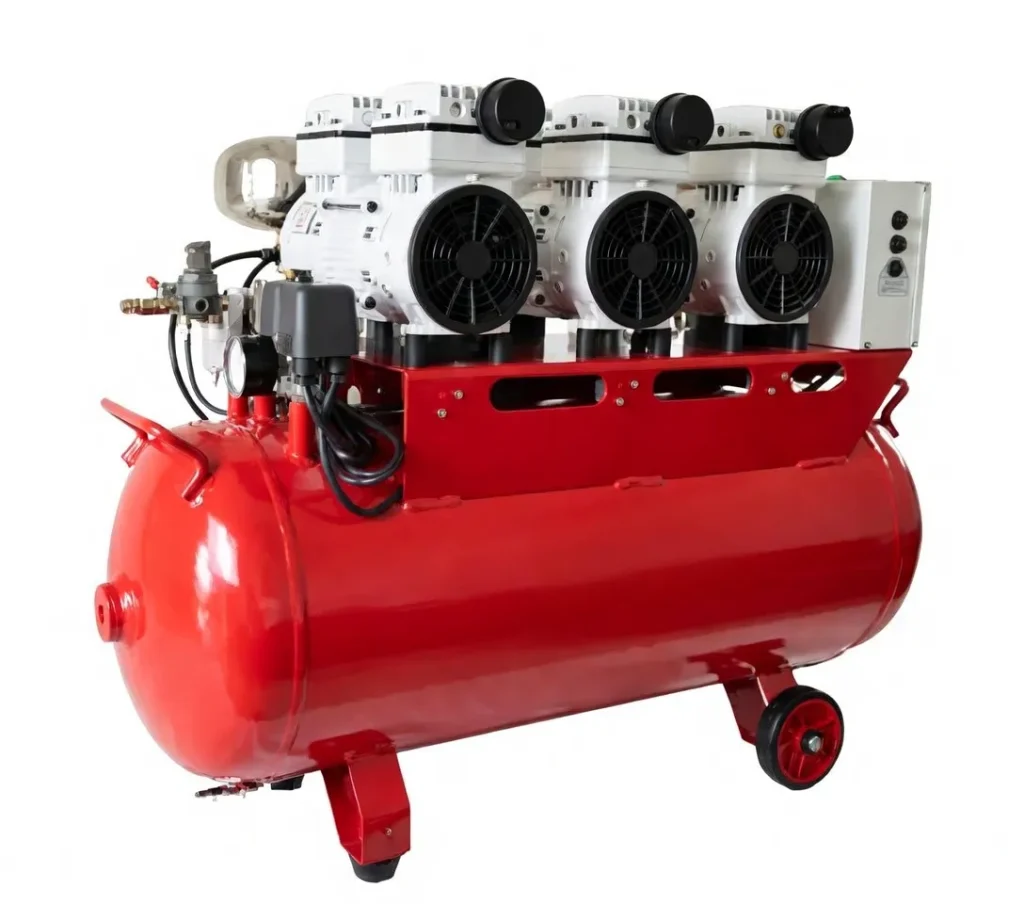 Ever Power is a manufacturer, not a distributor. Our dedicated production facility for dental and healthcare compressed air systems allows us to control every aspect of component specification, assembly quality, and pre-delivery testing — and to offer UK dental buyers direct access to an engineering team that can configure a system to their exact premises, clinical, and compliance requirements without the pricing overhead of an intermediary. For practices comparing quotes from dental equipment dealers, this often means a measurable cost advantage on identical or superior specifications.
Our customisation capabilities for UK dental practices are extensive. We can modify tank volume across the range from 24 litres to 500 litres, configure single-head or twin-head duplex systems (where a standby head provides automatic failover in the event of a compression head fault — essential for practices that cannot absorb clinical downtime), specify 230V single-phase or 400V three-phase supply, and provide bespoke enclosure colour coding and labelling for dental hospital or primary care centre corporate branding requirements. For large multi-surgery buildouts, we offer skid-mounted, pre-piped dental air station packages where all components — compressor, receiver, dryer, filtration, and distribution manifold — are assembled and pressure-tested in the factory, arriving on site ready for final connection.
Every UK dental order is reviewed by our dental application engineering team before production. They verify your configuration against the stated chair count, simultaneous usage factor calculated using the British Dental Association’s recommended demand factors, peak flow demand, available plant room dimensions, and electrical supply characteristics. We issue a signed written technical justification for the selected specification, formatted for inclusion in your infection control risk assessment documentation. Lead times for stocked standard models are typically 5–8 working days ex-works; custom configurations typically require 15–25 working days depending on complexity, with a confirmed production slot confirmed at order placement.
Vanliga frågor
Redo att uppgradera din tandläkarmottagnings lufttillförsel?
Speak directly with an Ever Power dental application engineer. We will assess your chair count, site layout, compliance obligations, and budget — then propose the right oil-free dental compressor configuration for your UK practice, with full documentation support, UKCA certification, and a written technical justification for your infection control file.
redigerad av gzl