 Across Britain’s industrial heartlands — from the steel fabricators of Sheffield to the automotive component suppliers clustering around Birmingham and the advanced engineering firms of the West Midlands — compressed air is as fundamental to the factory floor as electricity itself. The air compressor is not simply a machine that pressurises gas; it is a precision energy-conversion system whose design, specification, and maintenance directly govern the productivity, uptime, and running cost of virtually every pneumatically driven process within a facility. Understanding the technology at an engineering level gives procurement teams the confidence to specify correctly the first time, avoiding the expensive retrofitting and downtime that follow from an undersized or misapplied unit.
Modern industrial air compressors have evolved far beyond simple reciprocating piston machines. Variable-frequency drive rotary screw units, oil-free scroll compressors, and two-stage centrifugal designs now serve specialised sectors — from pharmaceutical cleanroom environments in Cambridge science parks to high-precision laser cutting installations demanding contaminant-free, pulse-free airflow. Getting the specification right means understanding working pressure bands, flow rates, duty cycles, and the cumulative cost of inefficiency over a 10-to-15-year operating life.
How an Industrial Air Compressor Works: The Engineering Principle
Stage 1
Admisie și filtrare a aerului
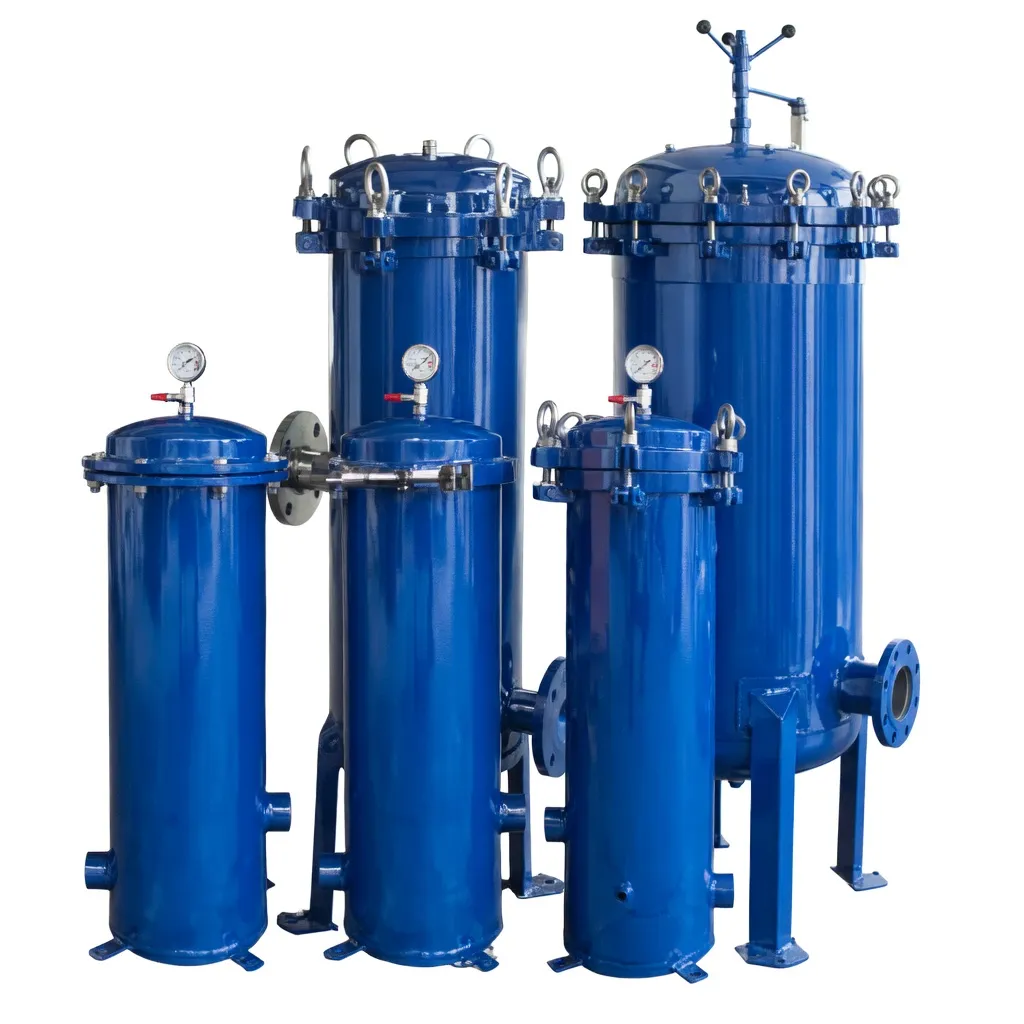
Ambient air is drawn through a multi-stage inlet filter — typically a combination of pre-filter mesh, coalescing media, and activated carbon depending on application class. The filter arrests particulate matter, airborne oils, and moisture before compression begins, protecting internal components and downstream tooling. In UK industrial environments where ambient humidity can be substantial, an effective inlet filtration strategy has measurable impact on dryer duty cycle and overall system longevity.
Stage 2
Compression Mechanism
In a rotary screw compressor — the dominant technology for continuous industrial duty — two counter-rotating helical rotors (male and female profiles) mesh together inside a precision-machined housing. As the rotors turn, air trapped between the rotor profiles and the housing wall is progressively reduced in volume, raising its pressure. The absence of reciprocating masses means rotary screw machines run with far lower vibration than piston compressors, making them well-suited to facilities where vibration-sensitive equipment operates nearby. Compression ratio and final pressure are determined by rotor geometry, speed, and the number of compression stages.
Stage 3
Cooling, Separation & Delivery
Compression generates significant heat — typically raising air temperature to 70–100°C above ambient — which must be managed through an aftercooler (air-cooled or water-cooled) before the compressed air enters the distribution network. A separator vessel then removes lubricant carry-over in oil-injected designs; air/oil separators rated to deliver residual oil content below 3 ppm are standard for general industrial use, while precision applications demand sub-0.01 ppm figures achievable through downstream coalescing filtration. The conditioned, pressurised air then flows into a receiver vessel that buffers peak demand and stabilises system pressure.
Core Materials Used in Industrial Air Compressor Manufacturing
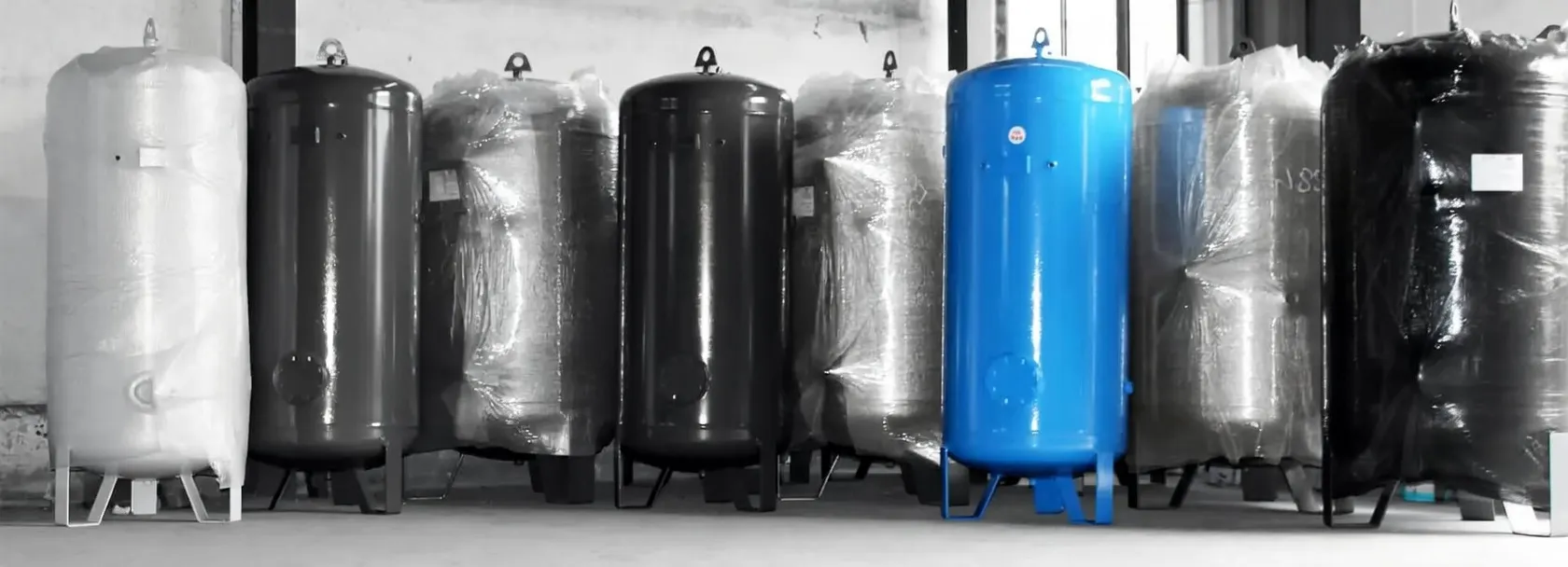
Material selection in air compressor design is not incidental — it is the primary determinant of service life, thermal efficiency, contamination risk, and maintenance intervals. Engineers at Ever Power specify materials through a structured selection process that weighs mechanical loads, thermal cycling, corrosive exposure, and international certifications including those mandated under UK PSSR 2000 (Pressure Systems Safety Regulations).
Cast Iron & Ductile Iron
Used for compressor cylinders, valve plates, and crankcases in reciprocating designs. Offers excellent vibration damping, wear resistance under cyclical loading, and machinability. Ductile iron grades (GS500-7 and GS600-3) are preferred where tensile strength above 500 MPa is required.
High-Tensile Alloy Steel
Rotor shafts, crankshafts, and gear trains are machined from through-hardened alloy steels (42CrMo4, 34CrNiMo6) offering yield strengths typically in the range of 750–1000 MPa. Precise heat treatment cycles — quench and temper — bring the surface hardness to 58–62 HRC in high-wear zones.
Stainless Steel (304 / 316L)
Air/oil separators, precision filtration housings, gas tanks, and pipework in food-grade or pharmaceutical applications are manufactured from 316L austenitic stainless steel — selected for its resistance to chloride-induced stress corrosion cracking, a real-world concern in UK coastal manufacturing facilities.
Aluminium Alloy (EN AW-6061)
Rotor housing end-covers, aftercooler fins, and lightweight portable unit frames benefit from the combination of low density (2.7 g/cm³) and good thermal conductivity (167 W/m·K) of T6-tempered 6061 aluminium, reducing overall machine weight and improving heat rejection.
PTFE & Engineered Polymers
Valve seats, piston rings in oil-free compressors, and dynamic seals utilise PTFE composites, PEEK, and filled nylon grades. These materials combine near-zero lubricity requirements with resistance to the full range of temperatures encountered across a compression cycle — typically -20°C to +200°C.
Core Technical Advantages of Modern Industrial Air Compressors
⚡
Eficiența acționării cu frecvență variabilă
VFD-controlled compressors continuously adjust motor speed to match actual air demand, eliminating the energy wastage of fixed-speed machines that load-and-unload cyclically. In facilities with variable demand profiles — common in UK batch-manufacturing operations — VFD units routinely deliver 25–40% energy savings versus equivalent fixed-speed models, producing a payback period well within 3 years at current UK industrial electricity tariffs.
🔧
Integrated Intelligent Control
Advanced PLC controllers with colour touchscreen HMIs enable real-time monitoring of discharge pressure, temperature, flow rate, and power consumption. Remote access via Modbus RTU/TCP, PROFIBUS, or Ethernet IP protocols allows integration with plant SCADA systems — a capability increasingly demanded by UK facilities seeking ISO 50001 energy management certification or Industry 4.0 compliance.
🌡️
Heat Recovery Systems
Up to 90% of the electrical energy input to a compressor ultimately becomes heat in the compressed air and coolant circuits. Heat recovery modules — factory-fitted or retrofitted — redirect this thermal energy to space heating or process water preheating. For a 110 kW compressor operating 6,000 hours per year, recovered heat can offset hundreds of thousands of kilowatt-hours of gas or electric heating annually, with obvious economic and carbon-reduction implications under the UK’s Net Zero commitments.
🔇
Low Noise Acoustic Enclosures
Compliance with the Control of Noise at Work Regulations 2005 is non-negotiable in UK production environments. Sound-attenuated canopies combining mineral-wool acoustic lining, anti-vibration mounts, and airflow-optimised vent geometry bring operational noise levels to 62–72 dBA at 1 metre — typically below mandatory action levels — without compromising cooling performance or service access.
🛡️
Intervale de service extinse
Synthetic compressor lubricants combined with centrifugal pre-separation and high-efficiency air/oil separators extend oil-change intervals to 8,000 hours in standard duty and reduce airend overhaul cycles to beyond 50,000 hours. This directly reduces planned maintenance downtime — a critical metric for UK manufacturers operating tight just-in-time production schedules.
Product Technical & Performance Parameters
| Parametru | Small Rotary Screw (7–37 kW) | Medium Rotary Screw (37–132 kW) | Large Industrial (132–355 kW) | Oil-Free Screw (11–250 kW) |
|---|---|---|---|---|
| Interval de presiune de lucru | 5 – 13 bar | 6 – 13 bar | 6 – 16 bar | 4 – 10 bar |
| Livrare gratuită prin aer (FAD) | 0.8 – 5.5 m³/min | 5.5 – 24 m³/min | 22 – 65 m³/min | 1.6 – 43 m³/min |
| Specific Power (kW per m³/min) | 6.2 – 7.8 | 5.6 – 7.2 | 5.2 – 6.5 | 6.8 – 8.4 |
| Discharge Temperature (above ambient) | < 8°C | < 8°C | < 10°C | < 5°C |
| Oil Carry-over (max) | 3 ppm | 3 ppm | 3 ppm | 0.001 ppm (Class 0) |
| Noise Level (at 1m) | 62 – 68 dBA | 66 – 72 dBA | 70 – 78 dBA | 60 – 70 dBA |
| Materialul rotorului | Cast iron / Alloy steel | Alloy steel (42CrMo4) | Alloy steel (34CrNiMo6) | Stainless/PEEK-coated |
| Motor Protection Class | IP54 / IE3 | IP55 / IE3 | IP55 / IE4 | IP55 / IE4 |
| Airend Overhaul Interval | 40,000 hrs | 50,000 hrs | 50,000+ hrs | 40,000 hrs |
| Voltage Options | 380 / 400 / 415 V | 380 / 400 / 415 V | 380 / 400 / 415 / 690 V | 380 / 400 / 415 V |
All performance data measured in accordance with ISO 1217 Ed.4 Annex C at standard reference conditions (20°C, 1 bar, 0% relative humidity). Actual FAD varies with site altitude and ambient temperature. Contact Ever Power for site-corrected performance data.
Industrial Application Scenarios: Where Air Compressors Drive UK Productivity
Compressed air touches virtually every sector of UK manufacturing and process industry. The following scenarios illustrate the technical and commercial demands placed on air compressor systems across the most significant application areas, drawing on conditions typical of Britain’s major industrial regions.
Stainless Steel Receiver Vessels & Post-Processing Equipment
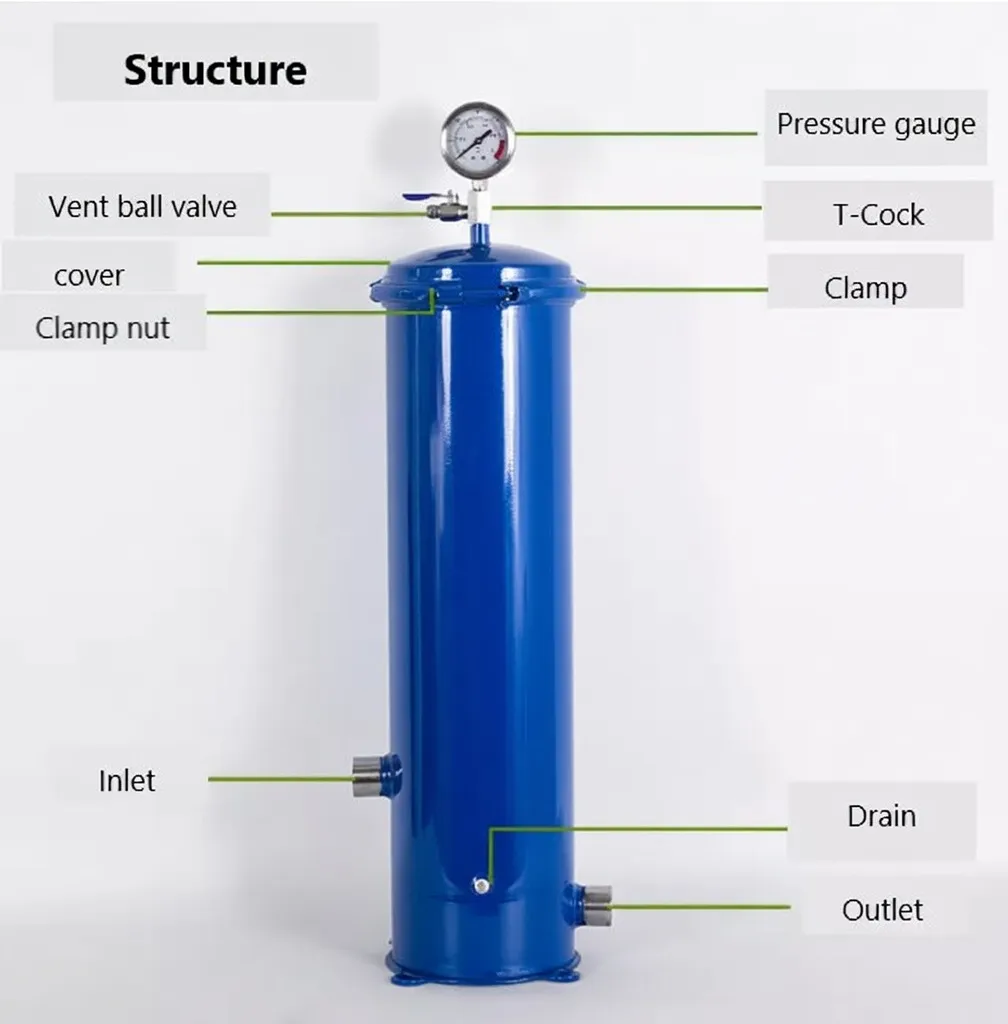
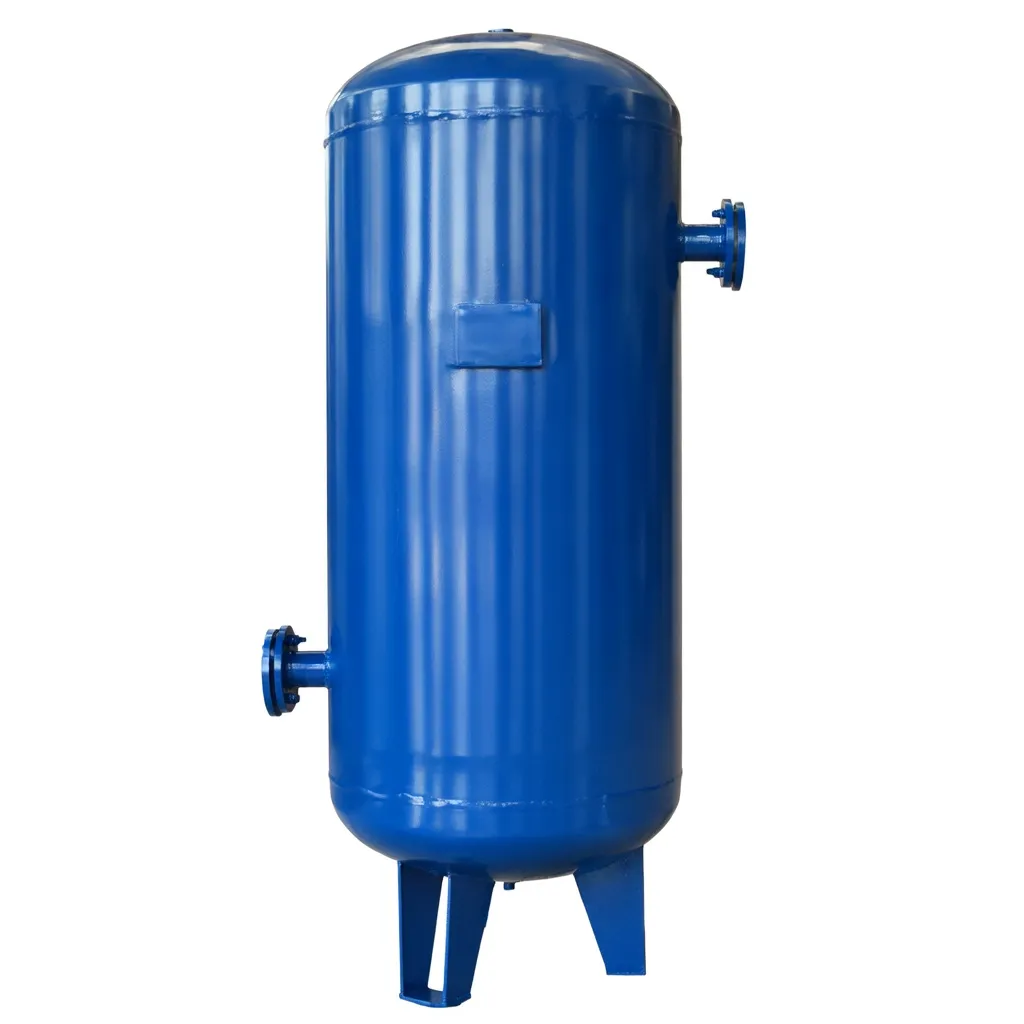 Downstream of the compressor itself, the quality and reliability of the post-processing equipment — receiver vessels, dryers, filtration arrays — determines whether nominally clean compressed air actually arrives at the point of use in the condition the process requires. Ever Power’s stainless steel gas tanks are manufactured from 316L plate, hydrostatically tested to 1.5x MAWP, and carry full PED (Pressure Equipment Directive) compliance documentation essential for UK facilities operating under PSSR 2000.
The vessel geometry — aspect ratio, baffle plate arrangement, and inlet/outlet configuration — is designed to maximise moisture dropout by promoting turbulent deceleration of the airstream, reducing the load on downstream refrigerant or desiccant dryers. Drain connections are positioned at the lowest hydraulic point and are compatible with both timer-controlled and demand-actuated zero-loss condensate drains.
Manufacturing Excellence
Ever Power: Precision-Built Compressor Systems & Custom Engineering
Customisation Capabilities
Ever Power offers complete compressor system customisation — from airend profile geometry modification for non-standard pressure ratios, to bespoke acoustic canopy design for facilities with strict environmental noise limits. Electrical panels can be configured for UK DNO requirements, including G99 connection agreements for sites with on-site generation. Special voltage, frequency, and hazardous-area (ATEX Zone 2 Ex e/Ex d) versions are manufactured to order with full documentation packages for UK HSE requirements.
Precision Manufacturing
Rotor profiles are machined on 5-axis CNC grinding centres to within 0.002 mm of nominal geometry — tolerances that directly govern volumetric efficiency and internal leakage rates. Housing bores are honed to Ra 0.4 µm roughness. All castings undergo ultrasonic inspection, and each assembled airend is run-in on a factory test rig with instrumented mapping of leakage, temperature rise, and specific power before shipment. Every unit leaving the Ever Power facility carries a traceable test certificate with ISO 1217-compliant performance data.
Supply Chain & UK Delivery
Ever Power maintains a bonded stock programme for high-demand standard models, enabling ex-works dispatch within 5 business days. UK buyers benefit from consolidated FCL shipping to Felixstowe or Southampton with pre-cleared customs documentation, delivered direct to site on flatbed transport. An experienced technical sales team handles UKCA conformity marking, CE/UKCA equivalence assessment, and IOM (Installation, Operation, Maintenance) manual localisation for British customers.
Featured Air Compressor Products from Ever Power
Ever Power’s product range addresses the full spectrum of industrial compressed air requirements. Two models stand out for their advanced variable-speed technology and energy efficiency credentials — highly relevant for UK buyers seeking to reduce operational electricity costs and meet carbon reduction targets.
Șurub cu frecvență variabilă
Compresor de aer cu șurub cu frecvență variabilă CM160PVF
The CM160PVF is a 160 kW permanent magnet variable frequency drive screw air compressor designed for high-duty continuous industrial applications. Its integrated PM motor and VFD package delivers class-leading specific power performance, adapting output pressure and flow in real time to match varying process demand. The unit’s compact footprint — significantly smaller than equivalent fixed-speed machines — makes it well suited to space-constrained plant rooms in UK manufacturing facilities. Noise levels below 72 dBA at 1 metre allow installation without specialist acoustic enclosures in most factory environments. The onboard touchscreen controller supports remote monitoring integration and provides full operational history logging for maintenance planning.
Variable Speed Drive Series
Compresor de aer cu șurub cu acționare cu viteză variabilă
Ever Power’s Variable Speed Drive Screw Air Compressor range spans 7.5–250 kW, covering the requirements of smaller precision workshops through to major manufacturing installations. The VSD control algorithm continuously optimises motor speed against the measured downstream pressure, eliminating the unloaded running periods that account for 15–35% of energy consumption in fixed-speed machines. All models in the range are designed for straightforward integration into existing compressed air infrastructure — they ship with standard G-thread outlet connections compatible with UK distribution pipework and carry both CE and UKCA marks. The controller’s predictive maintenance module tracks operating hours, temperature trends, and filter differential pressure, generating early warnings that allow service teams to plan interventions during scheduled production downtime rather than responding to unexpected breakdowns.
Customer Success Story: Sheffield Precision Fabrications Ltd
Case Study · Sheffield, South Yorkshire · Precision Laser & Sheet Metal Fabrication
 Sheffield Precision Fabrications Ltd (SPF), a mid-sized contract fabricator employing 140 people in the Don Valley, had been operating an ageing fleet of fixed-speed reciprocating and oil-injected rotary screw compressors supplying air to three fibre laser cutting stations and a plasma cutting bay. Annual electricity spend on compressed air alone had risen to over £68,000 — a significant proportion of the facility’s total energy bill. More critically, persistent oil contamination downstream of the ageing separator vessels was causing lens fogging on the laser cutting heads, forcing unscheduled stoppages every 3–4 weeks for optical cleaning and realignment. Production throughput was suffering, and customer delivery lead times were slipping.
SPF’s engineering director contacted Ever Power following a recommendation from a sister company in the automotive supply chain. After a detailed site survey measuring actual air consumption profiles across three production shifts, Ever Power’s application engineers recommended replacing the entire compressed air plant with two CM160PVF Variable Frequency Screw Air Compressors configured in a lead-lag arrangement, downstream refrigerant dryers, and a four-stage filtration train including activated-carbon final-stage units rated to deliver ISO 8573-1 Class 1 air at all laser cutting points. A 3,000-litre 316L stainless steel receiver vessel — sized to provide a 45-second storage reserve at peak system demand — was included to stabilise pressure during compressor transition events.
The changeover was completed during a planned two-week maintenance shutdown, with Ever Power providing on-site commissioning engineers and full operator training. Within the first quarter of operation, SPF’s electricity consumption for compressed air dropped by 34% — an annualised saving of approximately £23,100 at then-current tariffs. Lens contamination incidents fell to zero over the following six months, eliminating roughly 180 hours of previously lost production time per year. The payback period on the capital investment is projected at 2.8 years, well within the threshold set by SPF’s finance committee for capital equipment approval.
Ce spun clienții noștri din Marea Britanie
★★★★★★
“The reduction in lens-fogging incidents has been dramatic. We were losing a full shift every month to cleaning and realignment — that’s simply gone now. The oil-free air quality coming out of the filtration train is genuinely different to what we had before. Ever Power’s commissioning team were professional and knew the product inside out.”
James Whitfield
Engineering Director · Sheffield Precision Fabrications Ltd
★★★★★★
“We specified a custom ATEX-rated variant for our Birmingham powder-coating facility, and Ever Power handled the entire compliance documentation process for us — HSE requirements, PSSR written scheme of examination, everything. Lead time was shorter than any European supplier quoted, and the technical support after commissioning has been responsive and genuinely knowledgeable.”
Rachel Moss
Plant Manager · Midlands Coatings Group, Birmingham
★★★★★★
“The VSD units have completely changed our energy profile. Our production manager now watches the compressor power draw in real time through the SCADA integration — it’s become a key metric in our ISO 50001 programme. The price was very competitive for the specification level, and delivery to our Leeds facility was faster than we’d been told to expect.”
David Carmichael
Maintenance & Utilities Manager · Northern Plastics Technologies, Leeds
Întrebări frecvente
EVER POWER INDUSTRIAL · COMPRESSED AIR SYSTEMS
For technical enquiries and custom quotations: sales@compresor-de-aer-pentru-tăiere-laser.com
editat de gzl