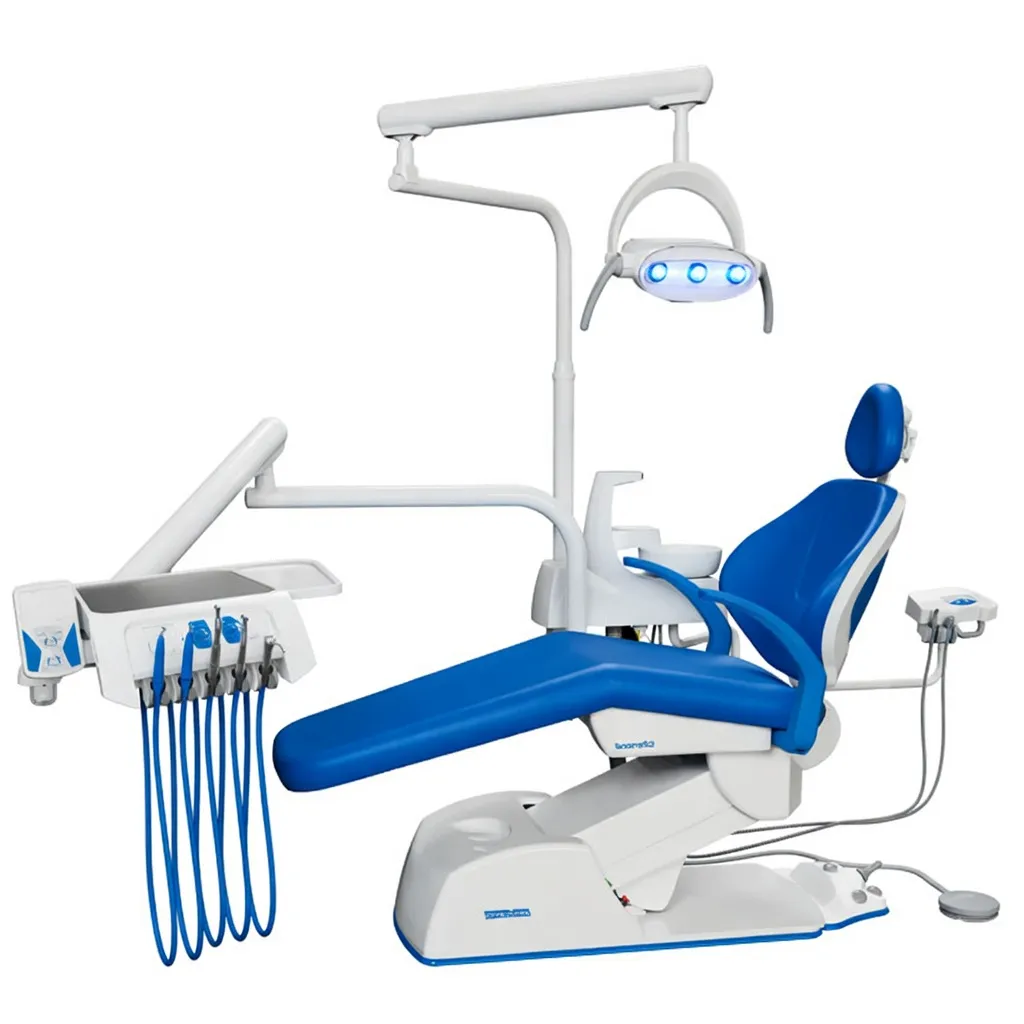
 Compressed air is the invisible infrastructure of every modern dental surgery. From the moment a dentist picks up a turbine handpiece to the final rinse of the three-way syringe, the quality and purity of the compressed air supply determines both clinical outcomes and patient safety. Across the United Kingdom, dental practices operating under the NHS standard contract, CQC Fundamental Standards, and HTM 01-05 decontamination guidelines face a critical infrastructure decision that is too often underestimated during a practice fit-out or refurbishment: choosing the right compressed air source. The wrong choice — an oil-lubricated compressor — can introduce oil aerosols, water vapour, and microbial contaminants directly into a patient’s oral cavity, creating infection control risks that no downstream filter can fully eliminate.
The oil-free air compressor for dental clinics has therefore evolved into a dedicated clinical equipment category, governed by international air purity standards and stringent acoustic requirements. Unlike industrial compressed air systems, a dental-grade oil-free compressor must deliver genuinely contaminant-free air at point of generation — not merely filtered air — while operating quietly enough for an enclosed treatment room and compactly enough to fit within a plant room or even beneath a reception desk. These are demanding and specific requirements, and selecting a supplier who understands both the engineering and the clinical context is critical for any UK dental practice owner, practice manager, or dental group estates lead.
This comprehensive guide walks through everything you need to know: how oil-free dental compressors work at a mechanical level, what materials and technologies are used, which application scenarios they serve inside a working UK surgery, what to look for in a technical specification, and how practices from Edinburgh to Bristol have successfully deployed our systems. You will also find a detailed parameter table, customer testimonials, and answers to the long-tail questions that UK practice owners are asking right now.
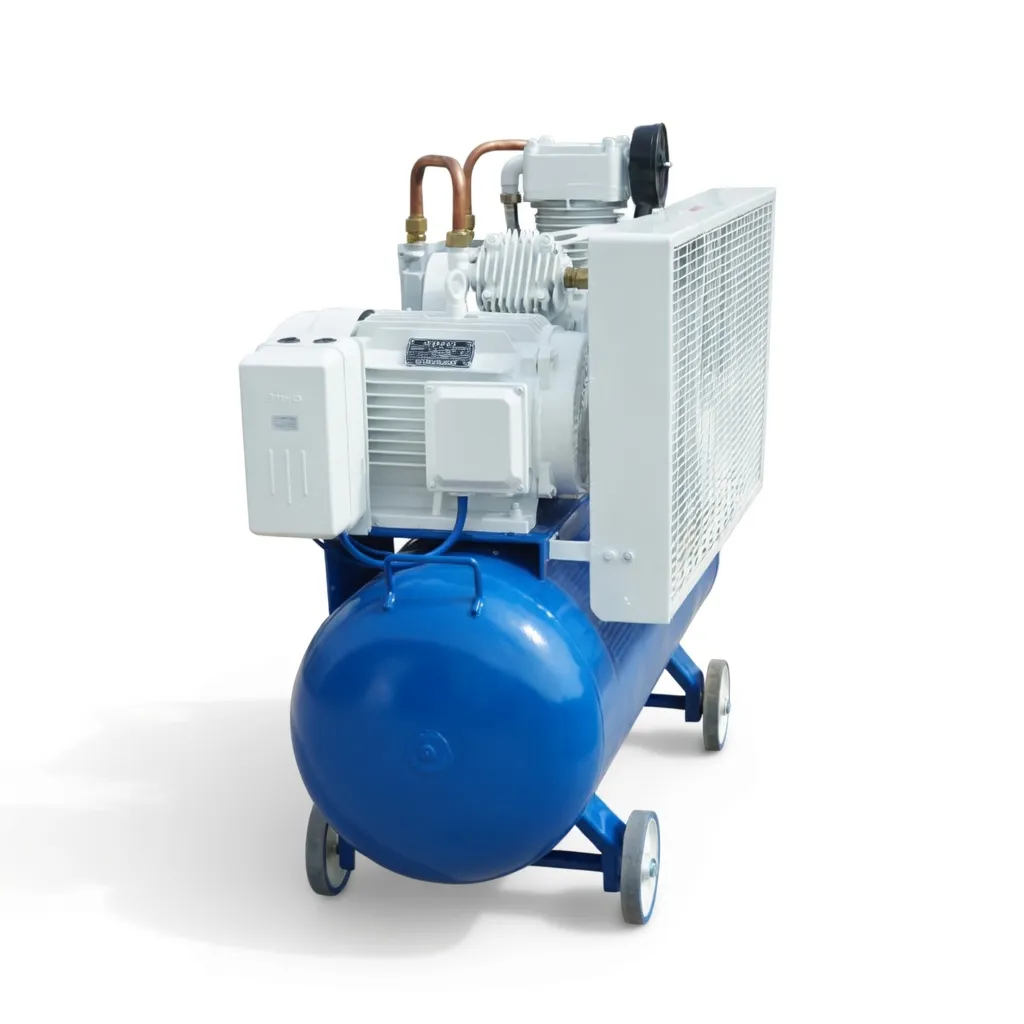
Ever Power EP-D Series — Oil-Free Dental Air Compressor, designed for UK dental practices
Why UK Dental Practices Must Use Oil-Free Compressors
 The regulatory and clinical case for an oil-free air compressor in a dental setting is watertight. Under HTM 01-05 and the associated SDCEP decontamination guidance, clinical compressed air must not pose an infection control risk through contamination. Oil-lubricated compressors — even those fitted with high-specification downstream coalescing filters — generate air streams that can carry residual oil aerosols at concentrations between 0.1 and 1 mg/m³. When a dental turbine handpiece accelerates to 300,000 RPM and exhausts that air directly across freshly prepared dentine, periodontal pockets, or surgical extraction sites, those oil traces come into direct mucosal contact. The result is chemical irritation, potential disruption of wound healing, and a compromised infection control environment that the CQC’s inspection regime will scrutinise closely.
Oil-free compressors eliminate this at source. In a modern dental oil-free compressor, the compression elements use PTFE-impregnated piston rings, self-lubricating composite bearings, or contact-free scroll geometry. There is no oil in the compression stage whatsoever. The air leaving the pump is genuinely oil-free — classified ISO 8573-1 Class 0 for oil content, which means the compressor contributes zero oil contamination to the air supply. This is the only classification level that fully satisfies both clinical requirements and manufacturers’ warranty conditions for turbine handpieces, which are designed to run on clean, dry, uncontaminated air exclusively.
Beyond the patient safety argument, there is a compelling total cost of ownership case. An oil-free dental compressor eliminates oil changes, oil separator replacement, and oil-related filter maintenance entirely. Annualised service costs fall by 30–45% compared with equivalent oil-lubricated systems. The mean time between failures increases substantially, and the risk of an unscheduled downtime event — a compressor oil contamination incident that requires the whole surgery to be decommissioned while Infection Prevention and Control (IPC) colleagues investigate — drops to effectively zero. For a busy NHS contract practice in Birmingham or a private implant clinic in Leeds, operational continuity is a genuine financial priority, and the oil-free compressor delivers it reliably.
How Oil-Free Dental Compressors Work: Principle, Materials & Construction
Oil-Free Piston Mechanism
The most widely deployed technology in 2–4 chair dental installations uses a reciprocating piston fitted with PTFE composite rings. These rings are self-lubricating due to the PTFE matrix, which has a naturally low coefficient of friction against the cylinder wall. No liquid lubricant is introduced at any point. The cylinder bores are precision-honed and hard-anodised aluminium or cast iron, and the PTFE rings maintain their sealing properties across the full temperature range encountered in normal dental use. The piston rod is supported on pre-lubricated sealed bearings in the crankcase, which is separated from the compression chamber by a labyrinth seal — preventing any cross-contamination from the crank assembly to the air side.
Silent Scroll Technology
For noise-sensitive installations — consulting rooms, first-floor plant rooms, or practices sharing a Victorian terrace with residential tenants — scroll compressor technology offers the ideal solution. Two interlocking Archimedean spiral elements, one fixed and one orbiting, trap and compress air without any metal-to-metal contact. The orbiting scroll is coated with a dry PTFE composite and runs on an eccentric bearing. The near-frictionless, contact-free operation generates noise levels as low as 52 dB(A) — quieter than a normal conversation. The rotational motion is smooth and vibration-free, requiring no anti-vibration mounting pads. For practices in England’s conservation zones or shared premises, this is often the only viable compliance-friendly option.
Integrated Drying & Filtration
Moisture in compressed air is equally hazardous for dental instruments. Water droplets accelerate internal corrosion in handpiece turbines, contaminate air-driven scaling tips, and provide a growth medium for biofilm in distribution pipework. The Ever Power dental series integrates a refrigerant aftercooler that cools the compressed air to +3°C pressure dewpoint, condensing the vast majority of water vapour before it enters the receiver tank. A cyclonic water separator then removes condensate, which drains automatically via a timed solenoid valve. The downstream distribution air meets ISO 8573-1 Class 4 moisture classification as standard — suitable for all dental handpiece manufacturers’ air quality specifications without supplementary desiccant drying.
Technical Performance Parameters — Ever Power EP-D Dental Series
| Parâmetro | EP-D50 2-Chair | EP-D100 4-Chair | EP-D200 8-Chair |
|---|---|---|---|
| Free Air Delivery (FAD) | 50 L/min | 100 L/min | 200 L/min |
| Pressão de trabalho | 5.5 – 7 bar | 5.5 – 7 bar | 5.5 – 8 bar |
| Nível de ruído | ≤56 dB(A) | ≤58 dB(A) | ≤60 dB(A) |
| Oil Content in Compressed Air | 0.000 mg/m³ | 0.000 mg/m³ | 0.000 mg/m³ |
| ISO 8573-1 Oil Classification | Classe 0 | Classe 0 | Classe 0 |
| Pressure Dewpoint | +3°C PDP | +3°C PDP | +3°C PDP |
| Potência do motor | 0.75 kW | 1,5 kW | 3,0 kW |
| Receiver Tank Capacity | 24 L | 50 L | 100 L |
| Dimensions L × W × H (mm) | 580×240×490 | 810×280×620 | 1080×340×760 |
| Voltage | 230 V / 50 Hz | 230 V / 50 Hz | 230 V / 50 Hz |
| Certificações | CE / PED ✔ | CE / PED ✔ | CE / PED ✔ |
Six Core Advantages of the Ever Power Dental Oil-Free Compressor
Absolute Patient Safety
Because the compression stage is entirely free of lubricating oil, the air reaching a patient’s oral cavity meets ISO 8573-1 Class 0 — the strictest possible certification level. There is zero possibility of oil aerosol contact with mucosal tissue, open wounds, or root canals during procedures. For NHS contract practices operating under CQC inspection and HTM 01-05 governance, this provides an unambiguous, auditable compliance position that no oil-lubricated system with downstream filtration can match. Patients with known sensitivities, implant patients, and paediatric patients all benefit from the absolute certainty of truly oil-free clinical air.
Consulting-Room Quiet Operation
Operating at 56–60 dB(A) — comparable to a quiet office conversation — the EP-D series can be installed in a utility room, plant cupboard, or even an under-desk cabinet directly adjacent to a treatment room. There is no need for a dedicated compressor room with acoustic attenuation panels or remote plant space. This is a significant cost and space advantage for UK practices operating from converted Victorian houses, modern business park units, or high-street premises where every square metre has a rental cost. The smooth, vibration-free operation of the scroll variants also eliminates structural noise transmission, a persistent nuisance in multi-floor dental buildings.
Dramatically Lower Maintenance Costs
The annual service schedule for an oil-free dental compressor consists of an intake air filter replacement, a visual inspection of PTFE piston rings (typically replaced every 2,000–4,000 hours), and a drain valve test. There are no oil changes — saving approximately £60–100 per service visit — no oil separator elements to replace, no oil-contaminated condensate to dispose of under hazardous waste regulations, and no risk of oil carry-over into handpiece turbines causing premature bearing failure. For a 4-chair practice running two surgeries simultaneously for 40 hours a week, the cumulative maintenance saving against an oil-lubricated equivalent exceeds £800 per year across a typical 10-year asset life.
Consistent Pressure Under Peak Demand
A common concern when replacing a larger oil-lubricated compressor with an oil-free unit is pressure stability during peak clinical demand — for example, when all four surgeries simultaneously activate turbine handpieces during a busy morning list. The EP-D series addresses this through intelligent pressure band control and appropriately sized receiver tanks. The compressor maintains a working pressure of 5.5–7 bar within ±0.3 bar under full simultaneous load, ensuring that turbine speed — and therefore cutting efficiency and tactile feedback to the clinician — remains constant throughout the session. Optional duplex (tandem) configurations are available for 6-chair and 8-chair practices where peak demand diversity is lower and pressure reliability is paramount.
Sustainability & Environmental Compliance
UK dental practices are increasingly held to account on their environmental impact as part of NHS England’s Greener NHS programme and the BDA’s own sustainability initiative. Oil-free compressors contribute directly to a practice’s environmental performance: there is no oil-contaminated condensate to classify as special waste under the Hazardous Waste (England and Wales) Regulations 2005, no requirement for licensed waste contractors to collect used lubricating oil, and no risk of an oil spill event requiring an Environment Agency incident report. The IE3 premium-efficiency motors used in the EP-D series reduce energy consumption by 8–12% compared with IE2 motors, contributing to lower carbon reporting figures under the NHS carbon footprint reporting framework.
Compact Footprint — Fits Any Practice Layout
At 580×240×490 mm for the EP-D50 (2-chair model), the Ever Power dental compressor occupies less floor area than a standard office filing cabinet. It can be wall-mounted via the optional bracket kit, stored in a broom cupboard, or positioned beneath a reception desk with the supplied vibration-isolation feet. For dental groups undertaking a new-build fit-out in a mixed-use development in central London, Edinburgh’s New Town, or Bristol’s harbourside, where mechanical plant rooms are minimal or shared, this compact footprint is a critical specification advantage that larger industrial compressor units simply cannot match. The unit ships pre-piped and pre-wired to a 230V/50Hz single-phase supply — plug-in installation in under two hours by a qualified dental engineer.
Application Scenarios: Where Oil-Free Dental Compressors Are Used in a UK Surgery
Turbine Handpiece Drive
The air turbine handpiece is the highest-demand application in the dental surgery. Spinning at up to 300,000 RPM, it requires a sustained flow of clean, dry, oil-free air at 2.2–2.5 bar at the handpiece connection (typically 4–5 bar at the dental unit). Any moisture or oil contamination destroys the ceramic micro-bearings within the turbine head within weeks. The EP-D series is sized specifically to ensure continuous turbine air supply without pressure drop across all simultaneous chairs in the practice.
Ultrasonic & Air Scaler Operation
Piezoelectric and air-driven scalers used in periodontal maintenance and routine hygiene appointments depend on clean compressed air for both drive and chip-blowing functions. Contaminated air introduces biofilm risk into the water reservoir circuits of combination units and into the water-air spray delivered to the sulcular tissue during subgingival debridement — a direct infection control concern that the oil-free compressor eliminates entirely.
Three-Way Syringe Air/Water
Every dental treatment unit features a three-way syringe delivering air, water, or air-water spray directly into the patient’s mouth. This is perhaps the most direct route for air contamination to reach a patient. Oil-free compressed air ensures that the air function of the syringe — used constantly throughout an appointment for cavity drying, bond site preparation, and impression taking — delivers genuinely inert, safe air with no chemical or biological load.
Implant Surgery & Oral Surgery Units
Implant drills, surgical motors, and bone trepanning systems in both GDPs and specialist oral surgery environments require Class 0 clean air supply as a manufacturer warranty condition. The sterile field in implant surgery is compromised instantly by oil-containing air exhausted near the surgical site. Oil-free compressors are the only technically compliant choice for implant practices seeking to maintain handpiece warranties and infection control accreditation simultaneously.
Dental Treatment Unit (Chair) Pneumatics
Modern dental chairs from Belmont, A-dec, Sirona, and other major manufacturers use compressed air for headrest articulation, automatic chair positioning, cuspidor bowl flushing, and instrument holder movements. While these are not direct patient contact applications, contaminated air entering the chair’s pneumatic control system accelerates valve wear, corrodes brass fittings, and deposits oil film on control surfaces — all of which compromise the chair’s working life and trigger costly warranty disputes.
Decontamination Room Equipment
Instrument washer-disinfectors, ultrasonic baths, and autoclave door seals in the decontamination room frequently use compressed air for instrument drying cycles, door-mechanism actuation, and air-flush operations. These non-clinical but hygiene-critical applications benefit directly from a clean air supply that will not contaminate freshly decontaminated instruments or introduce oil trace to the autoclave chamber environment.
Customer Success: Northgate Dental Group — Leeds, West Yorkshire
Background: Northgate Dental Group operates a 6-chair mixed NHS and private practice from a purpose-built unit in Headingley, Leeds. The practice had been running a 15-year-old oil-lubricated piston compressor that required six-monthly oil changes, had suffered two oil separator failures in 18 months, and had generated a CQC compliance concern regarding oil-contaminated condensate disposal during a routine inspection in early 2022.
Challenge: The practice manager needed to replace the existing system with a compliant, low-maintenance oil-free solution that could handle simultaneous demand from six treatment chairs — including two chairs fitted with implant surgical motors — without exceeding the noise levels specified by the shared-premises lease agreement (63 dB measured at the building’s party wall).
Solution: Ever Power supplied a duplex configuration of two EP-D100 units interconnected via a common receiver manifold and pressure controller, delivering a combined FAD of 200 L/min with full duty/standby redundancy. The installation was completed over a single weekend to minimise clinical downtime. The two units were positioned in the existing plant cupboard on anti-vibration mounts, connected to the existing copper pipework via flexible stainless braiding, and commissioned with a 24-hour pressure retention test. Measured noise at the party wall: 54 dB.
Outcome: At the practice’s next CQC compliance review, the compressed air system received no adverse comment for the first time in three inspection cycles. Handpiece turbine replacement frequency dropped from an average of eight units per year to three — a direct result of eliminating oil contamination from the air supply. Annualised maintenance costs fell from approximately £2,200 to £1,060, a saving of £1,140 per year. The system has been in continuous clinical operation for 26 months without an unscheduled stoppage.
What UK Dental Professionals Say
“We’ve run the EP-D100 for 14 months across our four-chair practice in Manchester city centre. The noise level is genuinely remarkable — our treatment room is next door to the cupboard and the patients simply don’t notice it. The CQC inspector specifically commented positively on our compressed air documentation during our last visit. I would not go back to an oil-lubricated system.”
Principal Dentist, Manchester, Greater Manchester
“As a specialist oral surgeon running an implant-heavy caseload in Edinburgh, clean air is not optional — it’s the difference between a sterile field and a compromised one. Ever Power customised the EP-D200 to include a remote pressure display and an alarm relay for our practice management system. They also delivered on exactly the timescale promised. Our implant rejection rate in the first year of operation has been zero, and we’re confident the air supply is contributing to that outcome.”
Specialist Oral Surgeon, Edinburgh, Scotland
“I manage the estates for a dental group with sites in Bristol, Bath and Swindon. We standardised on the Ever Power EP-D series across all three sites last year. The purchase process was straightforward, the technical data sheet was genuinely comprehensive, and the post-sales support has been responsive. The fact that there are no oil-related consumables to manage across three sites has simplified our maintenance scheduling enormously. Recommended without hesitation for any dental group considering a compressor upgrade.”
Group Estates Manager, South West England Dental Group
Ever Power Manufacturing & Bespoke Customisation for UK Dental Groups
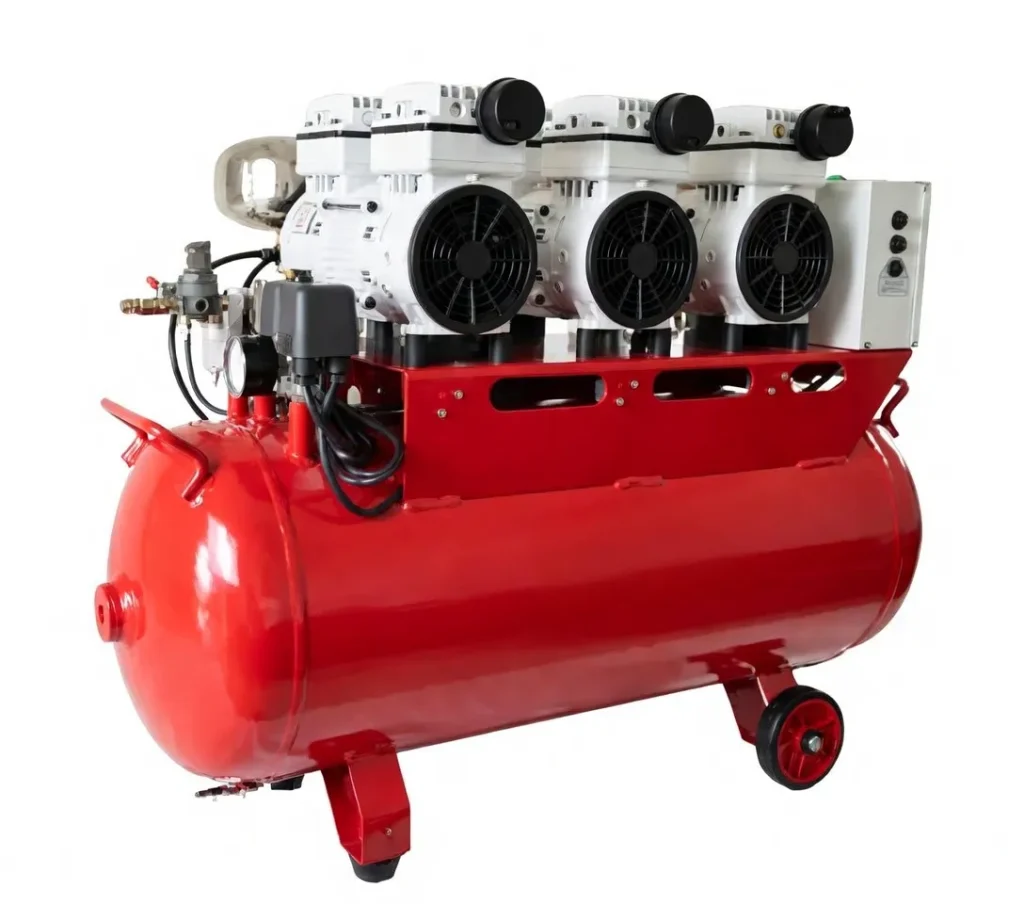 Ever Power operates a 28,000 m² manufacturing facility with ISO 9001:2015 certification and in-house pressure equipment testing to PED Directive 2014/68/EU requirements. Every dental oil-free compressor leaves the factory with a full hydrostatic pressure test of the receiver vessel, a 4-hour endurance run test under simulated clinical load, and a complete air purity analysis report confirming ISO 8573-1 Class 0 compliance. The factory’s CNC machining centres produce precision cylinder bores and scroll elements to tolerances of ±0.005 mm, ensuring that PTFE ring seal integrity is maintained for the rated service life from day one of operation.
Our product customisation capability is one of the strongest differentiators we offer to UK dental groups, DSOs, and NHS dental estates teams. We do not simply offer a catalogue of fixed configurations. We work directly with your project engineer, dental equipment supplier, or facilities manager to design a compressed air solution around your exact practice layout, chair count, peak demand profile, and installation constraints. Customisation options include: bespoke tank volumes from 10 L to 500 L, duplex and triplex arrangements with duty/standby logic, remote alarm outputs compatible with your BMS or nurse call system, hospital-grade colour-coded pipework manifolds, custom electrical enclosures for 3-phase 415V supply in larger premises, and powder-coat colour matching to your practice interior scheme. For dental group contracts covering multiple sites, we offer a standardised equipment specification package that simplifies commissioning, maintenance, and spare-parts stocking across your entire estate.
Custom Order Process: Share your practice floor plan and chair count with our engineering team → receive a bespoke sizing calculation and equipment proposal within 48 hours → approve drawings and specification → factory build in 15–20 working days → delivery to UK mainland with lift-gate service → optional commissioning visit by our UK service partner network covering London, Midlands, North West, Yorkshire, Scotland, and South West England.
Supplying Dental Practices Across the United Kingdom
Ever Power’s dental oil-free compressor range is stocked and distributed for rapid delivery to dental practices throughout England, Scotland, Wales, and Northern Ireland. Our UK logistics partner provides next-working-day pallet delivery to mainland postcodes. Typical delivery times to London, Birmingham, Manchester, Leeds, Edinburgh, Cardiff, and Bristol are 1–2 working days from dispatch. For Northern Ireland and the Scottish Highlands, 3–4 working days applies. All units are shipped on a purpose-built pallet with full export packaging, individual unit test certificates, CE Declaration of Conformity, operating manual in English, and a 24-month manufacturer’s warranty as standard.
Frequently Asked Questions — Oil-Free Air Compressors for UK Dental Practices
What is the best oil-free air compressor for a small NHS dental practice in the UK with two surgeries?
For a two-surgery NHS dental practice in the United Kingdom, the Ever Power EP-D50 is the most commonly recommended model. It delivers 50 L/min free air delivery at 5.5–7 bar working pressure, operates at ≤56 dB(A), and meets ISO 8573-1 Class 0 oil-free requirements for both surgery chairs simultaneously. The unit’s compact 580×240×490 mm footprint and single-phase 230V/50Hz power supply make it straightforward to install in a standard plant cupboard without specialist electrical work. For NHS practices on tight capital budgets, the EP-D50 also offers the lowest total cost of ownership in the range due to its minimal service schedule — no oil changes, no oil separator elements, and a 2-year manufacturer’s warranty included as standard.
How much does a dental-grade oil-free air compressor cost in the UK, and what is the typical price for a 4-chair practice?
Pricing for a dental-grade oil-free air compressor in the UK varies according to model specification, chair count capacity, and any bespoke customisation requirements. As a general guide, entry-level 2-chair models (equivalent to the EP-D50) typically begin from approximately £900–£1,400 ex-works. For a 4-chair practice, a unit comparable to the EP-D100 is typically priced in the range of £1,800–£2,600, depending on whether an integrated dryer, monitoring outputs, or duplex redundancy is included. An 8-chair model or a duplex system for a 6-chair practice will typically range from £4,000–£7,500 depending on customisation. To receive an accurate, no-obligation quotation for your specific practice, send your surgery count and site address to [email protected] and our UK sales team will respond within one working day.
Does a dental air compressor in a UK practice need to comply with CQC regulations, and which specific standards apply?
Yes. In England, dental practices regulated by the Care Quality Commission (CQC) under the Health and Social Care Act 2008 must demonstrate that clinical environments are safe and that infection control standards are maintained. Compressed air systems fall within the scope of HTM 01-05 (Decontamination in primary care dental practices) issued by the Department of Health, which requires that clinical air be free from contamination that could pose an infection risk. The relevant compressed air purity standard is ISO 8573-1, with Class 0 for oil content being the highest and most appropriate classification for direct patient contact applications. The Pressure Systems Safety Regulations 2000 (PSSR 2000) also require a written scheme of examination for pressure vessels, which our EP-D series supports with PSSR-compatible service documentation. Scotland, Wales, and Northern Ireland have equivalent guidance under their respective health departments.
Which oil-free compressor supplier in the UK can provide a custom-built unit for a large private dental group with multiple sites?
Ever Power specialises in bespoke compressed air solutions for multi-site dental service organisations (DSOs) and private dental groups operating across the United Kingdom. We offer a standardised equipment specification programme that allows a dental group to deploy identical compressor configurations across all sites — simplifying maintenance, spare parts logistics, and engineer training. Our factory in-house manufacturing capability means we can accommodate any bespoke requirement: custom tank volumes, 3-phase electrical supply, remote alarm relay outputs for your building management system, colour-matched powder coatings, and duplex or triplex duty/standby configurations for zero-downtime critical applications. Enquiries from dental group procurement leads can be directed to [email protected] with site count and chair configuration details.
How often does a dental oil-free air compressor in a busy UK practice need to be serviced, and what does the maintenance involve?
For a dental practice operating 40 hours per week — a typical NHS contract commitment — the Ever Power EP-D series recommends an annual service interval, which in practice equates to approximately 2,000 hours of runtime. The annual service consists of: replacement of the intake air filter element (approximately £12–18 per unit), visual inspection and if necessary replacement of PTFE piston rings (replacement interval 2,000–4,000 hours depending on operating conditions), functional test of the automatic condensate drain valve, pressure safety valve test, and a pressure retention check of the receiver vessel. There are no oil changes, no oil separator replacements, and no oil-contaminated waste streams to manage. A competent dental practice maintenance technician or a domestic compressed air service engineer can complete the annual service in under 90 minutes.
Where can a dental practice in London buy an oil-free air compressor that meets NHS infection control requirements and delivers next-day shipping?
Ever Power supplies oil-free dental compressors to practices throughout London and the wider South East of England with a standard 1–2 working day pallet delivery service to all London postcodes. Units are dispatched from our UK distribution partner’s Midlands warehouse and delivered on a tail-lift vehicle to your practice address. Each unit is shipped with its CE Declaration of Conformity, ISO 8573-1 air purity test certificate, PSSR-compatible vessel examination documentation, and the full user manual in English — all of which you will need on file for CQC and NHS inspection purposes. To place an order or request a quote for a London dental practice, email [email protected].
What is the difference between an oil-free piston compressor and a scroll compressor for dental use, and which should I choose for my Scottish clinic?
Both technologies deliver ISO 8573-1 Class 0 oil-free air and are fully suitable for dental clinical use. The primary differences are acoustic performance, maintenance cycle, and purchase cost. Oil-free piston compressors are typically 4–8 dB noisier than scroll equivalents at the same output, require PTFE ring inspection every 2,000–4,000 hours, and carry a lower purchase price. Scroll compressors operate at 52–56 dB(A), have near-zero vibration (no anti-vibration mounts required), and have an extended maintenance interval of 4,000–6,000 hours between service visits — but cost approximately 25–35% more to purchase. For a Scottish clinic in a shared premises arrangement where noise at a party wall is a lease condition, or in a practice where the compressor sits in a cupboard adjoining a treatment room, the scroll variant is strongly recommended. For a single-surgeon practice with a dedicated plant room, the piston model offers excellent value.
When is the right time for a UK dental practice to upgrade from an oil-lubricated compressor to an oil-free model, and what are the warning signs?
Several warning signs indicate that your current oil-lubricated compressor is creating clinical risk and should be replaced urgently. These include: turbine handpiece failures occurring more than twice per year per surgery (a direct symptom of oil contamination in the air line); patients or clinical staff commenting on an unusual taste or smell from the three-way syringe air function; visible oil staining or discolouration at the condensate drain; a CQC inspector noting concerns about your compressed air quality documentation; your compressor oil separator element requiring replacement more than once per 12 months; and any unscheduled compressor shutdowns causing clinical session cancellations. Even in the absence of these warning signs, any oil-lubricated compressor over 10 years old in a dental setting should be considered for replacement on a planned basis — the risk of an unexpected failure during a clinical session increases substantially with age, and the resulting disruption to patient care and NHS contract compliance can be significant.
Ready to Upgrade Your Dental Practice Air Supply?
Join dental practices across the United Kingdom — from single-surgery NHS clinics to multi-site private groups — who have switched to Ever Power oil-free dental compressors. ISO Class 0 certified. CE marked. Custom-built for your exact specification. UK mainland delivery in 1–2 working days.
📧 [email protected] | 24-Month Manufacturer’s Warranty | CE & PED Certified