Industrial Gas Compression — UK Supply & Export
불소실리콘 화학 공정 압축기
Nine specialist compressor models engineered for difluoromethane, hydrogen chloride, synthetic gas, oxygen, and regenerative air duties — purpose-built for fluorine chemical, pharmaceutical, and energy process industries.
✉ 지금 견적 받아보세요
Specialist Compression for Fluorine Chemical Processes
Across fluorine chemical manufacturing, the reliability of your compressor system is inseparable from product quality, process yield, and personnel safety. Our comprehensive range of fluorosilicone chemical process compressors spans nine distinct models, each developed to handle corrosive, reactive, or high-purity gas streams that standard industrial compressors are simply not rated for. Whether you are processing difluoromethane refrigerants, compressing hydrogen chloride in a continuous reaction loop, boosting synthetic gas for downstream synthesis, or maintaining high-purity oxygen supply for metallurgical or pharmaceutical applications, a correctly specified compressor makes the difference between stable, profitable production and costly downtime or regulatory failure.
With over 18 years of specialised application engineering experience across UK and European fluorochemical plants, petrochemical complexes, and specialty gas producers, we understand that each process carries its own hazard profile, pressure envelope, and materials compatibility requirement. This page gives UK procurement managers, process engineers, and plant managers a single reference for all nine models — covering operating parameters, suitable applications, mechanical design principles, and the bespoke engineering support available through our technical team.
Product Range Overview
Difluoromethane
DW-24/0.15-18 Difluoromethane Compressor
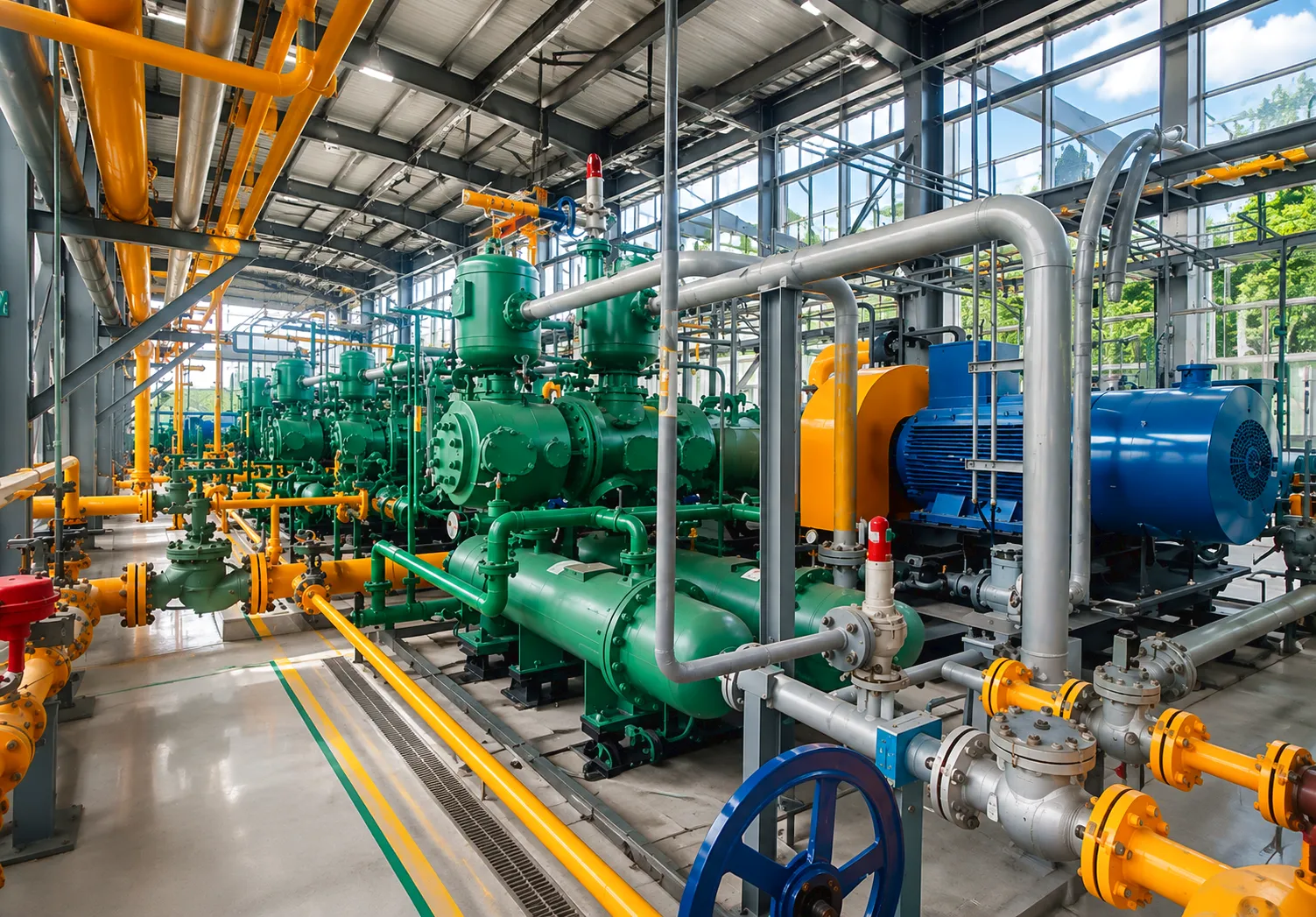
Designed for fluorine refrigerant recovery and recirculation loops, this model handles difluoromethane (R-32) at inlet pressures as low as 0.15 MPa absolute, making it suitable for both vacuum-side and low-pressure feed applications in fluorochemical plants across England and Scotland.
Flow: 24 m³/min | Pressure range: 0.15–18 MPa
Hydrogen Chloride
DW-671-6 Hydrogen Chloride Compressor
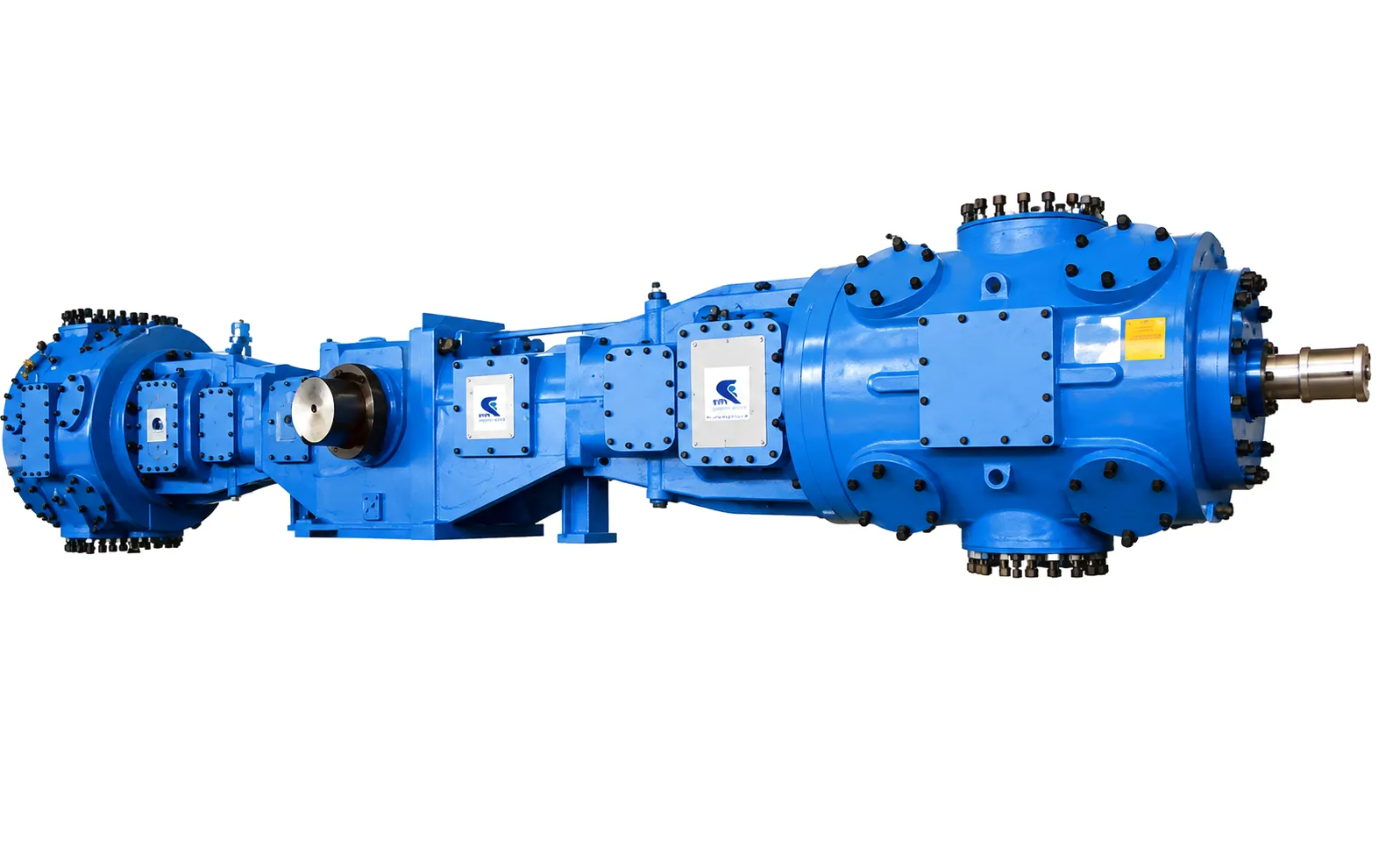
Built with materials resistant to hydrogen chloride corrosion at elevated flow rates, the DW-671-6 suits large-scale HCl gas handling in chlor-alkali, PVC production, and specialty chemical synthesis. The wetted internals use alloy selection validated for sustained HCl service without embrittlement.
Flow: 671 m³/h | Discharge pressure: 6 bar(g)
Hydrogen Chloride
DW-24.5/(2.2–2.7)–7.5 Hydrogen Chloride Compressor
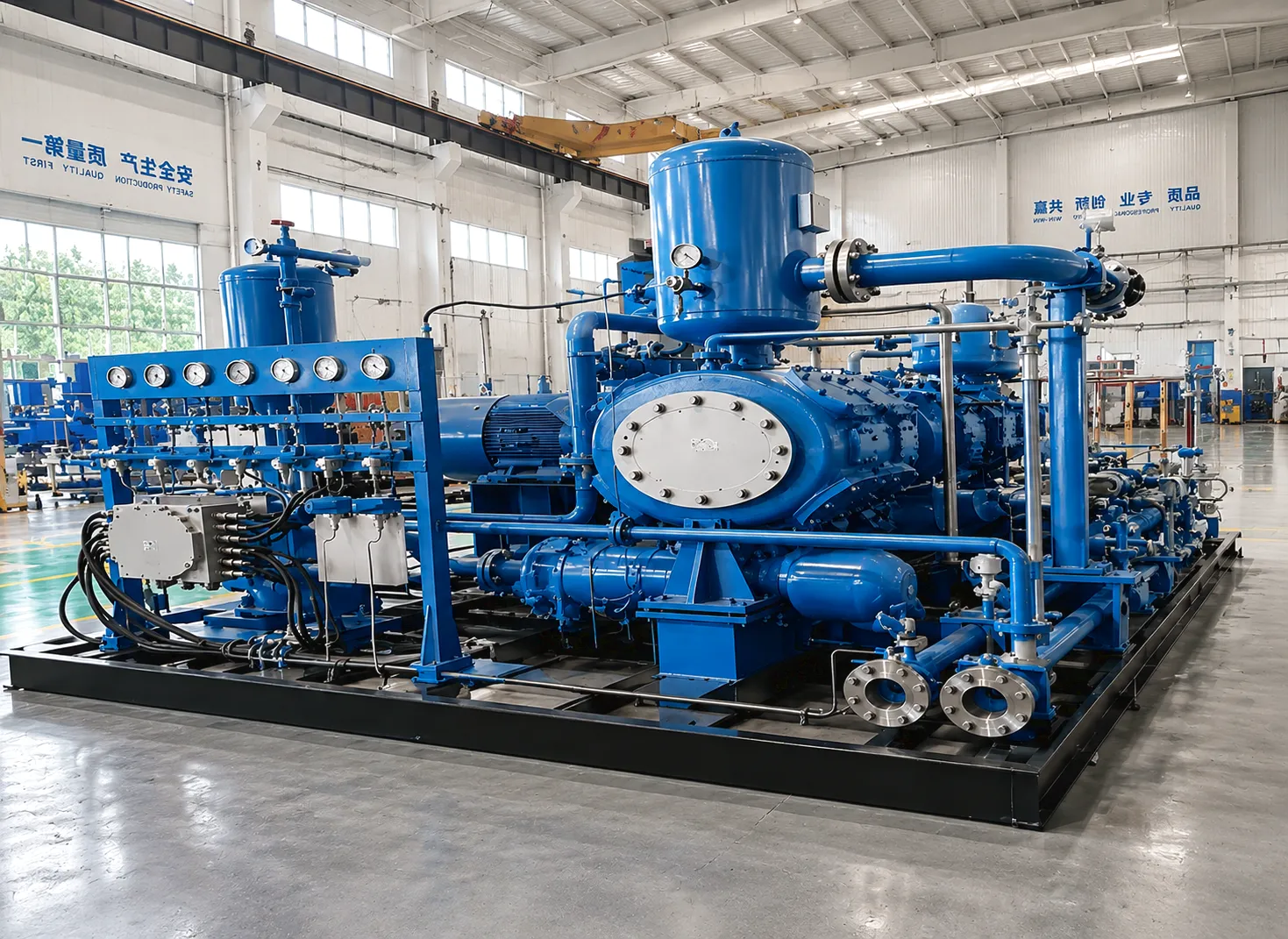
This model addresses medium-capacity HCl compression where suction pressure varies between 2.2 and 2.7 bar absolute, enabling stable operation through process transients common in batch fluorination reactions. Popular with specialty chemical producers in the North West and Yorkshire regions of the UK.
Flow: 24.5 m³/min | Inlet: 2.2–2.7 bar(a) → 7.5 bar(g)
Synthetic Gas
PW-0.7/84.3-94 Synthetic Gas Compressor
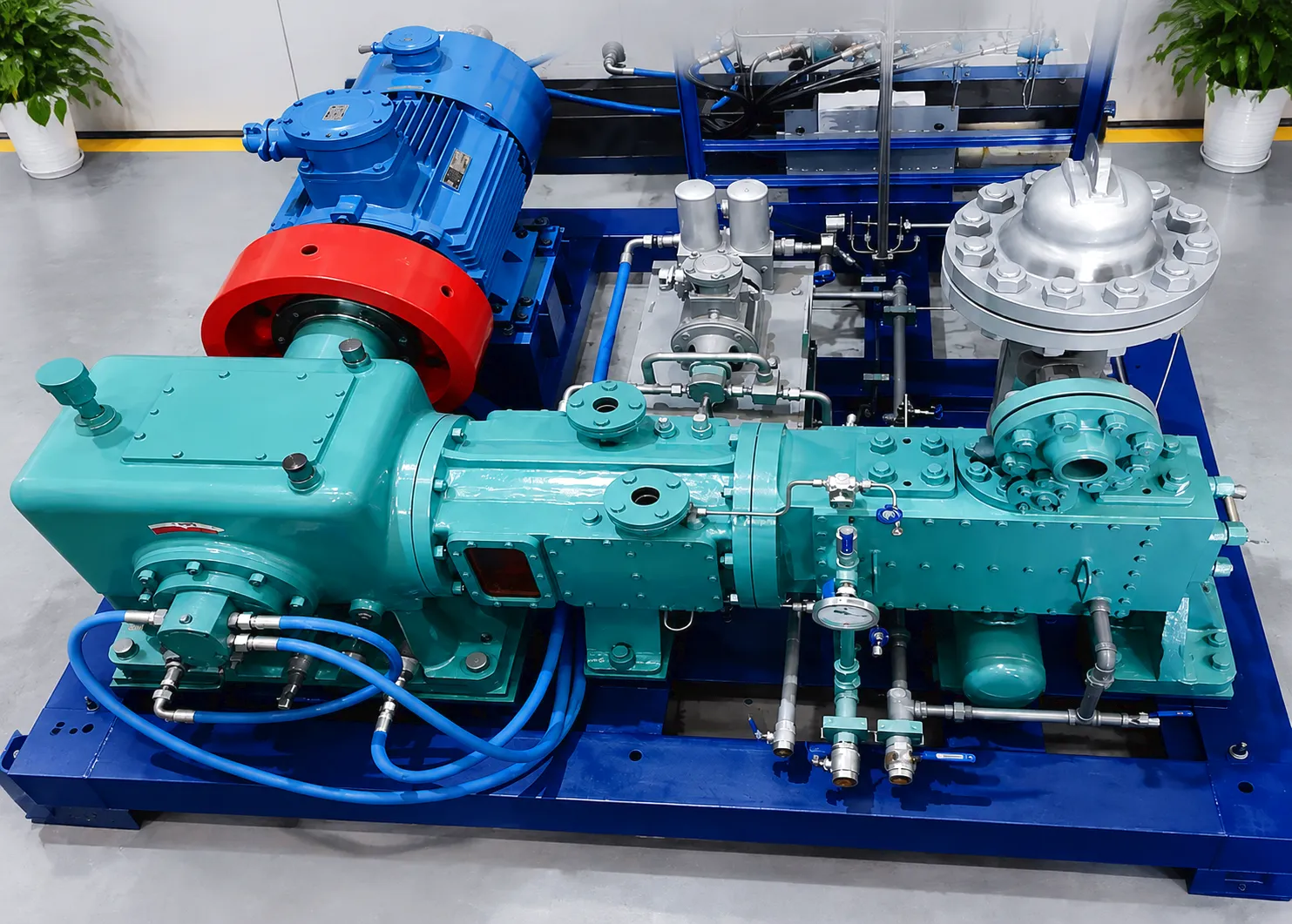
Engineered to handle high-pressure synthetic gas streams, this piston compressor type compresses mixed synthesis gas from 84.3 bar inlet to 94 bar discharge — critical for ammonia synthesis loops, methanol plants, and fluorochemical precursor manufacturing where precise pressure steps are non-negotiable.
Flow: 0.7 m³/min | Pressure: 84.3 → 94 bar
Regenerative Air
DW-106/4 Regenerative Air Compressor
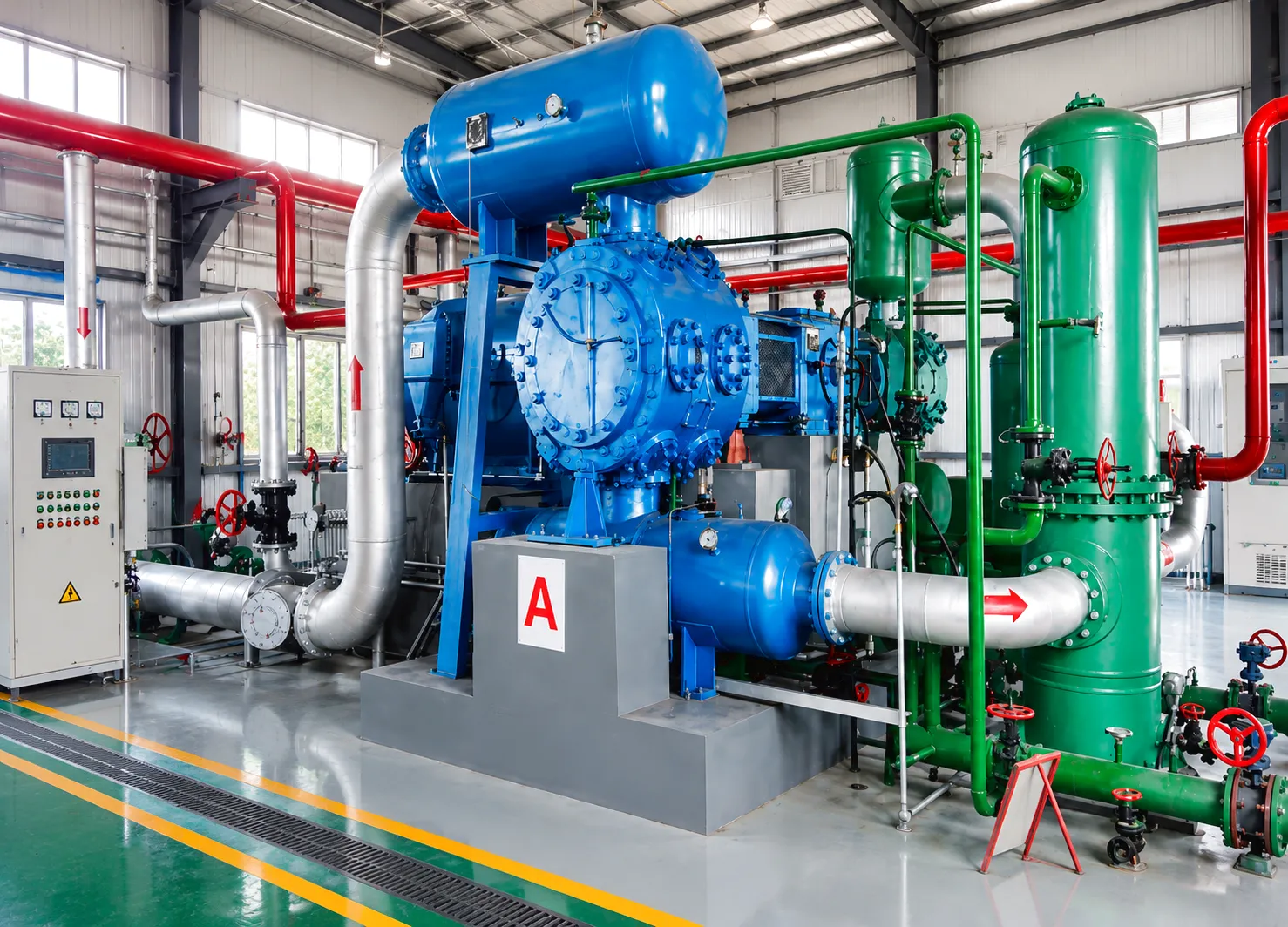
Dedicated to molecular sieve regeneration cycles in gas drying and purification systems, this model delivers 106 m³/min of hot or ambient process air at 4 bar to flush adsorbents during their regeneration phase. Widely used in air separation unit pre-treatment and solvent recovery systems across UK industrial sites.
Flow: 106 m³/min | Discharge: 4 bar(g)
산소
3ZW-13.5/30.4 Oxygen Compressor
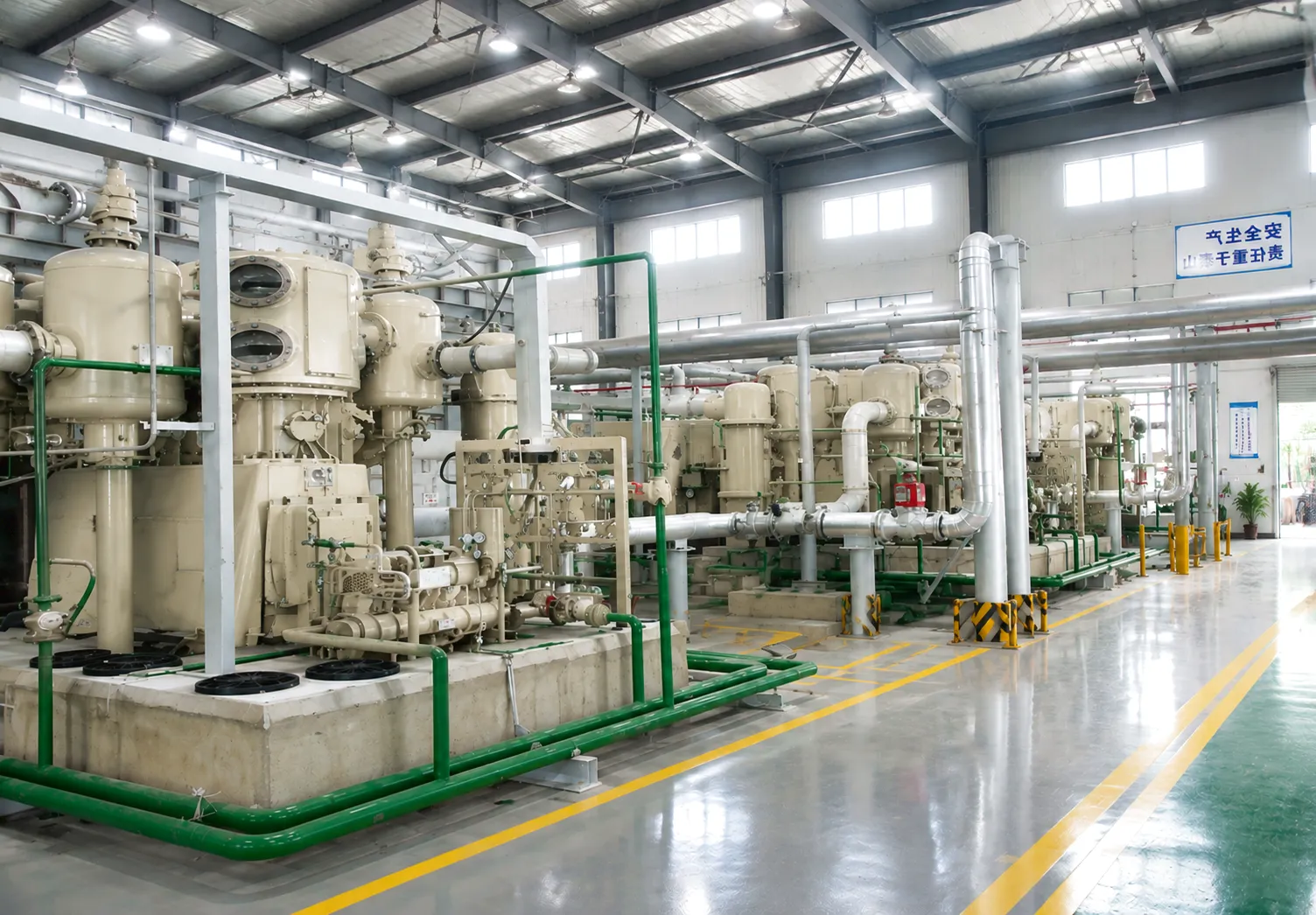
Oxygen service demands the highest levels of cleanliness, material compatibility, and ignition risk management. The 3ZW-13.5/30.4 is built with oxygen-compatible seals, oil-free cylinder design, and PTFE piston rings — meeting the requirements of BS EN ISO 10083 oxygen purity levels used in steel pickling, glass manufacture, and pharmaceutical synthesis in the UK.
Flow: 13.5 m³/min | Discharge: 30.4 bar(g)
Synthetic Gas
DW-15.8/45 Synthetic Gas Compressor
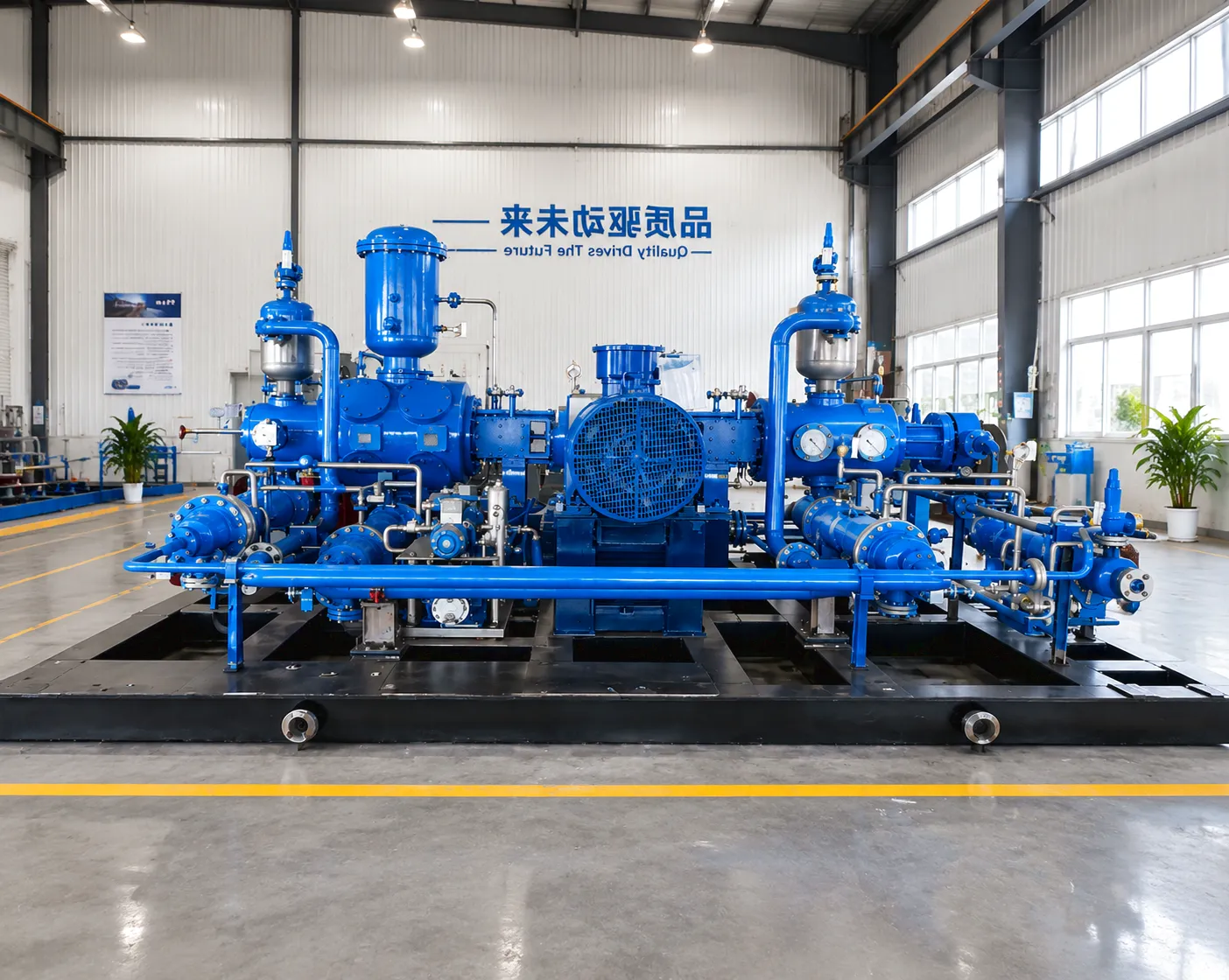
Delivering 15.8 m³/min against a 45 bar discharge pressure, this model is the workhorse for mid-stage synthesis gas compression in fluorochemical and fine chemical production. The robust crankcase and stepped-bore cylinder arrangement provides consistent performance across continuous 24/7 plant operation schedules without frequent maintenance intervention.
Flow: 15.8 m³/min | Discharge: 45 bar(g)
Difluoromethane
4MW-150/5.8-17 Difluoromethane Compressor
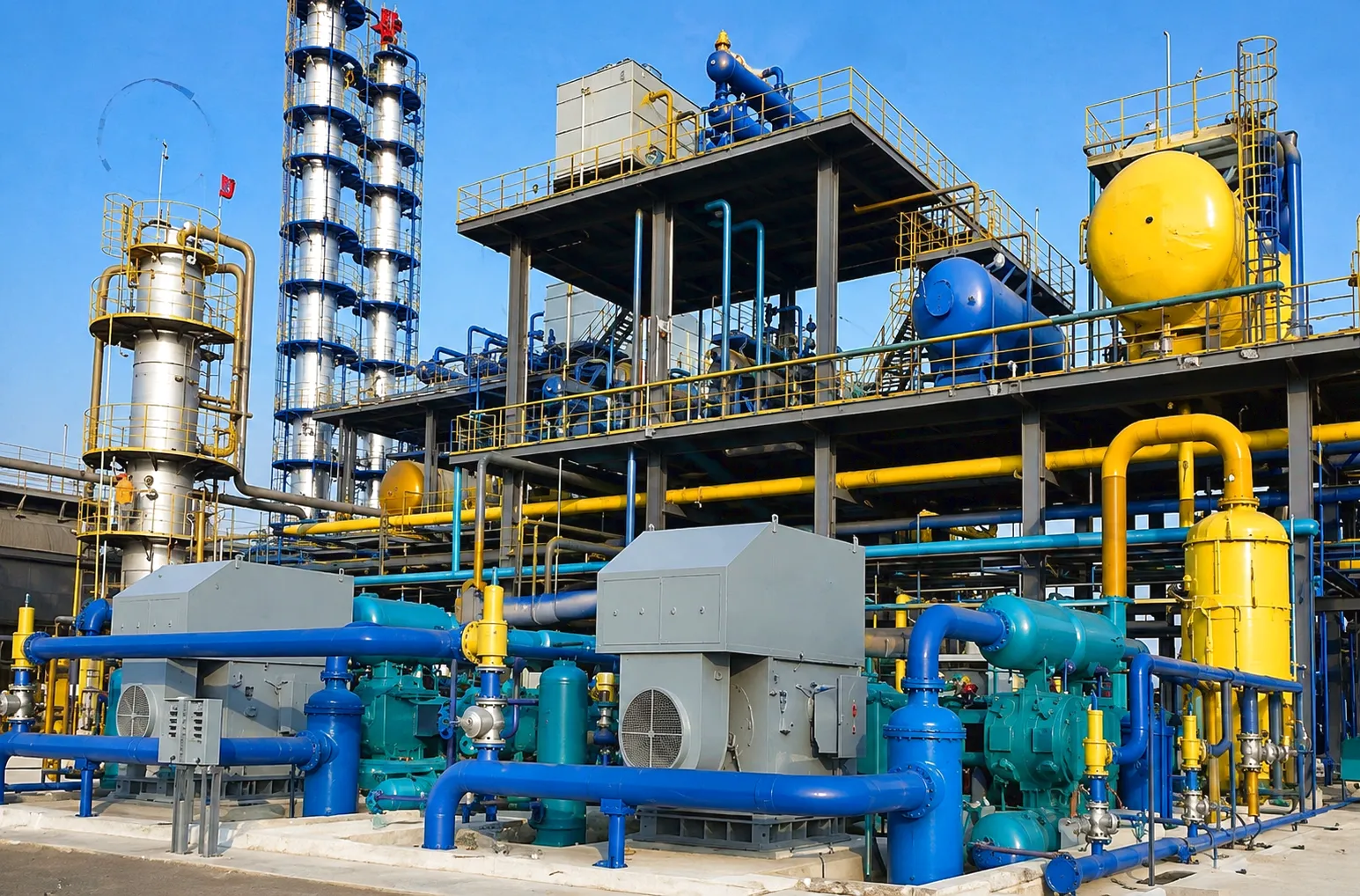
The largest difluoromethane model in the range, the 4MW-150 offers 150 m³/h capacity with inlet pressures of 5.8 to 17 bar — well-suited to refrigerant bulk storage transfer, large-scale R-32 production, and multi-stage refrigerant recovery operations. The four-stage cylinder arrangement manages compression ratio across stages to control discharge temperature and minimise wear.
Flow: 150 m³/h | Pressure: 5.8 → 17 bar
Synthetic Gas
PW-0.7/84.3-94 Synthetic Gas Compressor (2nd Unit)
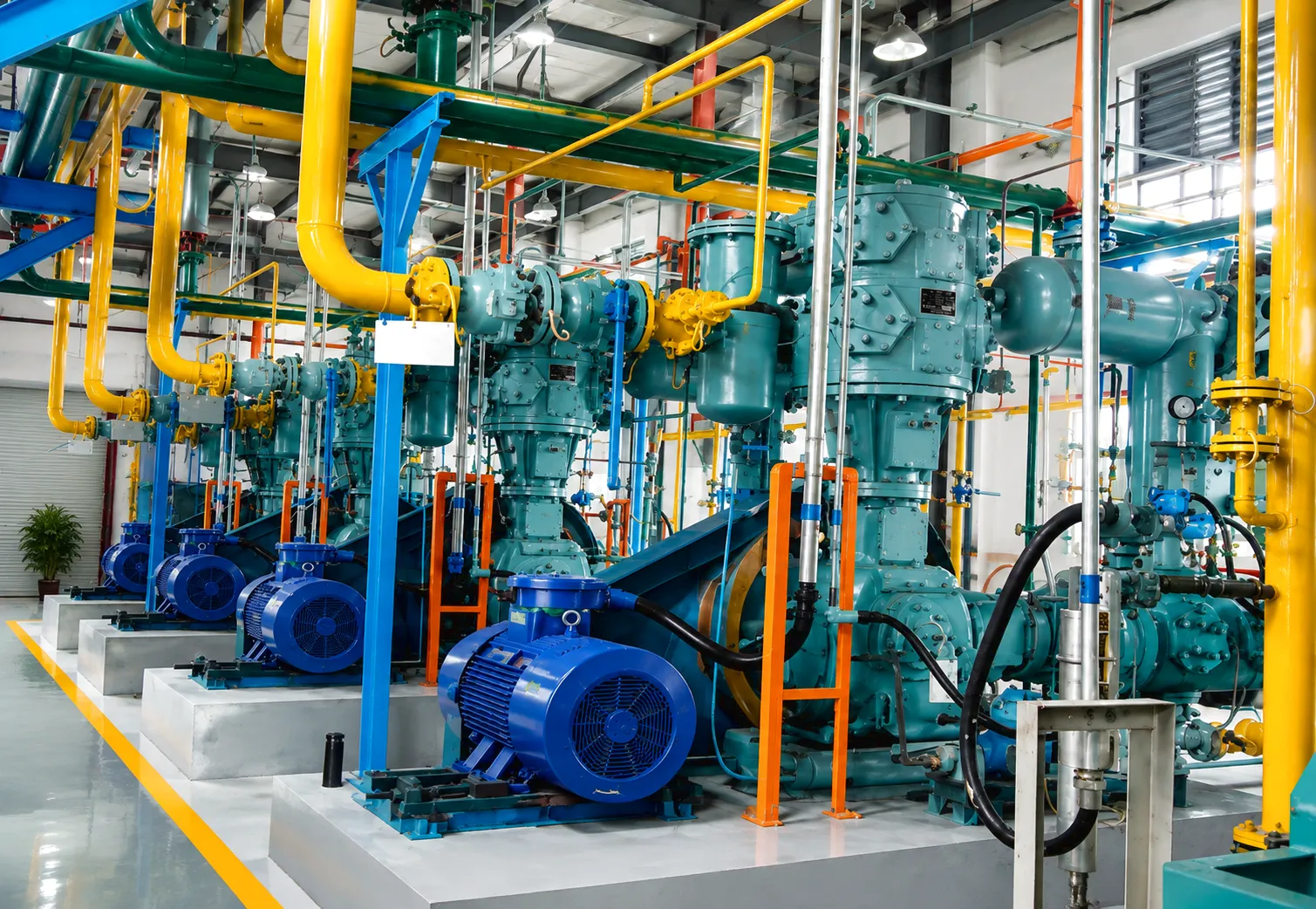
Where process requirements call for dual-unit redundancy or parallel compression trains, the second PW-0.7/84.3-94 unit operates in identical specification to the primary, allowing seamless load sharing and uninterrupted production during planned maintenance windows. Common for UK fluorochemical facilities operating under COMAH regulations requiring high-availability process safety standards.
Flow: 0.7 m³/min | Pressure: 84.3 → 94 bar
Technical Specifications — General Parameters
The table below summarises the general operating parameters for the complete range. These figures represent typical values for the gas types indicated. For exact parameters of any specific model — including cylinder bore, stroke, shaft speed, motor power, cooling medium, and dimensional drawings — please contact our technical team at [email protected].
| 모델 | 가스 매체 | Volumetric Flow | Inlet Pressure | 토출 압력 | 압축기 유형 | 냉각 |
|---|
| DW-24/0.15-18 | Difluoromethane (R-32) | 24 m³/min | 0.15 MPa(a) | 18 MPa(g) | Reciprocating piston | 수냉식 |
| DW-671-6 | Hydrogen Chloride (HCl) | 671 m³/h | Atmospheric | 6 bar(g) | Reciprocating piston | 수냉식 |
| DW-24.5/(2.2–2.7)–7.5 | Hydrogen Chloride (HCl) | 24.5 m³/min | 2.2–2.7 bar(a) | 7.5 bar(g) | Reciprocating piston | 수냉식 |
| PW-0.7/84.3-94 | Synthetic Gas | 0.7 m³/min | 84.3 bar(a) | 94 bar(g) | Reciprocating piston (high-pressure) | 수냉식 |
| DW-106/4 | Regenerative Air | 106 m³/min | Atmospheric | 4 bar(g) | Reciprocating piston | Air/water-cooled |
| 3ZW-13.5/30.4 | Oxygen (O₂) | 13.5 m³/min | Atmospheric | 30.4 bar(g) | Oil-free reciprocating (3-stage) | 수냉식 |
| DW-15.8/45 | Synthetic Gas | 15.8 m³/min | Atmospheric | 45 bar(g) | Reciprocating piston (multi-stage) | 수냉식 |
| 4MW-150/5.8-17 | Difluoromethane (R-32) | 150 m³/h | 5.8 bar(a) | 17 bar(g) | 4-stage reciprocating | 수냉식 |
| PW-0.7/84.3-94 (2nd) | Synthetic Gas (parallel duty) | 0.7 m³/min | 84.3 bar(a) | 94 bar(g) | Reciprocating piston (high-pressure) | 수냉식 |
ⓘ Contact us for full datasheet including motor power (kW), shaft speed (RPM), overall dimensions, weight, and nozzle connections for each model.
Why These Compressors Perform Where Others Cannot
⚙
Corrosion-Grade Materials
Wetted parts use alloy selections validated for sustained contact with HCl, fluorinated refrigerants, and reactive synthesis gas streams. No standard cast-iron wetted components are used on corrosive gas models.
🔥
Oxygen-Safe Engineering
The 3ZW oxygen model is fully oil-free with PTFE piston rings, oxygen-compatible seals, and degreased internals — reducing ignition risk to levels acceptable under BS EN ISO 10083 and UK DSEAR/ATEX requirements for oxygen compression duty.
📈
High-Pressure Piston Technology
Reciprocating piston compressors remain the standard for high-pressure gas duty above 30 bar. Multi-stage cylinder arrangements control the inter-stage temperature and pressure ratios, protecting seals and valves while maintaining volumetric efficiency over the full service life.
🔨
Bespoke Engineering Available
Not every process fits a standard catalogue spec. Our engineering team can modify suction scrubbers, valve configurations, shaft sealing arrangements, and skid layout to meet your exact P&ID requirements, British Standard piping standards, and site footprint constraints.
🔒
Leak-Tight Shaft Sealing
On all toxic and flammable gas models, mechanical shaft seals with buffer gas injection are standard, preventing process gas escape into the motor compartment and meeting UK Health and Safety Executive (HSE) guidance on toxic gas containment in COMAH sites.
✅
Process-Ready Skid Packages
Each compressor is available as a fully skid-mounted unit including suction filter, inter-coolers, after-cooler, safety relief valves, pressure gauges, and control panel wiring — reducing on-site installation time and ensuring correct component integration from the factory.
How These Compressors Work — Principles, Materials and Applications
Reciprocating Piston Operation
The core operating principle across all nine models is reciprocating piston compression. A crankshaft driven by an electric motor converts rotational motion into linear piston movement within a precisely machined cylinder bore. As the piston moves away from the cylinder head, gas is drawn in through the suction valve at low pressure. The subsequent compression stroke closes the inlet valve and progressively reduces the gas volume, raising pressure until the discharge valve opens and compressed gas flows into the downstream process line. Multi-stage variants repeat this sequence across two, three, or four cylinder stages, cooling the gas between stages via water-cooled intercoolers to maintain temperature within safe limits for the gas medium and seal materials. This operating mode makes reciprocating compressors the natural choice for high-pressure duties and corrosive gas handling, where centrifugal or screw types would face material incompatibility or inadequate pressure ratio per stage.
Materials of Construction
Material selection varies by gas medium to balance mechanical strength, corrosion resistance, and cost. Cylinder bodies for hydrogen chloride service use ductile iron with Hastelloy or Alloy 20 liner inserts where HCl concentration and moisture content indicate risk of wet acid corrosion. Piston rings and valve plates use PTFE or reinforced polymer composites that resist chemical attack while maintaining low friction coefficients. On oxygen compressors, all wetted surfaces are degreased, and only oxygen-compatible lubricants or dry PTFE-based coatings are used — eliminating the hydrocarbon contamination risk that can lead to auto-ignition in high-pressure oxygen. Difluoromethane and synthetic gas models use carbon-steel pressure casings with stainless internals where fluorinated compound absorption into cast iron could cause embrittlement over time. Shaft seals on toxic gas units incorporate double mechanical seal arrangements with nitrogen or inert gas buffer purge to prevent any outward gas migration during operation or standstill.
Typical Application Sectors in the UK
Fluorine chemical process compressors serve a tightly defined set of industries where gas purity, containment, and pressure performance are non-negotiable. In the UK, the primary demand comes from fluorochemical producers in Teesside, Runcorn, and the Humber estuary industrial clusters, where HCl handling is a core process in organofluorine synthesis. Synthetic gas compressors appear in ammonia and methanol plants using natural gas reforming, as well as in electrolysis-based green hydrogen facilities where product gas requires boosting before storage. Oxygen compressors supply medical gas networks, steel and glass manufacturing sites, and specialist aquaculture and wastewater aeration installations. Difluoromethane compressors support refrigerant production plants and bulk gas distribution terminals throughout England and Scotland. The regenerative air model meets demand from air separation plant operators running pressure-swing adsorption or temperature-swing adsorption drying systems, where reliable regeneration airflow is critical to desiccant longevity and product gas purity.
Customer Success — Real Installations, Real Results
How UK and European process operators solved their most demanding compression challenges with our equipment.
Case Study — Teesside, United Kingdom
Organofluorine Manufacturer Resolves HCl Compression Reliability Crisis
산업: Fluorochemicals / Specialty Chemicals
위치: Teesside, North East England
Model Installed: DW-671-6 Hydrogen Chloride Compressor
A mid-sized organofluorine producer on Teesside was experiencing chronic unplanned shutdowns on its HCl compression circuit — an aging competitor unit was suffering from accelerated corrosion on its cast-iron cylinder bores, with valve wear occurring every four to six weeks under continuous duty. Each shutdown cost an estimated 18 hours of production and significant maintenance labour. The plant team had exhausted rebuild options and needed a permanent replacement capable of handling wet HCl at sustained flow rates above 600 m³/h.
Following a site survey and gas analysis review, we supplied a DW-671-6 with Alloy 20 wetted components, upgraded PTFE-seated valves rated for HCl service, and a double mechanical shaft seal with nitrogen purge. The unit was skid-mounted with all instrumentation pre-wired to the plant DCS interface, reducing commissioning time to under two days. In the 14 months following installation, the customer reported zero unplanned stops related to the compression circuit and a valve maintenance interval that extended to beyond 10 months — far exceeding the previous unit’s performance.
“We had been struggling with corrosion on our HCl circuit for three years. The new unit changed everything — not a single unplanned stop in over a year. The engineering support before purchase gave us full confidence in the material selection.”
— Process Engineering Manager, Organofluorine Plant, Teesside
★★★★★
“We specified the 3ZW-13.5/30.4 for our oxygen boosting application at our Sheffield steel pickling facility. The oil-free design was non-negotiable for us under our site ATEX classification. Commissioning was smooth and output quality has been consistent throughout six months of operation.”
Plant Director
Steel Processing Facility, Sheffield, England
★★★★★
“The DW-15.8/45 synthetic gas compressor was installed in our methanol reforming train in Grangemouth last year. The technical quotation was detailed enough for our engineering review process, and the delivery timescale was met exactly as agreed. We are looking at a second unit for a parallel train.”
Project Procurement Manager
Petrochemical Plant, Grangemouth, Scotland
★★★★★
“Our refrigerant production line in Runcorn needed a high-capacity R-32 compressor that could handle variable suction conditions during changeover batches. The 4MW-150/5.8-17 handled this perfectly. The engineering team walked us through the inter-stage cooling configuration in detail before we committed — that level of pre-sales support is genuinely rare.”
Chief Chemical Engineer
Refrigerant Production Facility, Runcorn, Cheshire
Manufacturing Capability and Custom Engineering
Every compressor in this range is manufactured under a documented quality management system with full material traceability, pressure vessel inspection records, and mechanical run-test documentation supplied at delivery. Our manufacturing facility operates CNC-machining centres for precision cylinder bore finishing, automated valve seat grinding equipment, and dedicated leak-test bays for toxic and flammable gas configurations where shop-floor proof-pressure testing to 1.5 times maximum allowable working pressure is mandatory before despatch.
Product customisation is a core part of our commercial offering — not an afterthought. We have delivered modified configurations including extended suction scrubber vessels for entrained liquid protection, stainless steel gas side piping for elevated purity applications, ATEX-rated motor and panel assemblies for Zone 1 and Zone 2 classified areas under UK DSEAR regulations, remote-mount control panels for long-distance operator stations, and acoustic enclosures for units installed in noise-sensitive urban or near-residential industrial sites. Our application engineers work directly from your process datasheet and P&ID rather than from a generic inquiry form — ensuring that the quotation we provide reflects your actual operating conditions rather than a catalogue default.
Our products also integrate smoothly with wider plant compressed air systems. For facilities requiring variable-speed rotary screw air supply alongside process gas compression, the CM250PV 가변 속도 로터리 스크류 공기 압축기 그리고 CM132PVF 가변 주파수 로터리 스크류 공기 압축기 are available as complementary utility air solutions for the same facility.
Need a non-standard configuration? We build to your specification.
Send your process conditions — gas composition, flow rate, suction and discharge pressures, site classification, and piping standard — and our team will return a detailed technical proposal within five working days.
견적 받기 →
자주 묻는 질문
What is the typical price range for a hydrogen chloride compressor supplied to a UK chemical plant, and what factors affect the final cost?
Pricing for HCl compressors depends on volumetric flow rate, discharge pressure, materials of construction (standard alloy versus Hastelloy or Alloy 20 wetted parts), shaft sealing arrangement, motor ATEX classification, skid scope, and documentation requirements for COMAH-regulated sites. For an accurate quotation reflecting your specific process conditions in the UK, contact us directly at [email protected] with your gas composition, flow, and pressure data.
Which difluoromethane compressor model is best suited for an R-32 refrigerant production facility operating in England?
For large-scale R-32 production requiring high volumetric throughput, the 4MW-150/5.8-17 with its four-stage cylinder arrangement handles variable inlet pressures between 5.8 and 17 bar — suitable for bulk filling, transfer, and recovery operations. For lower-pressure feed or suction-side duty from near-vacuum conditions, the DW-24/0.15-18 with its wide inlet pressure range (0.15 MPa absolute) is the appropriate selection. Our engineers can model both for your specific duty point upon request.
How long does it take to get a quote and arrange delivery of a fluorosilicone process compressor to a site in the United Kingdom?
Technical proposals are typically returned within five working days of receiving full process data (gas composition, flow rate, suction and discharge pressures, site classification, and applicable standards). Delivery timescales for standard configurations generally range from 10 to 18 weeks ex-works, with expedited schedules available for certain models subject to shop loading at the time of order. Bespoke configurations with non-standard materials or ATEX motor selections require additional lead time that will be confirmed at the quotation stage.
Where can I find a reliable supplier of oxygen compressors for pharmaceutical or food-grade applications in the UK that meets ATEX and DSEAR compliance?
Our 3ZW-13.5/30.4 oxygen compressor uses an oil-free cylinder design with PTFE piston rings and oxygen-compatible shaft seals, addressing the ignition risk requirements central to ATEX and DSEAR compliance. For pharmaceutical oxygen applications, we can supply units with documentation packages that support USP or Ph. Eur. qualification processes. Discuss your site area classification and purity requirements with our team to confirm the correct motor selection and scope for your specific installation in England, Scotland, or Wales.
What maintenance interval can I realistically expect on a reciprocating piston compressor handling corrosive gas on a UK industrial site running continuous 24/7 operation?
With correct material specification and operating within rated conditions, valve maintenance intervals of 8,000 to 12,000 hours are achievable on HCl and fluorinated gas models — representing approximately 10 to 16 months of continuous operation. Piston ring replacement intervals are typically 16,000 to 24,000 hours under clean, dry gas conditions. These figures can decrease significantly if the gas stream carries entrained liquid, particulates, or operates at the upper limit of rated pressure, which is why suction scrubbing and proper inter-stage separation form part of our standard skid scope recommendation.
When should a fluorochemical plant in northern England consider upgrading from a standard industrial compressor to a specialist corrosive gas model?
Standard industrial compressors with cast-iron wetted components are unsuitable for any gas stream containing hydrogen chloride, fluorinated compounds, or reactive synthesis gas mixtures at elevated pressures. The trigger points for upgrading include accelerating corrosion on cylinder bores or valve seats, increasing seal leak frequency, gas analysis showing contamination from corroded internals, or regulatory review identifying material non-compliance under UK COMAH or COSHH requirements. If your current compressor is showing two or more of these symptoms, a specialist replacement is generally more cost-effective within 24 months than continued maintenance of an incompatible unit.
What is the typical price range for a hydrogen chloride compressor supplied to a UK chemical plant, and what factors affect the final cost?
Pricing depends on flow rate, discharge pressure, materials, shaft sealing, ATEX classification, skid scope, and documentation requirements. Contact us with your process data for an accurate quotation.
Which difluoromethane compressor model is best suited for an R-32 refrigerant production facility operating in England?
For large-scale production, the 4MW-150/5.8-17 handles variable inlet pressures. For low-pressure or near-vacuum suction duty, the DW-24/0.15-18 is recommended. Contact our engineers for duty-point modelling.
How long does it take to get a quote and arrange delivery of a fluorosilicone process compressor to a site in the United Kingdom?
Technical proposals are returned within five working days of receiving process data. Delivery timescales are 10 to 18 weeks ex-works for standard configurations; bespoke units require additional lead time confirmed at quotation.
Where can I find a reliable supplier of oxygen compressors for pharmaceutical or food-grade applications in the UK that meets ATEX and DSEAR compliance?
Our 3ZW-13.5/30.4 oxygen compressor uses an oil-free cylinder with PTFE piston rings and oxygen-compatible seals, meeting ATEX and DSEAR requirements. Documentation packages to support pharmaceutical qualification are available.
What maintenance interval can I realistically expect on a reciprocating piston compressor handling corrosive gas on a UK industrial site running continuous 24/7 operation?
Valve maintenance intervals of 8,000 to 12,000 hours are achievable on correctly specified HCl and fluorinated gas models. Piston ring replacement is typically 16,000 to 24,000 hours under clean, dry conditions.
When should a fluorochemical plant in northern England consider upgrading from a standard industrial compressor to a specialist corrosive gas model?
Upgrade triggers include accelerating corrosion on cylinder bores or valve seats, increasing seal leak frequency, gas contamination from corroded internals, or regulatory review identifying material non-compliance under COMAH or COSHH requirements.
Ready to Source Your Fluorosilicone Process Compressor?
Whether you need a single replacement unit, a parallel redundancy configuration, or a fully engineered skid package for a COMAH-regulated UK chemical site, our team is ready to support your procurement from technical selection through to delivery and commissioning.
✉ Email Us for a Detailed Quote
[email protected] · 편집: gzl