 Walk around almost any municipal wastewater treatment plant in the United Kingdom — from a mid-sized works in Yorkshire to a large urban facility outside Manchester — and you will hear the constant thrum of blower systems pushing compressed air into biological aeration tanks. That process, known as activated sludge aeration, is the beating heart of modern sewage treatment. Microorganisms suspended in the mixed liquor consume dissolved organic pollutants, but only when they receive a continuous, reliable supply of oxygen. Without adequate aeration, the biology collapses, effluent quality plummets, and the plant risks breaching its Environment Agency discharge consent limits. The air compressor, or more precisely the low-pressure oil-free blower, is therefore not a peripheral piece of equipment — it is the engine driving biological treatment performance every single hour of every single day.
For decades, oil-lubricated Roots-type rotary lobe blowers were the industry default. They are mechanically simple, relatively inexpensive to purchase, and widely understood by maintenance teams. The problem is that oil-lubricated machines inevitably allow trace quantities of lubricant to migrate into the air stream. In an aeration tank, that oil creates a thin film on the water surface that inhibits oxygen transfer, suppresses microbial activity, and introduces hydrocarbon contamination into an environment where the entire objective is biological purification. Operators have long accepted this as an unavoidable trade-off. It is not. Modern oil-free air compressors — specifically twin-screw and centrifugal blower designs engineered to deliver 100% oil-free air — have fundamentally changed what is possible in wastewater aeration, both technically and economically.
Why Wastewater Aeration Demands Truly Oil-Free Compressed Air
The activated sludge process depends on maintaining a delicate microbial ecosystem. Aerobic bacteria, protozoa, and other organisms form biological floc that agglomerates suspended solids and absorbs dissolved organic carbon. These organisms require oxygen transfer efficiencies that are extremely sensitive to surface tension at the air-water interface inside the aeration tank. Even a concentration of two to three milligrams per litre of mineral oil in the mixed liquor has been shown in published environmental engineering literature to reduce oxygen transfer efficiency by eight to fifteen percent. Over a full year of continuous operation at a plant with power bills already running into hundreds of thousands of pounds, this seemingly small reduction translates into substantial extra energy consumption and degraded effluent quality simultaneously.
Beyond the oxygen transfer issue, there is a regulatory dimension that UK operators cannot ignore. Under the Water Industry Act and Environment Agency discharge consent frameworks, any form of hydrocarbon introduction into the treatment process that might reach the final effluent is subject to scrutiny. While oil carry-over from conventional blowers rarely causes a direct consent breach in isolation, it contributes to the overall quality burden that operators must manage, and it complicates sludge management since oil-contaminated biological sludge has a reduced agricultural application value under the UK’s Bioresource Strategy. Switching to a certified oil-free air compressor system eliminates this contamination pathway entirely, simplifying both process management and regulatory reporting.
Zero Oil Contamination
ISO 8573-1 Class 0 certified air stream — no oil aerosols, vapours or particles enter the aeration basin at any operating load.
20%+ Energy Savings
Variable-speed drive integration and advanced rotor geometry deliver documented energy reductions exceeding 20% versus legacy fixed-speed Roots blowers.
Reduced Maintenance
No oil changes, no oil filters, no oil separator servicing. Maintenance intervals extend to 4,000+ hours, reducing plant downtime and life-cycle cost.
Kepatuhan Regulasi
Supports UK Environment Agency consent compliance and aligns with OFWAT efficiency targets for AMP8 investment programmes at water utilities.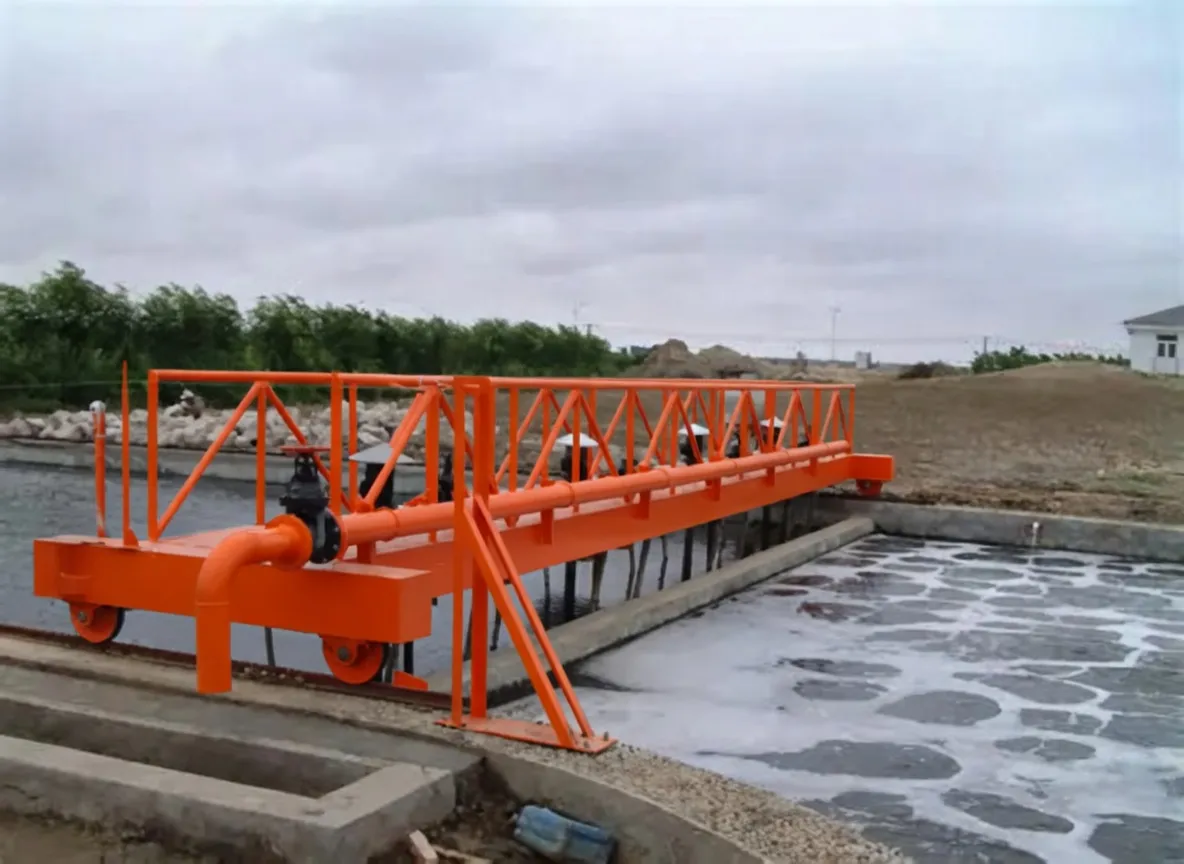
How an Oil-Free Screw Blower Works in a Biological Aeration System
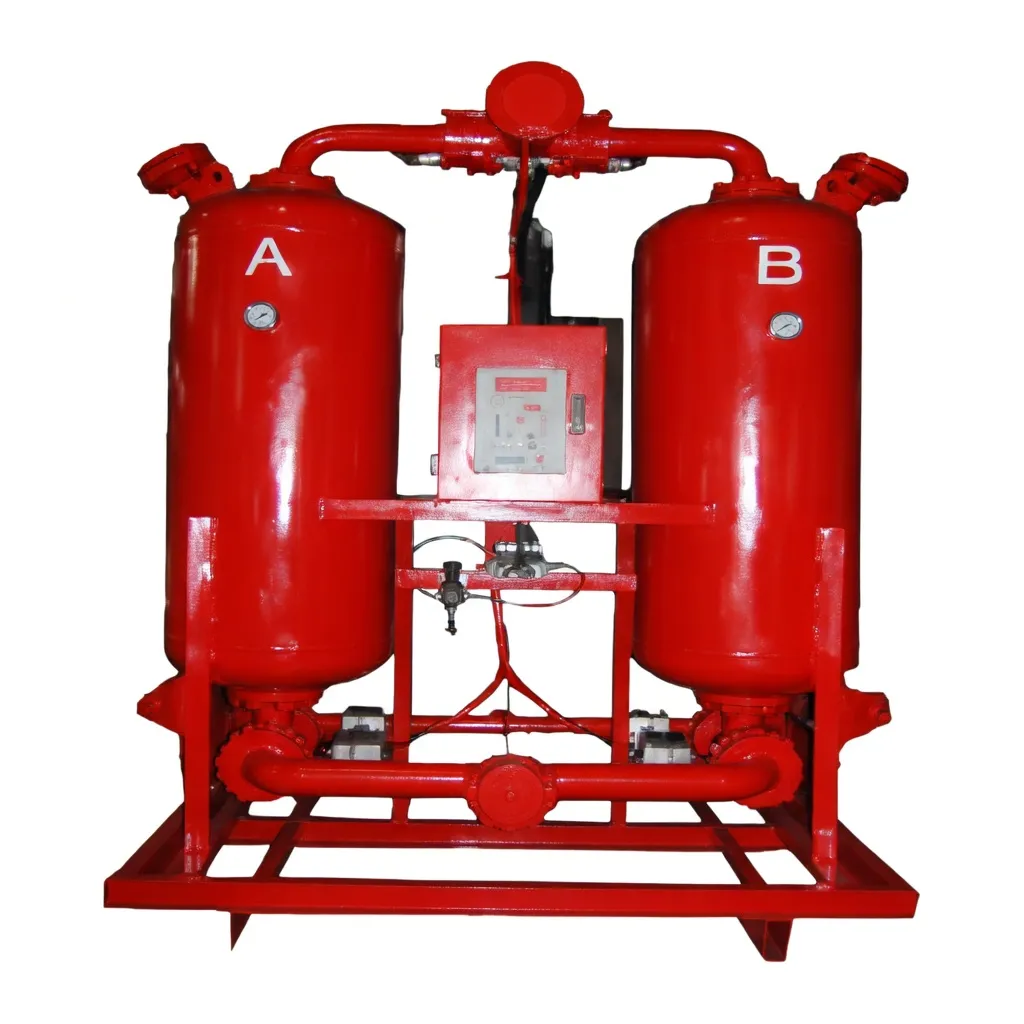
The twin-screw oil-free blower operates on a positive displacement principle, but with a critical design difference from its oil-flooded counterpart: the male and female rotors are machined to sub-micron tolerances and are kept in precise synchronisation by timing gears rather than by a lubricating oil film. Because the rotors never physically contact each other or the casing, no lubricant is required in the compression chamber. Air is drawn in at the inlet, trapped between the rotor lobes, and progressively compressed as the rotors turn before being discharged at the required outlet pressure — typically 0.4 to 1.0 bar gauge for activated sludge aeration duty. The entire compression process is oil-free in the truest mechanical sense, not simply filtered downstream.
Centrifugal (turbo) blowers operate on a different principle, using a high-speed impeller to impart kinetic energy to the air mass before converting that energy to pressure in a spiral volute casing. Because there are no contact surfaces in the compression path, oil-free operation is inherent to the design. Variable inlet guide vanes and variable-speed drives allow centrifugal blowers to follow the dissolved oxygen setpoint signal from the plant’s SCADA system with exceptional precision, ramping flow up or down across a wide turndown ratio without the hunting or surge behaviour that once limited centrifugal machine adoption in water treatment applications. At large municipal plants — works treating flows above 100 megalitres per day — turbo blower arrays have become the technology of choice, while twin-screw oil-free units remain highly competitive at smaller and medium-scale facilities throughout England, Scotland, and Wales.
Aeration Process Flow
Inlet Air Filtration
Oil-Free Compression
After-Cooler
Fine Bubble Diffusers
Biological Treatment
Technical Performance Parameters
The following table summarises the key technical parameters of Ever Power’s oil-free blower range as configured for wastewater aeration duty. These figures represent standard performance at reference conditions (ISO 1217 Ed.4, 20 °C, 1 bar abs, 0% relative humidity). Site-specific performance data can be provided on request based on actual altitude, inlet temperature, and target discharge pressure for your facility.
| Parameter | Oil-Free Screw Blower | Centrifugal (Turbo) Blower | Oiled Roots Blower (Legacy) |
|---|---|---|---|
| Flow Range (m³/min) | 1 – 80 | 20 – 600+ | 0.5 – 120 |
| Discharge Pressure (bar g) | 0.3 – 1.5 | 0.4 – 1.0 | 0.3 – 1.0 |
| Oil Classification | ISO 8573-1 Kelas 0 | ISO 8573-1 Kelas 0 | Oil-Contaminated |
| Specific Energy (kW per m³/min) | 4.8 – 6.2 | 4.2 – 5.5 | 6.5 – 8.5 |
| Noise Level (dB(A) at 1 m) | 72 – 78 | 70 – 75 | 82 – 92 |
| VSD (Variable Speed Drive) | Standard | Standard | Optional |
| Maintenance Interval (hours) | 4,000 – 8,000 | 8,000 – 16,000 | 1,500 – 3,000 |
| Typical Payback Period | 18 – 30 months | 24 – 42 months | — |
Application Scenarios Across UK Water and Industrial Sectors
The demand for reliable oil-free aeration air extends well beyond the traditional municipal sewage works. Across the United Kingdom’s diverse industrial base, biological treatment processes are increasingly deployed as businesses face tighter trade effluent consent conditions and rising sewer disposal charges. Food and beverage manufacturers — breweries in Burton-on-Trent, dairy processors in Somerset, soft drinks producers across the Midlands — operate their own effluent treatment plants that rely on identical aeration technology. Pharmaceutical manufacturing sites, particularly those in the Cambridge biotech cluster and the established North West England pharma corridor, also operate highly sensitive biological treatment systems where the risk of hydrocarbon contamination in the biomass is completely unacceptable from both a process and a regulatory standpoint.
Aquaculture facilities and fish hatcheries require dissolved oxygen levels maintained within tight bands to support stock health, and oil-free compressed air systems serve as both a supplemental oxygenation source and as the primary driver for recirculating aquaculture system (RAS) biofilter aeration. Even in anaerobic digestion (AD) facilities — where the primary process is of course oxygen-free — oil-free blowers are required for biogas conditioning stages, leachate treatment aeration, and digestate post-treatment systems. The common thread across all of these applications is the same: the presence of oil in the process air stream creates problems that far outweigh any capital saving made by purchasing cheaper oil-lubricated equipment.
Municipal Sewage Works
Continuous 24/7 duty, population equivalent 5,000 to 500,000+. VSD control linked to DO sensors for precise load-following.
Brewery & Food Effluent
High BOD loads from fermentation and wash-down streams. Oil-free air preserves biological floc integrity during peak production cycles.
Pharmaceutical Sites
Zero-contamination tolerance. ISO 8573-1 Class 0 certification is a baseline requirement at GMP-regulated manufacturing locations.
Aquaculture & RAS
Biofilter aeration in recirculating systems. Oil contamination would be lethal to stock — certified oil-free supply is non-negotiable.
Landfill Leachate
Aggressive leachate chemistry demands materials-compatible, low-maintenance blower solutions. Oil-free screw units handle ammonia-rich streams reliably.
Industrial MBR Plants
Membrane bioreactor scouring air must be absolutely oil-free to prevent irreversible membrane fouling and preserve permeability.
Customer Success: Real Installations Across the UK
The proof of any technology lies not in specification sheets but in operational reality. The following case summarises a representative installation from our UK project portfolio, with supporting testimonials from plant operators and procurement engineers who have made the switch to oil-free aeration.
Case Study · Yorkshire, UK · Municipal Water Utility
Replacing Six Roots Blowers at a 95,000 PE Activated Sludge Works
A Yorkshire-based water utility operating a 95,000 population equivalent activated sludge treatment works had been running a bank of six oil-lubricated Roots blowers installed in the late 1990s. By 2021, maintenance costs had escalated significantly, oil carryover into the aeration lanes was causing a persistent surface film, and the plant’s specific energy consumption for aeration was running at 7.8 kWh per kilogram of BOD removed — well above modern benchmarks. Following a feasibility study supported by Ever Power, four twin-screw oil-free blowers with integrated VSD were commissioned in 2022. Within twelve months of full operation, the specific energy had fallen to 5.4 kWh per kg BOD removed (a 31% reduction), the surface oil film had completely disappeared, and effluent ammonia compliance improved from 94% to 99.2% of samples meeting the 3 mg/l consent limit. The annual electricity saving at current UK industrial tariffs amounts to approximately £185,000 at the site.
31%
Energy Reduction
£185k
Annual Saving
99.2%
Consent Compliance
0
Oil Contamination Events
“
We’d been dealing with oil skimming protocols for twenty years. Fitting the oil-free screw blowers eliminated the whole problem overnight. The biological performance data speaks for itself — we haven’t had an ammonia breach since commissioning.
— Process Manager, Yorkshire Water Utility, UK
“
Our trade effluent volumes fluctuate enormously between production runs. The variable speed control on the Ever Power units means the blower system just follows the load automatically. Our aeration electricity consumption is down and we’re getting better nitrification than we’ve ever seen.
— Utilities Engineer, Midlands Brewery Group, UK
“
From an MCERTS auditing perspective, being able to demonstrate ISO 8573-1 Class 0 certification for our aeration air supply has simplified our annual environmental audit enormously. The Ever Power engineering team understood our regulatory context from day one.
— Environmental Compliance Manager, Scottish Pharmaceutical Site, UK
Ever Power Manufacturing & Custom Engineering Capability
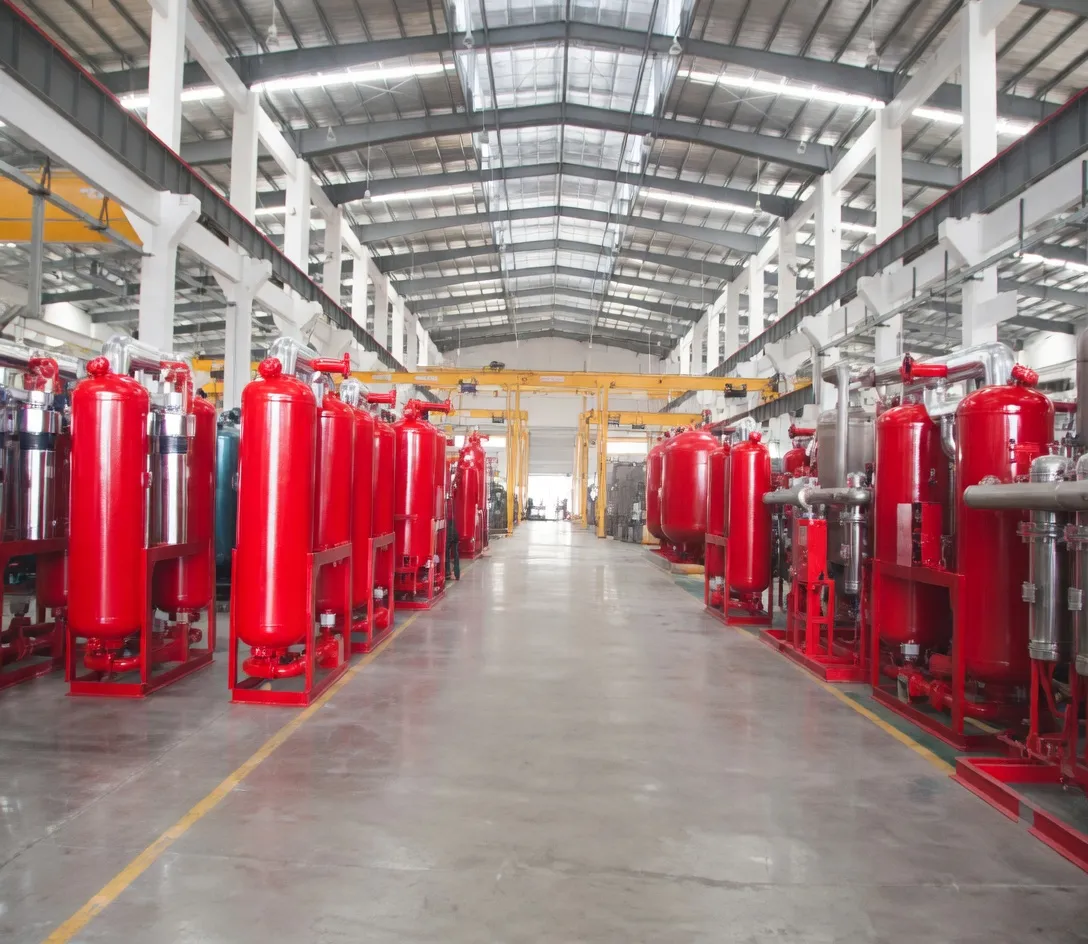
Ever Power operates a purpose-built manufacturing facility equipped with precision CNC machining centres, automated rotor lapping equipment, and a full-scale performance test cell capable of replicating any UK site condition from sea level to 600 metres altitude. Our engineering team has more than eighteen years of accumulated application knowledge in low-pressure oil-free compressed air systems, and we apply that knowledge through a structured customisation process that begins with your inlet conditions and ends with a complete system solution rather than a catalogue product.
For UK wastewater and industrial effluent clients, our customisation services include: bespoke blower skid assemblies with stainless steel pipework rated for aggressive condensate environments, ATEX Zone 2 certification for landfill and AD facility installations, bespoke control panel engineering with Ethernet/IP or Modbus RTU integration into existing SCADA platforms, and acoustic enclosure design to meet planning-restricted noise limits at sensitive sites. Every unit is factory performance tested before despatch and is accompanied by a third-party witnessed FAT report. We can configure systems from a single compact blower serving a small package plant right through to multi-unit parallel arrays for major municipal works, and our project engineers will visit your UK site at any stage of the procurement process — from initial feasibility through to commissioning and operator training.
Custom Solutions Include
- ✓ ATEX Zone 2 Certification
- ✓ SCADA / BMS Integration
- ✓ Bespoke Acoustic Enclosures
- ✓ Stainless Steel Skid Builds
- ✓ Factory Acceptance Testing
- ✓ UK Site Commissioning & Training
Serving Water and Industrial Treatment Plants Across England, Scotland, Wales and Northern Ireland
The UK’s water industry operates under the regulatory oversight of Ofwat, with each water and sewerage company investing in asset upgrades through five-year Asset Management Plan (AMP) cycles. AMP8, running from 2025 to 2030, has placed an unprecedented emphasis on energy efficiency, carbon reduction, and environmental compliance — all areas where the transition from oiled Roots blowers to oil-free screw or centrifugal blowers delivers measurable, auditable improvements. Thames Water, Anglian Water, Severn Trent, United Utilities, Yorkshire Water, Southern Water, South West Water, Welsh Water, Scottish Water, and NI Water all have active capital programmes that include blower system upgrades as a defined efficiency measure.
Beyond the regulated utilities, the UK’s extensive industrial effluent treatment sector represents an equally important market. Manufacturing clusters in the West Midlands, the North West, South Wales, and Central Scotland operate trade effluent treatment plants that face the same process chemistry and energy challenges as their municipal counterparts, often with fewer dedicated engineering resources to manage them. Ever Power’s UK supply chain, technical support partners, and responsive spare parts logistics make us a practical choice not just for large capital projects but for ongoing operational support across the entire country — from rural package plants to major urban treatment works serving populations of hundreds of thousands.
Pertanyaan yang Sering Diajukan
Common questions from UK water engineers, procurement managers, and plant operators.
Ready to Upgrade Your Wastewater Aeration System?
Speak to an Ever Power application engineer today. We provide free sizing calculations, energy saving estimates, and competitive quotations for any UK wastewater or industrial effluent treatment site.
Response within 24 hours · Free technical consultation · UK-wide delivery
© Ever Power Industrial Air Solutions · Specialist Oil-Free Compressed Air for Wastewater Treatment · edit by gzl