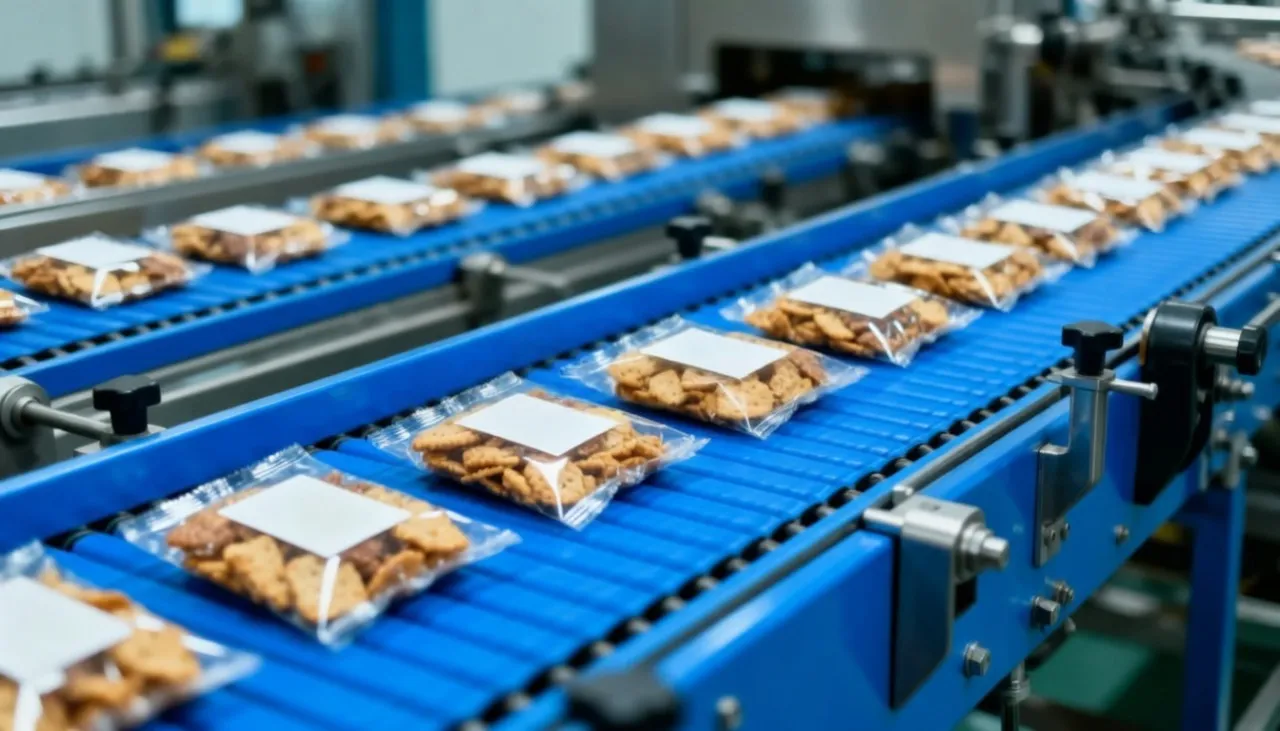
 Walk into any high-throughput snack facility in the UK — whether it’s a crisp plant in Leeds, a nut processor in Birmingham, or a baked-goods manufacturer in Manchester — and you’ll find compressed air doing quiet, critical work throughout the production floor. It inflates MAP (modified atmosphere packaging) bags with a precise nitrogen-rich gas mix, propels biscuits and puffed snacks gently through pneumatic conveying lines, actuates filling heads, and drives labelling machinery without pause. Compressed air is, in many ways, the invisible backbone of modern food packaging.
The problem? Conventional lubricated rotary screw compressors introduce oil aerosols and vapour into the air stream. At parts-per-million concentrations, this contamination is invisible to the naked eye, yet it is enough to taint flavour, accelerate rancidity, collapse protective gas atmospheres inside packs, and — most seriously — trigger food safety incidents that can shut a production line and damage brand reputation overnight. For British food manufacturers navigating the Food Standards Agency (FSA) frameworks, BRC Global Standards, and retailer codes of practice demanded by Tesco, Sainsbury’s, and Ocado, an oil-free air compressor is no longer a luxury upgrade. It is the only defensible choice.
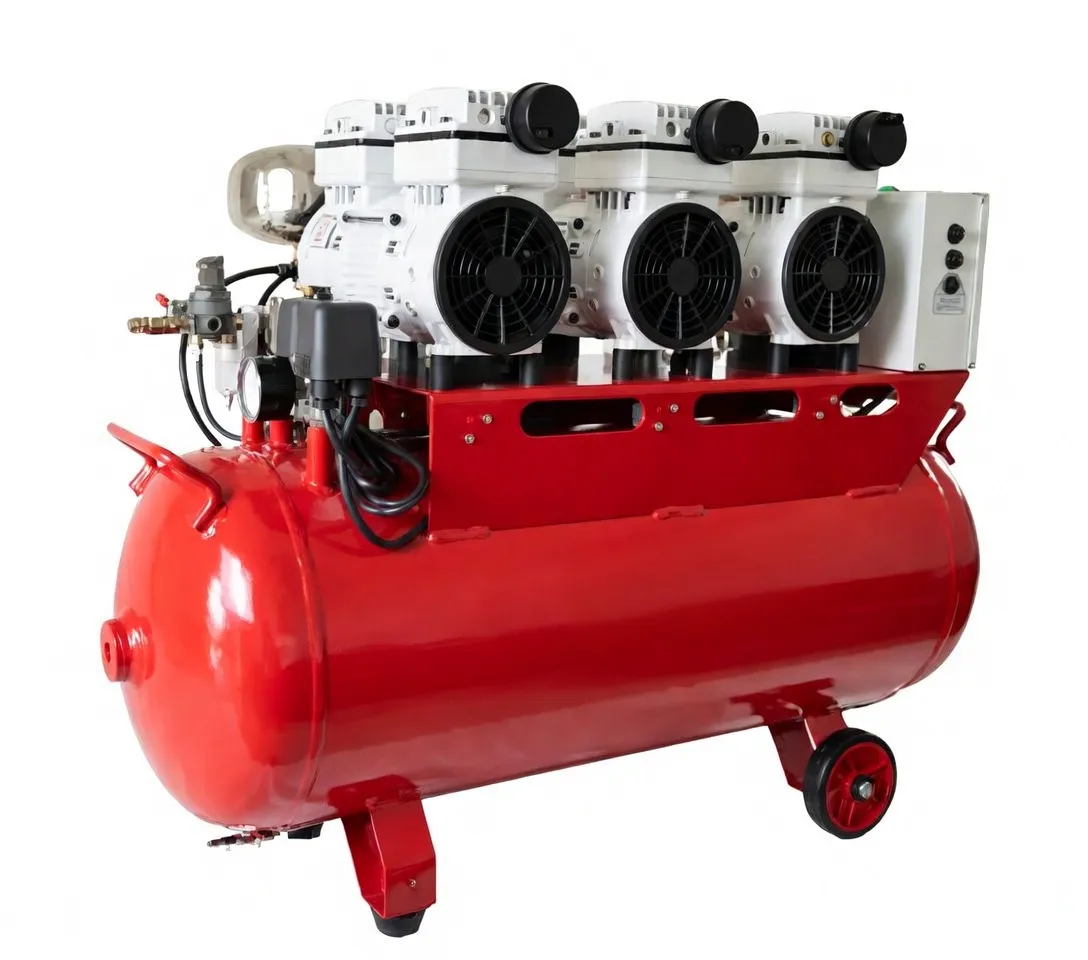
 Ever Power oil-free air compressor deployed on a food packaging line — delivering ISO 8573-1 Class 0 air purity
Why Oil Contamination Is a Zero-Tolerance Issue in Food Packaging
 The chemistry is unforgiving. Mineral compressor oil contains hydrocarbons that, even at concentrations as low as 0.01 mg/m³, can measurably alter the headspace chemistry inside a modified atmosphere package. For nitrogen-flushed crisp bags — where oxygen reduction to below 2% is the entire point of the packaging operation — a trace oil mist disrupts that carefully engineered gas balance. The lipids and unsaturated fatty acids in the oil oxidise rapidly once enclosed, creating aldehydes and ketones that consumers detect as off-flavour at concentrations well below any analytical threshold visible to a QA lab conducting routine air quality checks.
Beyond flavour, the regulatory picture in the United Kingdom is increasingly demanding. BRC Global Standard for Food Safety Issue 9, which governs the majority of UK retail-approved manufacturing sites, explicitly requires that compressed air coming into contact with food or food contact surfaces must be monitored and meet defined purity standards. ISO 8573-1, the internationally recognised benchmark for compressed air quality, classifies total oil content across five grades. Class 1 permits up to 0.01 mg/m³; Class 0 — the designation that an oil-free air compressor is designed to achieve by construction — sets the limit even lower or to a value declared by the equipment manufacturer and verified by independent testing. Major UK food retailers increasingly specify Class 0 as the minimum expectation during supplier audits.
Conventional wisdom used to hold that a lubricated compressor fitted with activated carbon filtration was “good enough.” That position has eroded. Activated carbon beds saturate, bypass, and fail — often silently. The cost of a product recall in the UK snack and bakery sector, factoring in retailer de-listing, FSA notification obligations, and brand repair, dwarfs the entire capital cost of upgrading to an oil-free compressor system many times over. Genuine prevention, rather than filtration-based mitigation, is now the engineering standard that responsible food manufacturers demand.
Spesifikasi Kinerja Teknis
How an Oil-Free Compressor Actually Works — and Why the Material Matters
In a standard lubricated rotary screw compressor, oil serves two purposes simultaneously: it seals the micro-clearances between the male and female screw rotors, and it acts as a heat transfer medium, absorbing the heat of compression before being cooled, separated from the compressed air, and returned to the compression chamber in a continuous loop. Strip out that oil and you have a fundamental engineering challenge — how do you seal and cool the compression element without introducing a contaminant?
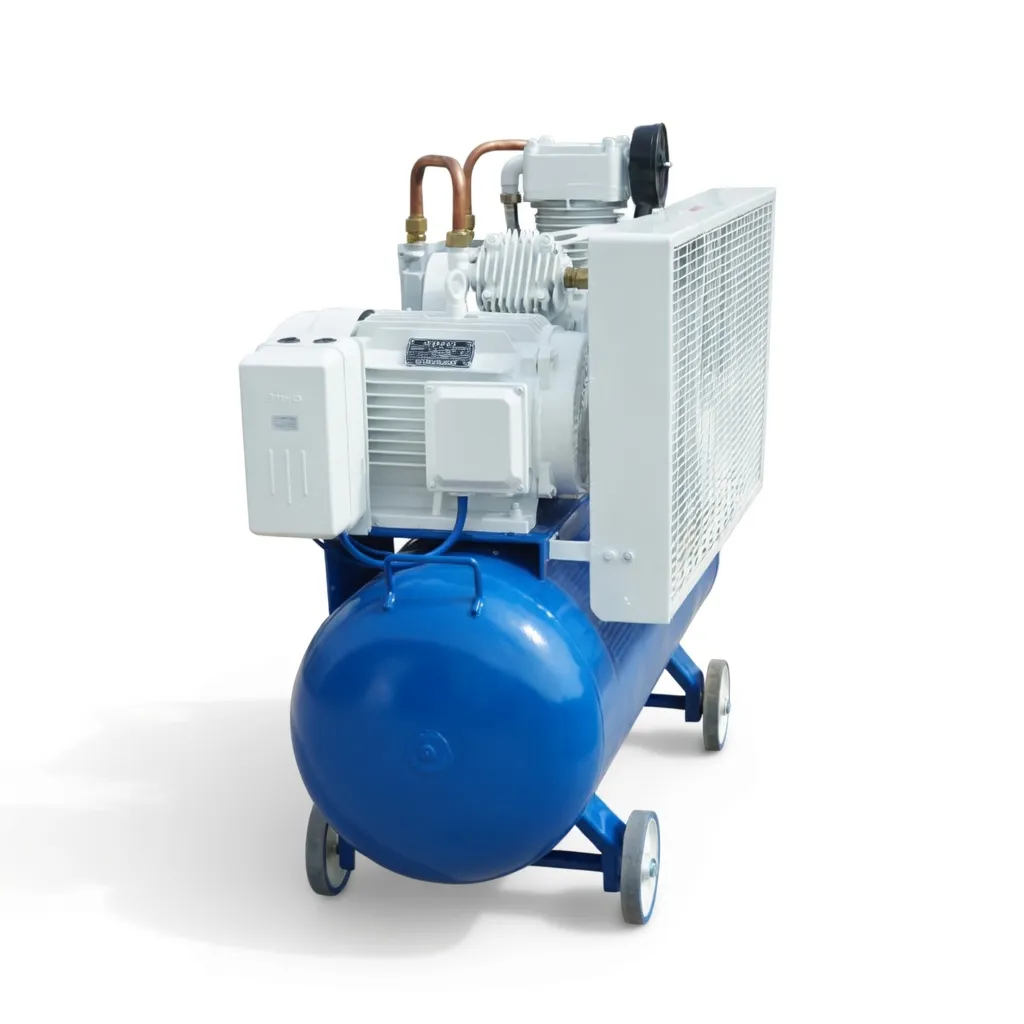
The answer used in modern oil-free screw compressors lies in precision-ground rotor profiles and advanced material science. The rotors are typically manufactured from high-strength steel or special-grade aluminium alloys, coated with PTFE (polytetrafluoroethylene) or proprietary ceramic-hybrid compounds that deliver self-lubricating properties without any liquid lubricant. The dimensional tolerances involved are extraordinary — rotor clearances are held to within a few micrometres across the operating temperature range. Timken or SKF labyrinth seals physically isolate the gearbox oil from the compression stage so that even if gearbox lubrication is present in adjacent assemblies, it cannot migrate into the air stream.
Many modern oil-free screw compressors use a two-stage compression design with an intercooler between stages. The first stage compresses air from atmospheric pressure to an intermediate pressure — typically 3 to 5 bar — before the intercooler removes the heat of compression. The second stage then continues compression to the final delivery pressure. This two-stage approach allows lower individual stage compression ratios, which means lower operating temperatures and reduced stress on rotor coatings. The result is a machine that can run continuously in a 24/7 food production environment with overhaul intervals comparable to conventional oil-flooded machines, while delivering absolutely oil-free compressed air on every cubic metre it produces.
Key Advantages of Choosing an Oil-Free Air Compressor
Guaranteed ISO 8573-1 Class 0 Purity
No oil injection into the compression chamber means no possibility of oil carry-over. Class 0 compliance is structural, not dependent on downstream filter maintenance.
Reduced Maintenance Cost Over Time
Eliminating oil changes, oil separator elements, and downstream coalescing filters can cut annual maintenance spend by 30–45% compared to equivalent oil-flooded systems in food-grade applications.
BRC & Retailer Audit Confidence
Presenting Class 0 certification from an oil-free air compressor removes compressed air as a risk category in BRC, SQF, and Tesco Nurture audits — a genuine competitive advantage during supplier reviews.
Extended Product Shelf Life
Clean compressed air preserves the integrity of MAP gas mixes, directly extending the commercially declared shelf life of nitrogen-packed snacks, coffee, and bakery products.
VSD Energy Efficiency Available
Variable speed drive models match motor speed to actual demand, delivering energy savings of 20–35% in facilities with fluctuating packaging line output — meaningful in the context of UK energy prices.
No Condensate Disposal Complexity
Oil-free compressors generate condensate that is classified as clean water under UK environmental regulations — no oil-water separator or controlled waste disposal contract required, simplifying site compliance.
Oil-Free vs Oil-Flooded: A Food Packaging Perspective
Customer Success: Midlands Snack Manufacturer Achieves Class 0 Compliance
Case Study: Meridian Snack Co. — Coventry, West Midlands, UK
Latar belakang: Meridian Snack Co. operates a 7,500 m² facility producing nitrogen-flushed mixed nut pouches and trail mix blends under own-label contracts for three major UK grocery retailers. Their legacy compressed air system comprised two 37 kW oil-flooded rotary screw compressors with high-efficiency coalescing filtration. Despite regular filter changes, oil aerosol readings at point-of-use were periodically exceeding 0.05 mg/m³ — above Class 1 limits — during summer months when inlet air temperatures elevated oil carryover from the separation stage.
Tantangan: A major retail partner’s technical audit flagged the compressed air system as a critical risk item and issued a 90-day corrective action notice. Meridian needed to achieve and document ISO 8573-1 Class 0 oil purity across all packaging line supply points before the next audit window or face potential contract suspension affecting approximately £4.2 million in annual turnover.
Larutan: Ever Power supplied and commissioned two 30 kW two-stage oil-free rotary screw compressors, configured in a duty-standby arrangement with a shared 1,000-litre receiver and a refrigerant dryer delivering a pressure dew point of +3°C. The installation was designed around Meridian’s existing pipework footprint, minimising downtime to a planned 48-hour switchover weekend.
Hasil: Post-installation oil aerosol testing by an accredited UK laboratory returned readings of <0.001 mg/m³ at all six point-of-use sample points — well within Class 0 parameters. The follow-up retail audit awarded a full green status on compressed air. Annual energy consumption fell by 18% due to the VSD control on the duty unit. Meridian’s engineering director noted that the 18-month payback period was significantly shorter than the financial exposure of a potential contract suspension.
Apa Kata Pelanggan Kami
“After switching to the Ever Power oil-free system, our BRC audit score on compressed air went from an observation to a zero-finding. The technical support during commissioning was genuinely excellent — they understood our MAP line requirements without needing to be educated on the basics.”
— James Holloway, Engineering Manager
Snack Manufacturer, West Midlands, UK
“We operate a high-care ready meal facility in Edinburgh and our compressed air specification is non-negotiable. The kompresor bebas oli from Ever Power has been running continuously for 14 months with zero unplanned downtime. The condensate disposal situation alone has saved us a meaningful amount on our waste contractor costs.”
— Fiona MacGregor, Operations Director
Prepared Foods Manufacturer, Edinburgh, Scotland
“We source a fully customised configuration with a specific air receiver volume and integrated dryer to suit our bakery nitrogen-flush line in Bristol. Ever Power’s engineering team adapted the package to our exact footprint and electrical supply constraints. The price was competitive and the lead time was shorter than quoted.”
— David Trent, Facilities Manager
Artisan Bakery Group, Bristol, England
Our Manufacturing Capability & Custom Configuration Service
Ever Power’s production facility operates under ISO 9001:2015 quality management, with a dedicated engineering team that has delivered custom oil-free air compressor packages to food manufacturers across England, Scotland, and Wales for over a decade. We do not offer a catalogue-only approach. Every project begins with a compressed air demand survey — analysing your peak flow rates, pressure requirements, duty cycle patterns, and available plant room dimensions — before a detailed proposal is prepared.
Custom capabilities include: non-standard pressure settings up to 40 bar, bespoke skid configurations integrating dryer, filters, and receiver as a single pre-piped package, stainless steel internal pipework for allergen-sensitive sites, ATEX-rated motor options for flour dust environments, remote monitoring interfaces compatible with existing SCADA and BMS systems, and CE-marked installations with full documentation packages to support BRC and FSA file submissions. Whether you operate a single MAP packaging line or a multi-site portfolio across the UK, our application engineers size and configure the solution to match — not the other way around.
Selecting the Right Oil-Free Compressor for Your UK Food Facility
British food manufacturers tend to face a combination of space constraints, legacy electrical infrastructure, and demanding retailer codes of practice that make the selection process more involved than simply picking a compressor by flow rate and pressure. The majority of UK food factories were built in the 1980s and 1990s, when compressed air was an afterthought in the plant room design. That means many sites are working with limited ceiling height, older 415V TPN electrical panels with restricted spare ways, and pipework that was laid out for oil-flooded machines — with larger bore headers designed to allow some pressure drop without the system pressures being re-engineered.
For a typical UK snack or bakery facility running two to four VFFS packaging machines plus a pneumatic conveying circuit, a 22–55 kW oil-free rotary screw compressor with VSD will comfortably cover the demand profile at 6.5–8 bar, with a total installed flow capacity of 3.5–10 m³/min depending on conveying duty cycle. Sites running high-speed MAP lines at over 200 packs per minute may require larger units in the 75–110 kW range. A refrigerant dryer to a pressure dew point of +3°C, combined with a single-stage particulate and sterile breathing-air filter, rounds out the treatment train to meet ISO 8573-1 Class 1:4:1 across solid particles, water, and oil — the specification most commonly required by BRC auditors in the UK food manufacturing sector.
For facilities in Scotland and Northern England where ambient temperatures regularly drop below 5°C in unheated plant rooms during winter, inlet air temperature management becomes relevant — cold inlet air causes condensation issues in the compression stage of some oil-free designs not rated for sub-10°C inlet conditions. Ever Power’s UK food-grade range is designed for ambient operation down to 0°C, making it suitable for the full range of British factory conditions without supplementary heating provisions.
Ready to Upgrade Your Food Packaging Line to Class 0 Air Purity?
Ever Power’s application engineers are available to discuss your specific UK food facility requirements. Custom configurations, competitive pricing, and fast lead times — contact us today.
📧 Dapatkan Penawaran — [email protected]
diedit oleh gzl