 Walk onto the paint shop floor of any major automotive manufacturer — whether that is a Jaguar Land Rover facility in the West Midlands, a BMW plant in Munich, or a Toyota body shop in Derby — and the single most scrutinised utility feeding every spray gun is compressed air. Not the robot arms, not the conveyor speed, not even the paint formulation itself. Air purity is the invisible variable that separates a flawless factory finish from a panel riddled with fish-eye craters and pinhole defects that can cost tens of thousands of pounds per shift in rejected bodywork.
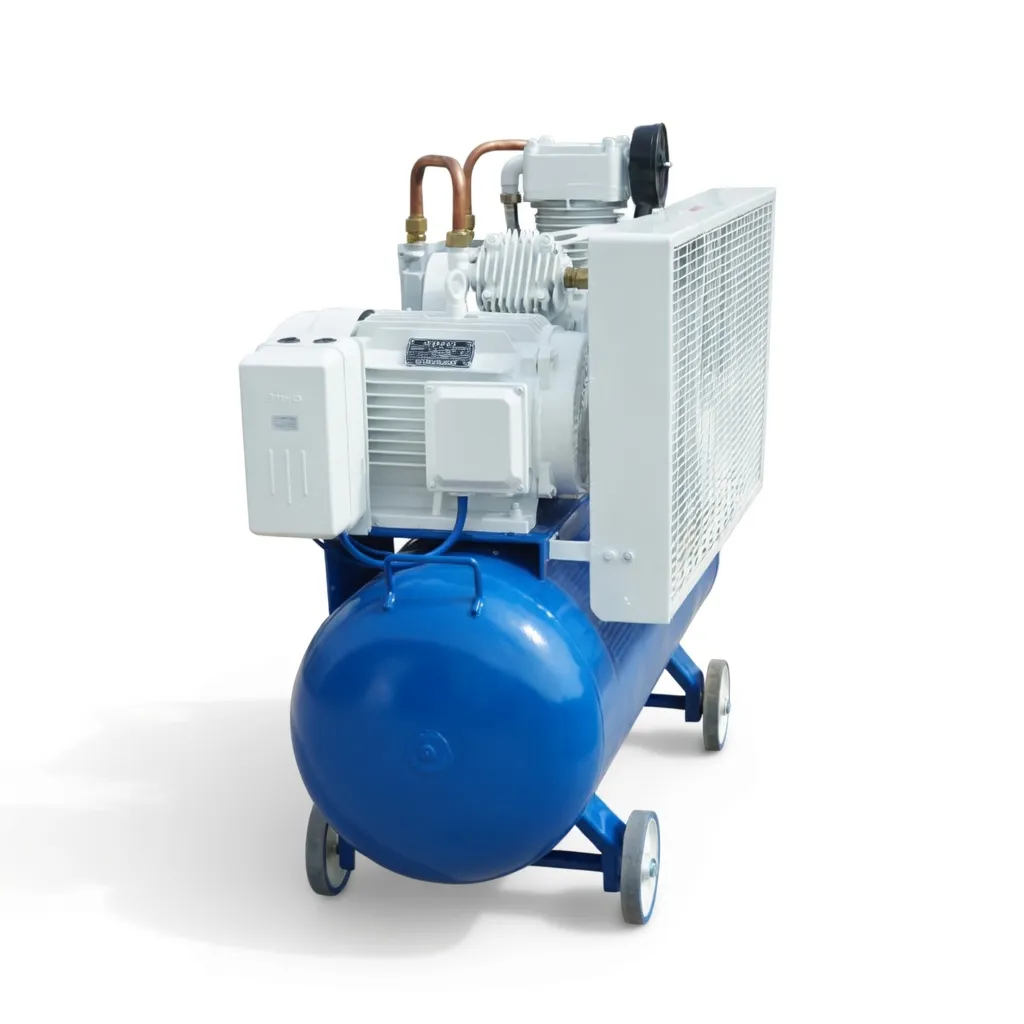
The oil-free screw air compressor purpose-built for automotive painting and body coating is no longer a premium option reserved for tier-one OEM plants. Mid-sized refinish bodyshops, coachbuilders, custom restoration workshops, and fleet re-spray operations across the UK are making the same transition — driven by stricter environmental legislation, rising insurance costs around rework, and client expectations that demand showroom-quality results every single time. This guide unpacks the technology, the performance data, the real-world outcomes, and every question worth asking before you specify or upgrade your compressed air system.
Why Compressed Air Purity Makes or Breaks an Automotive Paint Job
Automotive body coating is a multi-layer process: electrocoat primer, sealer, base coat, and finally a clear lacquer that must cure to a mirror gloss without a single visible imperfection. Every layer is applied by high-volume low-pressure (HVLP) spray guns or automated electrostatic bells, all powered by compressed air. When that air carries even trace quantities of oil aerosol — a common output from standard lubricated screw compressors — the consequences are immediate and costly. Oil molecules migrate to the wet paint surface, creating surface tension differentials that manifest as fish-eye craters, pinholes, and adhesion failures. Depending on the stage at which contamination occurs, remediation can mean stripping back to bare metal, re-applying all coats, and re-curing in the oven — a process that can add three to five working days per vehicle and easily exceed £2,000 per panel in a professional bodyshop context.
Beyond oil, moisture is the second enemy. Condensation in supply lines causes blushing on solvent-borne finishes and adhesion failures on waterborne systems. The industry standard for automotive spray applications demands a pressure dew point (PDP) of −40°C or below — a specification that requires either a high-performance refrigeration dryer paired with adsorption drying, or a dedicated heatless or heated regenerative desiccant system. An oil-free screw air compressor eliminates the primary contamination risk at source, while a properly matched drying system controls moisture to the level automotive chemistry demands.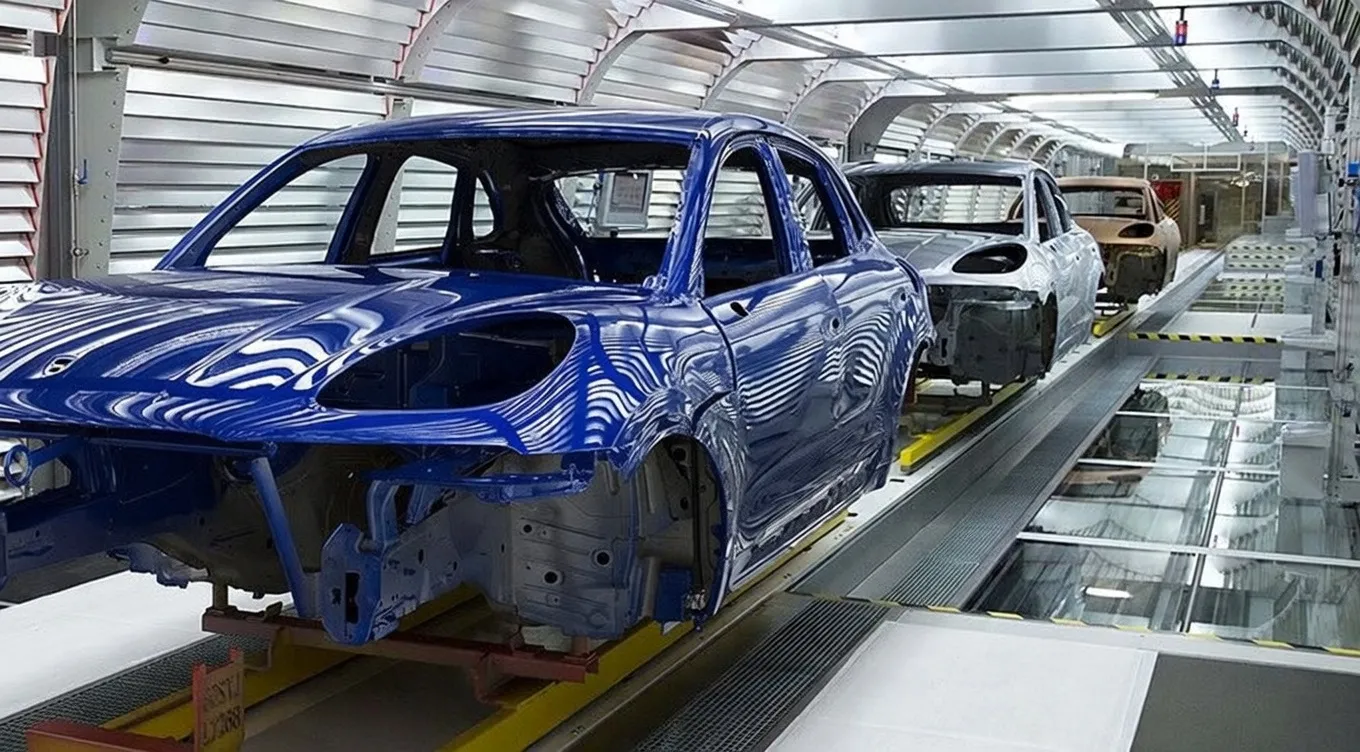
How an Oil-Free Screw Compressor Actually Works
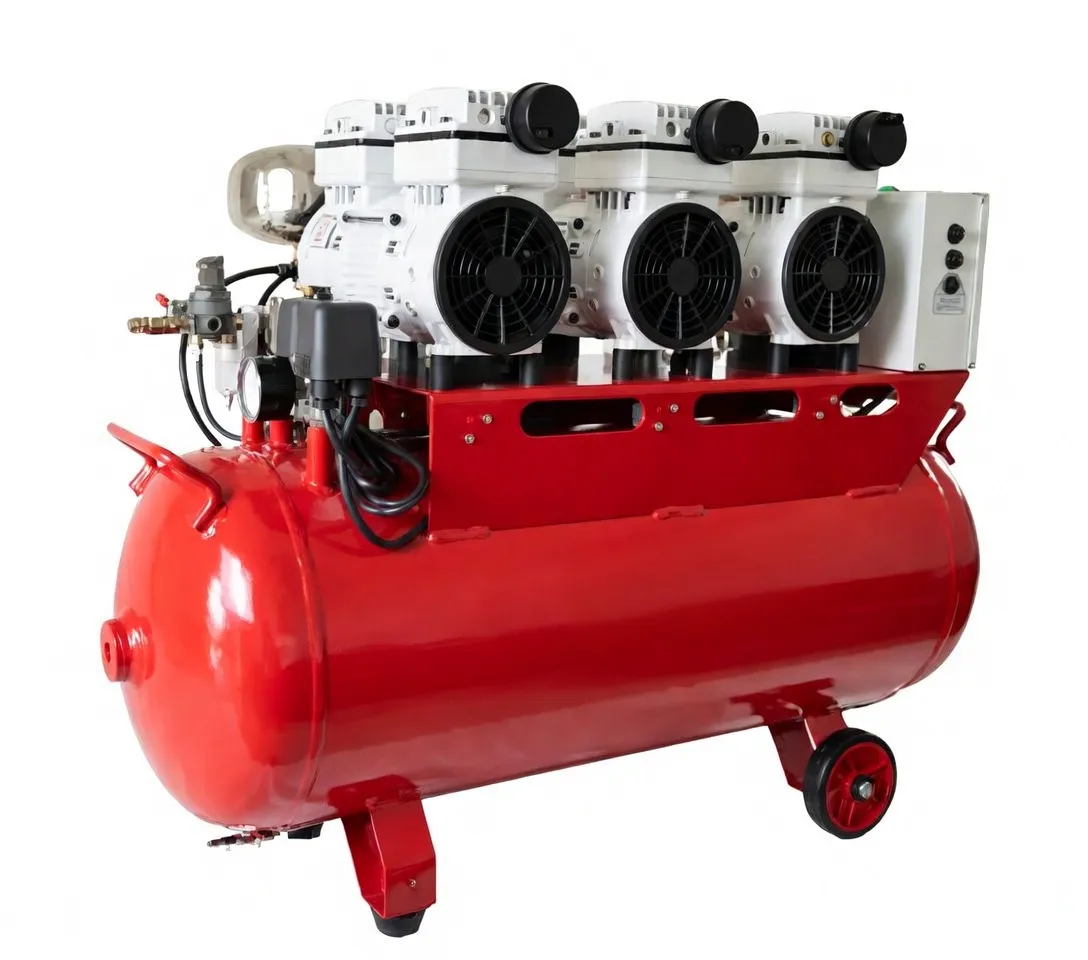 At the heart of every oil-free rotary screw unit are two precisely machined, contra-rotating helical rotors that mesh together with extremely tight clearances — typically in the range of a few micrometres. Because the rotors never make metal-to-metal contact, no lubricating oil is required in the compression chamber itself. Air is drawn in, trapped between the rotor lobes and the housing, then progressively compressed as the lobes advance. The compressed air exits to a downstream aftercooler and separator without any hydrocarbon contamination at all. This is a fundamentally different design philosophy from oil-injected screw compressors, where oil is deliberately introduced into the rotor chamber to cool and seal — oil that must then be separated downstream, never completely to zero.
Modern oil-free machines used in automotive finishing typically incorporate two-stage compression with water cooling or air cooling between stages. The inter-stage cooling reduces the temperature of partially compressed air before it enters the second stage, improving thermodynamic efficiency and protecting rotor coatings from thermal degradation. Rotor surfaces are treated with PTFE-based or specialty ceramic coatings that provide low-friction performance, corrosion resistance in humid environments, and a service life that typically exceeds 80,000 operating hours before major overhaul — a critical factor for continuous paint-line operations where unplanned downtime is commercially catastrophic.
The compressed air output from an oil-free screw machine meets ISO 8573-1 Class 0 for oil content — defined as a total oil aerosol, vapour, and liquid concentration of less than 0.01 mg/m³. When paired with a regenerative desiccant dryer and a 0.01-micron coalescing pre-filter, the finished air quality spec achieves Class 1.2.1 or better under ISO 8573-1, satisfying the most demanding automotive paint quality plans and OEM process validation requirements.
Technical Performance Parameters
| Parameter | Specification | Standard / Reference |
|---|---|---|
| Compressor Type | Two-stage oil-free rotary screw | ISO 1217 |
| Rated Pressure Range | 5.5 – 10 bar (g) | Adjustable to application |
| Free Air Delivery | 0.5 – 60+ m³/min (model dependent) | ISO 1217 Annex E |
| Oil Content (outlet) | < 0.01 mg/m³ (Class 0) | ISO 8573-1:2010 |
| Pressure Dew Point (with dryer) | −40°C to −70°C PDP | ISO 8573-1 Class 2 |
| Particulate Content | < 0.1 μm / < 0.1 mg/m³ | ISO 8573-1 Class 1 |
| शोर स्तर | 62 – 72 dB(A) at 1 m | ISO 2151 |
| Motor Efficiency Class | IE3 / IE4 (VSD models) | IEC 60034-30-1 |
| Control System | Variable Speed Drive (VSD) standard | Industry 4.0 compatible |
| Rotor Coating | PTFE or ceramic composite | Proprietary formulation |
| Design Service Life | 80,000+ hours (major overhaul) | Manufacturer data |
Application Scenarios Across the Automotive Coating Process
Electrocoat (E-coat) Primer
The body-in-white is submerged in a paint bath and an electrical current deposits a corrosion-resistant primer across every surface. Compressed air circulates the bath, controls agitators, and powers conveyor systems. Any oil contamination at this stage compromises adhesion for every subsequent layer.
Sealer & Primer Surfacer
Applied by HVLP spray guns or robotic atomisers, the sealer coat fills surface irregularities and provides a uniform base for colour coats. At this stage, the spray guns typically operate at 2 – 3 bar atomisation pressure; clean, dry air directly controls transfer efficiency and film build uniformity.
Basecoat & Effect Colours
Metallic and pearl effect basecoats are the most sensitive layer in the system. Aluminium flake orientation is directly influenced by air velocity and pattern consistency. A single pressure spike or moisture pulse from a contaminated air supply will produce visible flop variation — a defect immediately flagged on quality control light booths.
Clear Lacquer & Top Coat
The final clear coat seals the entire system and delivers gloss, UV resistance, and scratch hardness. It is the most visible layer and the one customers will run their hand across in the showroom. Oil aerosol in the supply air at this stage causes cissing — the technical term for fish-eye defects that require full colour re-application to correct.
Key Advantages of Ever Power Oil-Free Compressors for Painting Operations
Zero Oil Contamination
ISO Class 0 certified output eliminates fish-eye defects, cissing, and adhesion failures at source — not managed downstream.
Lower Total Operating Cost
VSD motors reduce energy consumption by up to 35% compared to fixed-speed equivalents. No oil change intervals, no separator element disposal costs.
Reduced Rework Costs
Eliminating contamination-driven rework in a commercial bodyshop can recover 8 – 15% of paint booth operating time annually.
Environmental Compliance
No oil-laden condensate to treat or dispose of. Helps satisfy UK Environment Agency requirements and supports ISO 14001 certification drives.
Industry 4.0 Ready
Integrated IoT monitoring via Modbus/Profibus/EtherNet IP enables real-time air quality trending, predictive maintenance alerts, and remote diagnostics.
Long Service Intervals
Air-end overhaul intervals of 16,000+ hours. No oil filter or separator elements. Dramatically reduced maintenance downtime for continuous paint lines.
Customer Success: Midlands Prestige Refinish Centre, Birmingham, UK
A specialist prestige vehicle refinishing centre in Solihull, Birmingham, operating three climate-controlled spray booths and processing an average of 60 vehicles per week for insurers, main dealers, and private clients — predominantly Porsche, Audi, and Bentley — identified compressed air contamination as the root cause of a persistent fish-eye problem affecting approximately 1 in every 8 panel repairs. The operation was running a 15-year-old oil-injected rotary screw compressor with a downstream coalescing filter pack. Despite regular filter element changes, intermittent oil carry-over during cold starts and at high ambient temperatures was creating unpredictable surface defects.
Following a compressed air quality audit, the workshop specified two Ever Power 22 kW VSD oil-free screw compressors in a lead-lag configuration, with a twin-tower heated regenerative desiccant dryer providing a guaranteed PDP of −40°C year-round. The installation was commissioned over a single weekend to avoid disrupting production. Within the first month, contamination-related rework dropped to zero. Energy consumption fell by 28% compared to the previous fixed-speed unit. The business owner calculated a full return on investment within 22 months purely from the elimination of rework labour and materials costs — not accounting for energy savings or the improved customer satisfaction scores that came with consistently flawless results.
0
Contamination Defects
Month 1 Post-Install
28%
Energy Cost
Reduction
22 mo
Full ROI
Payback Period
−40°C
Guaranteed PDP
Year-Round
हमारे ग्राहक क्या कहते हैं
★★★★★
“We run a high-volume accident repair centre in Manchester processing over 80 vehicles a week. After switching to the Ever Power oil-free unit, our fish-eye callback rate dropped to virtually nothing. The paint technicians noticed the difference within the first week. The VSD control means our electricity bill actually went down at the same time. Outstanding product.”
— James Hargreaves
Technical Director, Hargreaves Accident Repair, Manchester, UK
★★★★★
“As a Tier 2 automotive plastics supplier in the East Midlands, we apply primer and topcoat to interior and exterior trim components on a semi-automated line. The quality plan from our OEM customer specifies ISO 8573-1 Class 0. We could not have achieved that accreditation audit without the Ever Power system. The after-sales technical support was also genuinely impressive — same-day response, always.”
— Priya Nair
Operations Manager, Midlands Trim Technologies Ltd, Coventry, UK
★★★★★
“Our classic car restoration workshop in Bristol handles concours-level restorations where finish perfection is genuinely non-negotiable. We trialled three compressor brands. The Ever Power machine delivered the most consistent air quality and the quietest operation — important in a workshop environment where you need to hear what the spray gun is telling you. Two years on, not a single maintenance issue.”
— Tom Whitfield
Workshop Principal, Heritage Auto Restoration, Bristol, UK
Ever Power Manufacturing: Custom Solutions Built for Your Exact Process
Not every automotive painting operation has identical requirements. A three-booth independent bodyshop in Yorkshire has a very different compressed air demand profile from a 24-hour OEM paint shop running parallel conveyor lines in Sunderland. Ever Power’s manufacturing facility operates a full in-house engineering design and customisation capability — from CAD-driven air-end geometry optimisation through to custom motor sizing, non-standard pressure ratings, bespoke control panels with PLC programming, and integrated dryer-filter-receiver skid packages designed to fit within specific plant room footprints.
Our application engineers work directly with customers’ process engineers and site services teams from the specification stage through to commissioning and first-article air quality verification testing. Custom configuration options include: non-standard flanged outlet connections, ATEX-rated enclosures for paint mixing room installations, enhanced acoustic enclosures for noise-sensitive environments, stainless steel pipework packages for food-grade adjacent facilities, and multi-compressor sequencing controllers for n+1 redundancy configurations. Every customised machine is factory acceptance tested against the agreed performance specification before despatch, and full documentation packs — including test certificates, material data sheets, and O&M manuals — are provided as standard.
Serving Automotive Businesses Across the United Kingdom
The UK automotive refinish market spans from large accident repair group networks operating dozens of sites across England and Scotland, through to single-site independent bodyshops, franchised dealership preparation centres, specialist classic and prestige vehicle restorers, and OEM supply chain component painters. Ever Power supports this entire spectrum with a dedicated UK supply chain, UK-based technical application support, and a network of authorised service partners providing preventive maintenance and emergency call-out coverage across England, Wales, Scotland, and Northern Ireland.
Key automotive manufacturing and refinishing clusters where Ever Power oil-free compressors are actively specified include the West Midlands automotive corridor (Coventry, Birmingham, Solihull), the North East manufacturing base (Sunderland, Gateshead, Washington), the Yorkshire and Humber industrial zone, the South East dealer preparation market (London, Surrey, Kent), and Scotland’s growing accident management sector. Lead times from UK stock for standard models run to 5 – 10 working days, with full application surveys, site surveys, and compressed air quality audits available at no charge to qualifying customers throughout the UK.
North East England
Yorkshire & Humber
Greater London & South East
Scotland
Wales & South West
अक्सर पूछे जाने वाले प्रश्नों
What is the best oil-free screw air compressor for an automotive spray painting workshop in the UK, and how much does it typically cost?
For a typical three-to-five booth UK automotive spray painting workshop, a 15–22 kW VSD oil-free rotary screw compressor delivers the right combination of free air delivery (roughly 1.5 – 2.5 m³/min at 7 bar) and ISO Class 0 output quality. Indicative pricing in the UK market runs from approximately £8,000 – £18,000 plus VAT for the base machine, with an integrated desiccant drying package adding a further £3,000 – £6,000. Ever Power offer fixed-price supply and commissioning packages — contact our UK team for a written quote tailored to your booth count and cycle times.
Why do fish-eye defects keep appearing on my car paint job even after I replaced the oil separator filter on my existing compressor?
Coalescing and oil separator filters downstream of an oil-injected compressor are effective under steady-state conditions but fail to maintain Class 0 output during cold start cycles (when oil viscosity is low and carry-over spikes) and at high ambient temperatures (when oil vapour pressure increases). Even a brief contamination event during a cold Monday morning start can affect the first two or three jobs of the day. Replacing the filter is treating a symptom. Switching to an oil-free screw compressor removes the contamination source entirely — there is no oil in the compression chamber to carry over in the first place.
Which compressed air dew point specification do I need for automotive waterborne basecoat painting in a UK climate?
For waterborne basecoat systems, a pressure dew point of −40°C is the recommended minimum in UK automotive refinish quality plans, and most OEM Approved Repairer programmes specify this as a mandatory requirement. This is achieved with a twin-tower regenerative desiccant dryer — either heated or heatless depending on plant air consumption — positioned downstream of the oil-free compressor and a coalescing pre-filter. A refrigeration dryer alone will not reliably reach −40°C PDP in the UK’s variable ambient conditions and is not recommended as the sole drying solution for automotive paint shops.
How long does it take to get a quote and delivery for a custom oil-free compressor package for my West Midlands automotive plant?
For standard models from UK stock, a written quotation can typically be issued within 24 hours of receiving your flow and pressure requirements, and delivery runs to 5 – 10 working days. Custom-engineered packages — including bespoke skids, non-standard electrical specifications, ATEX compliance, or specific PLC control configurations — carry a lead time of 4 – 8 weeks from order confirmation, depending on scope. Our UK application engineers will conduct a site visit or remote survey at no charge to confirm the right specification before quotation.
What ongoing maintenance does an oil-free screw air compressor for automotive painting actually require, and how does that compare to a conventional machine?
An oil-free rotary screw compressor eliminates oil changes, oil filter elements, and oil separator elements entirely — those are the most frequent consumable costs on a conventional machine. The main scheduled maintenance tasks on an oil-free unit are: inlet air filter element replacement (typically every 2,000 – 4,000 hours), air-end bearing inspection (every 16,000 hours or per condition monitoring data), PTFE rotor coating inspection, and coolant/intercooler checks on water-cooled models. Annual maintenance cost for a 22 kW oil-free unit in a UK bodyshop context is typically 40 – 55% lower than an equivalent oil-injected machine when all consumables and disposal costs are included.
Can Ever Power supply an oil-free compressed air system that meets the ISO 8573-1 Class 0 requirements specified in my automotive OEM approved repairer contract in the UK?
Yes. All Ever Power oil-free screw compressors are independently certified to ISO 8573-1:2010 Class 0 for oil content, and we supply full third-party test certification as part of the standard documentation package. When combined with our matched desiccant drying and filtration packages, the complete system achieves Class 1.2.1 or better across all three ISO 8573-1 contaminant categories — particulate, moisture, and oil. This documentation package is accepted by all major OEM Approved Repairer programmes we are aware of operating in the UK market, including those of several German premium brands with UK franchised networks. We are happy to review your specific contract requirements before you order to confirm compliance.
Ready to Eliminate Paint Defects and Cut Energy Costs?
Talk to an Ever Power application engineer today. Free UK site survey, no-obligation quotation, and full compressed air quality audit included.
जीजेडएल द्वारा संपादित