 Froth flotation is the backbone of modern mineral recovery — separating valuable ore particles from gangue through precisely engineered differences in surface hydrophobicity. At the heart of every flotation cell, a continuous flow of compressed air generates fine bubbles that rise through the mineral slurry, collect target particles, and carry them to the overflow lip as a stable, mineral-rich froth. For UK mining engineers and processing plant managers, the selection of the correct compressed air source is far from a peripheral decision. It directly determines whether a circuit achieves its target grades and recoveries, or quietly falls short in ways that take months to diagnose.
What many operations have learned at significant cost is that oil-contaminated compressed air is not simply a maintenance inconvenience. Oil residues — even at parts-per-million concentrations — alter the surface chemistry of mineral particles, disrupt the performance of collector and frother reagents, and suppress recovery rates in ways that are genuinely difficult to attribute without systematic investigation. As British mining operations face rising energy and reagent costs alongside tighter environmental obligations, the case for deploying purpose-built oil-free air compressors across flotation circuits has never been stronger or more commercially urgent.
Ever Power Industrial Systems brings more than 18 years of specialised application engineering to this challenge. Our oil-free compressor range has been deployed in copper concentrators, lead-zinc processing plants, and coal preparation facilities across the United Kingdom and internationally — delivering measurable improvements in flotation recovery, reagent efficiency, and long-term operating economics. This guide covers everything a UK mineral processing engineer needs to understand about oil-free technology, how it applies to flotation work, and how to specify the right system for your site.
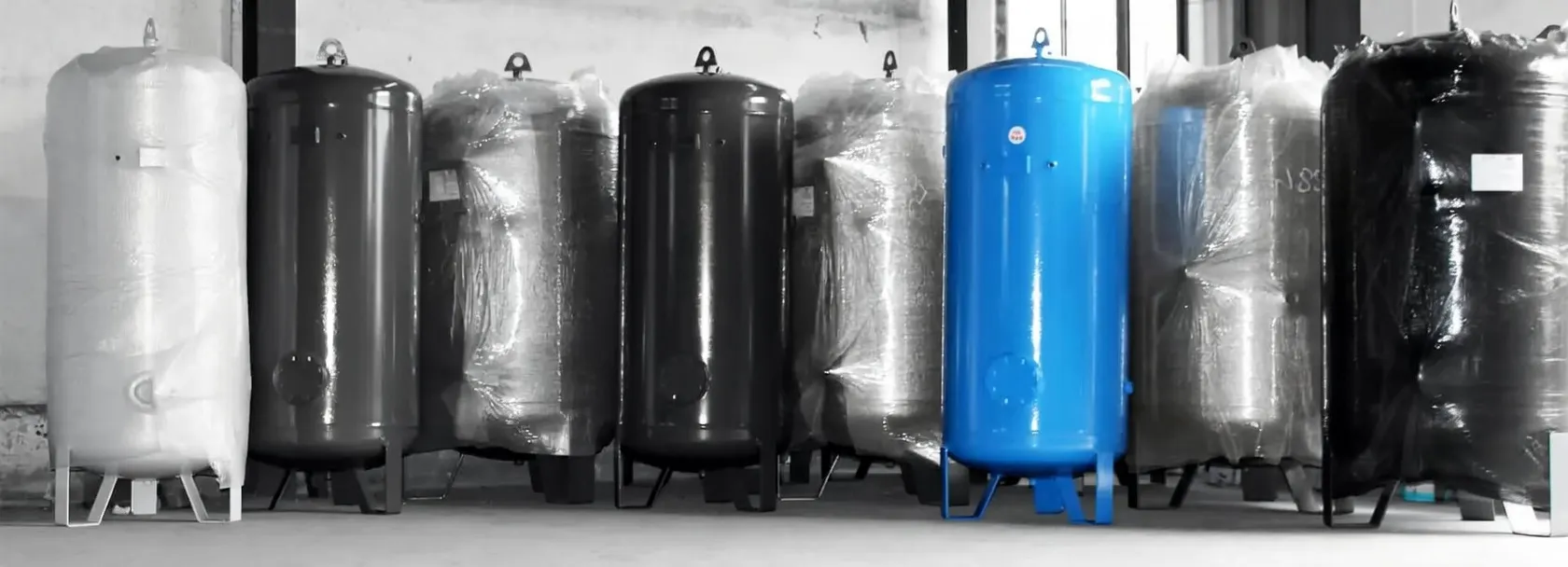
Ever Power Series EF — Oil-Free Rotary Screw Compressor, purpose-engineered for froth flotation applications in UK mineral processing
The Science Behind Flotation — and Why Compressed Air Quality Is Non-Negotiable
Understanding the mechanism explains why oil-free matters so much
 Froth flotation exploits the difference in surface wettability between target mineral particles and gangue. When compressed air is injected into a slurry-filled flotation cell, it produces streams of fine bubbles rising through the pulp. Hydrophobic mineral particles — typically rendered so by collector reagents such as xanthates, dithiophosphates, or fatty acids — attach to these rising bubbles and ascend to the froth layer, where they overflow into a concentrate launder. Hydrophilic gangue particles remain suspended and exit as tailings. The engineering looks straightforward on paper, but it is exquisitely sensitive to surface chemistry. Any foreign surface-active contaminant introduced via the compressed air stream can compete with collector molecules for mineral surface sites, destabilise bubble-particle aggregates in the froth zone, or alter bubble diameter and surface tension — all with direct and quantifiable consequences for concentrate grade and metal recovery.
Optimal bubble size for copper sulphide flotation falls between approximately 0.5 mm and 2.0 mm. Irregularities introduced by contaminated air supply — whether from pulsation, hydrocarbon surfactant films on bubble surfaces, or chemical interaction with frother molecules — produce larger, less stable bubbles with lower mineral-loading capacity. The first signs typically appear as declining froth stability, increased scavenging requirements, or a gradual creep in tailings grade that resists conventional metallurgical troubleshooting. UK plant metallurgists who have investigated these symptoms systematically have, in many cases, traced the root cause to the quality of compressed air rather than any change in feed ore or reagent supply.
Bubble Generation
Bubble size, uniformity, and surface cleanliness determine mineral attachment efficiency in the pulp zone. Oil-contaminated air produces irregular, over-sized bubbles with reduced carrying capacity.
Reagent Interaction
Hydrocarbon films from compressor oil compete with xanthate collectors for mineral surface sites. Even trace contamination at 2–5 mg/m³ can suppress xanthate adsorption efficiency by over 20%.
Recovery Impact
UK copper concentrators have documented recovery drops of 1.5–4.2 percentage points attributed to oil carry-over — equivalent to thousands of pounds in lost daily revenue at current metal prices.
⚠️
Oil contamination in flotation air is the most consistently under-diagnosed cause of declining mineral recovery in British concentrators — and one of the easiest to fix.
Why Conventional Oiled Compressors Are Costing UK Mining Operations Money
Standard oil-injected rotary screw compressors and lubricated reciprocating units deliver compressed air that inherently carries oil aerosols and vapours downstream. Even with high-quality coalescing filtration installed and maintained, residual oil concentrations typically remain in the 0.01–0.1 mg/m³ range under ideal ISO 8573-1 Class 1 conditions — and drift significantly higher as filter elements become saturated, particularly during peak demand or surge events. In many UK plants operating older compressor infrastructure with irregular filter change schedules, actual oil carry-over in the flotation air supply can reach 1–5 mg/m³ or more. This represents a chronic, continuous contamination of the flotation environment that is invisible to most routine monitoring protocols.
The consequences are felt across multiple dimensions of plant performance. In copper sulphide flotation, oil contamination preferentially depresses chalcopyrite recovery while gangue mineral floatability is relatively less affected — simultaneously reducing both grade and recovery. In lead-zinc operations, the selective depression of sphalerite with zinc sulphate becomes less precise, pushing operators to increase reagent dosages in an attempt to restore selectivity, adding direct costs without addressing the underlying cause. Coal flotation is particularly susceptible: the fine coal surface that needs to be rendered hydrophobic by collector addition is readily passivated by hydrocarbon films, reducing yield and increasing product moisture content — with knock-on costs in drying energy and transport penalties.
A growing regulatory dimension reinforces the economic case. The Environment Agency’s guidance on best available techniques (BAT) for mineral processing operations in England increasingly references compressed air quality, and several major UK concentrators have moved to mandate oil-free compressed air as a condition of environmental management certification renewals. Scotland’s SEPA and Natural Resources Wales have issued similar advisory guidance to permitted operations. For plants pursuing or maintaining ISO 14001 certification, the transition to oil-free compressed air provides a verifiable, documented step-change in process control performance.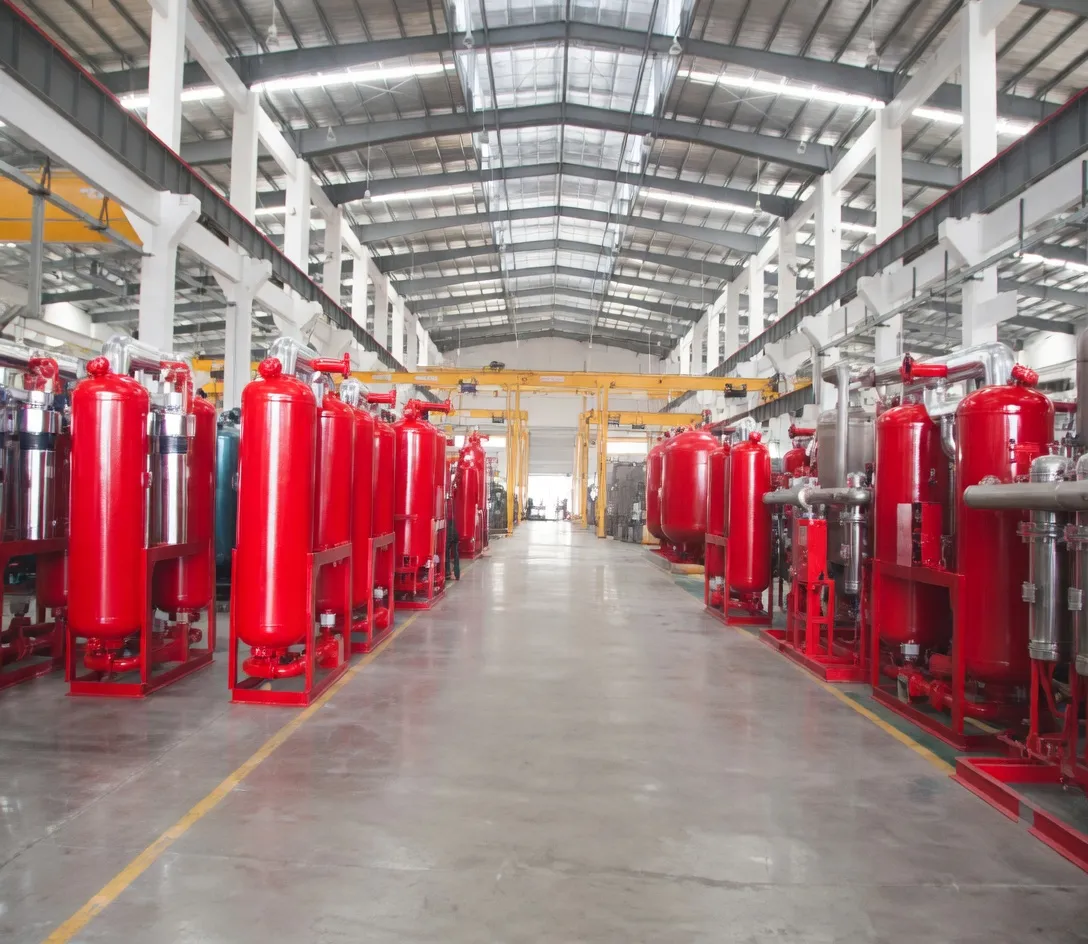
How Oil-Free Compressor Technology Works in a Flotation Context
The engineering principles behind guaranteed zero oil carry-over
Unlike conventional oil-flooded machines, a true oil-free compressor eliminates lubricants from the compression chamber entirely. Ever Power’s Series EF units use PTFE-coated dry screw rotors or high-precision scroll elements — materials with inherently low friction coefficients that operate without any lubricant in the airend. The compression element is physically isolated from the drive gear lubrication system by precision shaft seals and a pressurised barrier zone, ensuring that lubricants have no physical pathway into the compressed air stream under any operating condition. This is not a filtration strategy — it is an architectural guarantee.
For larger capacity applications — typically above 55 kW where dry screw technology becomes less economical — water-injected screw compressors offer a highly effective route to oil-free compression. A precisely metered flow of clean water into the rotor chamber provides both cooling and sealing functions without any hydrocarbon lubricant. The water-air mixture is separated by centrifugal separation downstream, and the delivered air contains no oil by design — achieving ISO 8573-1 Class 0 without requiring any activated carbon or coalescing filtration downstream.
This distinction matters enormously. Some suppliers position oil-injected compressors equipped with activated carbon filters as functionally equivalent to true oil-free machines. In practice, filtration elements degrade, saturate, and can fail during surge or high-temperature events — potentially releasing a slug of accumulated oil directly into the flotation circuit. A genuine oil-free air compressor carries no oil in the airend, so there is nothing to migrate to the process even under abnormal operating conditions. This is precisely why major UK mining groups now specify true Class 0 oil-free compressors in procurement standards for new or upgraded flotation installations.
⚙️ Dry Screw / PTFE Scroll
- Ideal for 7.5–45 kW flotation circuits
- Minimal moving parts, low maintenance burden
- No water separator or drain management required
- Compact footprint for space-constrained plant rooms
- Consistent air quality at all loads
💧 Water-Injected Screw
- Scalable from 55 kW to 250+ kW
- Single-stage compression for high energy efficiency
- Integrated water separator, cooler, and drain system
- Optimal for large concentrators and multi-cell banks
- Remote site packages available for UK mine locations
Technical Specifications — Ever Power EF Series Oil-Free Compressors for Flotation
All models ISO 8573-1 Class 0 certified · CE marked · 400V/50Hz UK power standard
S = Dry Screw/Scroll; W = Water-Injected Screw. FAD measured at ISO 1217 standard conditions. Custom voltage, pressure, and flow configurations available on request. VSD option available on all models 15 kW and above.
Why UK Mining Engineers Specify Ever Power
Seven Technical Advantages That Define Our Oil-Free Flotation Compressors
Guaranteed ISO 8573-1 Class 0 Purity
Class 0 certification means zero detectable oil in the delivered air stream — verified by third-party testing, not manufacturer declaration. No filter to maintain, no degradation path, no contamination risk from day one to end of service life.
Measurable Recovery Rate Improvement
Plants switching from oiled to oil-free typically record 1–3 percentage point copper recovery improvements and 1.5–2.5% galena recovery gains. At current LME metal prices, these gains translate to substantial annual revenue increases on medium and large UK operations.
Reduced Reagent Consumption
When oil is no longer competing with collectors for mineral surface sites, the required xanthate and frother dosage decreases. UK flotation plants typically report 8–15% reagent cost reductions post-conversion — a direct and immediate operating cost benefit.
Lower Maintenance Overhead
No oil changes, no coalescing filter replacements, no oil condensate disposal. EF Series compressors are designed for 12,000–16,000 hours between major airend services in continuous mining operations — reducing planned downtime and maintenance labour costs significantly.
Environmental Compliance Support
No oil waste streams simplifies site environmental management. Supports ISO 14001 certification, Environment Agency BAT documentation, SEPA compliance in Scotland, and ESG reporting requirements increasingly demanded by institutional mining investors and project finance providers.
VSD-Driven Energy Savings
Integrated Variable Speed Drive control matches compressor output precisely to flotation cell demand, eliminating unloaded running losses. Average energy savings of 22–35% versus fixed-speed units — critical for UK operations exposed to electricity costs above 20p/kWh in 2024–2025.
Built for Harsh Mining Environments
EF Series units are rated for -10°C to +45°C ambient operation, with IP54 electrical enclosures, stainless steel air passages, and corrosion-resistant coatings suited to the wet, chemically active atmospheres encountered in UK concentrators and coal preparation plants.
Four Core Flotation Applications — Matched to the Right Oil-Free Compressor
Each mineral type presents distinct demands on compressed air specification, pressure, and flow stability
Customer Case Study
How a Welsh Lead-Zinc Concentrator Recovered £180,000 in Annual Revenue
What UK Mining Professionals Say
Verified Feedback from Plant Engineers and Operations Managers
“We had been chasing a grade problem for almost a year. After fitting the Ever Power oil-free units, rougher concentrate grade improved within the first week. The commissioning support was excellent — they clearly understand flotation metallurgy, not just compressor engineering. That dual knowledge made a genuine difference to how quickly we saw results.”
“The custom pressure regulation system Ever Power designed for our three-stage lead-zinc circuit was exactly what we needed — off-the-shelf compressors couldn’t handle the demand variability between rougher and cleaner stages. We got bespoke engineering at a competitive price, and the lead time from order to commissioning was much shorter than we had budgeted for.”
“Our coal prep plant in South Wales had struggled with inconsistent froth stability for years. Switching to Class 0 oil-free air resolved it almost completely. Product moisture improved, electricity costs dropped after the VSD units were installed, and the ROI came in faster than our CAPEX presentation had projected. I’d recommend it to any coal flotation operation.”
Manufacturing & Custom Engineering Capability
Every Flotation Circuit Is Different. Your Oil-Free Compressor System Should Be Too.
Ever Power’s in-house engineering team provides complete custom design, manufacturing, and on-site integration services for oil-free compressed air systems across the United Kingdom. From a single replacement unit to a full multi-compressor system with DCS integration, our custom service capability covers the complete engineering scope — with no subcontracting of the core design work.
Custom Flow & Pressure Design
We engineer systems around your specific flotation cell configuration — manifold design, pressure zoning for multi-stage circuits, and flow balancing for complex rougher-scavenger-cleaner layouts. No standard catalogue can substitute for this.
UK Electrical Integration
All systems supplied pre-wired to BS 7671 / IEC 60364 standards, CE marked, and configured for 400V / 50Hz UK supply. Control panels can integrate with existing DCS, SCADA, or standalone PLC control on request.
Bespoke Enclosure Design
Custom acoustic enclosures, weatherproof outdoor skid packages, and containerised remote-site configurations. ATEX-rated designs available for classified areas. All fabrication to your site’s environmental and planning permit conditions.
Retrofit & Upgrade Projects
Existing compressor rooms can frequently be retrofitted during scheduled shutdowns. We provide as-built drawing review, pipework adaptation design, and full on-site commissioning as part of our standard retrofit service offering.
Ready to specify an oil-free compressor system for your flotation circuit? Our application engineers are available for no-obligation technical consultations and detailed ROI modelling.
Oil-Free Compressed Air for UK Mineral Processing: A Growing Industry Need
Understanding the British mining landscape and where oil-free compressors fit in 2024–2025
The United Kingdom is experiencing a significant and well-publicised revival in domestic mineral extraction ambition. Projects ranging from hard rock lithium at Trelavour in Cornwall and the Cornish Lithium brine programme, to copper and polymetallic exploration across North Wales, Cumbria, and the Scottish Highlands, are collectively expanding the market for specialist mineral processing equipment. The British Government’s Critical Minerals Refresh (2023) and ongoing support through the Faraday Institution and Future Minerals Fund have brought serious investment attention to UK mining projects that would have been considered marginal a decade ago. For virtually all of these new and emerging operations, flotation is expected to be a central separation step.
British mineral processing engineers are among the most technically demanding specifiers globally — shaped by a tradition of precision metallurgical practice, rigorous environmental oversight from the Environment Agency, SEPA, and Natural Resources Wales, and procurement standards from major mining houses that reflect hard lessons learned in global operations. Supplying an oil-free air compressor to a UK flotation plant is not simply a product transaction — it is an engineering partnership that must meet specific mechanical, electrical, acoustic, and certification requirements. Ever Power’s UK-experienced technical sales and application engineering teams are structured to support this, from initial site assessment through to commissioning documentation and long-term service agreements.
Copper, tin, and lithium projects — multiple flotation operations at feasibility or early construction stage
Lead-zinc and copper concentrators — selective flotation with highest air purity requirements
Gold and polymetallic projects — remote-site containerised packages and full engineered systems
Coal preparation and froth flotation — Class 0 air mandated in BAT permit conditions
Legacy coal prep upgrade projects and emerging critical minerals processing — retrofit packages available
अक्सर पूछे जाने वाले प्रश्नों
Questions UK Mining Engineers Ask About Oil-Free Flotation Compressors
Take the Next Step
Ready to Improve Flotation Recovery at Your UK Mining Operation?
Whether you are specifying a new flotation installation or troubleshooting declining recovery in an existing circuit, Ever Power’s application engineering team can help. Contact us for a technical proposal, detailed ROI analysis, and no-obligation site consultation.
Ever Power Industrial Systems · Specialists in Oil-Free Compressed Air for Mineral Processing · edit by gzl