 The safe movement of millions of passengers across Britain’s rail network depends on systems that most travellers never see or think about. Behind every smooth door slide, every controlled brake application, and every seamless pantograph lift on a high-speed train lies a critical piece of engineering: the oil-free screw air compressor. Compressed air is the lifeblood of modern rolling stock — it powers pneumatic brake circuits, actuates door mechanisms, raises and lowers current collectors, and in many configurations supports air spring suspension systems. Any contamination introduced by lubricating oil entering these circuits does not simply reduce system efficiency; it degrades brake pad friction coefficients, clogs valve seats, and in worst-case scenarios directly extends braking distances in ways that no safety-critical system can tolerate. Railway operators across the United Kingdom — from Network Rail’s managed infrastructure to Transport for London’s dense urban metro services — are increasingly mandating 100% oil-free compressed air as a baseline requirement for new rolling stock procurement contracts.
The shift to oil-free screw technology, now aligned with EN 15611 certification standards and deployed across China’s Fuxing CR400 high-speed fleet, represents the most meaningful advancement in railway pneumatic reliability in a generation. Ever Power has dedicated over eighteen years to engineering oil-free screw air compressors specifically for the demanding duty cycles of rail transit — environments where ambient temperatures swing from sub-zero northern winters to summer peaks, where vibration and shock loads are relentless, and where a compressor fault during revenue service is operationally unacceptable. Our rail-grade compressors are built to perform across their full design life without compromising the purity of the air stream they deliver, making them the trusted choice for train builders, rolling stock maintainers, and operators across the UK and Europe.
📧 Get a Quote — Oil-Free Rail Compressor
Response within 24 hours · UK enquiries welcome · Custom specifications accepted
How an Oil-Free Screw Air Compressor Works in Rail Applications
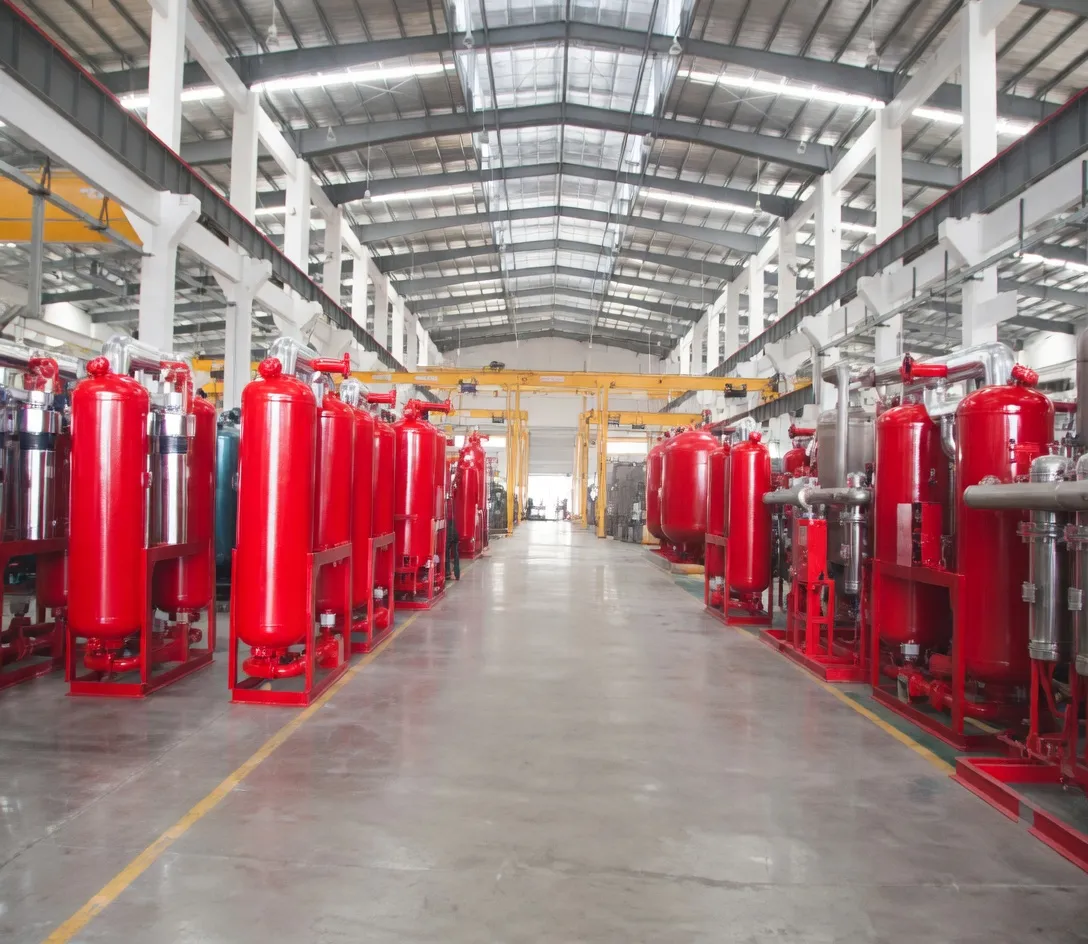
An oil-free screw air compressor operates through the precisely timed meshing of two helical rotors — a male and a female — machined to micron-level tolerances and rotating in opposite directions within a close-clearance casing. Unlike oil-flooded designs, the rotor profiles maintain a geometric sealing gap without any lubricant entering the compression chamber whatsoever. Timing gears housed in a completely separate, lubricated compartment synchronise rotor speeds while being physically isolated from the air path by labyrinth seals and dedicated drainage channels. Air drawn through the inlet valve is progressively compressed as the rotor cavity volume decreases along the rotor axis, and is discharged at pressures typically between 8 and 13 bar — the range most relevant to railway pneumatic systems. The whole process is mechanical, repeatable, and entirely free of the oil mist carry-over that makes conventional lubricated compressors unsuitable for life-critical rail applications.
Two-stage configurations are standard in heavy-duty rail variants. An intercooler — air-to-air or air-to-water type — reduces the temperature of compressed air between stages before it enters the high-pressure rotor set. This thermal management dramatically cuts specific power consumption and extends rotor coating service life. The rotors themselves are typically coated with PTFE-based or food-grade epoxy composite materials that resist wear under dry-running conditions and maintain compression efficiency over tens of thousands of operating hours without degrading the air purity delivered downstream.
At the outlet, a precision cyclone separator followed by coalescing filtration ensures the compressed air delivered to the brake system meets or exceeds ISO 8573-1 Class 0 — meaning no detectable oil content whatsoever. For rail environments where brake pad contamination is a life-safety issue, this zero-oil guarantee is not merely a performance advantage; it is an engineering non-negotiable. Every Ever Power rail compressor is factory-tested to confirm Class 0 output before a single unit leaves the production line, with test certificates supplied as part of the standard documentation package.
Technical Parameters — Ever Power Rail-Grade Oil-Free Screw Compressor
Why UK Rail Operators Choose Our Oil-Free Screw Air Compressors
Brake System Integrity
Oil contamination on brake pad friction surfaces reduces stopping effectiveness by up to 35% — a figure that translates directly into extended stopping distances at 300 km/h. Our oil-free screw air compressors eliminate this risk entirely, delivering ISO 8573-1 Class 0 air that keeps brake systems performing at their designed friction coefficients throughout the full service life of the vehicle. When UK rail safety auditors review a fleet’s pneumatic system, Class 0 certification is the benchmark that definitively closes the conversation on oil contamination concerns and removes it from the risk register altogether.
EN 15611 & EN 61373 Compliance
Selling or operating rolling stock in the UK, Europe, or markets referencing UIC standards requires demonstrable compressor compliance with EN 15611. Our entire rail compressor range is tested and certified to this standard, including vibration and shock testing per EN 61373 Category 1B — the most demanding classification for underframe-mounted equipment. Documentation packages covering CE marking, type test reports, and material traceability certificates are supplied as standard with every rail order, meaningfully simplifying the vehicle type approval process across GB mainline, HS2, and European interoperable corridors alike.
Lower Energy, Longer Range
Railway vehicles run on tight energy budgets — particularly battery-electric and hydrogen fuel cell trains entering UK service on non-electrified rural routes in the Midlands and North. Our two-stage oil-free screw design achieves specific power figures 12–18% lower than single-stage equivalents at the same discharge pressure, translating into meaningful range extension on traction-limited vehicles. Variable speed drive (VSD) variants match compressor output precisely to real-time air demand, eliminating unloaded running losses that account for up to 25% of wasted energy in fixed-speed pneumatic installations. Over a 35-year rolling stock life, these efficiency gains deliver a total cost of ownership reduction that substantially offsets the higher initial capital cost of the oil-free platform.
Where Oil-Free Screw Compressors Operate in UK Rail & Metro Systems
In high-speed and commuter rail environments across Britain — from Thameslink and Avanti West Coast to the Elizabeth Line and CrossCountry — compressed air simultaneously serves multiple critical subsystems on every vehicle. Understanding which systems depend on clean, oil-free compressed air helps engineers and procurement teams specify the right compressor configuration, and fully appreciate the consequences of specifying the wrong one. The four primary use cases below represent the areas where an oil-free screw air compressor provides not just a performance improvement but a safety-critical function.
🚂 Pneumatic Brake Circuits
The brake pipe, brake cylinders, and emergency brake reservoir on every vehicle must be continuously supplied with dry, oil-free compressed air at 5–9 bar. The oil-free screw air compressor replenishes the main reservoir between brake applications and compensates for leakage across the full train consist. Even trace oil carry-over accelerates brake valve seat deterioration, resulting in pressure loss faults that withdraw vehicles from service and trigger RSSB incident reporting obligations — neither outcome being acceptable in a franchise performance environment.
🚪 Automated Door Systems
Every passenger-facing sliding plug door on a modern EMU or DMU relies on a precise pneumatic actuation sequence — lock, slide, cushion — timed to sub-second tolerances to meet platform dwell requirements. Oil contamination clogs the micro-orifices in door control valves, causing erratic operation, obstruction detection failures, and door lock faults that trigger safety-critical event reports. Oil-free air keeps door system reliability at the 99.97%+ platform compliance level needed on busy commuter routes entering London Bridge, Manchester Piccadilly, or Edinburgh Waverley.
⚡ Pantograph Raise & Lower
Electric multiple units traversing 25 kV AC overhead lines must raise and lock their pantographs within a defined pressure-time envelope to ensure safe current collection contact. The pneumatic cylinder that raises the pantograph demands a high-volume, rapid air pulse — typically from a dedicated reservoir — followed by controlled lowering at end-of-journey or in response to automatic protection system commands. Our oil-free compressor refills this reservoir without introducing hydrocarbons that would compromise the dielectric properties of associated high-voltage insulation components.
🌫 Air Spring Suspension
On metro vehicles operating London Underground S-Stock and on newer intercity coaches, secondary air spring suspension continuously adjusts to maintain a level vehicle floor regardless of passenger loading. The levelling valve cycles many times per journey, drawing small but frequent volumes of compressed air. Over time, oil carry-over builds a varnish layer on levelling valve internals, restricting flow, causing ride height deviations that worsen passenger comfort scores and increase bogie wear rates on tightly curved urban track sections.
Témoignage client
Real-world results from the field — UK commuter rail fleet retrofit
Case Study · United Kingdom · Commuter Rail Operator
Northern Rail Class 331 Fleet — Transitioning to Oil-Free Pneumatics
 A UK-based rolling stock maintainer operating 31 Class 331 Civity electric multiple units on Northern franchise routes approached Ever Power in early 2023 following a series of brake valve failures traced to oil carry-over from original oil-lubricated compressors. The fleet, deployed across the Manchester–Leeds–York corridor, was experiencing an average of 4.2 compressor-related delays per month per ten vehicles — generating penalty charges under the franchise performance regime and attracting scrutiny from the Rail Safety and Standards Board.
Ever Power’s application engineers conducted a two-week on-site survey, measuring actual air consumption across brake, door, and suspension circuits under real traffic conditions. The resulting specification identified an oil-free two-stage screw compressor delivering 280 L/min FAD at 10 bar, configured for 110 VDC train bus supply and packaged to fit the existing underframe envelope without structural modification. Units were supplied with full EN 15611 documentation, wiring harnesses pre-terminated to the vehicle’s existing connector pattern, and a five-year maintenance agreement covering rotor coating inspection and timing gear service.
Fourteen months after fleet-wide installation, compressor-related delays had dropped to 0.3 events per month per ten vehicles — a 93% reduction. Brake valve replacement costs fell by £47,000 across the fleet in the first year alone. The maintainer subsequently extended the Ever Power supply agreement to cover retrofit programmes on two additional Northern fleet classes, and the project was cited in a 2024 RSSB engineering workshop as a reference implementation of oil-free pneumatic technology in UK commuter rail.
93%
Delay Reduction
£47k
Year-1 Valve Saving
14 mo
To Full Fleet Retrofit
31
Class 331 Units
What Our Rail Clients Say
★★★★★
“We’d been fighting oil contamination on our brake valves for two years. After fitting the Ever Power oil-free units on our pilot train, we ran 90,000 km without a single brake valve replacement. The performance data speaks for itself — we’ve now committed to fleet-wide conversion.”
— Fleet Engineering Director, UK Commuter Rail Operator
★★★★★
“The EN 15611 test documentation arrived complete and fully traceable on day one. That saved us roughly six weeks in our vehicle type approval process across the German and UK markets simultaneously. Rarely do suppliers reach this level of technical preparedness.”
— Chief Procurement Officer, European Rolling Stock OEM
★★★★★
“We specified oil-free screw compressors for our new metro fleet across 48 vehicles. Ever Power delivered on schedule, provided commissioning support on-site, and their condition monitoring integration with our TCMS cut first-year maintenance costs by 28% compared with our previous supplier. A genuinely differentiated product.”
— Maintenance Director, Middle East Metro Authority
Manufacturing & Customisation Capability
No two rolling stock applications are identical, and off-the-shelf compressor specifications rarely align with the precise dimensional envelopes, electrical supply variants, and documentation packages required by rail vehicle manufacturers and maintainers. Ever Power’s manufacturing facility spans 18,000 m² and houses a dedicated rail product division equipped with CNC machining centres, rotor profile grinding machines, leak-test benches calibrated to EN 15611 annexe requirements, and a full climate chamber capable of simulating -40°C to +70°C operating conditions. Every compressor destined for rail service undergoes a 72-hour loaded factory acceptance test before shipment — not a brief bench check, but a full-duty simulation that confirms performance under realistic thermal and pressure cycling conditions.
Our customisation service covers: discharge pressure and flow rate optimisation matched to your specific vehicle air demand model; electrical interface design to match train bus voltage, connector standard (EN 45545, IP-rated Deutsch or Harting), and protection relay schema; mechanical packaging to fit within defined underframe or cab-end equipment bays — including bespoke mounting brackets fabricated to your CAD drawings; and noise attenuation enclosures for vehicles where acoustic comfort is measured against EN ISO 3382 interior standards. We can also supply oil-free screw air compressors with integrated air dryers, pre-set relief valves, and colour-coded pipework assemblies ready for plug-in installation, reducing on-train assembly time by up to 60% compared with loose component supply. This is not a catalogue company adding a few paint colour options — it is a genuine engineered-to-order capability backed by a full design and validation team.
18,000 m²
Manufacturing Floor
72 Hours
Factory Acceptance Test
50+
Rail Fleet References
18 Years
Rail Compressor Expertise
UK enquiries responded to within one working day · Custom specifications accepted · Volume discounts available
Supplying Oil-Free Compressors to the UK Rail Industry
The United Kingdom’s rail sector is undergoing its most significant rolling stock renewal programme in decades. HS2 Phase One construction is advancing towards passenger service, bringing a new generation of high-speed vehicles requiring onboard air systems designed to the latest European Technical Specifications for Interoperability (TSI) — including the LOC&PAS TSI, which directly references EN 15611 for compressor performance. Meanwhile, the ongoing replacement of Mk3 coaching stock across long-distance operators, the expansion of battery-electric and bi-mode traction on non-electrified rural lines across Wales, Northern England, and Scotland, and the planned Piccadilly Line rolling stock upgrade for Transport for London all represent active procurement opportunities where oil-free screw air compressor technology sits at the centre of the vehicle specification.
Ever Power supports UK-based rolling stock builders, leasing companies (ROSCOs), and train operating companies with a dedicated pre-sales engineering team that understands the British railway’s specific regulatory environment — from RSSB Engineering Safety Management framework requirements to the TPWS and ATP system interfaces that affect pneumatic circuit design on safety-critical vehicles. We engage directly with UK-registered engineering consultancies and ROSCO technical teams, issue RFQ responses to standard Network Rail procurement templates, and provide compressor samples for independent UK laboratory testing prior to order placement.
For operators on the West Coast Main Line, East Coast Main Line, Transpennine routes, or Scotland’s electrified commuter networks, we hold stock of the most common rail compressor variants for rapid dispatch from our European logistics hub. Custom units typically run 12–16 weeks from approved engineering specification — a lead time we actively manage through early design engagement and modular architecture that allows standardised subassemblies to be committed to production before the final vehicle-specific integration details are confirmed. Talk to our team early in your programme and we can give you the design flexibility you need without the timeline risk.
Foire aux questions
Optimised for conversational and voice search · FAQPage Schema above
Ever Power · Oil-Free Screw Air Compressor for High-Speed Rail & Metro Braking Systems · edit by gzl