
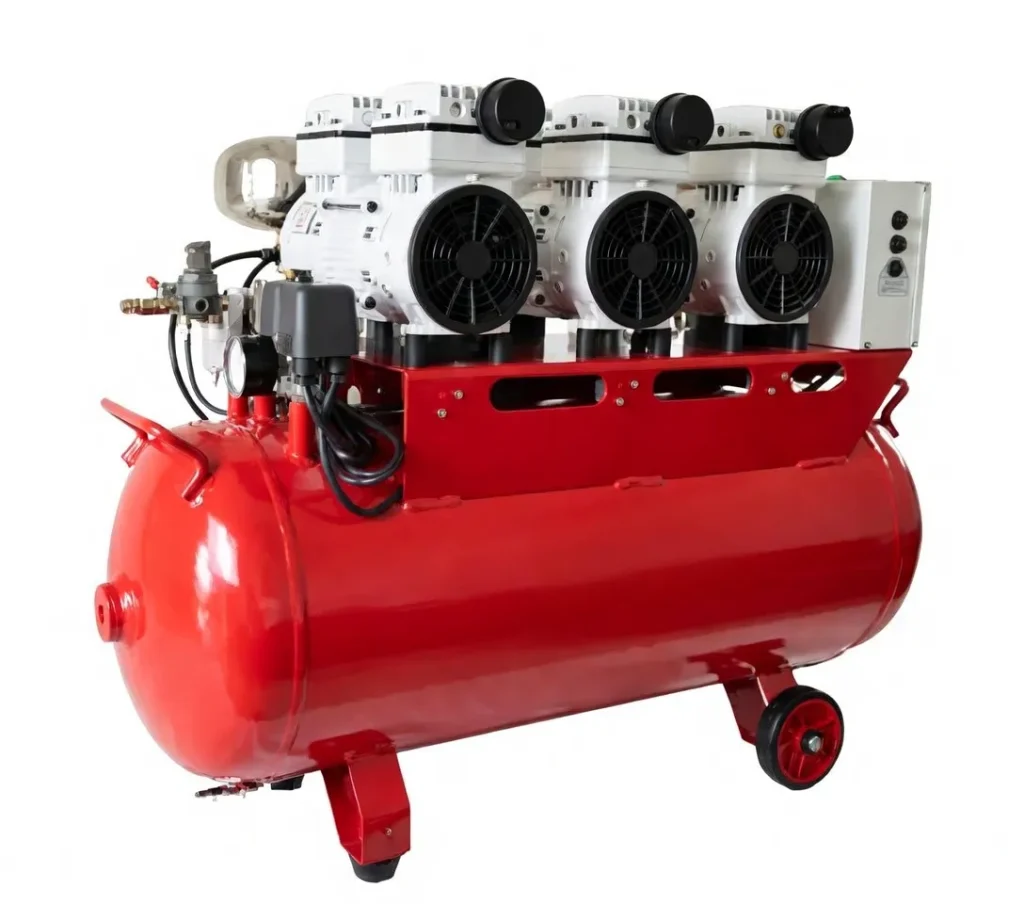
 In the controlled, sterile environment of an operating theatre or intensive care unit, the quality of compressed air is not merely a technical specification — it is a matter of life and death. A medical air compressor for operating rooms and ICU wards forms the silent backbone of modern clinical care across the United Kingdom, delivering clean, dry, contamination-free compressed air to surgical instruments, patient ventilators, anaesthesia delivery systems, and a host of critical life-support devices running around the clock. Every breath a ventilated patient takes in your ICU, every precise incision supported by a pneumatic surgical drill in the theatre, and every pressure-sensitive monitor alarm protecting patient safety depends on a stable, uninterrupted supply of pharmaceutically pure compressed air meeting the most stringent clinical standards available anywhere in the world.
Unlike standard compressed air technology used across manufacturing and construction, a medical air compressor deployed in a UK hospital environment must comply with an entirely separate regulatory regime. HTM 02-01 (Health Technical Memorandum 02-01), published by NHS England and NHS Improvement, governs every aspect of medical gas pipeline system design, installation, validation, and maintenance — from the oil-free compressor plant itself to the terminal units at each patient bedhead. ISO 7396-1 and EN 737-3 sit alongside this as international benchmarks, and all three must be satisfied before any medical air system can be signed off by the authorised engineer (AE) and authorised person (AP) for medical gases under UK law. The Care Quality Commission applies these same standards when assessing private hospital registration and ongoing compliance in England.
Ever Power has spent more than two decades designing and manufacturing oil-free medical air compressors that meet and consistently exceed these demanding requirements. Whether you are equipping a new NHS surgical suite in London, upgrading a legacy ICU compressed air plant in Manchester, procuring a multi-theatre hospital development in Birmingham, or installing a private specialist clinic facility in Edinburgh, Ever Power’s custom-engineered medical air compression systems deliver the purity, reliability, and fully documented performance your clinical teams and patients rely on every single day.
📩 Get a Free Quote — Talk to Our Medical Air Engineers
Response within 24 hours · UK Technical Team Available · Free HTM 02-01 Gap Assessment
Why UK Healthcare Facilities Cannot Use Standard Industrial Compressors
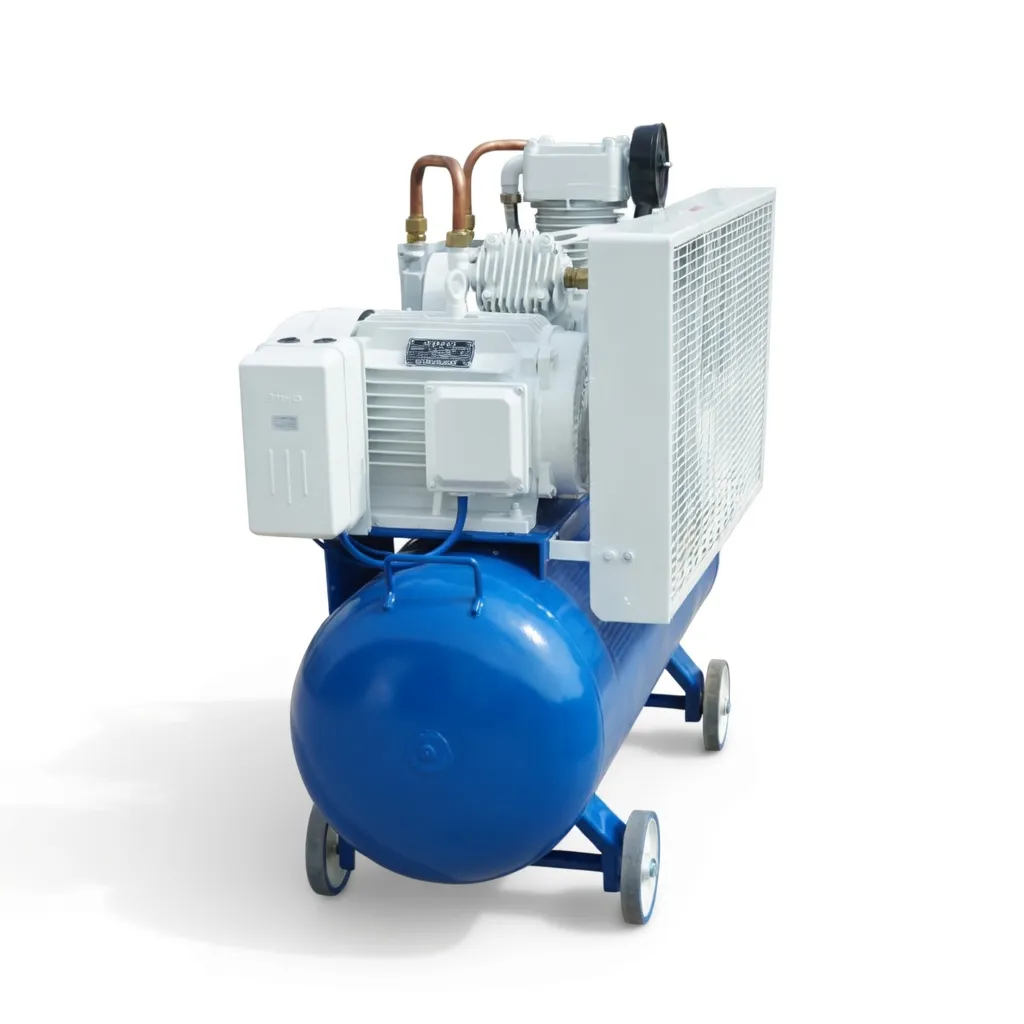 The compressed air distributed through a hospital’s medical gas pipeline is legally classified as a pharmaceutical medicinal product under UK regulations — which places its production under precisely the same quality and safety scrutiny as medicines manufactured for patient administration. This classification is not a technicality confined to hospital procurement documents. It has direct, practical consequences for the type of oil-free air compressor technology that can lawfully supply operating theatres, intensive care units, neonatal wards, and recovery areas across England, Scotland, Wales, and Northern Ireland.
Standard industrial air compressors — regardless of their brand reputation, output pressure, or build quality — are fundamentally incapable of meeting the medical air compressor standard required by HTM 02-01. Their lubricated compression mechanisms continuously introduce oil aerosols, hydrocarbon vapours, water moisture, and sub-micron particulate contamination into the air stream. When that same air is delivered through a mechanical ventilator to a critically ill patient in an ICU, or used as the carrier gas in an anaesthesia machine during open-heart surgery, the clinical consequences of oil contamination can include acute airway inflammation, alveolar damage, anaesthetic circuit contamination, and catastrophic failure of precision medical instrumentation. These are not theoretical risks — they are the reason UK healthcare regulators maintain non-negotiable purity standards.
A purpose-built oil-free medical air compressor for hospital use addresses these risks at the point of generation. PTFE (polytetrafluoroethylene) piston rings, precision scroll geometry, or oil-free rotary screw compression technology eliminates all contact between lubricating media and the compressed air pathway. The result is a verified ISO 8573-1 Class 0 air supply — the highest purity classification under the international standard — confirming zero detectable oil content at every point of use, from the theatre scrub sink to the ICU bedhead terminal unit.
Reliability engineering is equally critical. HTM 02-01 mandates a minimum N+1 redundancy configuration for all medical air plants — meaning at least one compressor unit beyond the calculated peak-demand requirement must remain available and ready for automatic duty-standby changeover at all times. A medical air compressor failure during a complex neurosurgical procedure or overnight ICU monitoring period is an event that UK healthcare estates teams and authorised engineers work to make structurally impossible through proper system design.
Key Advantages of Ever Power Oil-Free Medical Air Compressor Systems
ISO 8573-1 Class 0 Certified
Zero detectable oil content in the entire compressed air stream — the highest purity classification available — fully certified by accredited third-party laboratories for direct patient contact use.
HTM 02-01 Compliant Design
Every medical air compressor system is fully designed, built, and documented to HTM 02-01 specification — satisfying NHS Estates, CQC inspectors, and authorised engineers across England, Scotland, and Wales.
Ultra-Low Noise Operation
Precision acoustic enclosures and anti-vibration mountings maintain operational noise below 65 dB(A) — appropriate for plant rooms directly adjacent to clinical wards, operating suites, and recovery areas.
Intelligent Real-Time Monitoring
Integrated PLC control panels log pressure, dew point, temperature, run hours, and ISO air quality data continuously — with remote alarm output compatible with NHS BEMS and nurse call infrastructure.
N+1 Redundancy as Standard
Automatic duty-standby changeover eliminates any single point of failure. HTM 02-01 mandated redundancy is configured into every medical air plant we manufacture, not offered as an optional upgrade.
Variable Frequency Drive Option
VFD technology matches motor speed to real-time clinical demand, cutting energy consumption by up to 35% versus fixed-speed units — directly supporting NHS Net Zero Carbon commitments and Estates energy reduction targets.
End-to-End Custom Engineering
Each medical air compressor system is uniquely designed around your hospital’s flow demand calculations, plant room footprint, pressure requirements, and future expansion plans — from GP-surgery single-theatre builds to NHS major trauma centre replacements.
UK Technical Support Network
Dedicated UK application engineers provide pre-installation site surveys, Factory Acceptance Testing (FAT), on-site commissioning, and long-term planned maintenance contracts — supported by an 18-month parts and labour warranty.
Technical Specifications
Standard performance parameters for Ever Power medical air compressor systems — custom configurations available on request
| Parametri | Specification | Standard / Clinical Context |
|---|---|---|
| Air Purity Classification | ISO 8573-1 Luokka 0 | Zero oil content — pharmaceutical-grade air standard |
| Operating Pressure | 4 bar to 7 bar (field-adjustable) | HTM 02-01 medical gas pipeline design standard |
| Flow Capacity Range | 50 L/min to 5,000+ L/min | Single theatre to multi-block NHS trust |
| Noise Level | ≤65 dB(A) at 1 metre | Acoustic enclosure fitted as standard |
| Pressure Dew Point | -40°C to -70°C (PDP) | Refrigerant or adsorption dryer option |
| Power Supply | 230V/50Hz | 400V/3ph/50Hz | UK IET Wiring Regulations (BS 7671) compliant |
| Drive Type | Fixed speed or Variable Frequency Drive | VFD yields up to 35% energy saving |
| Cooling Method | Air-cooled or Water-cooled | Selected based on plant room conditions |
| Redundancy Configuration | N+1 (standard) | N+2 (available) | HTM 02-01 mandatory requirement |
| Compliance Standards | HTM 02-01 | ISO 7396-1 | EN 737-3 | NHS and CQC-registered private sector |
| Pressure Vessel Certification | UKCA / CE marked, PED compliant | Full materials traceability records supplied |
| Warranty | 18 months parts & labour | Extended planned maintenance contracts available |
Application Scenarios: Where Medical Air Compressors Serve UK Clinical Departments
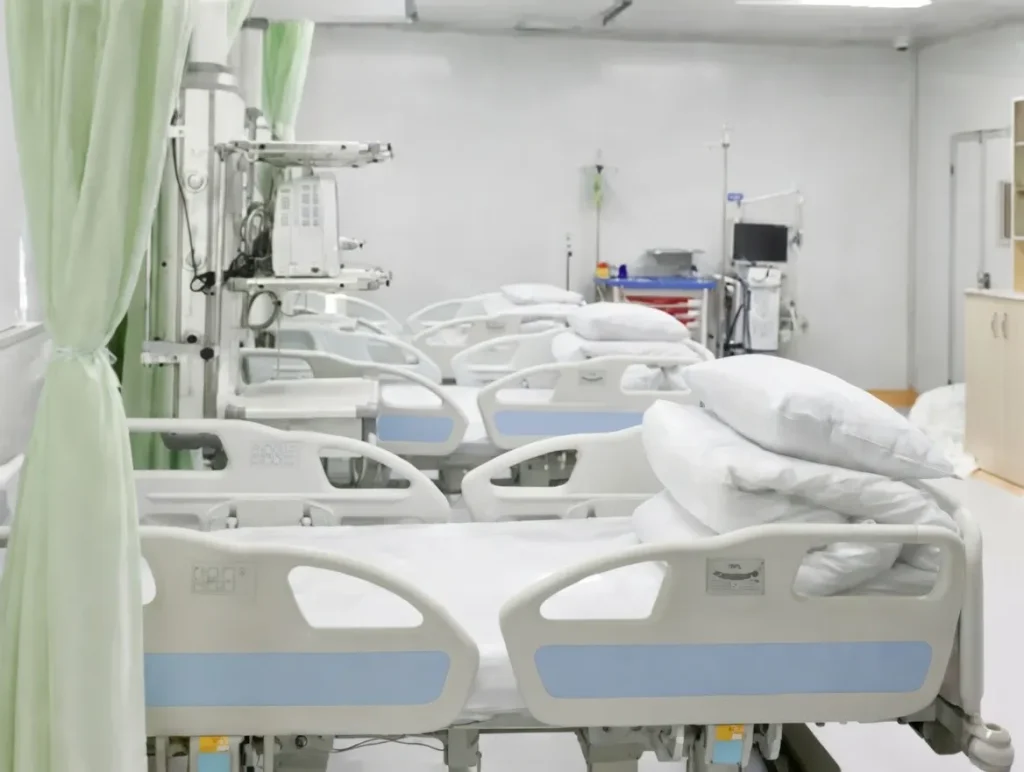
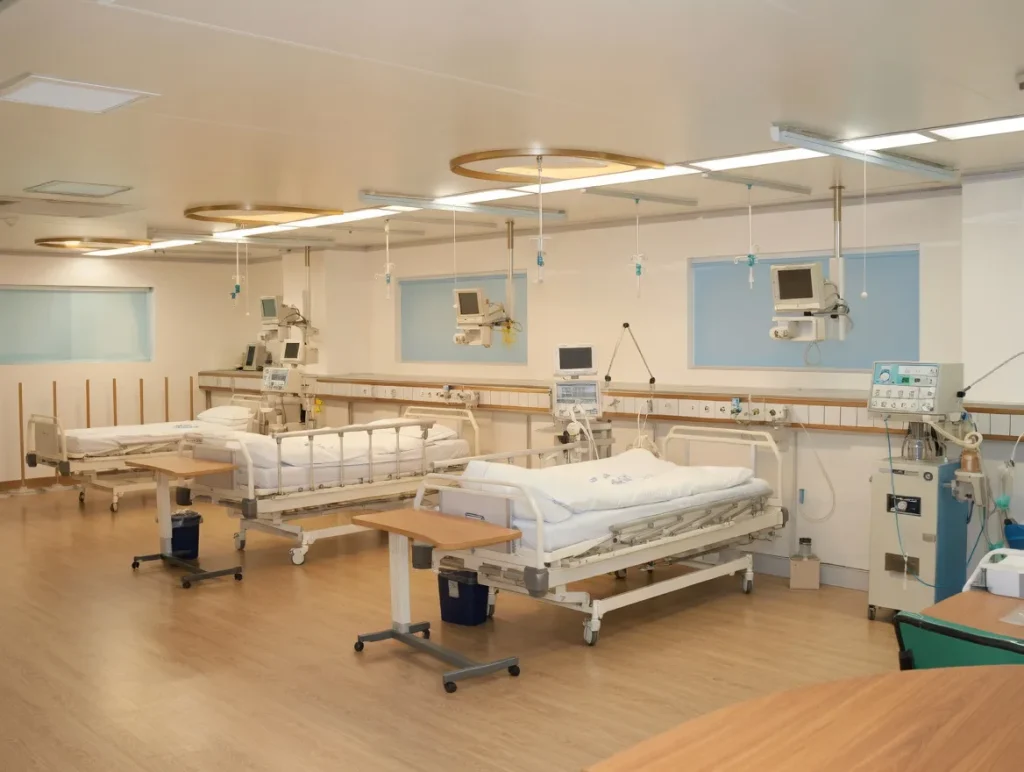
A well-engineered medical air compressor plant for an operating room or ICU does not serve a single department in isolation. The medical gas pipeline distributes pharmaceutically pure compressed air to every clinical area in the facility where patients require respiratory support, surgical procedures are performed, or precision medical devices depend on a clean pneumatic supply.
🔪 Operating Theatres
Powers pneumatic surgical drills, oscillating saws, high-speed orthopaedic handpieces, insufflators for laparoscopic procedures, and surgical suction equipment. Pressure stability at 4.5 bar is essential for consistent, repeatable tool performance throughout multi-hour surgical sessions. Clean, dry air also prevents instrument corrosion and premature wear.
🫁 ICU Ventilators and Gas Blenders
Mechanical ventilators, CPAP, and BiPAP systems in the ICU rely on accurately blended medical air and oxygen to deliver the prescribed FiO2 (fraction of inspired oxygen) to each patient. Flow and pressure instability in the medical air supply can directly compromise ventilator performance, making the oil-free air compressor one of the most clinically critical items of equipment in any UK intensive care facility.
💉 Anaesthesia Workstations
Medical air serves as a carrier and diluent gas within modern anaesthesia delivery machines, transporting volatile anaesthetic agents through the breathing circuit. Any oil contamination in the medical air supply would compromise the breathing circuit, damage gas analyser sensors, and potentially introduce harmful substances into the patient’s lungs during general anaesthesia — precisely why ISO Class 0 certification is non-negotiable.
👶 Neonatal Intensive Care Units
Premature and critically ill neonates receiving mechanical respiratory support represent the most vulnerable patient population in any UK hospital. The medical air delivered to neonatal incubators, high-flow nasal cannula devices, and infant ventilators must be absolutely free of contamination. Only an oil-free medical air compressor certified to ISO 8573-1 Class 0 provides the assurance level that neonatal clinical governance demands.
🚨 Emergency Departments and Resus
A&E resuscitation bays and major trauma units depend on immediate, always-on access to medical air for nebuliser therapy, bag-valve-mask ventilation support, rapid sequence intubation, and pneumatically powered resuscitation equipment. The N+1 redundancy standard built into every Ever Power medical air plant ensures that emergency departments are never left without supply, regardless of individual compressor maintenance or failure events.
🦷 Dental and Oral Surgery Suites
Hospital-based dental surgical units and specialist oral and maxillofacial operating theatres use medical compressed air for turbine handpieces, air-water syringes, and air abrasion devices. The ultra-dry supply from an adsorption dryer (dew point -70°C) prevents turbine bearing corrosion and aerosol contamination of the oral surgical field — critical for procedures where sterile technique has direct patient safety implications.
UK Regulatory Compliance: What NHS Trusts and Private Hospitals Need to Know
Procuring and installing a medical air compressor in a UK healthcare facility is a process governed by a specific and detailed regulatory structure that differs entirely from industrial compressed air procurement. HTM 02-01 (Part A and Part B) establishes the complete framework for medical gas pipeline system design, installation, validation, and post-installation maintenance across NHS facilities in England and Wales. In Scotland, the corresponding Scottish Health Technical Memorandum (SHTM 02-01) applies equivalent requirements. Across all UK regions, the authorised engineer (AE) for medical gases holds ultimate accountability for confirming that any installed medical air plant meets the technical requirements of the relevant HTM before clinical use commences.
Ever Power delivers a documentation package with every medical air compressor system that is specifically structured around HTM 02-01 sign-off requirements. This includes third-party ISO 8573-1 Class 0 air purity test certificates from UKAS-accredited laboratories, UKCA conformity declarations covering all pressure-containing components, materials traceability certificates for all wetted parts, factory acceptance test (FAT) records with calibrated instrument certificates, pre-commissioning flush and purge records, and a complete site-specific O&M manual formatted for the facility’s asset management system. Authorised persons for medical gases report that this documentation package consistently meets their validation requirements without requiring supplementary information requests — an outcome that materially shortens the time from installation to clinical go-live.
For private healthcare operators across London, Birmingham, Manchester, Leeds, Bristol, and Edinburgh — including registered facilities operated by Spire Healthcare, HCA Healthcare UK, Ramsay Health Care, and BMI Healthcare — Ever Power’s medical air systems satisfy the clinical governance standards assessed by the Care Quality Commission under the Health and Social Care Act 2008. Private hospital accreditation programmes, including CHKS and ACSA assessments, evaluate medical gas infrastructure as a core patient safety system. A properly documented, ISO Class 0 certified medical air compressor plant from a manufacturer with a proven UK installation track record is therefore not merely a procurement preference — it is a clinical governance requirement.
The UK’s commitment to NHS Net Zero Carbon targets by 2040 adds a further dimension to medical air compressor procurement. Ever Power’s VFD-equipped systems reduce electrical energy consumption at the compressed air plant by up to 35% compared with fixed-speed alternatives, and our system monitoring platform generates the consumption data reports that NHS Estates teams require for carbon reporting under the Greener NHS programme. Choosing an energy-efficient, custom-engineered oil-free medical air compressor is therefore both a patient safety decision and a sustainability investment for every UK hospital estates department.
Usein kysytyt kysymykset
Answers to the questions healthcare estates managers, procurement leads, and clinical engineers ask most often
What type of air compressor is required for a hospital operating room in the United Kingdom, and does it need to comply with HTM 02-01?
UK hospital operating rooms require dedicated oil-free medical air compressors that comply with HTM 02-01 (Health Technical Memorandum 02-01) and achieve a minimum ISO 8573-1 Class 0 purity rating for the compressed air supply. Standard industrial compressors — regardless of their output pressure or manufacturer — are not acceptable for medical gas pipeline systems, because they cannot reliably guarantee zero oil content in the delivered air stream. HTM 02-01 compliance is a legal requirement for all NHS trust facilities and is expected by the Care Quality Commission when assessing private hospital registration in England. Equivalent standards apply under SHTM 02-01 in Scotland. Ever Power’s medical air compressor systems are designed, built, and certified specifically to meet these requirements.
How much does a medical-grade oil-free air compressor typically cost for an ICU installation in England, and what factors affect the price of a hospital air compressor quote?
The price of a medical air compressor system for an ICU in England varies considerably based on several key factors: the number of compressor units required to achieve HTM 02-01 N+1 redundancy, total verified flow capacity at peak clinical demand, dryer type (refrigerant to -40°C dew point, or adsorption to -70°C), receiver vessel size and configuration, acoustic enclosure specification, and the complexity of the PLC control and monitoring system. For a typical ICU of 16 to 24 patient beds, equipment budgets generally range from £18,000 to £65,000 for the plant package alone, with installation, validation, and commissioning costs additional. Contact our engineers directly at [email protected] for a site-specific quotation based on your facility’s HTM 02-01 design brief and flow calculations.
Which UK standard specifically governs medical air compressors in NHS hospitals, and how does HTM 02-01 differ from the international ISO 7396-1 standard that suppliers often reference?
HTM 02-01 is the UK-specific Health Technical Memorandum that governs the complete lifecycle of medical gas pipeline systems — including the design, installation, commissioning, validation, and planned maintenance of medical air compressor plants — in NHS and CQC-registered private healthcare facilities in England and Wales. ISO 7396-1 is the international standard covering medical gas pipeline systems used globally. In UK practice, HTM 02-01 takes precedence and incorporates ISO 7396-1 requirements alongside additional UK-specific engineering and documentation obligations. Any supplier quoting ISO 7396-1 compliance alone, without specific HTM 02-01 design documentation, would not satisfy the sign-off requirements of an authorised engineer for medical gases operating under UK NHS regulations.
Where can I find a reliable and experienced supplier of oil-free medical air compressors for NHS hospitals across England, Scotland, and Wales who can provide full HTM documentation?
Ever Power supplies, installs, and commissions oil-free medical air compressors across all UK regions including England, Scotland, Wales, and Northern Ireland, serving both NHS trusts and CQC-registered private healthcare facilities. Our systems come with complete third-party ISO 8573-1 Class 0 test certification from UKAS-accredited laboratories, full HTM 02-01 documentation packages, and UKCA-marked pressure equipment certification. We provide pre-installation site surveys, factory acceptance testing, on-site commissioning alongside your AP for medical gases, and long-term planned maintenance contracts to support ongoing compliance. Contact our UK technical sales team at [email protected] for an initial consultation and site-specific proposal.
When should a UK hospital consider replacing or upgrading its existing medical air compressor plant, and what are the signs that the current system no longer meets HTM 02-01 requirements?
A hospital medical air compressor system should be evaluated for replacement when any of the following conditions are present: the installed plant is more than 15 years old and OEM spare parts availability is reducing; annual air quality testing records show oil content or particulate levels approaching or exceeding ISO 8573-1 Class 0 thresholds; the system does not provide the HTM 02-01-required N+1 redundancy in its current configuration; the control system lacks adequate remote monitoring and alarm output capability for integration with current BEMS; or a capital development project is adding clinical floor space that will increase medical air demand beyond the existing plant’s verified flow capacity. Ever Power offers free HTM 02-01 gap assessments for UK hospital estates teams considering a plant replacement or upgrade programme.
How does an oil-free scroll compressor inside a hospital medical gas pipeline system actually work, and why is this technology preferred over reciprocating piston compressors for UK clinical applications?
An oil-free scroll compressor uses two interleaved spiral-shaped elements — one fixed and one orbiting with an eccentric motion — to progressively compress air through a reducing volume without any contact between the two scroll surfaces. Because no metal-to-metal contact occurs in the compression chamber, no lubricating oil is required in the air pathway, producing intrinsically oil-free compressed air at the point of generation. Scroll compressors are preferred for UK hospital operating room and ICU applications primarily because they operate significantly more quietly than reciprocating piston types — typically 58 to 64 dB(A) compared with 72 to 80 dB(A) — produce minimal vibration suitable for mounting in plant rooms near clinical areas, and have substantially fewer moving parts than multi-cylinder piston designs, translating to lower maintenance frequency, higher mechanical reliability, and longer design life in continuous-duty medical air applications.
What is the fundamental difference between a medical air compressor and a standard industrial air compressor, and why is using an industrial unit in a UK NHS operating room a serious patient safety and regulatory issue?
The fundamental difference is the legal classification of the output and the certification required. A standard industrial air compressor produces compressed air for powering tools, manufacturing processes, and pneumatic systems where trace oil content, moisture, and particulate contamination are commercially acceptable. A medical air compressor produces compressed air legally classified as a pharmaceutical product under UK regulations — requiring ISO 8573-1 Class 0 independent certification, UKCA-marked pressure vessels, HTM 02-01-compliant system design, and the complete documentation trail required for NHS Estates and CQC sign-off. Using an industrial compressor to supply a medical gas pipeline system in an NHS or CQC-registered private hospital is a serious regulatory breach under the Health and Social Care Act 2008, a potential MHRA violation under pharmaceutical manufacturing regulations, and a direct patient safety risk that no UK healthcare organisation can accept.
Ever Power Medical Air Compressor Systems — UK Healthcare Specialists
Supplying NHS Trusts and CQC-Registered Private Hospitals across England, Scotland, Wales & Northern Ireland
HTM 02-01 · ISO 8573-1 Class 0 · ISO 7396-1 · UKCA / CE Certified · ISO 9001:2015 Manufacturer · edit by gzl
gzl:n muokkaama