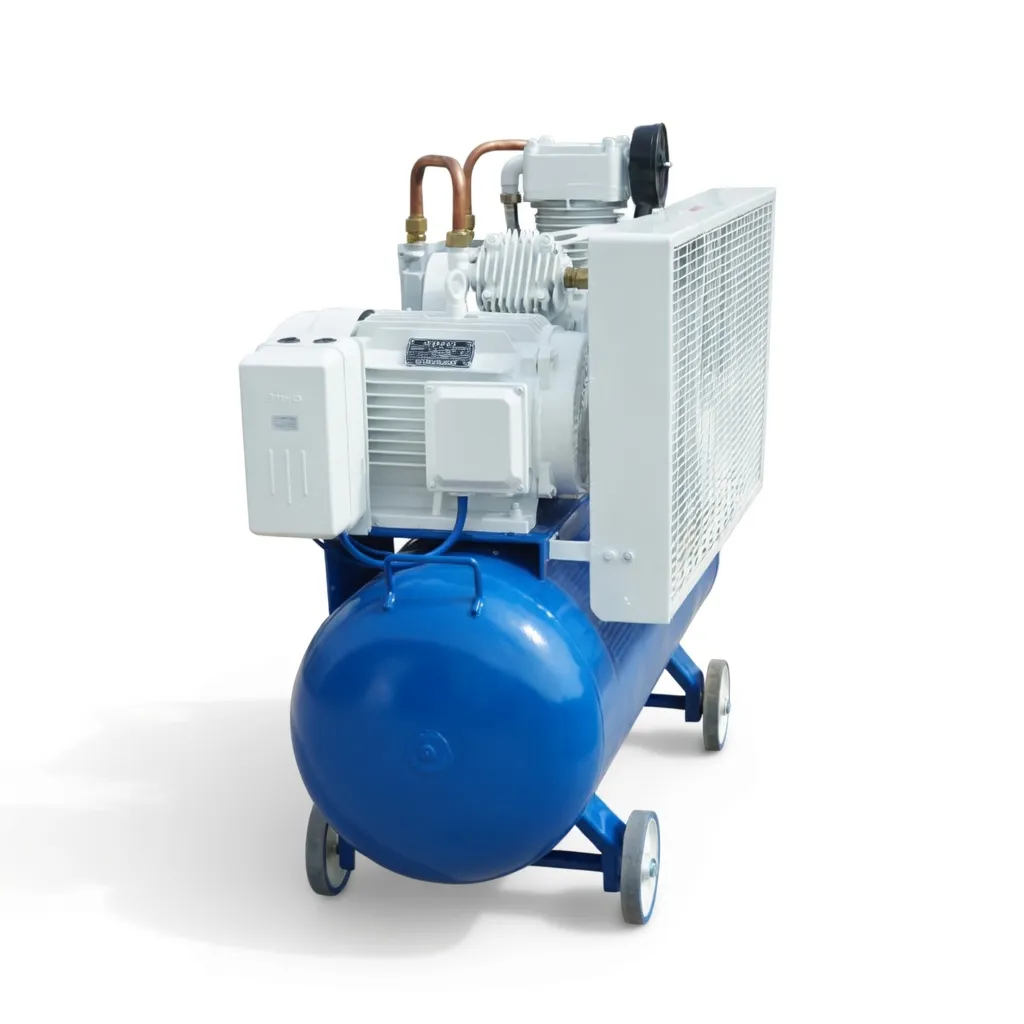
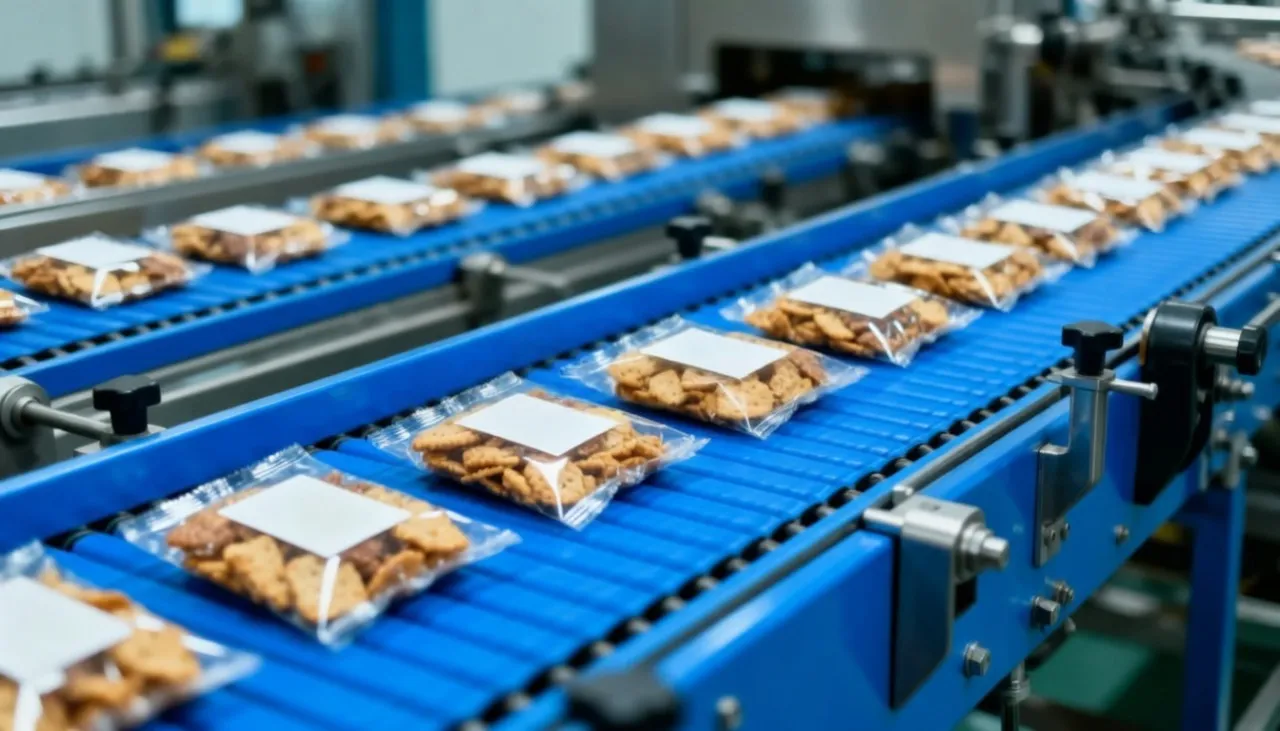
 Walk through any high-throughput food packaging hall in the UK — a crisps line in Harrogate, a ready-meal plant in Coventry, a premium coffee roastery in Bristol — and you will find compressed air threading through almost every step of the process. It opens pneumatic fill-heads, drives the servo valves on form-fill-seal machinery running at hundreds of packs per minute, conveys granulated sugar and ground coffee through sealed stainless pipework, purges headspace gases in modified atmosphere packaging (MAP), and actuates the vacuum pads on high-speed robotic palletisers. Compressed air is, in a very real sense, the nervous system of a modern food packaging line.
The problem is this: most of these applications deliver compressed air in direct or near-direct contact with either the product itself or the internal surface of the packaging. When a conventional lubricated screw compressor is used — even with a multi-stage oil-coalescing filter fitted downstream — residual oil aerosols as small as 0.008 micron pass through the filtration media, condense inside packaging, and introduce hydrocarbon contamination onto the product surface. A bag of salted cashews sealed with contaminated air will not fail immediately. It reaches the consumer’s home tasting faintly of mineral oil, generating a complaint, triggering a quality investigation, and potentially initiating a product recall that costs a UK food manufacturer far more than the capital value of every compressor on site.
The answer is not better filtration of a lubricated system — it is eliminating lubrication from the compression chamber entirely. An oil-free air compressor is the only compressed air source that can guarantee the food-grade air quality demanded by ISO 8573-1, the UK Food Standards Agency, and the BRC Global Standard for Food Safety. This guide covers technology selection, specifications, UK regulatory context, application-specific configurations, and the real-world economics of making the switch.
ISO 8573-1 Class 0 Certified · BRC Audit-Ready Documentation Included
 Speak to a UK application engineer within one working day — free system assessment, no obligation.
Clase 0
ISO 8573-1 Certified
18 +
Years Application Experience
500 +
Food Plants Supplied
48 h
Quote Turnaround
80%
Heat Energy Recoverable
The Three Oil-Free Technologies — and Which One Fits Your Food Packaging Line
Compressor Technology · Principle of Operation · Application Matching
Understanding the compression technology inside an oil-free air compressor matters far more in a food environment than it does in a general industrial setting, because each technology has a distinct duty-cycle profile, maintenance interval, and noise characteristic that must match your production schedule. Getting this wrong means either under-serving peak demand — causing pressure drops that disrupt MAP gas ratios or cause mis-seals on FFS machinery — or over-specifying and wasting capital budget that could have been invested elsewhere in the line.
🌀
Oil-Free Scroll Compressor
Two interleaving spiral rotors — one fixed, one orbiting — progressively compress air pockets without any lubricant entering the compression chamber. The scroll geometry generates very low vibration and genuinely quiet operation at or below 60 dB(A), making it the natural choice for laboratory-adjacent packaging environments, artisan producers who share space with open-plan offices, and any application where noise is a planning or workplace constraint.
100 – 900 L/min | 7 – 10 bar | Ideal for: boutique food producers, R&D lines, low-noise zones
⚙️
Oil-Free Rotary Screw Compressor
The industrial workhorse of large-scale food manufacturing. Precision-ground PTFE-composite coated rotors compress air at high continuous flow rates without lubrication. Two-stage versions with inter-stage cooling reduce the compression ratio per stage, lower outlet temperatures, and significantly extend rotor coating life compared with single-stage designs that run hotter during 24/7 food production duty cycles. This is the most common oil-free technology found in major snack food plants, ready-meal facilities, and large-scale bakeries across the UK.
800 – 10,000+ L/min | 7 – 13 bar | Ideal for: large production halls, MAP lines, conveying systems
🔄
Oil-Free Reciprocating Piston Compressor
PTFE-lined cylinders and self-lubricating piston rings enable oil-free operation in a compact, lower capital-cost package. Best suited to intermittent-duty applications — such as feeding a PSA nitrogen generator that operates in load/unload cycles — rather than continuous 24/7 service. Modern reciprocating oil-free units are surprisingly capable and well-proven in small contract-packing operations and food start-ups where capital is constrained but compliance standards are not.
100 – 500 L/min | 5 – 10 bar | Ideal for: nitrogen generator feed, small contract packers, intermittent duty
Ever Power Oil-Free Series — Technical Specifications for Food Packaging
All Models · CE Marked · PSSR 2000 · BRC Audit Pack Included
All models below are CE-marked, fully PSSR 2000 compliant, and supplied with a documentation package ready for BRC Global Standard, SQF, and FSSC 22000 audits. Free air delivery figures are measured at 20°C, 1 bar absolute, 0% relative humidity per ISO 1217.
| Model | Technology | Max Pressure | Envío aéreo gratuito | Motor Power | Noise | ISO 8573-1 | VSD |
|---|---|---|---|---|---|---|---|
| EP-OF-S07 | Oil-Free Scroll | 7 bar | 200 – 850 L/min | 2.2 – 11 kW | ≤ 60 dB(A) | Clase 0 | — |
| EP-OF-R10 | Tornillo rotativo sin aceite | 10 bar | 900 – 3,500 L/min | 15 – 55 kW | ≤ 68 dB(A) | Clase 0 | ✓ |
| EP-OF-R13 | Tornillo rotativo sin aceite | 13 bar | 1,600 – 6,200 L/min | 37 – 110 kW | ≤ 70 dB(A) | Clase 0 | ✓ |
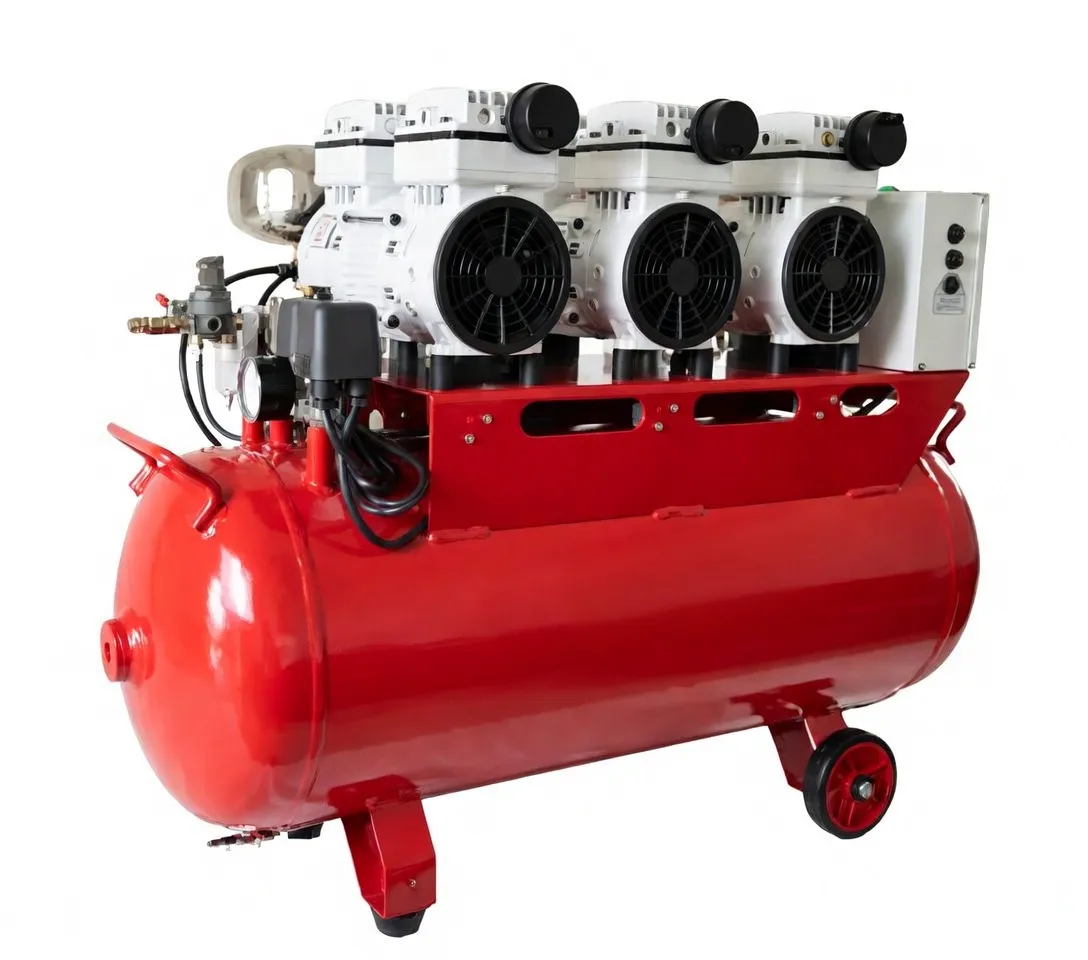
| EP-OF-T10 | Two-Stage Oil-Free Screw | 10 bar | 2,000 – 9,000 L/min | 55 – 160 kW | ≤ 72 dB(A) | Clase 0 | ✓ |
| EP-OF-P07 | Oil-Free Piston | 7 bar | 100 – 500 L/min | 0.75 – 5.5 kW | ≤ 65 dB(A) | Clase 1 | — |
* FAD measured per ISO 1217 | Custom voltage 230 V / 400 V / 440 V / 690 V available | ATEX Zone 21/22 on request | CE + UKCA marking standard
Why UK Food Manufacturers Choose Ever Power Over the Legacy Names
Seven Engineering & Operational Advantages
These are engineering realities validated across hundreds of UK food plant installations — not marketing claims. Each point addresses a specific failure mode or operational cost that plant engineers and quality managers consistently raise when reviewing their existing compressed air arrangements.
🔒
TÜV-Verified Class 0 — Not a Sales Claim
Third-party test certificates from ISO 17025-accredited laboratories confirm zero detectable oil in the output air stream at the conditions specified in ISO 8573-1. The certificate arrives with the unit, and an annual re-test programme is available as a managed service. There is no ambiguity, no reliance on filter manufacturer claims, and no gap for an auditor to probe.
⚡
VSD Standard from 15 kW — 25–40% Energy Saving
Every rotary screw model from 15 kW upwards ships with an integrated Variable Speed Drive inverter as standard equipment. Food packaging lines have highly variable air demand — a busy afternoon shift running all MAP lines simultaneously versus a quiet weekend with only labelling and coding running — and the VSD matches motor speed precisely to actual demand rather than running at full throttle and venting excess air through a blow-off valve. On a 37 kW installation running 6,500 hours per year, this typically saves between £7,000 and £18,000 in electricity costs annually at UK commercial tariffs.
🏗️
316L Stainless Internal Pipework Throughout
All internal airways, aftercooler tubes, and separator vessels in the EP-OF range are manufactured from 316L stainless steel rather than the painted carbon-steel housings standard in most industrial compressors. Internal corrosion generates iron oxide particulates that bypass oil filters entirely — they are a contamination vector that most food manufacturers have never quantified because they are not testing for it. Stainless construction eliminates this risk at source.
📋
BRC / FSSC 22000 Audit-Ready Documentation Pack
Each unit ships with a complete audit folder: CE declaration of conformity, PSSR 2000 conformance statement, ISO 8573-1 classification certificate with laboratory data, a recommended air quality testing schedule, approved laboratory contacts, and a pre-completed HACCP risk assessment template for compressed air as a potential contamination source. Your quality team can hand this folder directly to a BRC or FSSC auditor without drafting a single additional document.
🔧
8,000-Hour Service Intervals — Up to 2 Years Between Shutdowns
The advanced PTFE-composite rotor coating on the EP-OF screw range is rated for 8,000 operating hours between major services. That is nearly double the interval of older-generation oil-free designs that required major overhauls every 4,000–5,000 hours. For a food plant running three shifts, 6 days a week, this translates to close to two years of continuous operation before a planned production shutdown is required for compressor maintenance.
📡
Real-Time IoT Monitoring — Modbus, OPC-UA, SCADA Ready
Standard Modbus RTU/TCP communications and optional OPC-UA server functionality allow the oil-free air compressor to report pressure, outlet temperature, pressure dew point, power consumption, and cumulative run hours directly into your Building Management System or SCADA platform. Predictive maintenance alerts — triggered by bearing vibration, abnormal temperature rise, or filter differential pressure — are sent by email or SMS before a developing fault escalates to an unplanned stoppage on the food line.
🇬🇧
UK Parts Holding — 4-Hour Engineer Response in Key Regions
Critical wear components — rotor coating kits, bearing assemblies, controller modules, and filter elements — are stocked at our UK distribution hub near Birmingham. Certified service engineers based in the Midlands, North West, Yorkshire, and the South East can reach most food manufacturing facilities in England within four hours of a breakdown call. Scotland and Wales are typically covered within six hours through our partner engineer network.
Six Critical Food Packaging Applications — and What Each One Demands from a Compressed Air System
Application-Specific Requirements · Pressure · Cleanliness · Flow
Compressed air is not a single utility in food manufacturing — it is a range of distinct process inputs, each with its own pressure, flow, cleanliness, and dew-point specification. Designing a single compressed air system that serves all these applications efficiently, without cross-contamination risk between them, requires an understanding of the specific demands of each use case.
Modified Atmosphere Packaging (MAP)
MAP lines for crisps, nuts, salads, and fresh meat flush packaging headspace with nitrogen or a CO2/N2 blend to displace oxygen and extend shelf life. The compressed air driving gas mixing valves, bag-inflation nozzles, and pneumatic actuators must be Class 0 without exception. Any hydrocarbon carryover into the gas supply directly contaminates the modified atmosphere inside the package, falsifies the stated shelf life, and creates conditions that accelerate microbial activity rather than suppressing it.
Requirement: Class 0 oil | 6–8 bar | Pressure dewpoint ≤ –40°C
Pneumatic Conveying of Powders & Granules
Ground coffee, flour, icing sugar, instant drink mixes, and spice blends move through closed stainless pipework via compressed air in dilute-phase or dense-phase conveying modes. Oil in conveying air embeds into hygroscopic powders almost instantaneously, permanently ruins flowability, and coats conveying line internals with an oil-food matrix that is difficult to clean and provides an ideal growth environment for spoilage bacteria and moulds.
Requirement: Class 0 oil | 2–6 bar (phase-dependent) | Very low moisture
Form-Fill-Seal (FFS) Machinery
Horizontal and vertical FFS machines for biscuits, snacks, and frozen foods require stable, clean compressed air for servo valve actuation, film tension control, and sealing jaw cooling. Pressure fluctuations from a poorly regulated system cause jaw timing deviations, resulting in leaker rejects that can reach 2–4% of output on a vulnerable line. Consistent delivery from a VSD oil-free compressor reduces leaker rates and reduces the reject-handling labour cost that most production managers have quietly absorbed for years.
Requirement: Class 0 oil | 6–8 bar | Tight pressure stability ±0.1 bar
PSA Nitrogen Generator Feed Air
Pressure Swing Adsorption (PSA) nitrogen generators are increasingly common in UK food factories as a cost-effective alternative to bulk liquid nitrogen deliveries. The molecular sieve beds that separate nitrogen from feed air are extraordinarily sensitive to oil fouling. A single contamination event degrades nitrogen purity from 99.9% down to unacceptable levels within days and requires a full sieve bed replacement that typically costs between £4,000 and £12,000 depending on generator size. An oil-free air compressor feeding the PSA inlet eliminates this risk permanently.
Requirement: Class 0 oil | 7–10 bar | Low dew point essential
Confectionery & Chocolate Depositing Lines
Depositing heads for chocolate centres, cream fillings, jam layers, and marshmallow require precision pneumatic actuation at low pressures of 2–4 bar with absolutely zero oil mist. Chocolate is particularly unforgiving as a product — even nanogram-level mineral hydrocarbon surface contamination creates fat bloom-like surface defects that are immediately visible to consumers and result in batch-level rejection. High-end confectionery manufacturers, whose products command a significant premium, typically specify Class 0 for all compressed air regardless of contact classification as a matter of brand protection.
Requirement: Class 0 oil | 2–4 bar | Ultra-clean, low-vibration delivery
End-of-Line Robotics, Labelling & Case Packing
High-speed label applicators, inkjet coding systems, and collaborative robotic case-packing cells all use compressed air for vacuum pad actuation and ejector-based product gripping. While these systems sit one step removed from direct food contact, BRC Global Standard version 9 auditors now routinely question whether any compressed air supply in a food-grade zone — regardless of direct contact classification — can be traced to a verified oil-free source. The safest and most audit-proof approach is a single oil-free compressed air supply serving the entire production floor.
Requirement: Class 0 or Class 1 | 5–7 bar | BRC zone compliance
Supporting UK Food Manufacturers from Aberdeen to Brighton — and Every Production County Between
UK Coverage · Regulatory Context · Regional Support
 The United Kingdom maintains one of the most rigorous food safety regulatory environments anywhere in the world, shaped by the UK Food Standards Agency’s post-Brexit guidelines, the Health and Safety Executive’s PSSR 2000 regulations for pressure systems, and the widely adopted BRC Global Standard for Food Safety version 9 — which explicitly lists compressed air as a potential contamination source requiring a documented, risk-proportionate control programme. For UK manufacturers who also export to EU markets, EFSA requirements for compressed air utilities add a further layer of documentation obligation that Ever Power’s standard pack satisfies in a single document set.
Our densest concentration of food industry customers in the UK sits along the Midlands manufacturing corridor — facilities in and around Coventry, Leicester, Nottingham, and Birmingham, where the UK’s largest concentrations of ready-meal, bakery, and confectionery production are clustered. The North West is our second busiest region, driven by the high density of snack food producers in Greater Manchester, Merseyside, and Cheshire. Yorkshire — home to a significant proportion of the UK’s meat processing and dairy capacity — has seen particularly strong demand for ATEX-rated oil-free screw compressors designed for wash-down environments in fresh meat facilities around Bradford, Wakefield, and Doncaster.
Scotland’s premium food sector has emerged as one of the most proactive adopters of oil-free compressed air technology in recent years. Smoked salmon processors in Inverness and the Moray Firth coast, premium whisky bottling lines in Speyside, and artisan cheese producers in Ayrshire and Dumfries have all moved to Class 0 systems, driven by the premium brand positioning that makes contamination risk commercially intolerable. In the South East, space-constrained food facilities in London, Kent, and Surrey routinely specify the compact EP-OF-S07 scroll range, where the sub-60 dB(A) noise output and small physical footprint allow installation in shared industrial units without planning complications or noise complaints.
Customer Case Study: Northbrook Snack Foods Ltd, Harrogate, Yorkshire
Problem → Solution → Verified Results
8,000 t/yr
Annual Snack Production
19 Days
System Delivered & Commissioned
31%
Energy Cost Reduction
18%
Insurance Premium Reduction
Background: Northbrook Snack Foods produces approximately 8,000 tonnes per year of bagged snacks — crisps, popcorn, and nut mixes — from two production halls near Harrogate, North Yorkshire. Their existing air system comprised three ageing lubricated screw compressors with a two-stage coalescing filtration package that was, on paper, rated to achieve Class 1 oil content at the filter outlet. The maintenance team changed filter elements on the manufacturers recommended schedule and had no reason to question the air quality.
The Problem: During a scheduled BRC Global Standard v8 re-audit in 2021, the external auditor flagged the compressed air system as a critical non-conformity after oil staining was observed inside drain trap bodies downstream of the filtration skid. Independent point-of-use air sampling conducted the following day confirmed oil aerosol concentrations of 0.12 mg/m³ at MAP line take-off points — twelve times the Class 1 limit and vastly beyond the Class 0 target the quality team had assumed was being achieved. Northbrook faced a critical corrective action requirement with a 90-day closure window before their BRC certificate faced suspension — a situation that would have triggered immediate de-listing by their two largest retail customers.
The Solution: Ever Power’s UK applications team conducted a full on-site air audit within 48 hours of initial contact — assessing demand profiles, existing pipework layouts, and electrical supply capacity. A system was specified comprising two EP-OF-R10 variable-speed oil-free rotary screw compressors at 30 kW each in a lead/lag configuration, fed from the existing electrical distribution panel with minimal rewiring. The package included a refrigeration air dryer, a continuous pressure dew point transmitter with remote alarm, an activated carbon bed filter, and a sterile 0.01-micron final filter bank at each MAP line take-off. The complete system was delivered from UK stock and fully commissioned on-site within 19 working days — well inside the corrective action window.
Verified Results: Post-commissioning third-party air quality sampling confirmed ISO 8573-1 Class 0 for oil content at all MAP line points of use. The BRC critical non-conformity was formally closed within six weeks, and the full BRC certificate was maintained without a single day of suspension. Northbrook subsequently reported a 31% reduction in compressed air energy costs attributed to VSD motor control, a saving of approximately £14,200 per year at their site electricity tariff. Their product liability insurer, on review of the upgraded system documentation at renewal, reduced the contamination-risk premium component by 18% — an annual saving of just over £6,000. Total verified financial benefit in the first full year of operation came to approximately £20,200, against a total installed system cost of £68,500, representing a payback period of slightly under three and a half years — before accounting for the avoided cost of a potential product recall that a serious contamination event would have triggered.
What UK Food Manufacturers Say After Making the Switch
Three Independent Customer Voices
“
We had been living with the contamination risk for years without fully understanding how close to the edge we were running. The Ever Power team turned around a full system specification, delivery, and installation in under three weeks. The BRC auditor at our next visit was noticeably impressed by the documentation pack — it answered every question before it was asked. We have had zero compressed air-related non-conformities in three consecutive audits since.
James R. — Engineering Manager
Ready Meal Manufacturer · West Midlands, UK
“
The energy savings from the VSD compressors recovered around 40% of the capital cost within the first twelve months, which we genuinely did not expect. But the real value sits elsewhere — we export premium smoked salmon to nine European markets, and a single contamination incident would be commercially catastrophic. The Class 0 certification is, in effect, our product liability insurance policy. I sleep better for it.
Fiona M. — Operations Director
Premium Seafood Processor · Inverness, Scotland
“
We pack for over sixty different brands, and every major retail customer now includes compressed air quality data in their supplier approval paperwork. Having ISO 8573-1 Class 0 documentation already on file means we pass every single one of those questionnaires with no follow-up queries whatsoever. That is a competitive advantage that is genuinely difficult to put a number on, but I know it has won us at least three significant new contracts in the past two years.
David K. — Quality Director
Contract Food Packer · Manchester, UK
Bespoke Engineering & Custom Manufacturing — Because No Two Food Lines Are Identical
Custom Build Capability · ATEX · IP Ratings · Heat Recovery · Skid Packages
Standard catalogue compressors fit standard applications — but food packaging environments are rarely standard. A flour mill demands ATEX Zone 22 compliance and dust-rated enclosures. A wash-down fresh produce facility needs IP66 ingress protection and corrosion-resistant coatings on all external surfaces. A multi-line factory with three distinct pressure zones needs a triplex compressor configuration with an intelligent load-sharing controller that manages all three units from a single touchscreen interface. These are not edge cases — they are routine requirements that Ever Power’s manufacturing engineering team handle every week with no minimum order quantity for bespoke configurations.
The heat recovery option fitted to the rotary screw range deserves particular attention in the current energy cost environment. Up to 80% of the electrical energy consumed by an oil-free air compressor during compression is released as heat in the cooling circuit. With the optional heat recovery module, this thermal energy is captured and delivered as hot water at 45–70°C — suitable for pre-heating process water, warming CIP (clean-in-place) solution feed tanks, contributing to underfloor heating in cold storage antechambers, or supplementing boiler feed water. For food manufacturers reporting against Scope 2 carbon reduction targets in their sustainability disclosures, recovered heat from the compressed air system is an increasingly powerful and easily quantifiable contribution.
🔩
Custom Voltage & Phase
110 V to 690 V, single or three-phase, 50/60 Hz — matched to your site supply without additional transformers
💥
ATEX Zone 21 & 22
Flour, sugar, spice dust environments — DSEAR compliant, explosion-proof motors, earthed enclosures, non-sparking fans
💧
IP54 to IP66 Enclosures
Full wash-down protection for fresh produce, meat, and dairy environments — stainless fasteners, coated enclosures
🌡️
Heat Recovery Module
Up to 80% input energy recovered as 45–70°C hot water — CIP, process water, or space heating
📦
Factory-Assembled Skid Packages
Compressor + dryer + filters + receiver on a single certified skid — tested before despatch, one-day commissioning on site
🔁
Duplex & Triplex Lead/Lag
Two or three units sharing one controller — automatic hour-balancing, seamless duty changeover, N+1 redundancy for critical lines
Preguntas frecuentes
Questions UK Food Manufacturers Actually Ask — With Honest Answers
What is the actual price difference between an oil-free air compressor and a standard lubricated model for a UK food packaging line, and how long does the payback period typically take?
An oil-free air compressor for food packaging typically carries a 30–55% higher initial purchase price compared with an equivalent-capacity lubricated model. However, total cost of ownership over five years is consistently lower when you account for: the elimination of coalescing filter consumables (£1,500–£5,000 per year on a medium-sized system), energy savings from VSD control (£7,000–£20,000 per year depending on size and shift pattern), and the substantially reduced probability of a product contamination recall. In the UK, a single triggered recall event involving a packaged food product routinely costs the manufacturer between £500,000 and several million pounds in destroyed stock, logistics, retailer penalties, and legal fees. Against that exposure, the capital premium for an oil-free system is almost impossible to argue against on financial grounds alone. Our team can provide a fully costed five-year total cost of ownership comparison specific to your production volume and tariff rate — contact us for a no-obligation calculation.
How do I know whether my UK food packaging operation specifically requires ISO 8573-1 Class 0 or Class 1, and who decides which classification applies to my MAP line?
The classification is determined by the risk assessment conducted under your HACCP plan, which should identify every application where compressed air contacts food, packaging interiors, or food-contact surfaces. Applications where compressed air enters the headspace of packaging — MAP nitrogen flushing, direct purge applications, pneumatic conveying of loose food products — unambiguously require Class 0. Applications where air drives actuators or mechanisms with no food-contact pathway may be acceptable at Class 1. That said, BRC Global Standard version 9 auditors increasingly expect all compressed air in a food-grade zone to originate from an oil-free source, regardless of direct-contact classification, because the risk of hydrocarbon migration through condensate and leaks cannot be entirely discounted. When there is any uncertainty — and in practice there usually is — the prudent, audit-proof, and legally defensible choice is Class 0 for all food zone compressed air.
Where can I find a reliable oil-free air compressor supplier in the UK who can provide same-week delivery, on-site commissioning, and BRC-compliant documentation for a Yorkshire or Midlands food factory?
Ever Power maintains a UK stock holding of the most frequently specified EP-OF scroll and screw compressor models at our distribution hub near Birmingham, enabling same-week or next-day delivery to most postcodes in England, Wales, and lowland Scotland. Commissioning engineers based in the Midlands, Yorkshire, the North West, and the South East can be scheduled within 48–72 hours of unit delivery in most cases. Every unit ships with the full BRC-ready documentation pack described above. Email [email protected] with your site postcode, your estimated peak air demand in litres per minute, and your working pressure to receive a specific lead-time confirmation, a system proposal, and a delivered price within one working day.
How often should I test compressed air quality on a UK food packaging MAP line to stay compliant with BRC Global Standard requirements and current FSA guidance?
BRC Global Standard version 9 requires a documented compressed air monitoring programme as part of the utilities control section of your food safety plan. As a practical minimum, most third-party certification auditors now expect point-of-use oil content testing at least annually by an ISO 17025-accredited laboratory, with quarterly internal checks using solid-sorbent tube kits or photoionisation detector methods. After any maintenance event on the compressor, downstream filtration, or distribution pipework — including filter element changes — an out-of-cycle test at the relevant take-off point is strongly recommended before resuming production. Ever Power provides a recommended testing schedule, sampling procedure document, and a list of approved UK laboratories as part of the standard documentation pack supplied with each unit.
Can Ever Power supply an ATEX-rated oil-free air compressor for a flour mill or UK bakery environment where combustible dust is present, and what is the typical lead time and cost?
Yes. Ever Power manufactures ATEX Zone 21 and Zone 22 compliant versions of the EP-OF rotary screw series for environments where combustible flour, sugar, or spice dust may be present in the atmosphere. These units feature explosion-proof motor windings certified to II 2D Ex tb IIIC, earthed stainless enclosures, and anti-static non-sparking fan blades, and are supplied with a full ATEX technical file meeting the UK’s DSEAR (Dangerous Substances and Explosive Atmospheres Regulations 2002) requirements. Custom voltage configurations from 230 V single-phase to 690 V three-phase are available. Standard lead time for ATEX-rated bespoke configurations is 6–10 weeks from order confirmation and deposit. Pricing varies significantly with specification — contact our team for a project-specific quotation.
What is the realistic return on investment for upgrading to an oil-free air compressor on a medium-scale UK crisp or snack food production line running two to three shifts?
Based on completed installations across Yorkshire, the East Midlands, and the North West of England, the average simple payback period for an oil-free compressor upgrade on a medium-scale snack food line running two to three shifts is 18 to 30 months. The principal savings drivers are: VSD energy reduction (typically £8,000–£22,000 per year depending on system size and current tariff), elimination of filter consumables and oil-disposal costs (£2,000–£6,000 per year), and in many cases a measurable reduction in product contamination liability insurance premiums at renewal. Payback is accelerated when the upgrade coincides with end-of-life replacement of an existing lubricated system, avoiding dual running costs during transition. Our application engineers can model a site-specific ROI calculation using your current energy bills and air demand profile — it typically takes less than 30 minutes of data exchange to produce a credible figure.
EVER POWER · CERTIFIED OIL-FREE AIR COMPRESSORS · UNITED KINGDOM
Ready to Eliminate Contamination Risk from Your Food Packaging Line?
Talk to an Ever Power application engineer today. We will assess your existing system, calculate your contamination exposure, and deliver a fully costed ISO 8573-1 Class 0 solution within 48 hours — no commitment required.
[email protected] · edit by gzl