 Walk through any sheet metal fabrication shop in the West Midlands or a precision engineering firm in Sheffield, and you will find the same machine sitting beside every laser cutter — an air compressor. What you might not notice straight away is whether that compressor is oil-lubricated or oil-free, yet that single specification determines everything: the colour of your cut edge, the surface roughness value you can claim to your customer, and whether your stainless steel panels pass inspection first time or go straight to rework. For fabricators working with fibre lasers and CO₂ laser cutting machines, compressed air is not a utility — it is an active process gas, and its purity is every bit as critical as the laser power setting itself.
An oil-free screw air compressor removes the contamination risk entirely. Instead of relying on coalescing filters to strip oil aerosols down from the ppm range, the compression element itself contains no oil — the air that leaves the machine is the same air that went in, compressed and clean. This matters enormously when you are cutting 4 mm 304 stainless at 2,000 W or slicing through 8 mm aluminium plate. Any hydrocarbon residue in the assist gas stream will carbonise at the cut zone, embed in the resolidified melt layer, cause discolouration, and raise surface roughness well above the Ra 1.6 µm threshold that most aerospace and automotive buyers specify. Major laser cutting machine manufacturers — including international leaders in the sector — consistently recommend oil-free compressed air as the paired utility for high-quality laser cutting, and the reasoning is solid engineering, not marketing preference.
Why Laser Cutting Demands Oil-Free Compressed Air
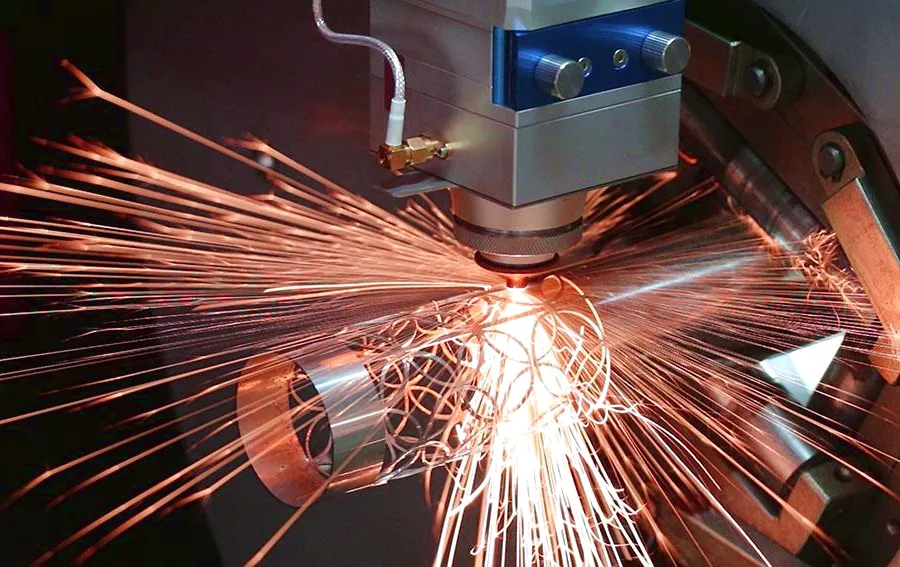
The physics of laser cutting dictates the gas purity requirement. In a coaxial assist-gas arrangement — which is standard on virtually every modern fibre laser and CO₂ laser cutting machine — high-pressure compressed air is delivered through the cutting nozzle at pressures typically ranging from 0.5 to 1.5 MPa (5–15 bar). This high-velocity air jet serves two simultaneous functions: it blows molten and vaporised material away from the kerf, and it cools the heat-affected zone to limit thermal distortion. When the air contains oil aerosols — even at concentrations that seem negligibly low — the consequences at the focus point are disproportionately severe.
At laser focal temperatures exceeding 3,000°C, oil droplets do not simply pass through — they decompose, carbonise, and deposit residue on the cut face and occasionally on the protective lens cover glass of the cutting head. Lens contamination alone can cost hundreds of pounds per replacement and, more critically, a single contaminated cut on aerospace-grade aluminium or food-grade stainless can mean the rejection of an entire batch. UK fabricators supplying Tier 1 automotive or aerospace components often work under quality management frameworks where contamination traceability is mandatory — an oil-free compressed air supply is one of the simplest ways to remove a controllable variable from the equation.
Cut-Face Purity
Oil-free air eliminates hydrocarbon deposit on the cut edge, enabling Ra 1.6 µm surface finish or better — a standard required across UK aerospace, automotive, and food equipment sectors.
Optical Protection
Clean air prevents lens and nozzle contamination. One contaminated protective window replacement on a fibre laser head can cost £80–£300. Oil-free supply dramatically extends consumable life.
Compliance Confidence
ISO 8573-1 Class 0 certification for oil content gives quality managers documentary evidence that the compressed air supply cannot contribute to product contamination — valuable for NADCAP and IATF 16949 audits.
How an Oil-Free Screw Compressor Works — and What Makes It Different
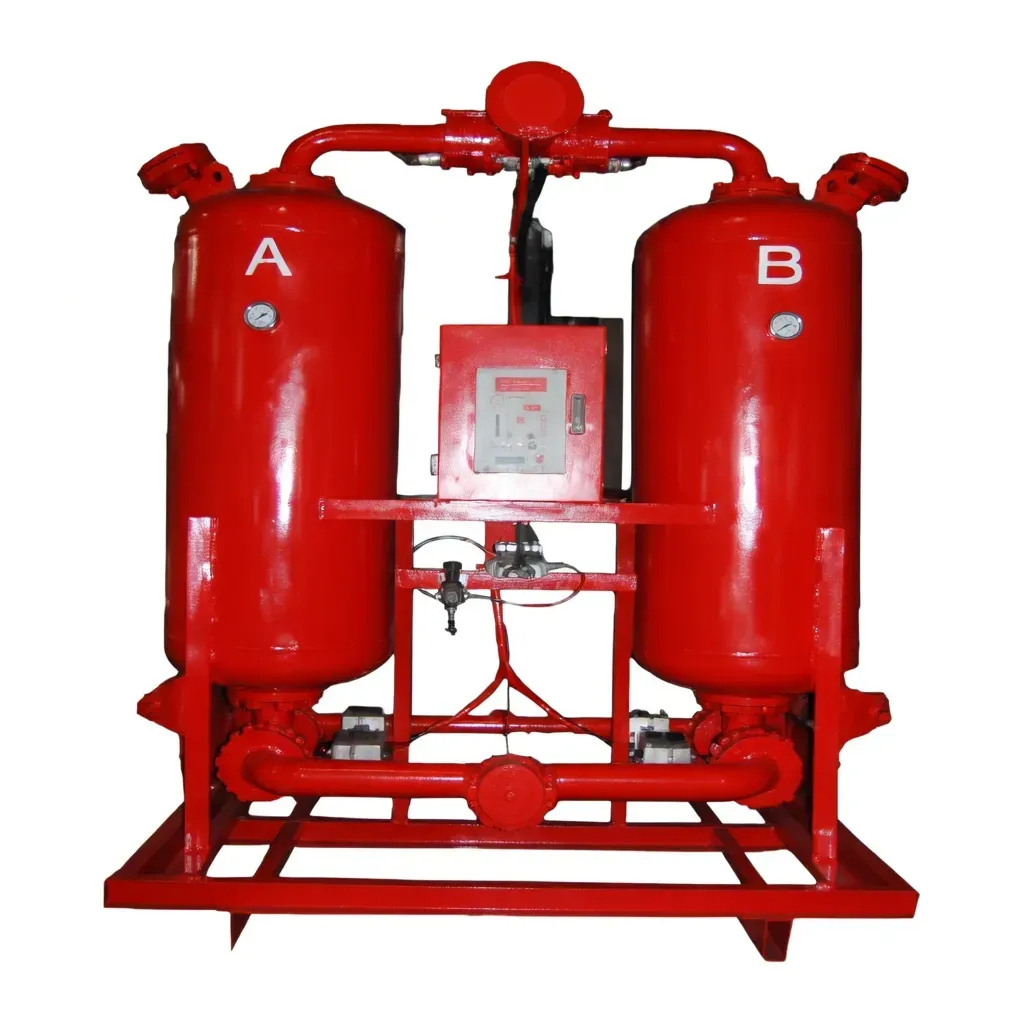 A twin-screw compressor uses two intermeshing helical rotors to trap, compress, and discharge air. In a conventional oil-flooded design, oil is injected into the compression chamber to cool the process, seal rotor clearances, and lubricate the rotor bearings. The oil is then separated downstream before delivery — but separation is never absolute, which is why oil-carry-over figures of 2–3 mg/m³ are typical even with high-efficiency coalescent filters. For general workshop air tools, this is inconsequential. For laser cutting nozzle assist gas, it is unacceptable.
In an oil-free screw compressor, the rotors are designed to maintain precise clearances without oil injection. The compression element uses PTFE-coated or specially profiled rotor profiles that can maintain dimensional stability across temperature ranges. Rotor bearings are located outside the air path and lubricated with grease or a separate oil circuit that is physically isolated from the compression zone. The result is air that has zero oil injection at source — not filtered oil, but truly oil-absent compression from first principles. Ever Power’s oil-free range uses a two-stage compression approach with an intercooler between stages, which not only reduces discharge temperature to safe levels without oil cooling but also improves overall efficiency compared to a single-stage design at equivalent pressure ratios.
The material specification of the rotor elements matters too. High-quality oil-free compressors use rotors manufactured from forged aluminium alloy or premium cast iron with specialised surface treatments, precision-ground to tolerances tighter than 10 µm. This level of manufacturing precision is what allows the rotor profiles to maintain their sealing geometry under thermal load — something a compressor produced with looser tolerances cannot sustain reliably over years of continuous duty.
Technical Specifications — Ever Power Oil-Free Screw Air Compressor Series
The table below summarises the key performance parameters across the Ever Power oil-free screw compressor range that is most commonly paired with laser cutting machines in UK fabrication environments. All flow rates are stated at ISO 1217 reference conditions (20°C inlet, 1 bar absolute, 0% relative humidity).
| Model | Motor Power (kW) | Free Air Delivery (m³/min) | Working Pressure (bar) | Noise Level (dB(A)) | Oil Content (mg/m³) | Laser Machines Supported |
|---|---|---|---|---|---|---|
| EP-OFS-11 | 11 | 1.3–1.8 | 7–10 | ≤65 | <0.001 | 1 × 1–2 kW fibre |
| EP-OFS-22 | 22 | 2.8–3.6 | 7–13 | ≤67 | <0.001 | 1–2 × 3 kW fibre |
| EP-OFS-37 | 37 | 4.5–5.8 | 8–13 | ≤68 | <0.001 | 1 × 6 kW / 2 × 3 kW |
| EP-OFS-55 | 55 | 6.8–8.5 | 8–13 | ≤70 | <0.001 | 1 × 10 kW / 2 × 6 kW |
| EP-OFS-75 | 75 | 9.2–11.8 | 8–16 | ≤72 | <0.001 | Multi-head production line |
* All models ISO 8573-1 Class 0 certified for oil content. Custom pressure and flow configurations available on request for multi-machine installations.
Application Scenarios: Where Oil-Free Air Compressors Make the Biggest Difference
Stainless Steel Fabrication
Cutting 304 and 316L stainless steel for catering, pharmaceutical, and food-processing equipment is one of the most demanding applications in UK laser cutting shops. Stainless steel is particularly sensitive to oxidation and hydrocarbon contamination because the chromium oxide passive layer on the cut face must reform cleanly after cutting. Any oil contamination prevents proper passive layer formation, leaving the cut edge susceptible to corrosion — a critical failure for hygienic equipment. Oil-free compressed air at 10–12 bar ensures a slag-free, bright cut edge that requires minimal post-processing and meets food-contact material standards.
Aluminium Sheet for Aerospace
Aluminium alloy sheet cutting for aerospace structural components, aircraft interior panels, and UAV airframes requires consistently clean cut geometry without re-cast layer contamination. Aluminium’s high thermal conductivity means the melt pool cools rapidly, so the assist gas must be absolutely clean to prevent oxide or carbon inclusions locking into the re-solidified material. UK aerospace supply chain manufacturers holding AS9100D certification have increasingly specified oil-free compressed air as a mandatory process input — and an oil-free screw compressor provides the documentary certification trail that aerospace auditors require.
Automotive Body Parts & EV Brackets
The UK automotive sector, particularly manufacturers supplying EV battery tray components, body-in-white reinforcement panels, and chassis brackets, demands laser-cut edges that go directly to forming or welding without secondary cleaning. If oil contamination is present on the cut edge, subsequent MIG or laser welding will produce porosity, reducing joint strength below specification. Many IATF 16949-certified fabricators have found that switching to oil-free compressed air eliminates an entire cleaning step from their process flow, improving throughput and reducing scrap rates — a direct, measurable saving that justifies the capital investment.
Structural Mild Steel — High Volume
General structural steelwork shops cutting mild steel at volume — architectural metalwork, signage, construction fixings — might question whether the premium for an oil-free compressor is justified when cutting a material that gets powder-coated or painted anyway. The answer lies in productivity: contaminated assist gas at high cutting speeds causes dross adhesion on the underside of the cut, which requires manual grinding to remove. An oil-free air supply at adequate pressure and flow eliminates dross consistently, particularly in the 3–10 mm thickness range most common in structural fabrication. The labour saving on de-drossing alone typically offsets the compressor cost differential within 18 months.
Seven Reasons UK Fabricators Choose Ever Power Oil-Free Compressors
Having commissioned oil-free compressor installations across dozens of UK fabrication sites over the past two decades, certain product characteristics keep coming up as the deciding factors for buyers who need reliable, long-term performance rather than just the lowest purchase price.
Customer Success: Precision Sheet Metal, West Midlands, UK
Challenge: Midlands CNC Fabrication Ltd supplies laser-cut aluminium brackets and steel reinforcement panels to a Tier 1 automotive supplier in the Coventry area. Following an IATF 16949 audit, their quality team identified oil contamination on cut edges as a root cause of intermittent porosity in subsequent laser welds — a non-conformance that was generating warranty claims from the end customer.
Solution: The plant replaced their existing oil-flooded compressor and downstream filter bank with an Ever Power EP-OFS-37 oil-free screw compressor, rated at 4.5–5.8 m³/min at 10 bar. The unit was installed with an integrated refrigerant dryer and a dedicated 200-litre receiver tank to stabilise pressure during peak demand at the cutting nozzle. The installation was completed over a single weekend shutdown to minimise production loss.
Result: Within three months of switching to oil-free compressed air, weld porosity non-conformances dropped to zero. The manual de-drossing step — previously accounting for approximately 1.5 hours of labour per shift — was eliminated entirely. The plant’s quality manager confirmed that cut-face Ra values consistently measured below 1.4 µm across all material types, and the compressor’s VSD motor reduced electricity consumption on the utility by 27% compared to their previous fixed-speed machine.
We cut 316L stainless for pharmaceutical enclosures and the surface finish requirement from our customer was Ra 1.6 µm or better. Before switching to oil-free, we were achieving Ra 2.1–2.4 µm on most cuts. Three months with the Ever Power unit and we are now consistently at Ra 1.2 µm. The difference is night and day.
The technical support from Ever Power during the sizing and commissioning process was excellent. They understood the laser cutting application and specified the right pressure and flow for our 10 kW fibre laser configuration. We have been running for over two years without a single contamination-related rejection.
We run three fibre laser cutting machines on one compressor with a receiver manifold — Ever Power sized the system correctly and the pressure stability is excellent even during simultaneous peak demand. Energy bills on that circuit are down and our lens replacement frequency has dropped by around 60%. Genuinely impressed.
Bespoke Configuration: Ever Power’s Custom Engineering Capability
Not every laser cutting installation fits a standard compressor specification. Multi-machine production lines, high-altitude facilities, applications requiring ultra-low dew points for sensitive materials, or customers working within tight acoustic constraints all have requirements that go beyond what a catalogue product can satisfy. Ever Power’s engineering team has the capability — and the experience — to develop custom oil-free compressor configurations from the ground up.
Custom projects completed for UK customers in recent years include: tandem compressor installations with load-sharing controllers to provide N+1 redundancy for continuous-production laser cutting lines; systems with dual-pressure outputs (8 bar for nitrogen boost station and 13 bar for direct air assist); acoustic enclosures reducing radiated noise below 60 dB(A) for installations adjacent to office areas; and integration of compressor monitoring data into customer SCADA systems via Modbus TCP. The factory also offers OEM supply for equipment manufacturers who wish to specify Ever Power compressor units as bundled components within their own laser cutting machine packages — with custom labelling, documentation, and warranty terms available under white-label agreements.
Oil-Free vs Oil-Flooded Screw Compressor: Side-by-Side for Laser Cutting
The table below draws on field data from laser cutting installations to compare the two compressor technologies across the criteria that matter most to UK fabricators. The figures represent typical observed values rather than best-case marketing claims.
| Criterion | Oil-Free Screw | Oil-Flooded Screw |
|---|---|---|
| Oil carry-over (mg/m³) | <0.001 (Class 0) | 0.1–3 (Class 1–3) |
| Cut-face Ra (stainless, typical) | 1.0–1.4 µm | 1.8–2.8 µm |
| Lens contamination frequency | Very low | Moderate–high |
| Annual filter cost (est.) | £120–£250 | £800–£2,400 |
| ISO 8573-1 Class 0 achievable? | Yes — by design | No — filter-dependent |
| Maintenance interval | 4,000 hours | 2,000 hours |
| Purchase price (37 kW equivalent) | Higher initial cost | Lower initial cost |
| 5-year total cost of ownership | Lower overall | Higher (energy + filters) |
Preguntas frecuentes
Send us your laser machine specification and we will prepare a no-obligation technical proposal — including compressor model, pressure and flow sizing, ancillary equipment recommendations, and delivered pricing to anywhere in the UK.
✉ Get a Quote — [email protected]