
Ever Power · Medical-Grade Compressed Air
Oil-Free Medical Air Compressors
for Operating Rooms & ICUs
HTM 02-01 Compliant Systems for UK Healthcare Facilities — Where Uninterrupted, Contaminant-Free Air Is a Clinical Imperative
Class 0 Oil-Free
HTM 02-01 Compliant
UK Stock & Support
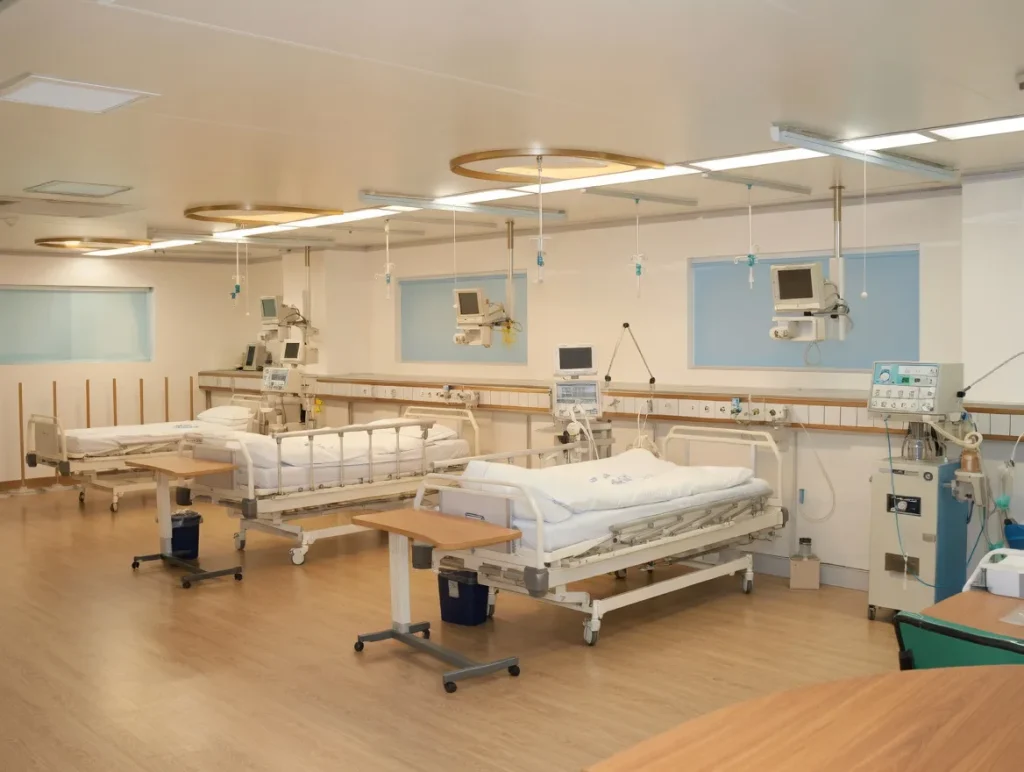
 In any operating theatre or intensive care unit across the United Kingdom, the medical compressed air network running behind tiled walls and beneath raised floors is one of the most safety-critical utilities in the building. It drives surgical power tools, feeds anaesthesia workstations, supports pneumatic tourniquets, and provides blended breathing gas to ventilated patients in critical care. Yet for many hospital estates managers and procurement leads, the precise specification of that air supply — its purity grade, pressure stability, oil content, and microbial load — remains ambiguously understood right up until a compliance inspection or, far worse, a clinical incident brings it sharply into focus. Having spent close to two decades commissioning medical air compressor plant across NHS trusts, private surgical hospitals, and specialist treatment centres in England, Scotland, Wales, and Northern Ireland, the engineers behind Ever Power’s healthcare division have seen both ends of that spectrum.
The demand for genuinely oil-free compressed air in clinical settings has hardened considerably since the most recent revision of HTM 02-01 and the UK’s adoption of BS EN ISO 7396-1 as the reference standard for medical gas pipeline systems. Where older oil-lubricated piston compressors sitting behind multi-stage coalescence filters were once considered an acceptable compromise, today’s regulatory landscape makes it unequivocally clear: air delivered to an operating room terminal, anaesthesia machine inlet, or ICU ventilator circuit must be oil-free at the point of compression — not merely scrubbed downstream. The distinction matters enormously. Filter saturation, coalescer bypass under high-flow surge conditions, and the presence of oil vapour in its gaseous phase (which conventional aerosol filters cannot capture) are failure modes that no amount of downstream filtration can fully eliminate if the compressor itself generates oil-contaminated output. Ever Power’s oil-free medical air compressor range addresses this at the source, delivering verified Class 0 output in accordance with ISO 8573-1, with pressure dew points meeting breathing-air purity requirements and bacterial filtration rated down to 0.01 micron.
This article covers everything a UK hospital estates team, procurement manager, or clinical engineer needs to understand when evaluating a medical air compressor for operating room and ICU installation — from technical purity requirements and system redundancy architecture to real-world commissioning outcomes and custom specification options.
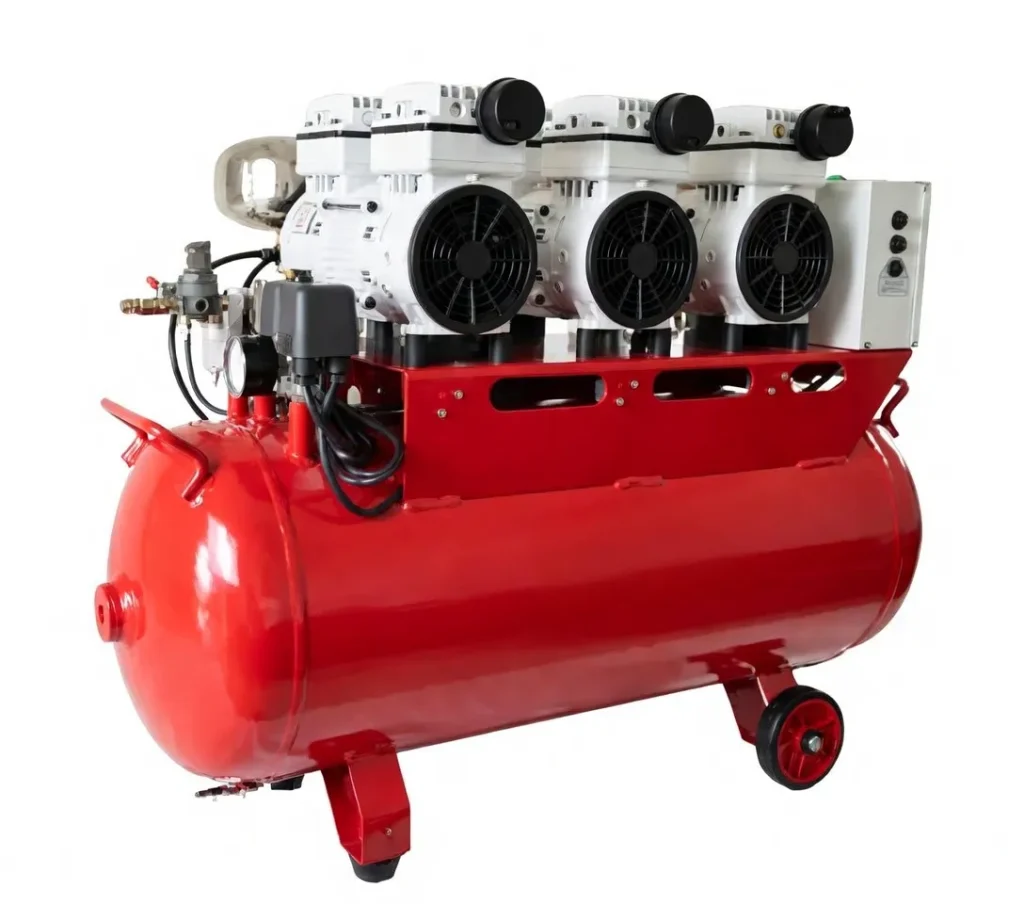
Ever Power Oil-Free Medical Air Compressor — Engineered for Clinical-Grade Purity in UK Operating Rooms & Critical Care Units
✉ Get a Quote — Medical Air Systems
Respond within 24 hours · Custom specifications welcome · UK delivery & installation
Why the Compressor Technology Defines Patient Safety
 The clinical risk posed by oil-contaminated medical compressed air is not theoretical. Trace quantities of oil introduced into a ventilator breathing circuit or anaesthetic gas pathway can cause lipoid pneumonia — a direct pulmonary inflammatory response to inhaled hydrocarbons — with symptoms that can be slow to manifest and difficult to attribute to their source during a patient’s hospital stay. More acutely, oil contamination of pneumatic surgical tool couplings creates not only a fire risk in oxygen-enriched operating theatre environments, but also causes premature failure of delicate instrument seals and bearings, leading to tool malfunction at the worst possible moment. An oil-free medical air compressor eliminates this hazard category entirely by removing the lubricant from the compression cycle itself, rather than relying on filtration to compensate for a contaminating process.
Beyond contamination, the second critical parameter is supply continuity. A single-compressor plant room with no redundancy protecting a multi-theatre block or a 20-bed intensive care unit is not an acceptable configuration under HTM 02-01, which mandates a minimum N+1 standby arrangement for any system serving a critical clinical area. Ever Power systems are engineered from the ground up with redundancy built in — not bolted on as an afterthought — with automatic duty/standby rotation, cross-connected manifolds, and remote fault alerting as standard features in any medical configuration.
Product Advantages
Six Engineering Advantages That Matter in a Clinical Environment
True Class 0 Oil-Free Output
Certified ISO 8573-1 Class 0 oil content — zero detectable oil at the compression stage. No coalescence filters masking an inherently contaminating process. The compression technology (scroll or rotary tooth) physically cannot introduce oil into the airstream, providing an absolute safety assurance that no filtration system alone can replicate.
Ultra-Low Noise Operation
Operating at below 63 dB(A) at 1 metre, Ever Power medical air compressor units can be sited in plant rooms adjacent to clinical areas without acoustic remediation. Scroll compressor technology produces inherently smooth, low-vibration compression cycles — no reciprocating piston shock loads to transmit through building fabric into adjacent wards or procedure rooms.
N+1 Redundancy as Standard
All medical configurations ship with automatic duty/standby rotation and cross-connected receiver manifolds. If any compressor module trips on fault, standby units cut in within 3 seconds — faster than system pressure can fall below the minimum clinical supply threshold. Running hour equalisation extends service life and prevents fatigue on a single unit.
Medical-Grade Bacterial Filtration
Integrated 0.01-micron sterile bacteria filters at the outlet stage capture viable and non-viable particulate including Bacillus subtilis spores. Combined with activated carbon polishing for residual vapour and a refrigerant dryer bringing pressure dew points to +3°C at line pressure, the treated output meets Grade E breathing-air purity under EN 12021.
BMS & Remote Monitoring Ready
Onboard control panels provide Modbus RTU/TCP and BACnet outputs as standard, enabling integration with any major hospital building management system. Alarms for dew point exceedance, filter differential pressure, CO/CO₂ concentration (on breathing-air models), and pressure deviation can be routed to the estates helpdesk, theatre control rooms, or a 24/7 remote monitoring service.
Low Lifecycle Maintenance Cost
Oil-free scroll compressors have no oil changes, no separator cartridges, no coalescence filters to replace on a quarterly cycle. Annual service intervals cover scroll tip seal inspection, bearing check, filter element replacement, and control calibration — typically completed in a single engineer visit of under 4 hours without taking the plant room offline, thanks to the live redundancy architecture.
Technical Performance Parameters
The table below covers the core performance parameters for Ever Power’s EP-Med Series oil-free medical air compressor range, sized for a typical UK district general hospital operating suite of 4–8 theatres with associated critical care unit. Custom flow rates from 120 L/min single-unit configurations up to 6,000 L/min multi-module systems are available on request. All values are at reference conditions (20°C ambient, sea level) unless otherwise stated.
| Parameter | Specification | Standard Reference |
|---|---|---|
| Compression Technology | Oil-free scroll / rotary tooth (depending on model) | ISO 8573-1 Class 0 |
| Oil Content in Output | < 0.01 mg/m³ (undetectable) | ISO 8573-1 Class 1 |
| Pressure Dew Point | ≤ +3°C at line pressure (breathing air); ≤ -40°C (instrument air) | HTM 02-01 / EN 12021 |
| Operating Pressure | 5.0 – 8.5 bar g (field-adjustable) | BS EN ISO 7396-1 |
| Flow Rate Range | 120 – 6,000 L/min (modular configuration) | Per system design |
| Støjniveau | < 63 dB(A) at 1 m | ISO 2151 |
| Duty Cycle | 100% continuous (24/7) | HTM 02-01 Part A |
| Particulate Filter | 0.01 micron sterile bacteria filter (outlet stage) | ISO 8573-1 Class 1 |
| CO Content (breathing) | < 5 ppm (monitored & alarmed) | EN 12021 / HTM 02-01 |
| CO₂ Content (breathing) | < 500 ppm | EN 12021 |
| Redundancy Architecture | N+1 minimum; N+2 available for critical care | HTM 02-01 Part A |
| Communications Output | Modbus RTU/TCP, BACnet IP, volt-free contacts | BMS integration |
Compression Principle & System Architecture
⚙️ Oil-Free Scroll Technology
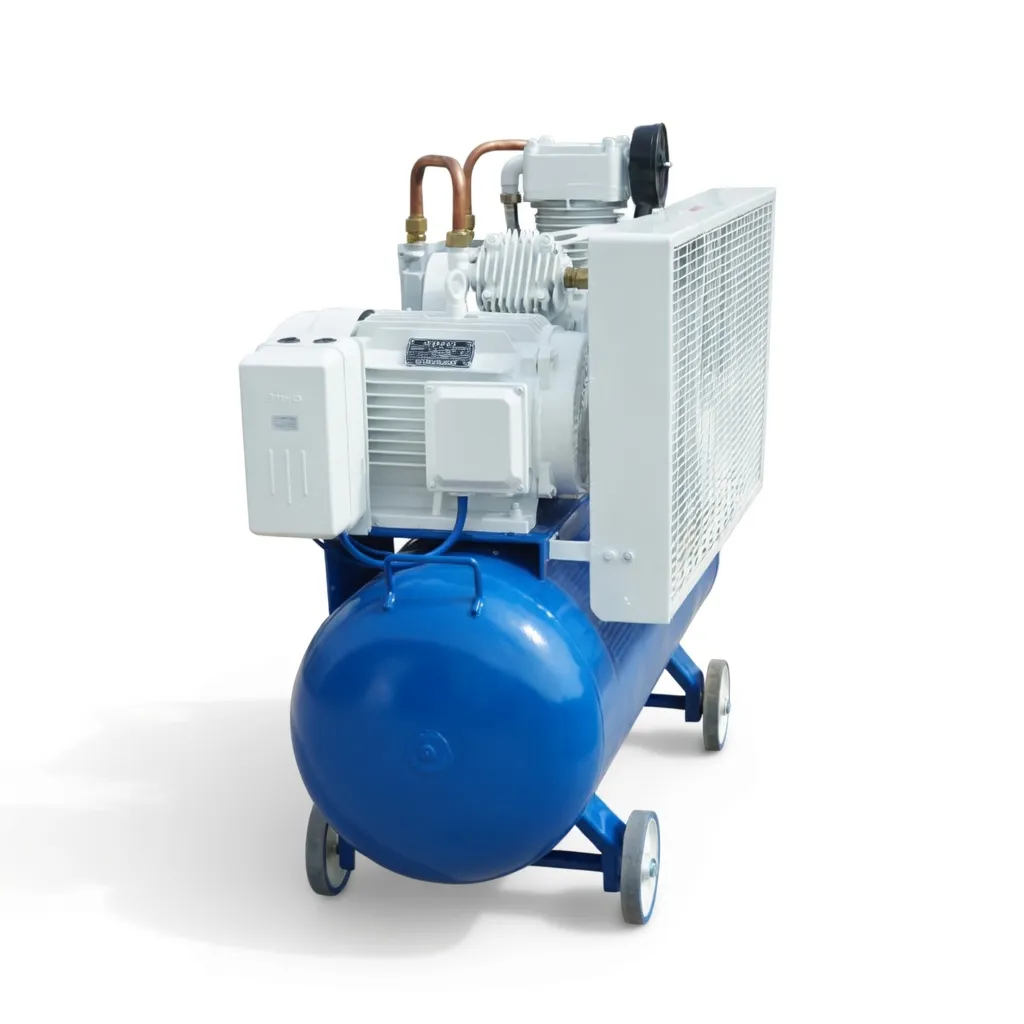
In a scroll compressor, a fixed scroll and an orbiting scroll interleave to progressively compress air pockets inward toward a central discharge port. Because the scrolls are separated by precision-machined PTFE tip seals rather than a lubricated metal-to-metal contact, no oil enters the compression chamber at any point. The result is a mechanically simple, inherently pulsation-free delivery of clean air — qualities that make scroll technology the preferred choice for hospital medical air compressor plant rooms where pressure stability and noise levels are tightly controlled.
🔬 Multi-Stage Purification Train
Compressed air exits each module at elevated temperature and passes through a pre-filter, refrigerant air dryer (reducing moisture to a pressure dew point of +3°C), an activated carbon tower removing any residual hydrocarbon vapour trace, and a final 0.01-micron sterile bacteria filter before entering the common header. Dew point transmitters log continuously; deviation beyond set limits triggers an alarm at the control panel and, where BMS integration is active, at a remote monitoring station — meeting the continuous quality monitoring requirement under HTM 02-01 Part B.
The overall plant room architecture follows a modular design: each compressor module connects to a shared receiver vessel sized to provide at least 10 minutes’ reserve capacity at peak clinical flow demand. This buffer absorbs short-term demand spikes from simultaneous surgical tool use in multiple theatres, preventing pressure transients from reaching terminal units. Control logic manages lead/lag sequencing, monitors each module’s running hours independently, and logs alarm events to a removable data storage device for compliance records — a requirement specifically referenced in HTM 02-01’s quality management framework for medical gas systems in UK healthcare facilities.
Where Medical Air Compressors Are Used in a Hospital Setting
Operating Theatre Suite
Surgical power tools (bone drills, sagittal saws, arthroscopic shavers), pneumatic tourniquet inflation systems, and laparoscopic insufflation units all draw from the medical air ring main. Tool performance depends entirely on stable pressure delivery — typically 4.5 bar at the terminal unit — and the absolute absence of oil that would degrade pneumatic motor seals and create fire risk in the oxygen-enriched theatre environment.
Intensive Care Unit (ICU)
Mechanically ventilated ICU patients rely on medical air blended with oxygen to deliver precise FiO₂ concentrations through ICU ventilators and high-flow nasal cannula therapy systems. Any interruption in supply, or any contamination of the gas mixture, directly impacts the patient’s respiratory support. Medical air compressor redundancy and continuous purity monitoring are not optional features in this environment — they are life-safety requirements.
Anaesthesia & Recovery
Modern anaesthesia workstations use medical air as a carrier gas for volatile anaesthetic agents and as a drive gas for ventilator bellows systems. Purity requirements here are equivalent to those for oxygen — any contaminant introduced at this stage is delivered directly to the patient’s lungs. Recovery area CPAP units and nebuliser drives also draw from the same pipeline, reinforcing the need for a consistently clean supply throughout the system.
Hospital Dental & Endoscopy Units
Hospital-integrated dental surgery suites and flexible endoscopy units with air-water channels draw from the same medical-grade compressed air infrastructure. Where these departments were previously served by small point-of-use dental compressors, centralised oil-free medical air compressor plant provides significantly better purity consistency, lower long-term maintenance cost per unit of compressed air, and unified compliance documentation for CQC inspection purposes.
UK Regulatory Framework
What UK Healthcare Facilities Need to Know About HTM 02-01 Compliance
HTM 02-01 — The Core Standard
Health Technical Memorandum 02-01, published by NHS England and the Department of Health, is the definitive guidance for medical gas pipeline systems in UK healthcare premises. Part A covers design and installation requirements, while Part B addresses operational management and quality control. Any medical air compressor installed in an NHS or CQC-registered private hospital must comply with its requirements for system configuration, alarm provision, purity monitoring, and documentation.
BS EN ISO 7396-1 & BS EN ISO 7396-2
These British Standards specify requirements for pipeline systems for compressed medical gases and vacuum, and for anaesthetic gas scavenging disposal systems respectively. They are harmonised with the European EN standard and referenced extensively within HTM 02-01. Procurement teams in London, Manchester, Birmingham, Bristol, Leeds, and Edinburgh can specify compliance with these standards as a minimum requirement in any tender documentation.
CQC Inspection Readiness
The Care Quality Commission’s inspection framework for acute hospitals specifically examines the maintenance, testing, and documentation of medical gas systems as part of its safe care and treatment domain. Estates teams supplying evidence of HTM 02-01 compliance, annual validation testing, and continuous purity monitoring logs consistently fare better in inspections. Ever Power’s documentation package — commissioning records, test certificates, and service history logs — is structured to support CQC evidence requirements directly.
Customer Success: NHS Trust Midlands, UK
Client
NHS Teaching Hospital Trust, West Midlands
Project Scope
6-Theatre Block + 22-Bed ICU
Solution
4 × EP-Med 15 kW Scroll Compressors (N+2)
The Challenge
The trust’s existing medical air plant — a bank of four oil-lubricated piston compressors installed in 2007 — had reached end of serviceable life. More pressingly, a scheduled HTM 02-01 compliance audit flagged three critical deficiencies: inadequate redundancy for a level-3 critical care facility, no continuous dew point monitoring, and documented oil contamination events on the coalescence filter log indicating the upstream compression process was generating oil aerosol beyond the filter’s rated removal capacity. The trust required a fully compliant replacement, designed to fit within the existing plant room footprint, and commissioned within a 14-week programme to avoid disruption to a planned surgical theatre refurbishment schedule.
The Solution
Ever Power’s applications team conducted a full demand analysis across all 6 theatres and the 22-bed ICU, establishing a peak coincident flow rate of 840 L/min at 6.5 bar. Four EP-Med 15 kW oil-free scroll compressor modules were specified in an N+2 configuration — any two of the four units can fail simultaneously without dropping below clinical supply pressure. The system was skid-mounted and pre-piped at the factory, reducing on-site installation to connection of four flanged joints and electrical supply terminations, keeping plant room downtime to 72 hours. Commissioning validation, including full HTM 02-01 pressure testing, purity sampling, and alarm proving, was completed and documented within 5 working days of installation completion.
Outcomes After 18 Months of Operation
100%
System uptime since commissioning
Zero
Oil contamination alarms recorded
Passed
CQC inspection (Outstanding for safe care)
-38%
Annual maintenance cost vs. previous plant
What UK Healthcare Professionals Say
“We’d been fighting oil contamination alarms on the old plant for two years. Since the Ever Power installation, I genuinely haven’t thought about the medical air plant room once — and in my job, that’s the highest compliment I can give a piece of equipment. The BMS integration meant our facilities team had live pressure and dew point data in the control room from day one.”
James Hartley
Head of Estates Engineering, NHS Trust, Leeds, England
“As theatre manager, the thing I care about is whether the surgical tools behave consistently from the first case to the last. Since we upgraded to oil-free scroll compressors, we’ve had no pressure drop complaints from surgeons and no pneumatic tool failures that I can attribute to the air supply. The system is noticeably quieter than the old piston bank, which matters for the plant room next to our recovery bay.”
Claire Mossington
Theatre Services Manager, Independent Surgical Hospital, London, England
“The documentation package Ever Power provided for commissioning was the most complete I’ve received from any compressed air supplier — HTM 02-01 test records, purity certificates, BMS integration drawings, and a maintenance schedule mapped to Part B requirements, all in one folder. It made our annual validation process straightforward and gave our clinical governance team exactly what they needed for the CQC evidence file.”
Dr. Alistair McPherson
Senior Biomedical Engineer, University Teaching Hospital, Edinburgh, Scotland
Factory & Custom Solutions
Built to Your Hospital’s Exact Specification
At Ever Power’s manufacturing facility, every medical air compressor system destined for a UK hospital is treated as a custom engineering project rather than a catalogue product. Standard configurations serve the majority of requirements, but healthcare facilities often present constraints that demand design flexibility — restricted plant room dimensions, unusual load profiles, existing ring main pressure ratings, integration with legacy BMS platforms, or the need to incorporate breathing-air quality monitoring for CO, CO₂, and N₂O in a single compact enclosure.
Our applications engineers work directly with hospital estates teams and M&E contractors from initial concept through to handover documentation, delivering systems that range from a single 4 kW scroll unit serving a standalone treatment room in Manchester to a 12-module, 300 kW redundant plant serving a major surgical centre in London. Every system leaves the factory with a full Factory Acceptance Test (FAT) report, CE-marked electrical panels, and a pre-formatted HTM 02-01 validation document package.
Custom Options Include:
- ▸ Bespoke enclosure dimensions for constrained plant rooms
- ▸ Integrated CO, CO₂, and dew point monitoring per HTM 02-01
- ▸ N+1, N+2, or fully redundant N+N configurations
- ▸ Legacy BMS protocol compatibility (LON, KNX, Trend)
- ▸ Instrument air / breathing air dual-output systems
- ▸ Integrated dryer bypass and service isolation valves
- ▸ HTM 02-01 commissioning and validation package
Ofte stillede spørgsmål
What exactly does HTM 02-01 require for medical air compressors installed in UK hospital operating rooms, and how does it affect purchasing decisions?
HTM 02-01 (Health Technical Memorandum) requires that medical air plant supplying operating theatres and critical care units provides N+1 minimum redundancy, continuous dew point monitoring with alarmed deviation, CO and CO₂ concentration monitoring where breathing air is supplied, and purity testing at defined intervals with documented records. For purchasing teams, this means the compressor system must be specified with built-in standby units, integrated monitoring outputs, and a commissioning validation package that generates the documentation your compliance and clinical governance teams need — not just the compressor unit itself. Ever Power systems are designed from the outset to meet Part A (design) and Part B (operational management) requirements as a complete package.
How much does a complete oil-free medical air compressor system typically cost for an NHS hospital in the UK, and what factors affect the price?
Pricing depends heavily on the number of theatres and ICU beds to be served, the redundancy configuration required, whether breathing air or instrument air purity is needed, and the level of monitoring and documentation included. A single-theatre or day-surgery unit with a basic N+1 scroll system typically starts from around £12,000–£18,000 supply-only. A 6–8 theatre block with N+2 redundancy, full HTM 02-01 monitoring, factory acceptance testing, and commissioning documentation typically falls in the £55,000–£110,000 range. Contact our team for a site-specific quotation — most hospital projects are priced within 5 working days of receiving a site survey or CAD drawing of the plant room.
What is the difference between breathing air and instrument air in a UK surgical facility, and do they need separate medical air compressor systems?
Breathing air (used in anaesthesia and ventilators) must comply with EN 12021 and HTM 02-01 breathing-air grade requirements, including CO < 5 ppm, CO₂ < 500 ppm, water vapour below saturation, and no detectable oil. Instrument air (used for pneumatic surgical tools and table controls) requires ISO 8573-1 Class 1 oil-free and Class 4 moisture at most, but does not need CO/CO₂ monitoring. In many UK hospitals these are served from the same plant with a common header, because a system meeting breathing-air grade automatically exceeds instrument-air requirements. Separate systems are used where demand profiles are very different or where breathing-air monitoring costs are to be allocated separately. Our applications team can advise on the most cost-effective combined or split configuration for your specific facility.
Which type of oil-free compressor technology — scroll, rotary tooth, or centrifugal — is most suitable for supporting ICU ventilators and critical care environments in a UK hospital?
For the flow rates typical of a 10–30 bed ICU (approximately 150–500 L/min), oil-free scroll technology is the most appropriate choice. It provides Class 0 oil-free output, smooth pulsation-free delivery (important for ventilator pressure stability), low noise (<65 dB(A)), and relatively low capital cost compared with rotary tooth or centrifugal machines at this scale. Rotary tooth compressors become more competitive above 1,000 L/min or where higher continuous-duty thermal cycling is anticipated. Centrifugal (turbo) compressors are generally sized for large industrial applications and are rarely appropriate for hospital plant rooms. For very large hospital complexes in London, Birmingham, or Manchester, a hybrid system combining scroll modules for base load with rotary tooth for peak demand can offer the best overall efficiency.
How do I know whether my hospital’s existing air compressor is safe and compliant for current operating room and critical care use under UK regulations?
Key indicators that an existing system may no longer meet current UK requirements include: oil-lubricated compression technology (not oil-free), absence of continuous dew point monitoring with BMS-connected alarms, no documented HTM 02-01 commissioning validation on file, coalescence filter change records showing recurrent high differential pressure (suggesting upstream oil loading), and any system installed before 2012 when the current version of HTM 02-01 was published. If any of these apply, we recommend requesting a formal assessment — Ever Power can provide a site audit report identifying specific compliance gaps and a costed remediation plan, which can form the basis for a capital replacement bid within your trust’s estates programme.
What size medical air compressor does a 4-theatre operating suite in a UK district general hospital typically need, and how is capacity calculated?
A 4-theatre block with recovery bay and adjacent anaesthetic rooms typically requires a peak coincident flow rate of 450–650 L/min at 6.5 bar. HTM 02-01 calculates diversity-corrected demand using the number of simultaneous tool terminals in use, the rated consumption of each device type, and a coincidence factor. At this scale, a 2 × 11 kW oil-free scroll compressor system (N+1) provides adequate capacity with headroom for demand growth. If the theatres include orthopaedic or neurosurgical programmes with high pneumatic tool consumption, upgrading to 3 × 11 kW (N+2) is advisable. Our applications team can perform a full demand calculation from your theatre programme schedule and equipment list at no charge as part of the quotation process.
Where can I get a medical air compressor system properly supplied, installed, and commissioned to HTM 02-01 standards for a hospital project in England or Scotland?
Ever Power works directly with NHS trusts, private hospital groups, and specialist M&E contractors across the United Kingdom. We supply and commission medical air compressor systems for healthcare facilities in London, Manchester, Birmingham, Bristol, Leeds, Sheffield, Glasgow, Edinburgh, Cardiff, and throughout the rest of England, Scotland, Wales, and Northern Ireland. Our field engineering team carries out on-site commissioning, HTM 02-01 validation testing, and handover documentation preparation. Contact us at [email protected] with your project details for a response within 24 business hours.
When should a UK hospital estates team consider replacing its medical air compressor, and what are the signs that a system is approaching end of serviceable life?
Most medical air compressor plant has a reliable serviceable life of 15–20 years with proper maintenance. Replacement should be planned when the system reaches 15 years of age regardless of apparent condition, when spare parts availability becomes problematic (typically for pre-2010 equipment), when running costs per cubic metre of compressed air exceed 140% of a modern equivalent system, when repeated contamination alarms can no longer be resolved by filter replacement, or when expansion of clinical services requires flow rates beyond the existing plant’s capacity. For NHS estates programmes, capital replacement bids are strengthened significantly by a technical assessment report evidencing compliance gaps relative to current HTM 02-01 requirements — something our applications engineers can provide.
How do oil-free scroll compressors in a hospital medical air plant room actually work, and why are they better than oil-lubricated alternatives for healthcare applications?
Scroll compressors use two interleaved spiral elements — one fixed, one orbiting — to progressively reduce the volume of trapped air pockets, increasing pressure without any reciprocating motion. The orbiting scroll is driven by an eccentric shaft and separated from the fixed scroll by PTFE tip seals that provide the compression seal without any oil. This means the compressed air never contacts any lubricant at any stage of the process, producing genuinely Class 0 oil-free output rather than filtered-oil output. Compared with oil-lubricated alternatives, scroll compressors produce no oil contamination risk, require no downstream oil removal filters (and their associated change costs), generate significantly less vibration and noise, and have no reciprocating piston shock loads to transmit through building structure — a meaningful benefit when plant rooms are adjacent to wards or procedure rooms.
What certifications and accreditations should a medical air compressor supplier based in the UK hold to be considered a credible and compliant source for NHS or private hospital procurement?
At minimum, a credible supplier should hold ISO 9001 quality management certification, be able to demonstrate product compliance with ISO 8573-1 Class 0 through third-party purity testing (not just manufacturer declaration), and provide CE-marked electrical control panels meeting UK/European EMC and Low Voltage Directive requirements. For NHS procurement specifically, suppliers should be able to evidence familiarity with HTM 02-01 commissioning requirements, have a documented service capability within acceptable response time for emergency callouts, and provide indemnity insurance appropriate for life-safety equipment. Ever Power holds ISO 9001 certification, supplies Class 0 verified systems with independent test certificates, and provides comprehensive documentation packages structured around HTM 02-01 Part B quality management requirements.
Ready to Upgrade Your Medical Air Plant?
Get a Custom Quote for Your UK Hospital
Medical Air Compressor System
Send us your plant room dimensions, theatre count, and compliance requirements. Our applications engineers will respond with a full specification and indicative pricing within 24 business hours.
Ever Power · Medical Gas Systems · UK Design, Supply & Commissioning · [email protected]
© Ever Power Medical Air Systems | HTM 02-01 Compliant Solutions for UK Healthcare | All specifications subject to site survey confirmation.
redigeret af gzl